


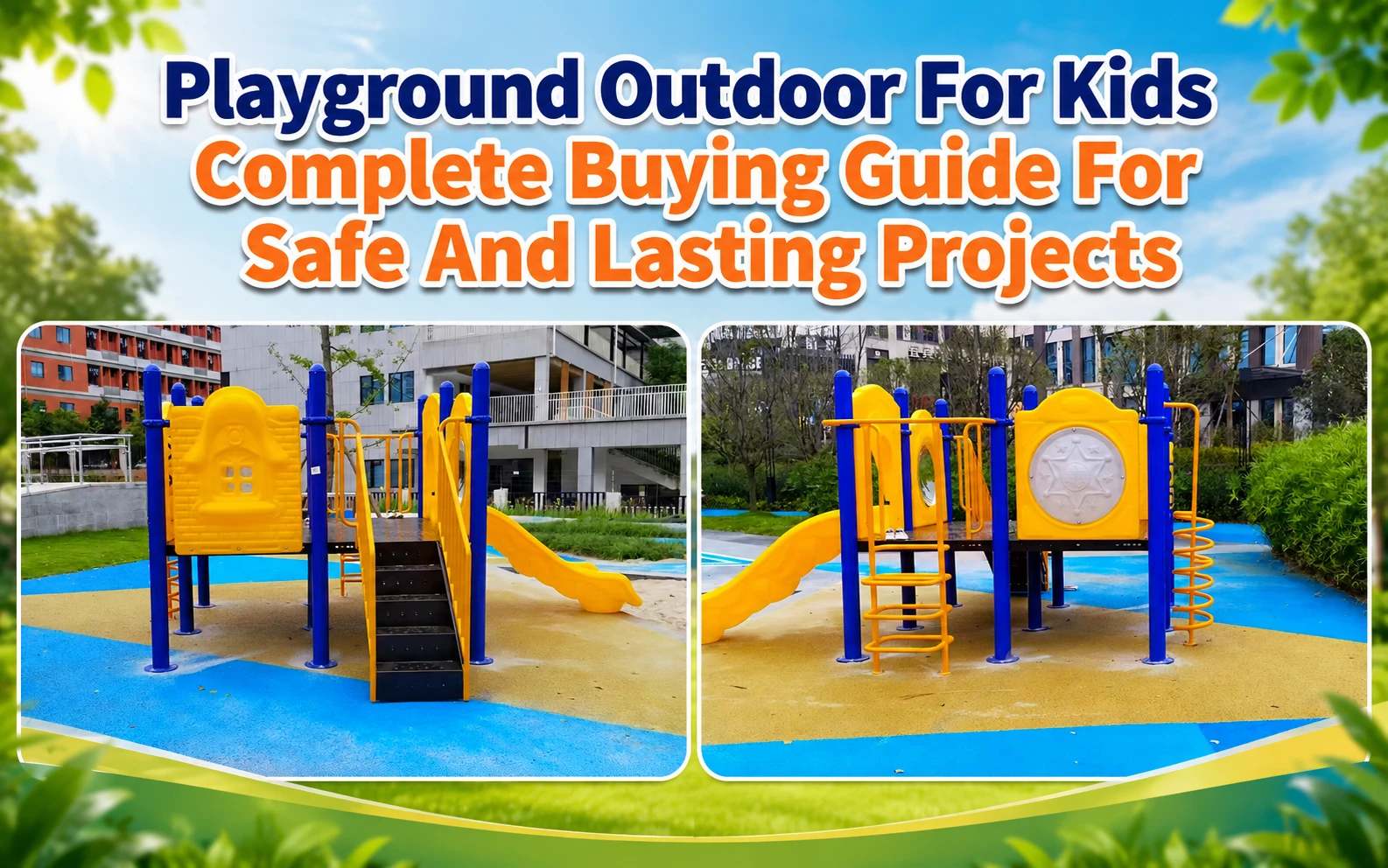
Buying a commercial playground outdoor for kids is not simply a matter of choosing the brightest slide or the largest structure. Buyers need to know whether the equipment fits the site, serves the correct age group, meets local safety requirements, stays within the real project budget, and can be installed and maintained without repeated problems. A successful playground outdoor for kids should combine play value, durability, accessibility, safe circulation, visual appeal, and reliable manufacturer support. Buyers should evaluate the playground outdoor for kids as a complete site system rather than a single product.
This guide combines procurement, safety, budgeting, customization, and maintenance perspectives. It is written for schools, kindergartens, public parks, residential communities, resorts, shopping centers, contractors, distributors, and investors who need clear answers before requesting a quotation.
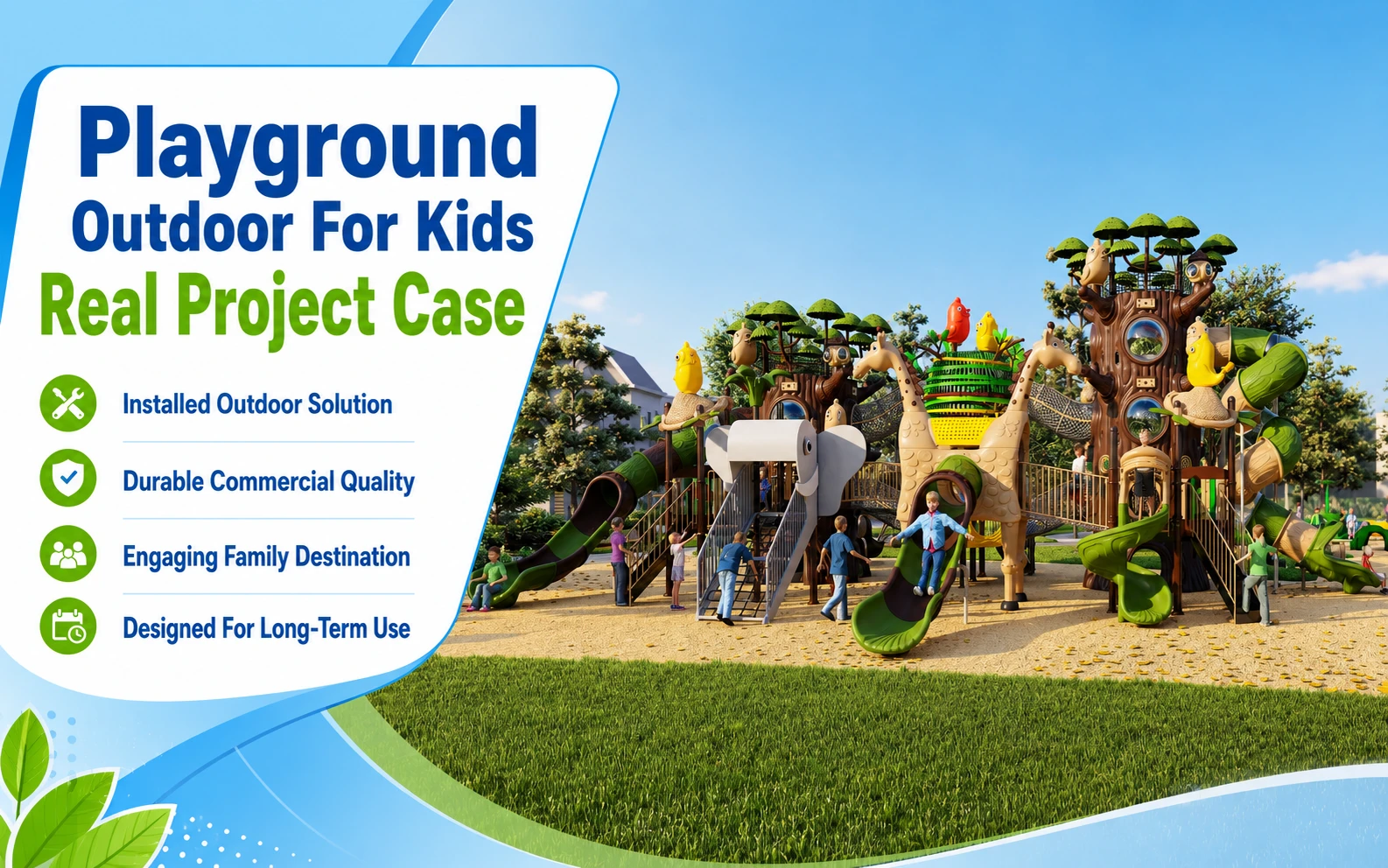
How To Define Project Requirements Before Requesting A Quote
Before comparing products, define what the playground outdoor for kids must achieve. Start with the user group. A preschool project for children aged two to five needs lower platforms, simpler access routes, smaller steps, shorter slides, and more ground-level activities. A school-age project can include higher climbing challenges, rope courses, upper-body activities, and longer slides. Mixed-age sites should separate activity zones or create clear transitions so younger children are not pushed into equipment designed for older users.
Next, provide an accurate site plan. A useful drawing should show total dimensions, entrances, buildings, trees, slopes, drainage points, underground services, existing pavement, and any areas that must remain open. Photos and videos help the designer understand sun exposure, surrounding architecture, and access for delivery vehicles. Without this information, a supplier may quote a structure that fits on paper but leaves insufficient safety clearance or creates difficult installation conditions.
Capacity is another important question. A small kindergarten may need a playground outdoor for kids for 20 to 30 children at one time, while a public park or commercial attraction may require several activity zones that distribute hundreds of visitors. Tell the manufacturer the expected peak use, age range, operating hours, supervision level, and whether the site must support children with mobility, sensory, or communication needs. These details allow the design team to recommend the right scale for the playground outdoor for kids instead of simply selling the largest unit.
Finally, define the goal of the playground outdoor for kids. Is the priority physical challenge, imaginative play, inclusive access, visual attraction, educational value, or fast return on investment? The answer changes the design of the playground outdoor for kids, the equipment mix, the materials, and the budget.
Which Equipment Mix Creates Better Play Value
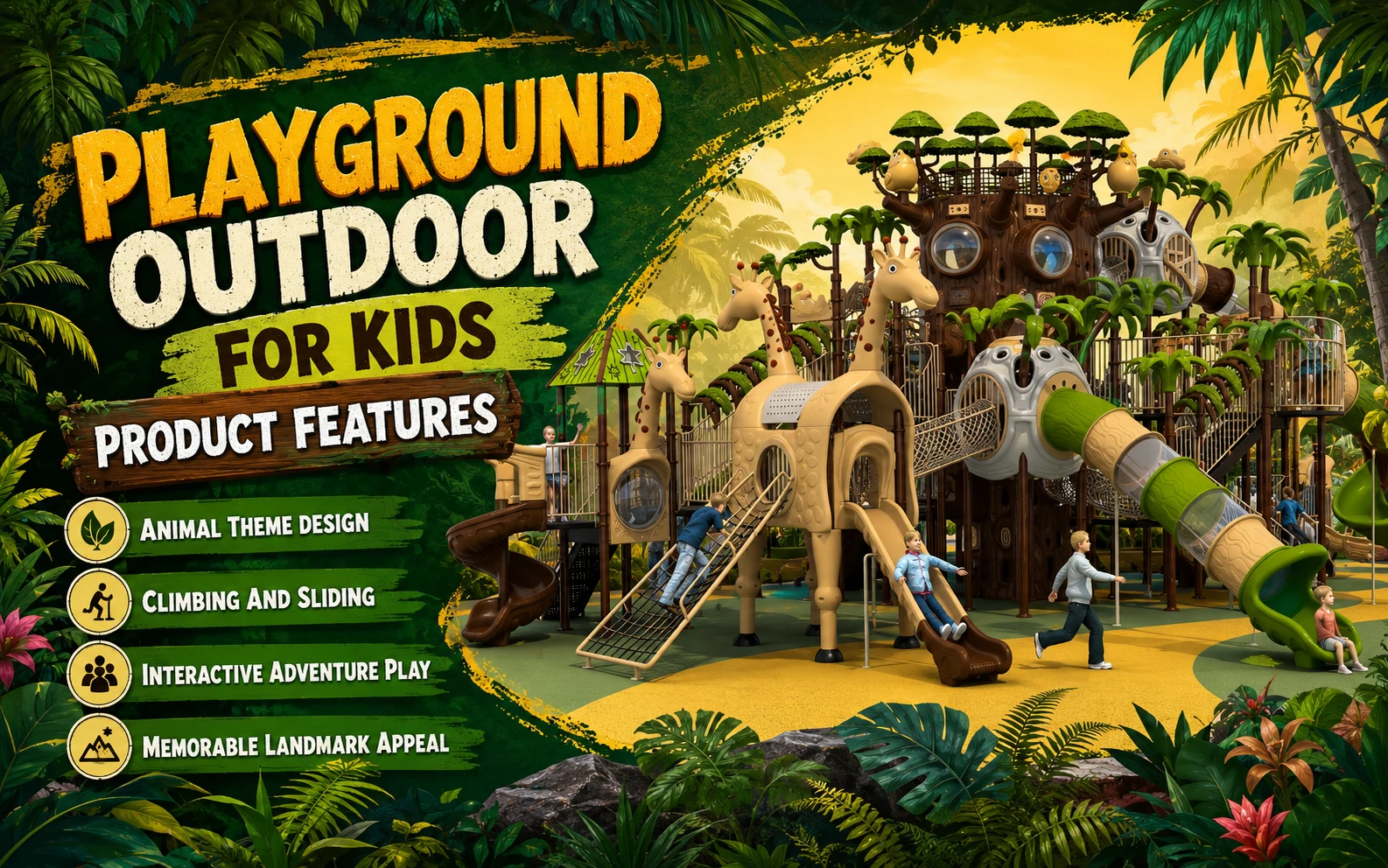
Customers often ask which components should be included in a playground outdoor for kids. The best answer for a playground outdoor for kids is usually a balanced combination rather than a long list of repeated slides. Slides create excitement and help move children through the structure, but climbing panels, rope nets, bridges, tunnels, balance elements, activity panels, swings, spinners, rocking equipment, and ground-level games create a fuller play experience.
For preschool areas, consider gentle ramps, low climbing steps, small slides, crawl tunnels, role-play panels, sensory walls, musical elements, spring riders, and shaded social spaces. For children aged five to twelve, add overhead ladders, challenging climbers, net towers, rotating equipment, track rides, larger slides, and cooperative play features. A well-planned playground outdoor for kids should offer easy, moderate, and challenging routes so children can choose activities according to their ability and confidence.
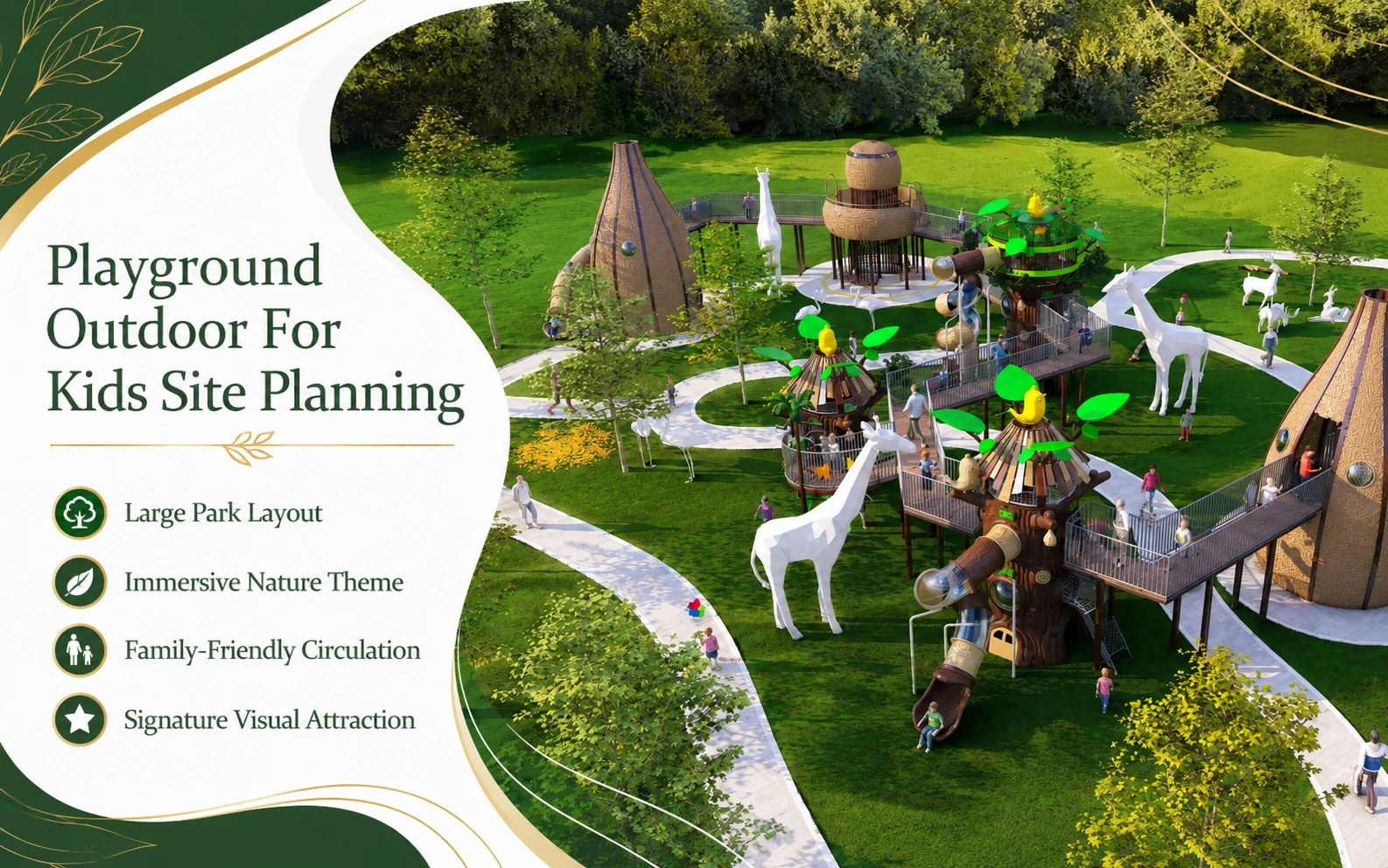
The layout of a playground outdoor for kids matters as much as the equipment list. Avoid placing the exit of a fast slide directly into a busy circulation path. Keep swings away from entrances and quiet play zones. Position benches where adults can supervise several areas without blocking children’s movement. Use open sightlines around enclosed components, and provide shaded rest areas where the local climate requires them. This makes the playground outdoor for kids easier to supervise and more comfortable to use.
Inclusive design should go beyond adding one ramp. A strong playground outdoor for kids may include accessible routes, transfer platforms, ground-level play panels, sensory activities, social play points, and activities that children with different abilities can enjoy together. ASTM F1951 provides a method for evaluating the accessibility of surface systems, while site-specific accessibility rules should also be checked during planning.
When comparing proposals, ask the supplier to label every activity, recommended age group, user capacity, platform height, and accessible feature. This makes it easier to see whether the playground outdoor for kids offers genuine variety or only looks impressive in a rendering.
Which Safety Standards And Surfacing Details Matter
Safety should be evaluated through documents and design details, not through statements such as “our products are very safe.” For a public-use playground outdoor for kids in the United States, buyers commonly review compliance with ASTM F1487 and applicable CPSC guidance. ASTM F1487 covers safety and performance requirements for public playground equipment intended for children from approximately two through twelve years old. European projects commonly reference the EN1176 series, while impact-attenuating surfacing is addressed through standards such as ASTM F1292 or EN1177.
For the playground outdoor for kids, ask for certificates or test reports that match the exact product series, materials, and market. A general company certificate may not prove that the quoted playground outdoor for kids has been tested. The technical drawing should show use zones, fall heights, platform barriers, guardrails, openings, slide exits, moving-equipment clearances, anchoring, and surfacing boundaries.
Surfacing under a playground outdoor for kids is part of the safety system, not an optional decoration. The required material and thickness depend on the equipment’s critical fall height, climate, drainage, accessibility target, and maintenance capacity. Poured-in-place rubber and rubber tiles provide a stable surface and can support accessible routes, but they require correct base preparation and professional installation. Engineered wood fiber may reduce initial cost, but it needs containment, regular leveling, and replenishment. Artificial grass with a tested shock pad can create a clean appearance, but the complete system must match the fall-height requirement.
ASTM F1292 establishes impact-attenuation performance requirements for surfacing within playground use zones, and ASTM F1951 addresses measurements related to wheelchair access over playground surfaces. A buyer should therefore request the surfacing specification, tested fall height, base-layer detail, drainage method, edge treatment, and maintenance instructions together with the playground outdoor for kids quotation.
No standard can remove every risk from a playground outdoor for kids. Good design manages foreseeable hazards while preserving age-appropriate challenge. The objective is not to make the playground outdoor for kids boring; it is to make climbing, balancing, sliding, and movement reasonably safe for the intended users.
How To Compare Materials And Manufacturing Quality
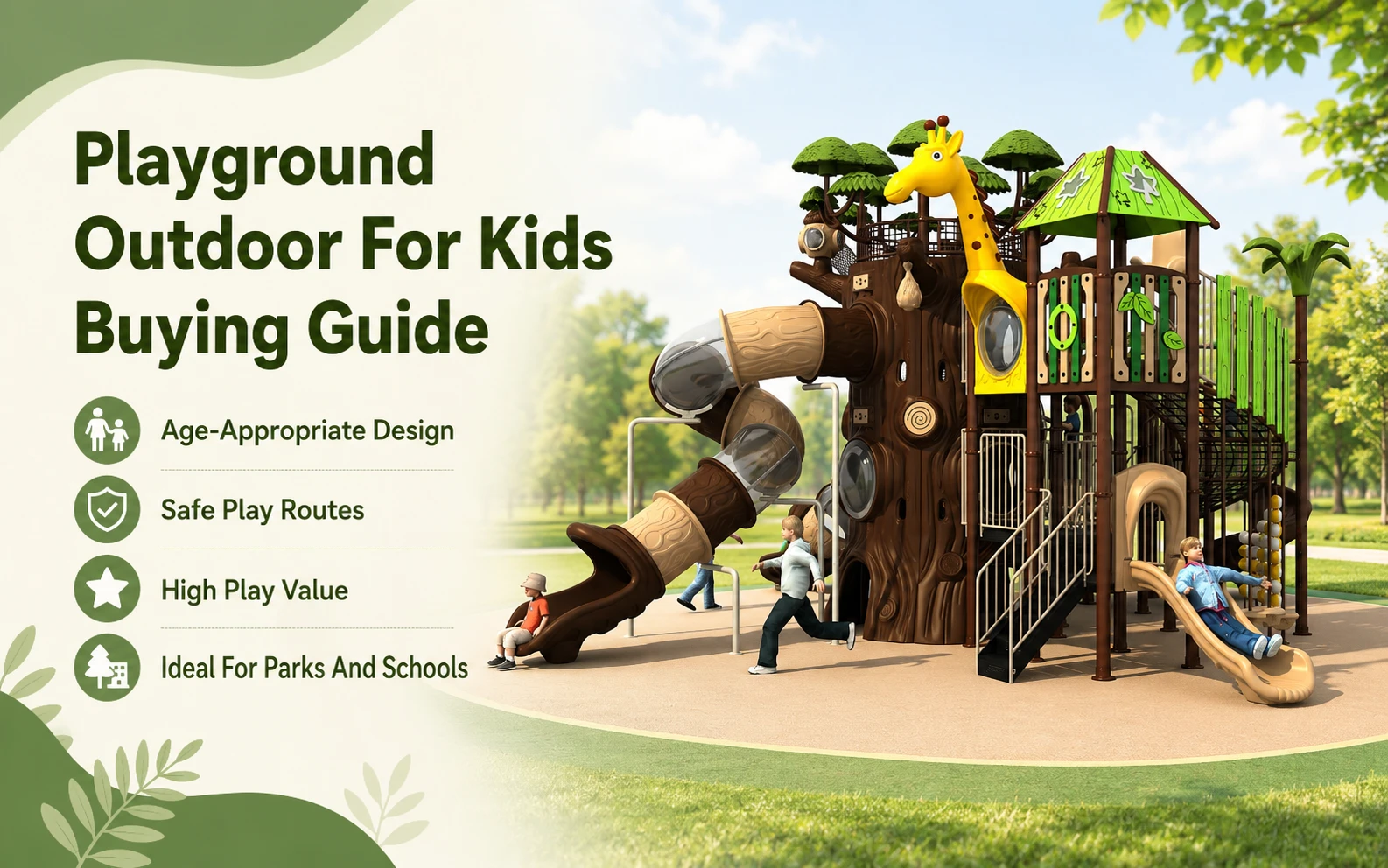
Material choice in a playground outdoor for kids affects appearance, service life, heat, corrosion resistance, cleaning, maintenance, and replacement cost. A commercial playground outdoor for kids commonly combines galvanized or stainless steel, rotationally molded plastic, HDPE or HPL panels, ropes, fasteners, rubber parts, and protective coatings. The correct combination depends on climate and site conditions.
For structural posts, ask about steel thickness, galvanizing method, coating process, welding quality, and corrosion protection. Coastal, high-humidity, or chemically aggressive environments may require upgraded metal treatment and stainless fasteners. For plastic components, ask about wall thickness, UV resistance, color consistency, and how replacement parts are identified. HDPE panels are useful for decorative walls and activity panels because they are moisture resistant and suitable for CNC cutting. HPL can provide a dense, rigid finish for premium panels, but edge treatment and fixing details still matter.
Do not judge a playground outdoor for kids only by a small material sample; the complete playground outdoor for kids should be reviewed through drawings, components, and factory records. Request close-up photos of welds, clamps, platforms, hardware covers, rope connectors, plastic edges, and foundation components. Ask whether the factory performs trial assembly before shipping. Trial assembly can reveal missing holes, incorrect connectors, interference between parts, or unclear installation sequences before the equipment reaches the project site.
Manufacturer capability also influences quality control. A factory with in-house design, rotational molding, metal cutting, welding, surface treatment, painting, assembly, and inspection can coordinate custom production more efficiently than a trader sourcing unrelated parts from several suppliers. For a customized playground outdoor for kids, request a 3D proposal, plan view, elevations, color scheme, activity list, material specification, foundation drawing, and packing list before approving production.
Buyers should also confirm how colors and themes will age. A castle, ocean, forest, space, vehicle, or local-culture theme may attract attention, but the structure should still be easy to inspect and repair. The best playground outdoor for kids uses theming to support play rather than hiding weak circulation or repetitive activities.
How To Build A Realistic Budget And Delivery Plan
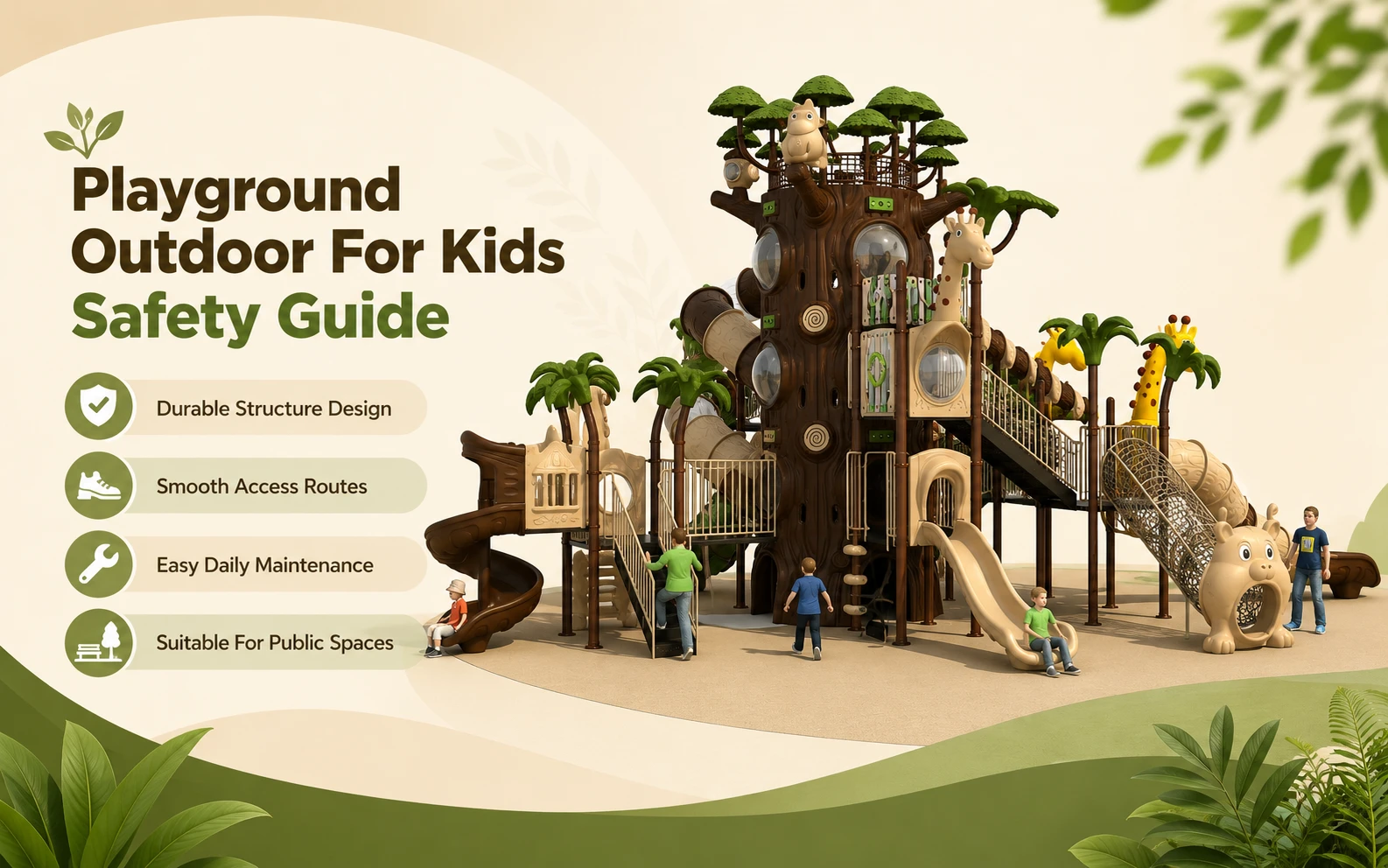
The equipment price is only one part of a playground outdoor for kids budget. A complete playground outdoor for kids cost plan may include design, equipment, safety surfacing, site preparation, foundations, drainage, freight, customs duties, local transport, installation labor, lifting equipment, fencing, shade, lighting, benches, signage, inspection, and future maintenance.
Industry planning guidance often allocates roughly 50 to 60 percent of a commercial playground budget to equipment, with the remaining amount covering installation and related site costs, although actual percentages vary by location and project complexity. A buyer should therefore avoid using the full budget for the play structure and discovering later that surfacing or civil work cannot be completed.
To compare quotations fairly, create a scope table. Check whether each supplier includes the same equipment, posts, hardware, foundations, spare parts, packing, freight terms, surfacing, installation supervision, and taxes. A low quotation for a playground outdoor for kids may exclude critical items or use a smaller structure than the rendering suggests. Ask for dimensions, capacity, component quantities, material grades, and Incoterms.
Delivery planning for the playground outdoor for kids should start before production. Confirm the drawing approval date, production period, inspection date, packing method, shipping route, estimated transit time, customs documents, and site-readiness deadline. Large components may require open-top containers or special unloading equipment. The installation team should receive drawings and packing lists before the shipment arrives.
Customization can control cost when used carefully. Instead of reducing safety-related materials, simplify decorative roofs, reduce oversized panels, combine standard modules, or phase the project. A modular playground outdoor for kids can open with the essential play structure and later add swings, sensory equipment, shade, or themed entrances as funding becomes available.
For a playground outdoor for kids, a reliable supplier should explain what changes the price and provide alternatives at different budget levels. This is more useful than presenting one expensive design with no clear cost breakdown.
What Installation Maintenance And After-Sales Support Should Include
A well-made playground outdoor for kids can still fail if it is installed incorrectly. Before shipment, confirm who is responsible for site measurement, civil work, unloading, assembly, surfacing, final inspection, and handover. The manufacturer should provide foundation drawings, installation manuals, numbered parts, hardware lists, and assembly guidance. For complex projects, remote video support, an installation supervisor, or an overseas installation team may be appropriate.
The site for the playground outdoor for kids must be prepared according to the approved drawings. Concrete strength, anchor positions, drainage slope, base layers, and finished surface levels affect equipment stability and fall protection. Changes made on site should be documented and approved rather than improvised. After installation, inspect fasteners, moving parts, clearances, barriers, slide joints, rope tension, surfacing depth, and trip hazards before opening the playground outdoor for kids.
Maintenance of the playground outdoor for kids should be planned from the first day. Establish routine visual checks for broken parts, vandalism, contamination, loose hardware, displaced surfacing, and obvious wear. Operational inspections should examine function and stability in more detail, while periodic professional inspections should review structural condition and safety performance. Major manufacturers also emphasize scheduled preventive maintenance and detailed annual inspection by trained personnel.
Keep records for the playground outdoor for kids, including inspections, repairs, replacement parts, cleaning, and incidents. Documentation helps the operator identify repeated problems and may be required for warranty claims. Warranty terms commonly depend on correct installation and maintenance, so buyers should read exclusions related to corrosion, misuse, normal wear, storage, and unauthorized modifications before purchasing a playground outdoor for kids.
After-sales support for the playground outdoor for kids should include a clear contact person, spare-part identification, response times, replacement procedures, technical drawings, and guidance for discontinued components. Ask whether common wear parts are included with the shipment and how long replacement parts are expected to remain available.
The best buying decision is not the cheapest structure on the first quotation. It is the playground outdoor for kids that fits the users, site, safety requirements, operating model, maintenance capacity, and total budget. When buyers define these factors early and compare suppliers through drawings, documents, materials, service scope, and lifecycle cost, they can build a play space that remains attractive, functional, and manageable long after opening.


 English
  Español
  Français
  Deutsch
  Português