


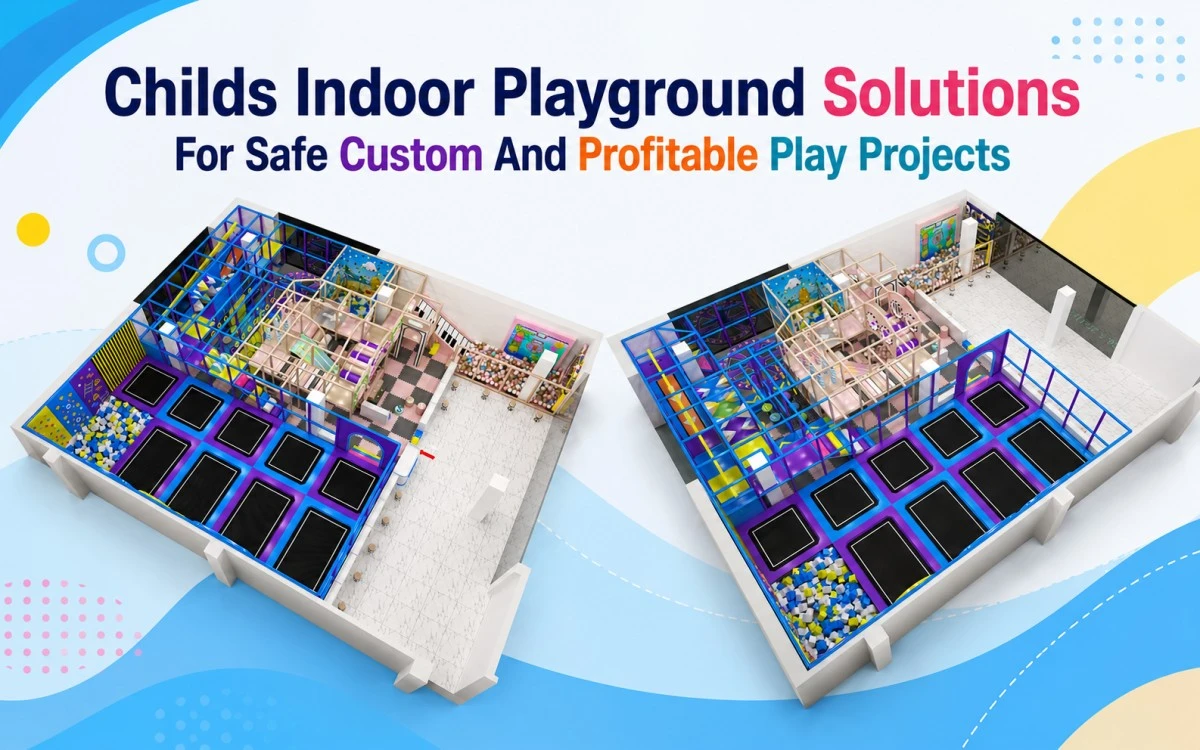
Childs Indoor Playground Solutions For Safe Custom And Profitable Play Projects
A successful childs indoor playground is not only a place where children run, climb, slide, and explore. For investors, schools, shopping malls, family entertainment centers, hotels, restaurants, and community operators, it is a long-term commercial project that must balance safety, visual attraction, space planning, durability, budget control, and daily operation. Many buyers do not simply ask, “How much is the playground?” They want to know whether the design fits their site, whether children will love it, whether parents will trust it, whether installation is manageable, and whether the project can bring stable value after opening.
As a professional playground equipment manufacturer, we understand that every childs indoor playground project begins with different needs. Some clients need a compact toddler area for a kindergarten. Some want a multi-level indoor play structure for a shopping mall. Some plan a ticketed play center with slides, ball pools, climbing nets, tunnels, obstacle courses, role-play zones, sensory modules, and parent rest areas. The right solution should not copy a standard design blindly. It should be planned around the site size, ceiling height, target age group, local market, safety requirements, brand positioning, and investment budget.
Understand The Real Purpose Of A Childs Indoor Playground
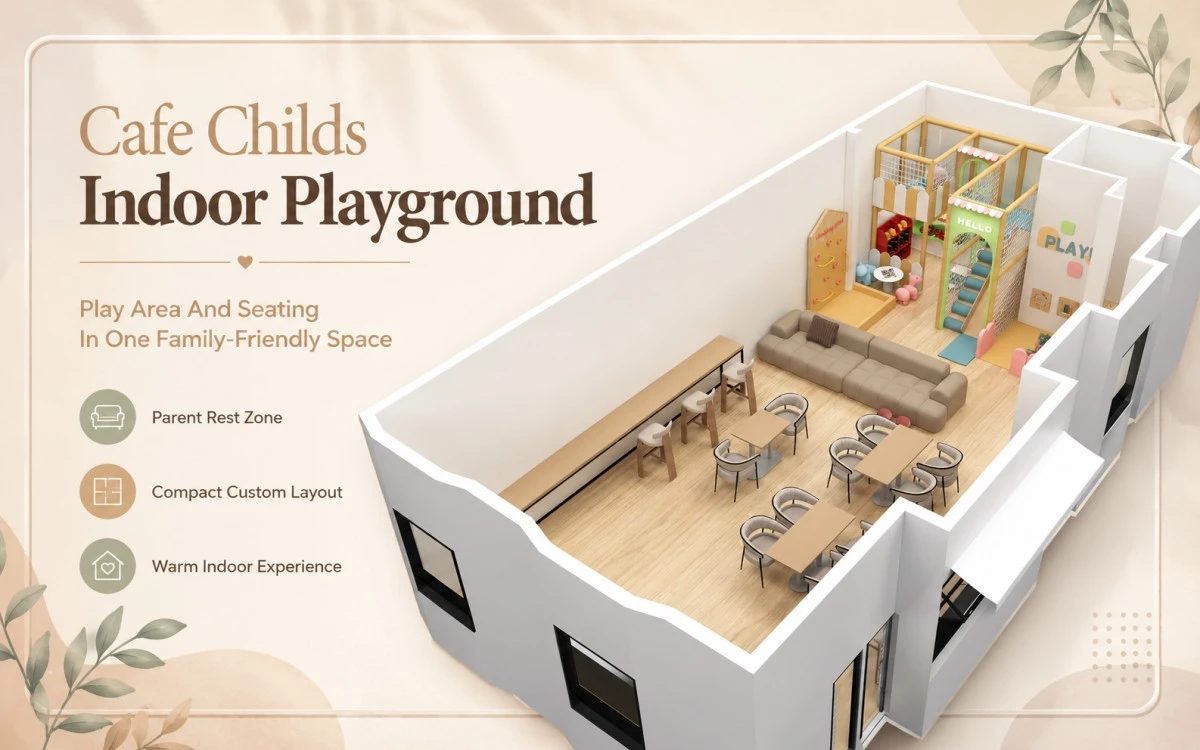
Before choosing equipment, buyers should first define the purpose of the childs indoor playground. A kindergarten may care more about physical development, sensory training, and easy supervision. A commercial play center may focus on customer flow, repeat visits, birthday parties, and strong visual impact. A mall may need an attractive family zone that keeps parents and children staying longer. A restaurant may need a small but safe play corner that improves customer experience.
A good childs indoor playground should match the behavior of real users. Children want movement, color, challenge, imagination, and freedom. Parents want safety, cleanliness, visibility, and comfort. Operators want durable equipment, clear traffic flow, easy maintenance, and reasonable return on investment. When these needs are considered together, the project becomes more than a play structure. It becomes a planned family entertainment space.
For this reason, we usually suggest clients share site drawings, ceiling height, entrance position, pillar locations, fire exits, target age range, and expected capacity. With this information, the childs indoor playground can be designed more accurately, reducing wasted space and avoiding layout problems during installation.
Choose The Right Zones For Different Age Groups
Age separation is one of the most important parts of childs indoor playground planning. Toddlers, preschool children, and older kids have different movement abilities and safety needs. If all children use the same area without zoning, the experience may become chaotic and unsafe.
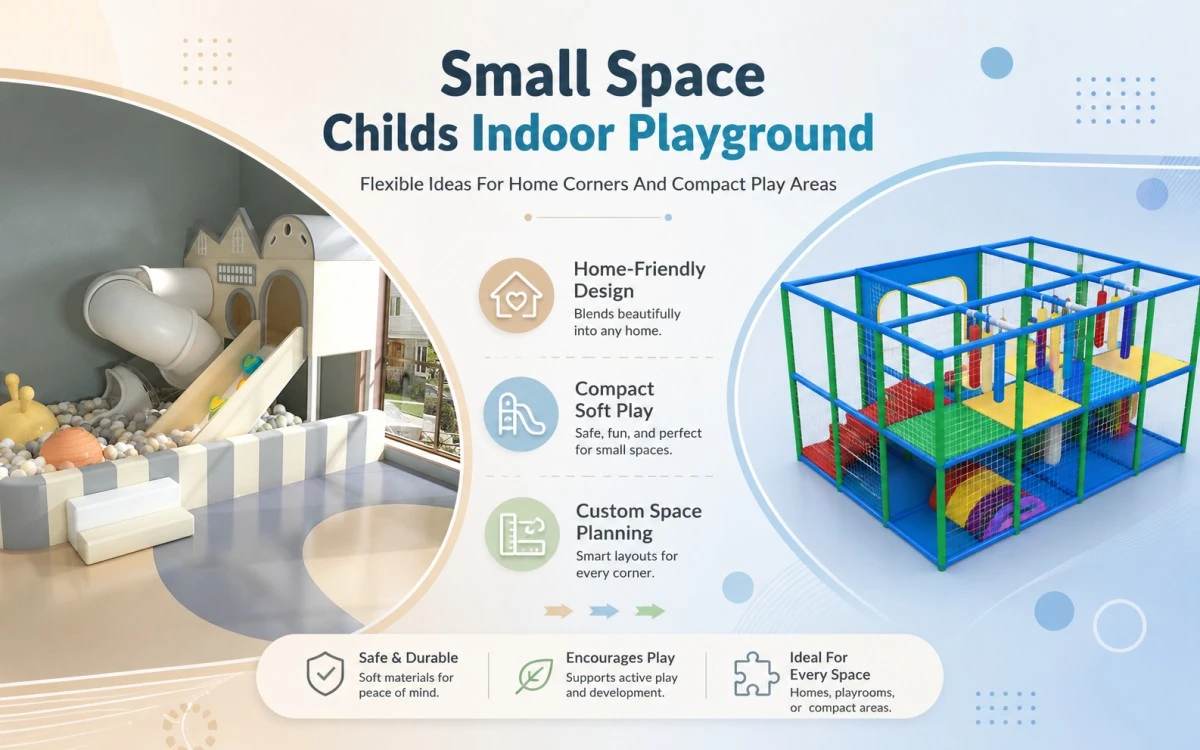
A toddler zone can include soft blocks, small slides, mini climbing steps, ball pools, sensory toys, animal shapes, soft tunnels, and low-height play elements. This area should be gentle, visible, and easy for parents or teachers to supervise. For preschool and primary-age children, the childs indoor playground can include tube slides, spiral slides, climbing nets, bridges, punching bags, obstacle paths, trampolines, interactive panels, and themed role-play areas.
For larger commercial projects, we can also add ninja courses, rope courses, climbing walls, sandpit-style sensory zones, electric play equipment, or party rooms. The goal is not to fill the space with random products. The goal is to create a layered childs indoor playground where children can move from easy play to active challenge naturally.
Clear zoning also helps operators manage peak hours. Parents can quickly understand where their child should play, and staff can supervise different areas more efficiently.
Safety Design Builds Parent Trust
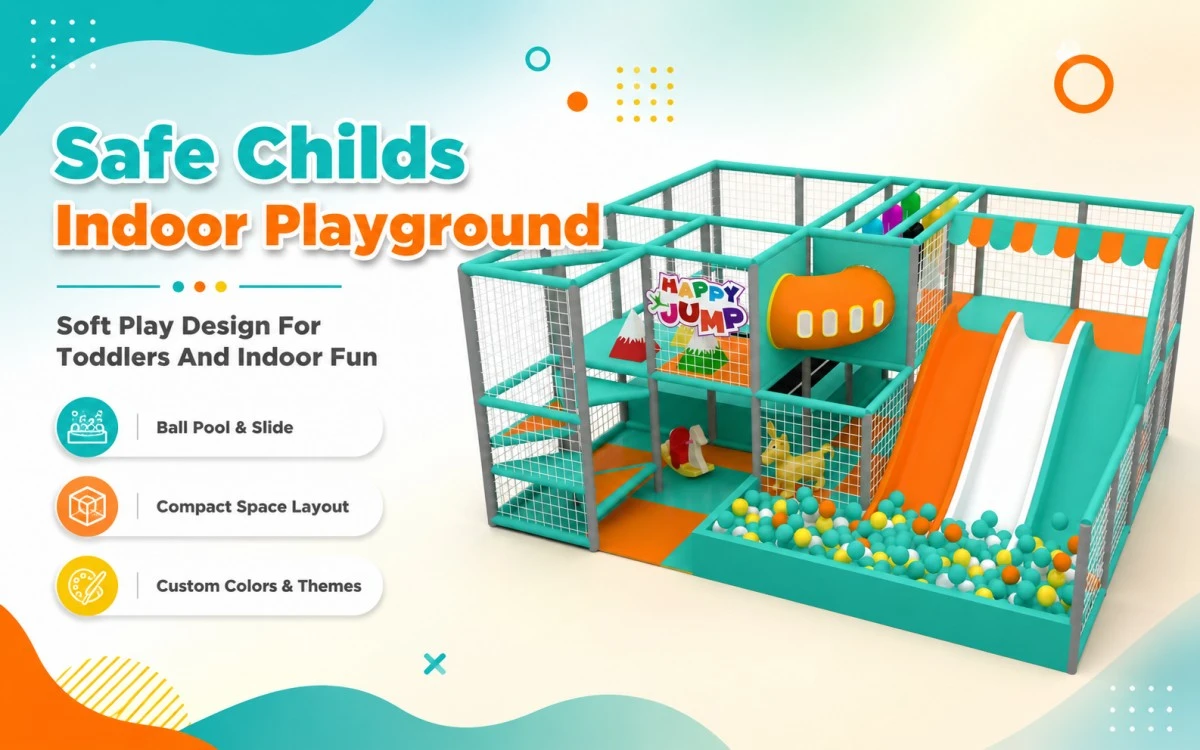
Safety is the foundation of every childs indoor playground. Parents may be attracted by colorful designs, but they only return if they feel the place is safe. A professional design should consider soft padding, rounded edges, anti-slip surfaces, strong netting, proper entrance and exit positions, reasonable platform height, stable steel structure, safe slide angles, and enough buffer space.
For indoor playgrounds, soft-contained play structures are commonly used because they reduce direct impact during climbing, sliding, crawling, and running. A high-quality childs indoor playground should use reliable materials such as galvanized steel pipes, soft foam padding, PVC or PU covering, reinforced netting, durable plastic parts, and stable connectors. These details may not always be visible in product photos, but they directly affect long-term safety and service life.
Buyers should ask suppliers clear questions: What materials are used inside the soft padding? How thick is the pipe protection? Are the platforms strong enough for daily commercial use? Can the design separate toddlers from older children? Can the supplier provide installation drawings? These questions help buyers choose a safer childs indoor playground instead of only comparing the lowest price.
Custom Themes Make The Project More Memorable
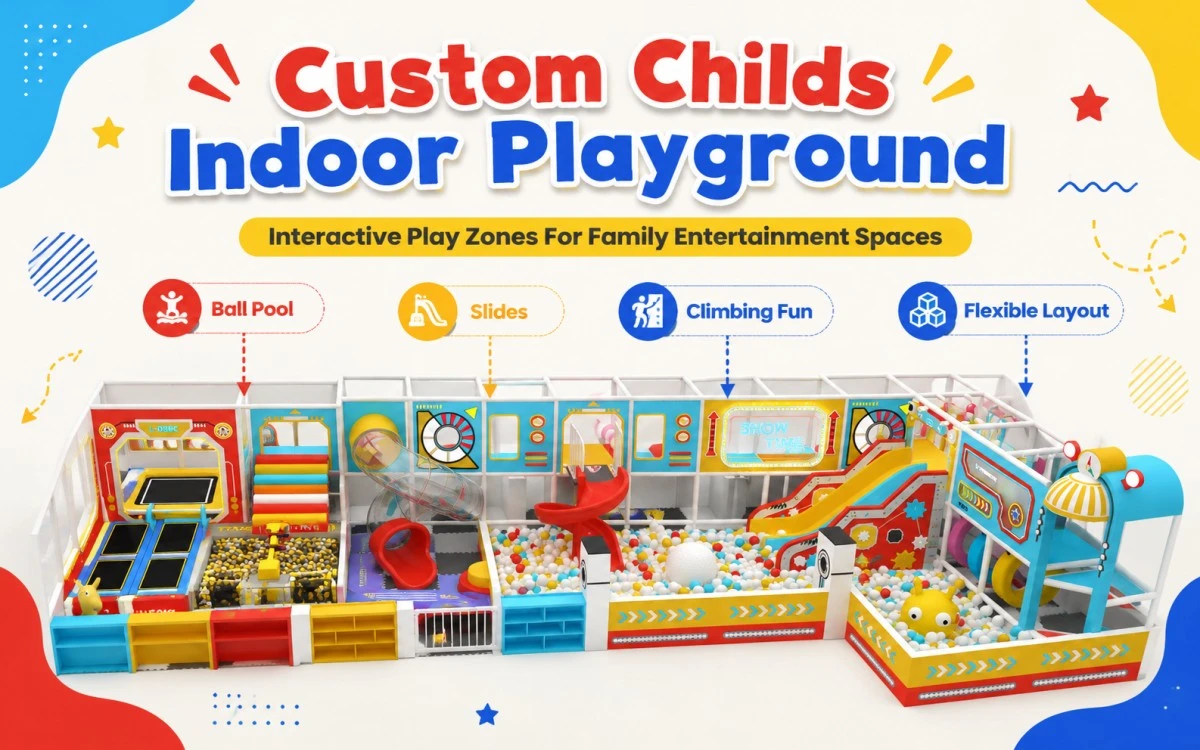
A custom theme can turn a normal childs indoor playground into a destination. Popular themes include forest adventure, ocean world, candy land, space exploration, jungle safari, castle kingdom, city role-play, sports challenge, and cartoon-style soft play. The theme should match the buyer’s target customers and business environment.
For example, a mall may prefer a bright and photo-friendly theme that attracts families from a distance. A kindergarten may prefer softer colors and educational elements. A hotel may choose a premium theme that matches its brand style. A restaurant may need a compact childs indoor playground with warm colors, quiet play elements, and easy cleaning.
Customization is not only about color. It can include layout, height, entrance style, slide type, product combination, logo position, brand colors, wall decoration, lighting atmosphere, and functional zones. Our design team can create a suitable plan based on the client’s site and target market. With the right customization, the childs indoor playground becomes easier to promote on websites, social media, local ads, and opening events.
Budget Planning Should Compare Value, Not Only Price
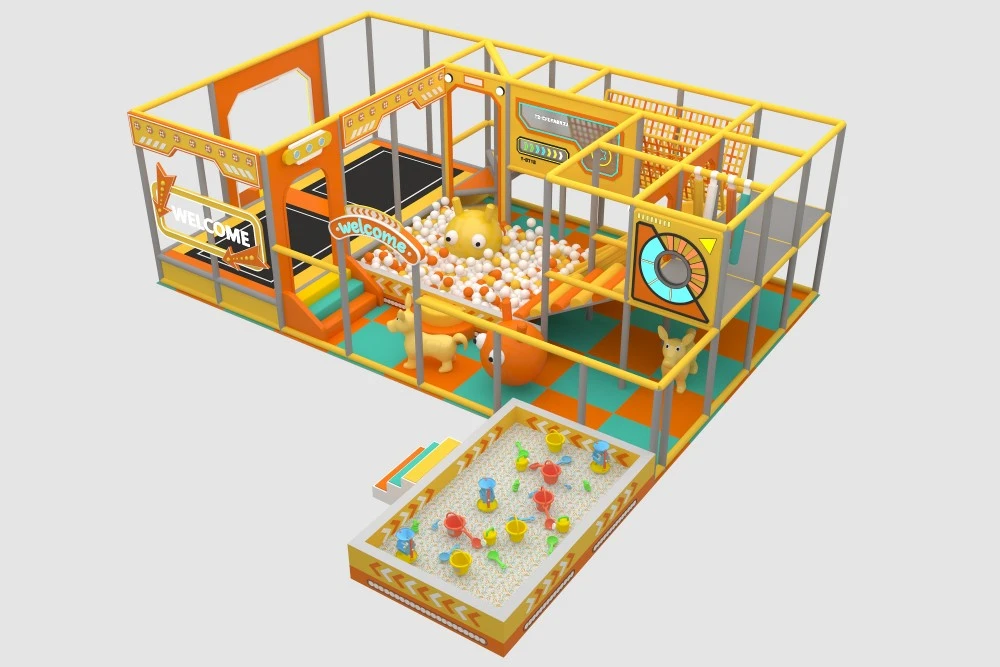
Many buyers start by asking for a simple price, but a childs indoor playground budget depends on several factors. These include total area, ceiling height, number of levels, slide types, material quality, theme complexity, accessories, shipping method, installation support, and local labor cost. A small toddler play corner and a large commercial indoor play center cannot be priced in the same way.
When comparing quotations, buyers should look beyond the final number. A cheaper childs indoor playground may use thinner padding, weaker netting, less stable structure, fewer play elements, or unclear installation documents. These problems can increase maintenance cost later. A better quotation should clearly explain product scope, material details, design service, production time, packing method, installation guidance, and after-sales support.
For investors, the more important question is: Can this childs indoor playground attract families, support daily operation, and last for years? A well-planned project can improve customer satisfaction, extend stay time, create party income, increase membership sales, and strengthen the brand image of the venue. That is why value-based purchasing is more practical than price-only purchasing.
Factory Strength Affects Quality And Delivery
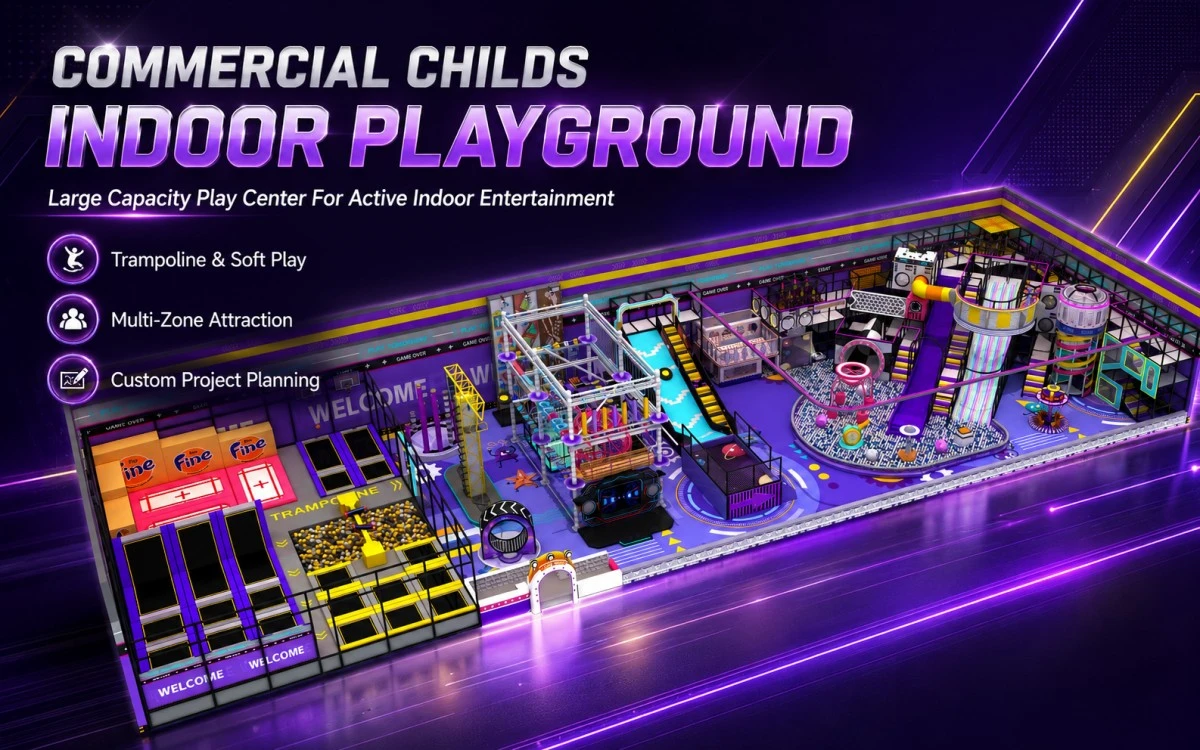
Choosing the right manufacturer is a key decision for any childs indoor playground project. A strong factory can provide design, production, quality inspection, packing, loading, and after-sales support in one process. This helps reduce communication problems and makes the project easier to control.
Our factory supports custom indoor playground equipment for schools, kindergartens, malls, parks, family entertainment centers, public indoor areas, and commercial projects. We can provide layout planning, product recommendations, color matching, 3D design, production, packing, shipping assistance, and installation guidance. For clients who need special sizes, themes, colors, or functional combinations, we can adjust the childs indoor playground plan according to actual project requirements.
Factory-direct supply is especially important for project buyers and dealers. It can make communication faster, customization more flexible, and quality control more direct. When a childs indoor playground supplier understands both design and production, the final product is more likely to match the approved plan.
Installation And Maintenance Should Be Planned Early
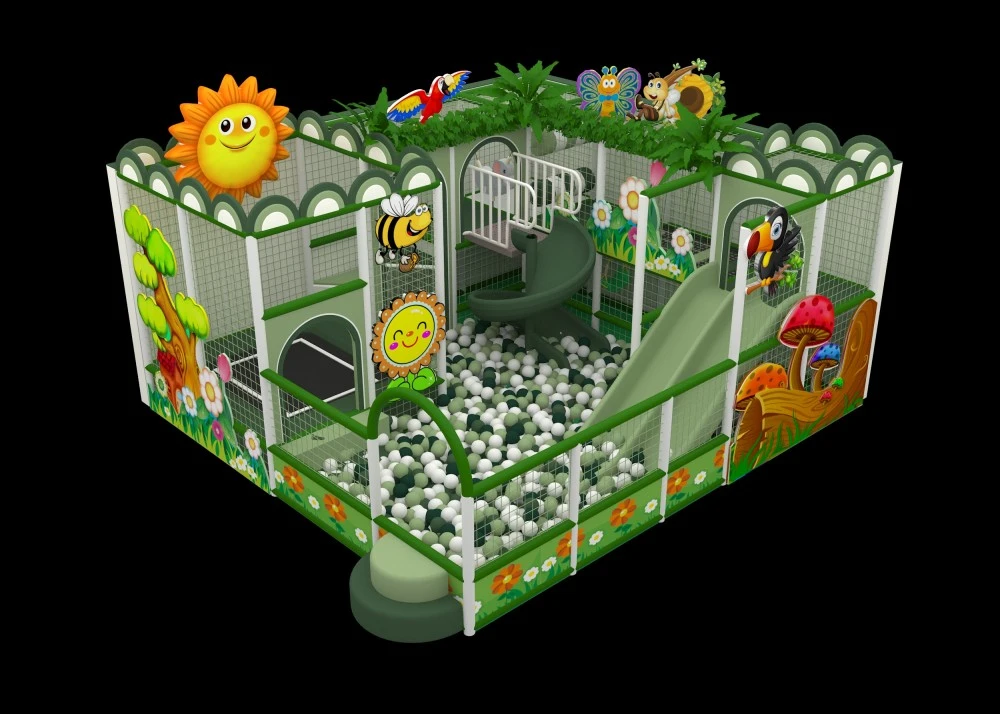
Installation is not the last step of a childs indoor playground project. It should be considered from the beginning. A good design must match the site conditions, including doors, pillars, walls, fire passages, floor condition, lighting, air conditioning, and emergency exits. If these details are ignored, the installation process may become difficult or expensive.
We can provide installation drawings, packing lists, product labels, and online guidance to help clients understand each part of the childs indoor playground structure. For large or complex projects, professional installation support can also be discussed according to project needs. Clear labeling and modular packing help reduce confusion on site.
Maintenance is also important for long-term operation. Operators should regularly check netting, fasteners, soft padding, floor mats, slide surfaces, ball pools, plastic parts, and entrance gates. Cleaning schedules should be prepared before opening. A well-maintained childs indoor playground looks better, lasts longer, and gives parents more confidence.
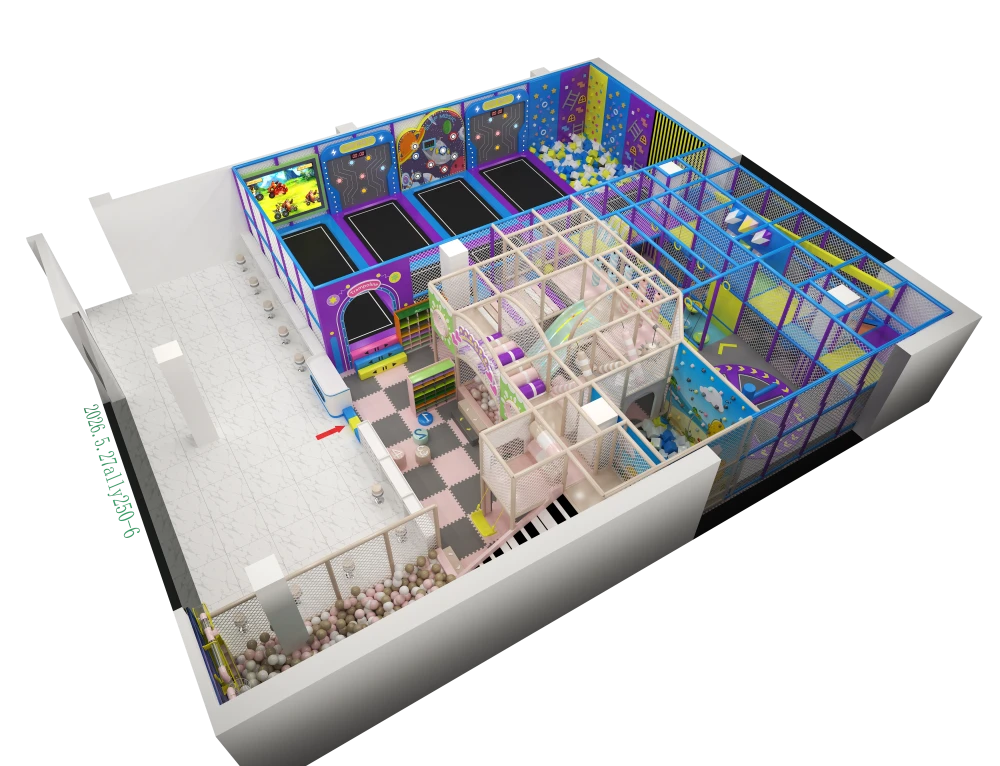
How To Start A Childs Indoor Playground Project With Us
Starting a childs indoor playground project can be simple when the process is clear. First, send us your floor plan, site photos, ceiling height, target age group, preferred style, budget range, and expected opening schedule. If you do not have a detailed plan yet, you can also share basic dimensions and project goals.
Second, our team will help recommend a suitable childs indoor playground layout. We can suggest different functional zones, play combinations, color schemes, and theme directions. Third, after the design is confirmed, production will be arranged according to the approved plan. During production, we focus on material preparation, structure processing, soft covering, plastic parts, inspection, and packing.
Fourth, we help prepare shipping and installation documents. After delivery, the client can install the childs indoor playground with the help of drawings and guidance. For project buyers, dealers, and commercial operators, we can also support future product expansion, replacement parts, and new custom designs.
A successful childs indoor playground is not built by equipment alone. It is built by correct planning, safe materials, attractive design, stable manufacturing, and responsible service. Whether you are opening a new play center, upgrading an existing venue, building a school play area, or developing a commercial family entertainment project, we can provide a custom solution that helps your space become safer, more attractive, and more profitable.


 English
  Español
  Français
  Deutsch
  Português