


Daycare With Outdoor Playground Solutions For Safer Early Learning
Daycare with outdoor playground solutions help childcare centers create safer, more attractive early learning environments. A well-planned outdoor space improves parent confidence, supports children’s physical development, and makes daily supervision easier for teachers. By using age-appropriate layouts, safe materials, rounded structures, proper zoning, and durable HDPE, galvanized steel, rotomolded slides, and reinforced rope nets, daycare centers can reduce safety risks and long-term maintenance pressure. Custom designs also make small courtyards, rooftops, large campuses, and commercial building spaces more valuable. With the right supplier, each project can achieve better enrollment appeal, smoother installation, reliable after-sales support, and long-term operational value growth.
Why A Daycare With Outdoor Playground Attracts More Families?
Many childcare centers and kindergartens already have complete indoor teaching courses, but most lack proper outdoor activity zones and supporting facilities. A well-built outdoor area makes a much better impression on visiting parents and effectively lifts enrollment conversion rates.
For parents, premium outdoor playgrounds are a key reference to judge a facility’s professional capability, safety management level and overall growth atmosphere. They directly build parental trust and make parents more willing to sign up their kids.
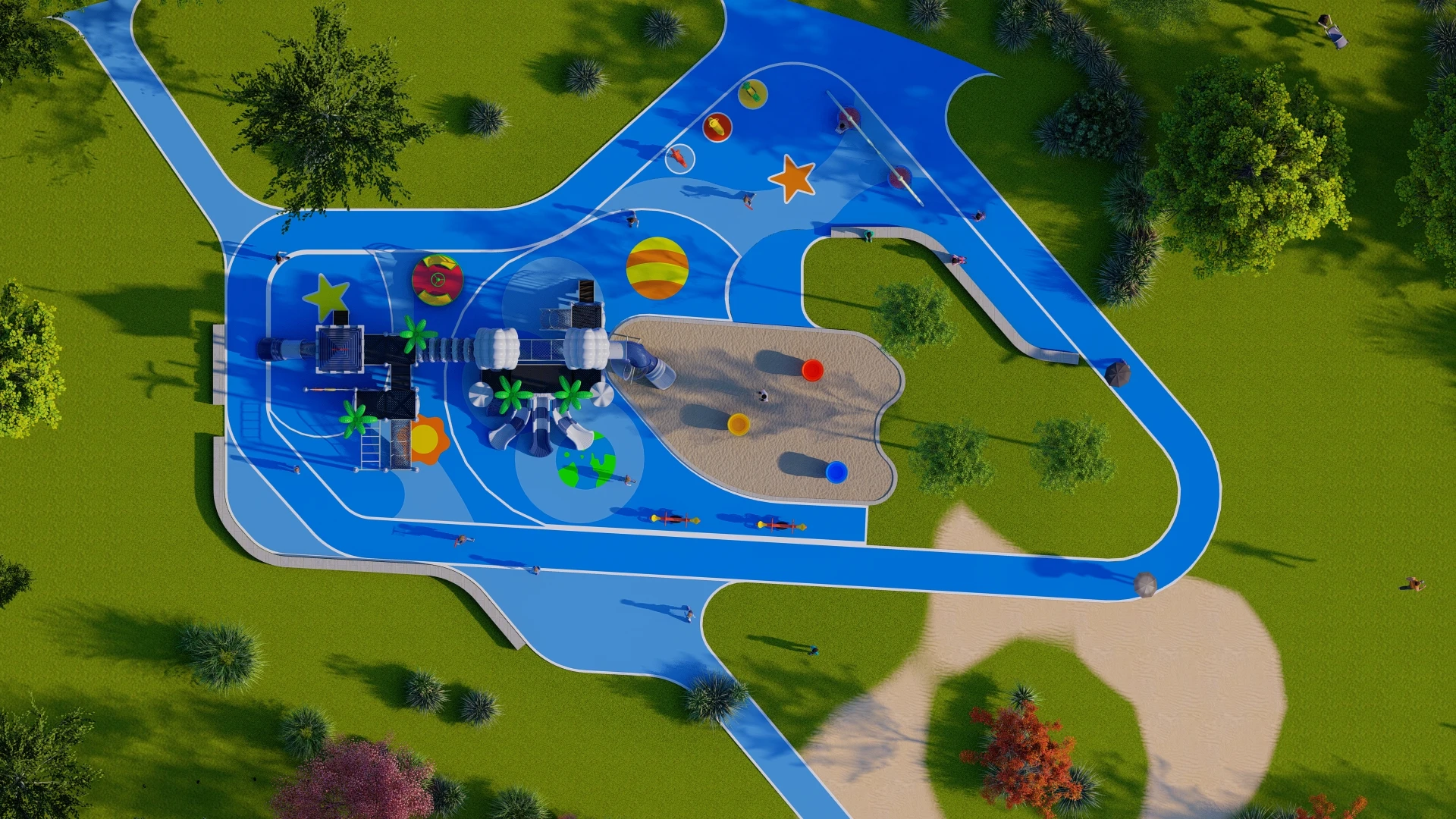
A safe and nicely built outdoor playground makes kids love going to school. Kids can play outside freely, so they’ll be more attentive and well-behaved in class. It also makes daily care and teaching work easier and better. What’s more, a themed playground is a great selling point for enrollment, helping kindergartens stand out from competitors.
Leading brands like Playworld and KOMPAN have proven that professional outdoor play equipment for early childhood can greatly promote kids’ physical exercise and social ability development. It also helps education institutions draw in more new families and keep a steady number of enrolled children long-term.
We provide one-stop customized outdoor playground solutions based on your actual site size, kids’ age range, budget and brand positioning. We turn underused idle spaces into high-value scenes that help boost enrollment. By creating a real, visible growth environment for children, we win high recognition from parents and help your institution achieve stable growth in enrollment numbers.
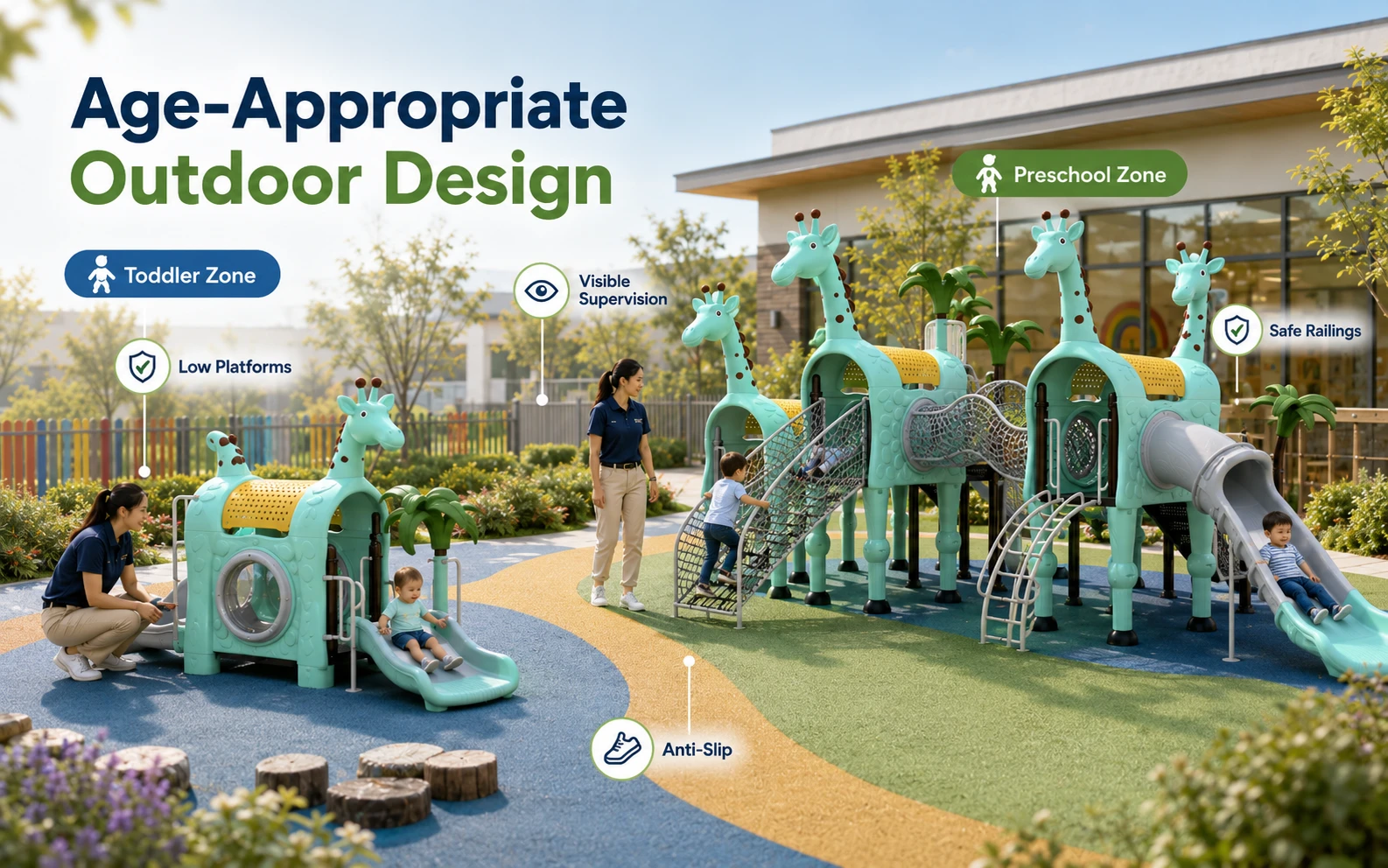
Age-Appropriate Outdoor Playground Design For Toddlers And Preschoolers
Most kindergartens and daycare centers just put in regular big outdoor play structures directly. But these standard playsets are often too tall, too complicated, and let kids of all ages play together. This creates safety risks and makes it really hard for teachers to keep an eye on everyone.
A good outdoor play area should be designed by age, matching little kids’ physical growth, so it’s safe and simple to manage every day.
For kids aged 6 to 23 months, we recommend low playground platforms, small slow slides, soft gentle ramps, simple climbing pieces and sensory play walls. All the gear is built close to the ground, so tiny toddlers can get on and off by themselves without any safety concerns at all.
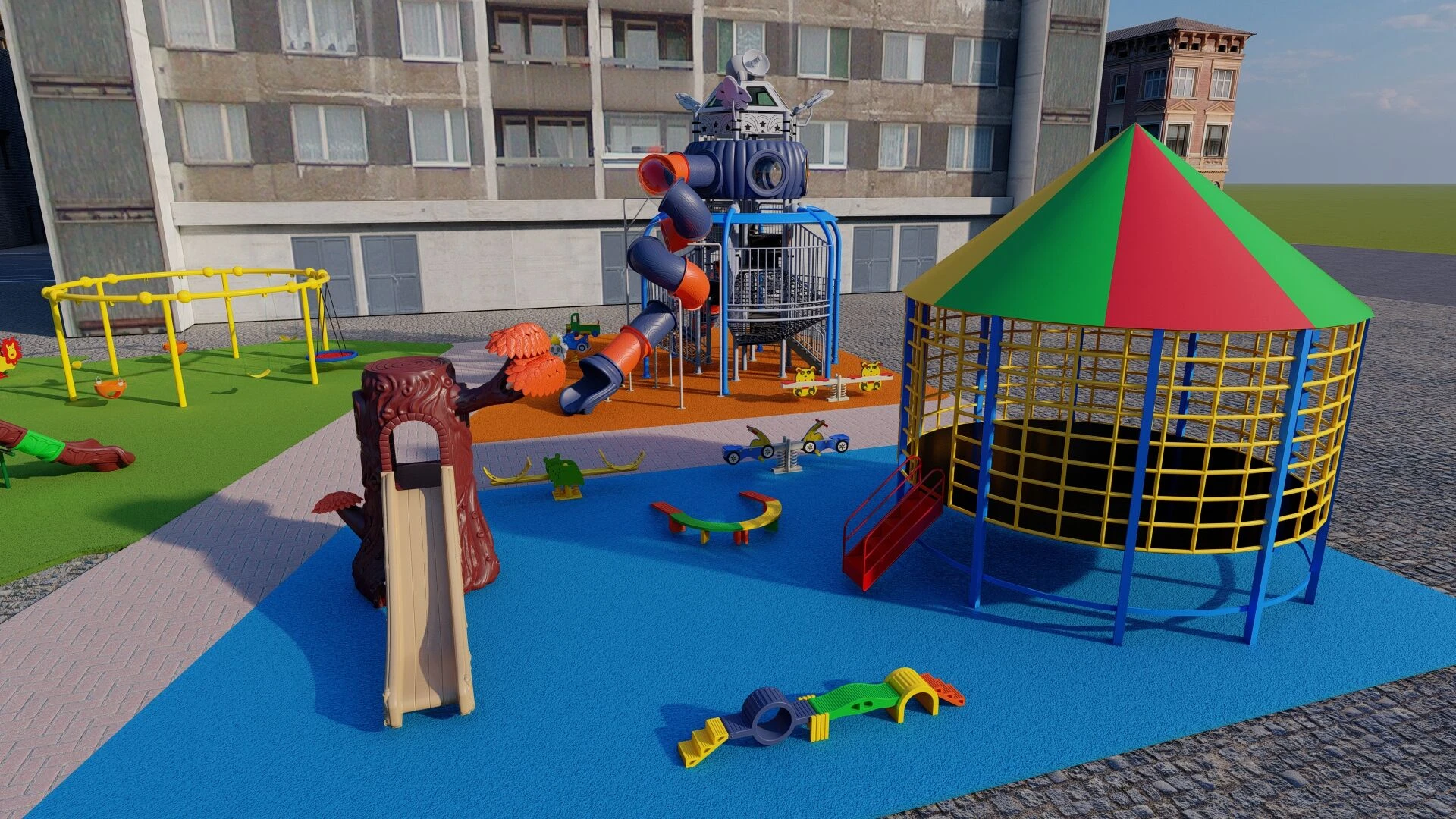
For children from 2 to 5 years old, you can add mini climbing spots, balance beams, combined slides and fun interactive play panels. These let kids run around, move freely and explore on their own, while we keep the height and play level just right for their age, totally safe and appropriate.
If you split the play space into separate zones for babies, toddlers and preschoolers, you can keep different age groups apart. It avoids overcrowding and accidental bumps, and makes it way easier for teachers to keep an eye on all the kids at the same time.
Top brands like GameTime and KOMPAN all agree: daycare playground equipment must fit kids’ age and development level perfectly.
We tailor outdoor playground plans based on your kids’ age group, number of children and your daily care style. We design the right height, play difficulty and function layout, to build a safe, practical and hassle-free outdoor play space — safe for kids, and stress-free for teachers.
Age Group Design Reference Table
| Age Group | Recommended Equipment | Design Focus |
|---|---|---|
| 6–23 Months | Low platforms, small slow slides, soft ramps, sensory walls | Close-to-ground design, simple movement, safe independent access |
| 2–5 Years Old | Mini climbing units, balance beams, combined slides, interactive panels | Controlled height, active exploration, age-appropriate challenge |
| Mixed Age Groups | Separate baby, toddler and preschool zones | Reduced collision risk, easier supervision, better daily management |
Safety Features Parents And Childcare Centers Care About Most
In an early childhood education setting, safety cannot be summed up with a simple phrase like “sturdy and durable”—it is embedded in every corner, every platform, and every railing. What parents and facility managers truly worry about is whether children might bump into sharp edges, whether platforms will be slippery in the rain, and whether the height of the railings is sufficient to prevent accidental climbing over. A qualified daycare with outdoor playground design must address these concerns one by one from the following perspectives:
Rounded corners & slip-resistant surfaces: All platform edges are rounded off — no more sharp corners that kids could bump into. The tabletop and stair treads come with slip-resistant texture or coating, so even after rain, there’s still good grip underfoot.
Guardrails & height guidelines for little ones aged 2–5: Guardrails should be no lower than 0.6 meters, and the gaps between the horizontal bars no wider than 0.09 meters. That way, no little head or body can get stuck. Also, the highest point on any climbing structure should stay within 1.2 meters, matching the height and abilities of young children.
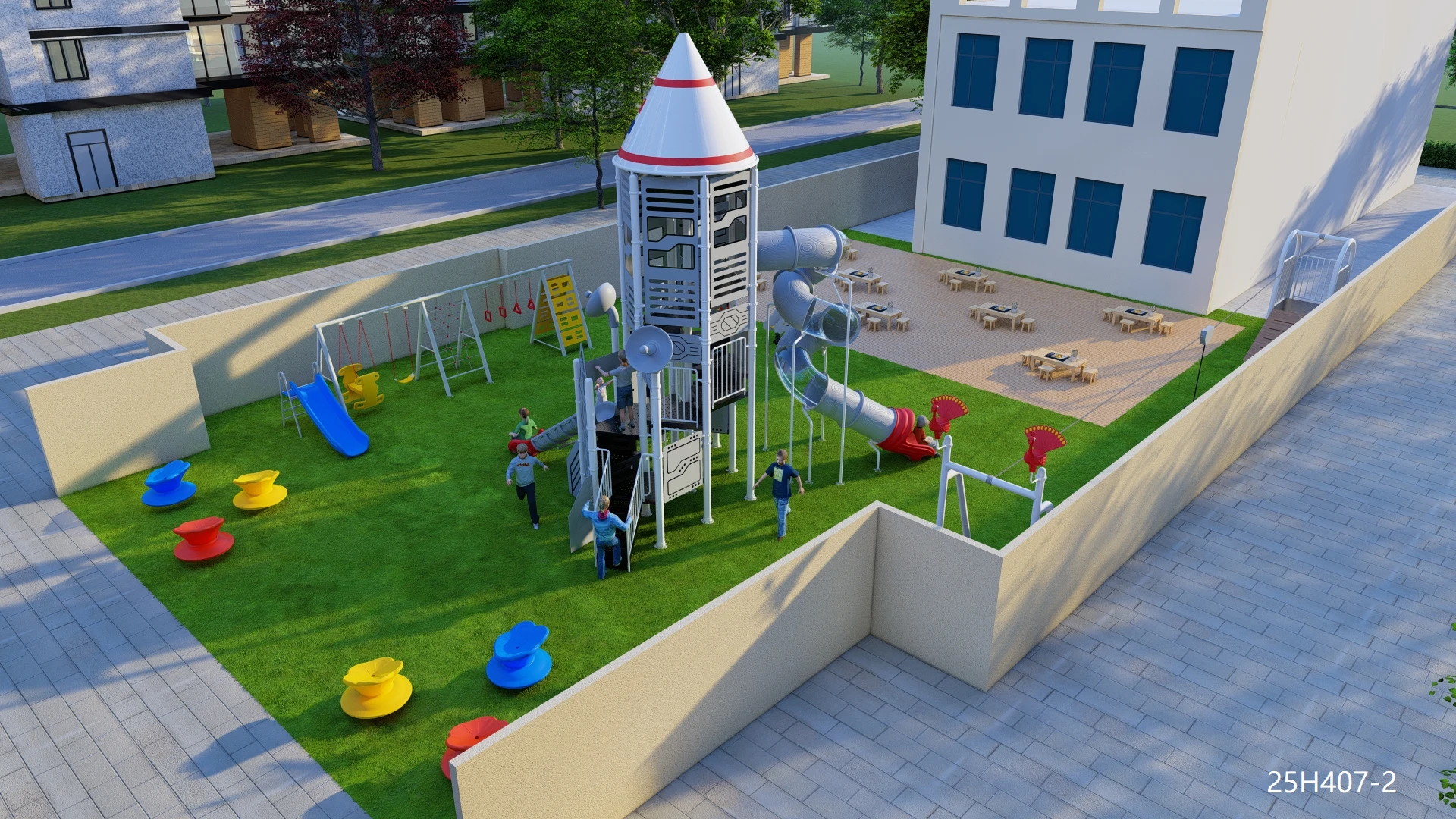
Zoning and movement flow: Best to keep the active zone, such as slides and climbing frames, separate from the quiet zone, such as reading nooks and sandpits. Plan ahead where the slide exits, where the climbing entrance is, and where teachers can stand to keep an eye on things. This cuts down on kids running into each other or crowding.
Impact absorption & installation spacing: Under and around the equipment, put down a good thick layer, at least 20 cm, of wood chips, sand, or rubber mats. That meets fall-safety standards. Leave plenty of space between different pieces of equipment for both supervision and emergency exit, and make sure everything’s fixed firmly in place, with no sharp bits sticking out.
Nowhere is this more important than in daily checks beyond just the hardware itself. Take a quick look each week at fasteners, weld points on guardrails, and the ground covering. Make sure nothing’s shifted or gone missing.
Furthermore, we not only provide equipment that complies with EN/ASTM standards but can also assist in planning a more rational outdoor playground layout for your daycare center based on your site’s entrances and exits, children’s movement patterns, supervisor sightlines, and safety distances — making safety the starting point of spatial design, rather than an afterthought.
Daycare Playground Safety Feature Table
| Safety Area | Key Requirement | Main Purpose |
|---|---|---|
| Rounded Corners | Smooth edges on platforms, panels and handrails | Reduce bumping and injury risks |
| Slip Resistance | Textured platforms, stairs and slide surfaces | Improve grip after rain or dew |
| Guardrails | Proper height and narrow spacing | Prevent falling, climbing over or getting stuck |
| Safety Surfacing | Wood chips, sand or rubber mats at proper thickness | Reduce impact from falls |
| Movement Flow | Separate active and quiet zones | Reduce collisions and crowding |
| Weekly Checks | Inspect screws, welds and ground covering | Keep long-term safety stable |
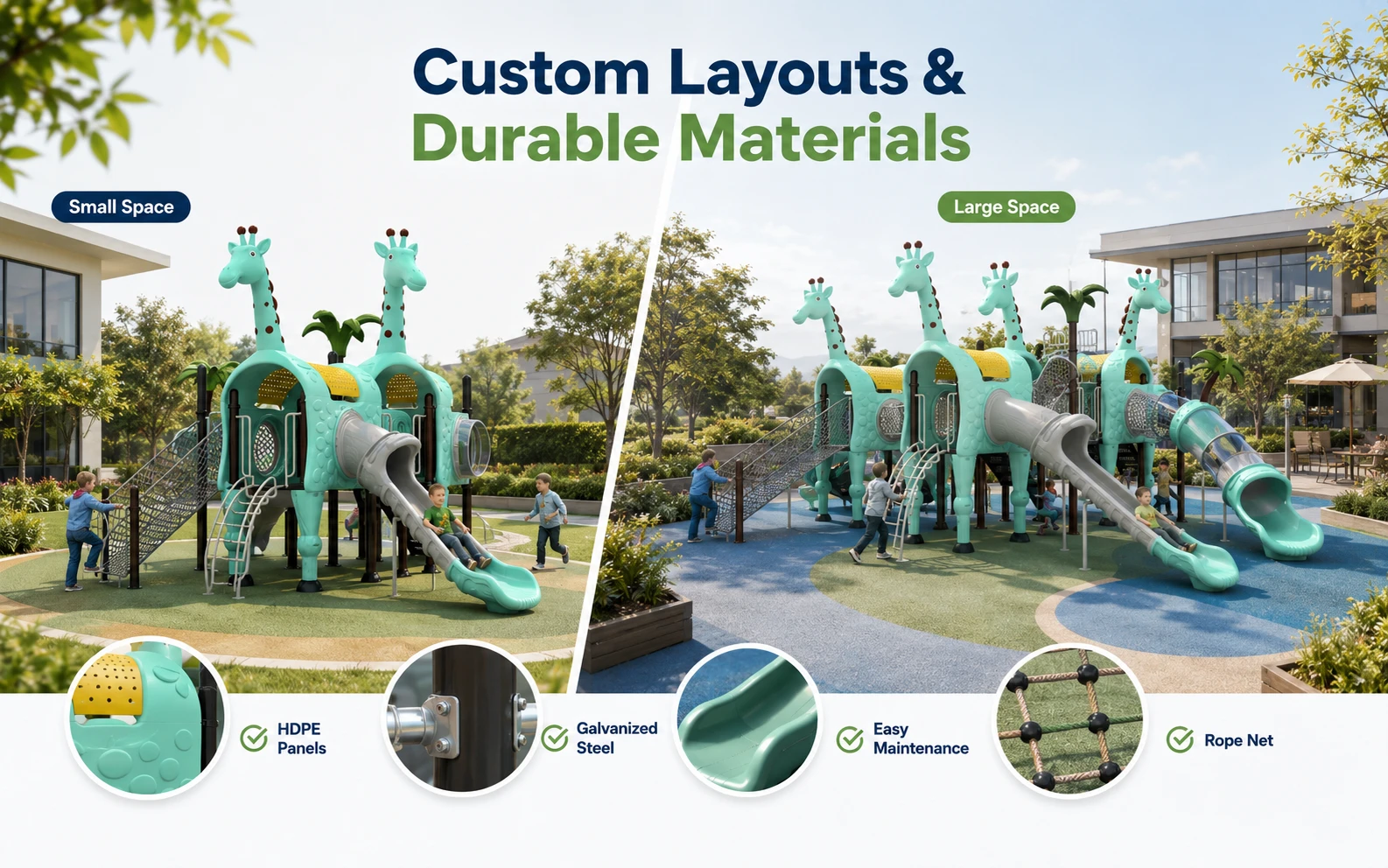
Custom Outdoor Playground Layouts For Small And Large Daycare Spaces
When it comes to setting up an outdoor playground, the thing that gives most daycares and kindergartens the biggest headache is the space — what if it’s too small? This kind of situation? We’ve seen it more times than we can count.
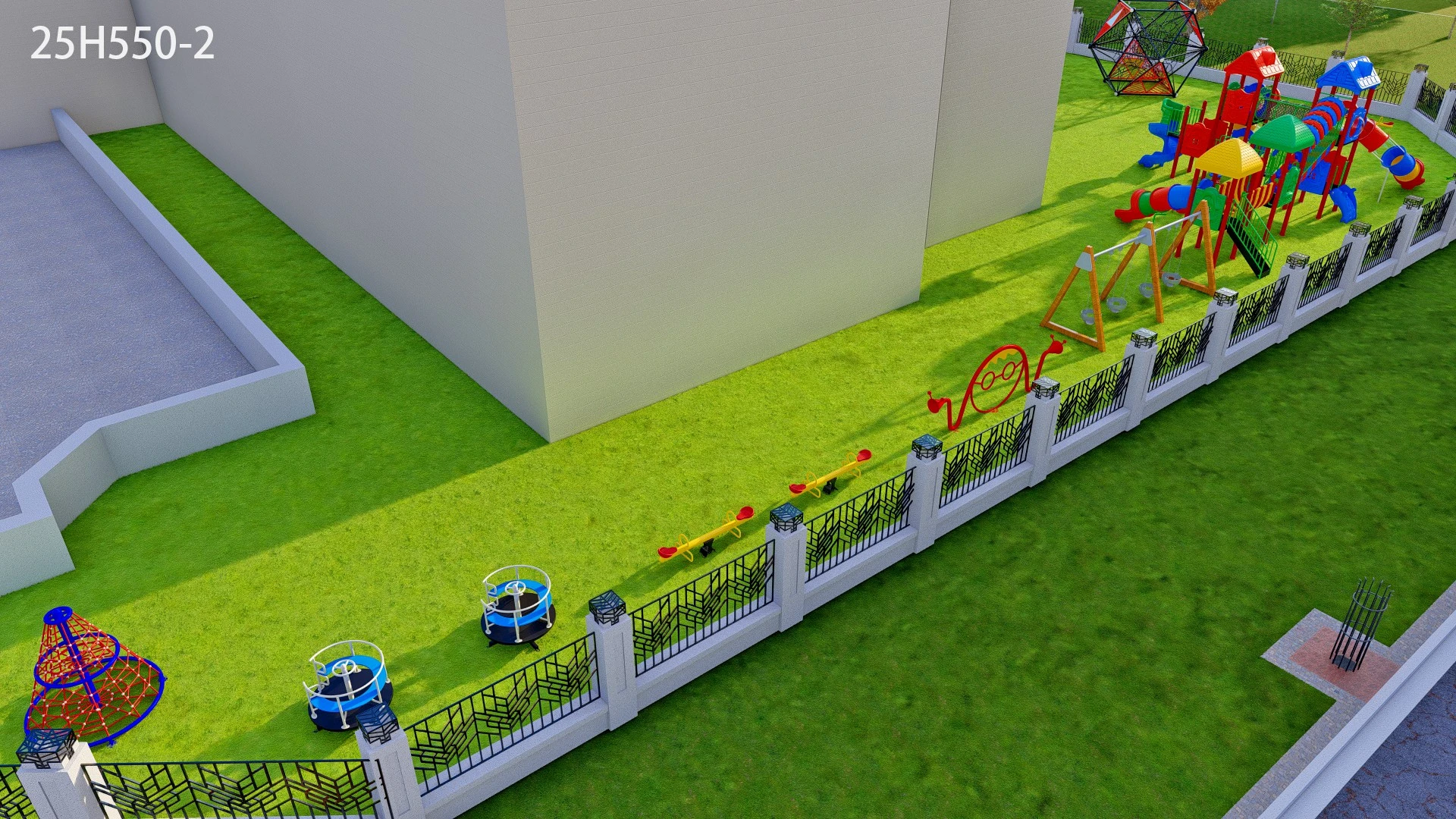
Whether it’s a small compact courtyard, an open outdoor spot right downstairs, a rooftop area, or just a corner beside a school or a shared space in a commercial building — all of these can be transformed into a lovely play space for kids.
Here’s how we usually work: We’ll first take a close look at your site, then tailor a custom plan based on your actual space size, the number of kids to use it, and your budget.
Got a smaller space? No problem. We can perfectly combine combo slides, low play platforms, wall-mounted game panels, small climbing units and sensory play equipment together. The whole layout stays compact yet never feels crowded.
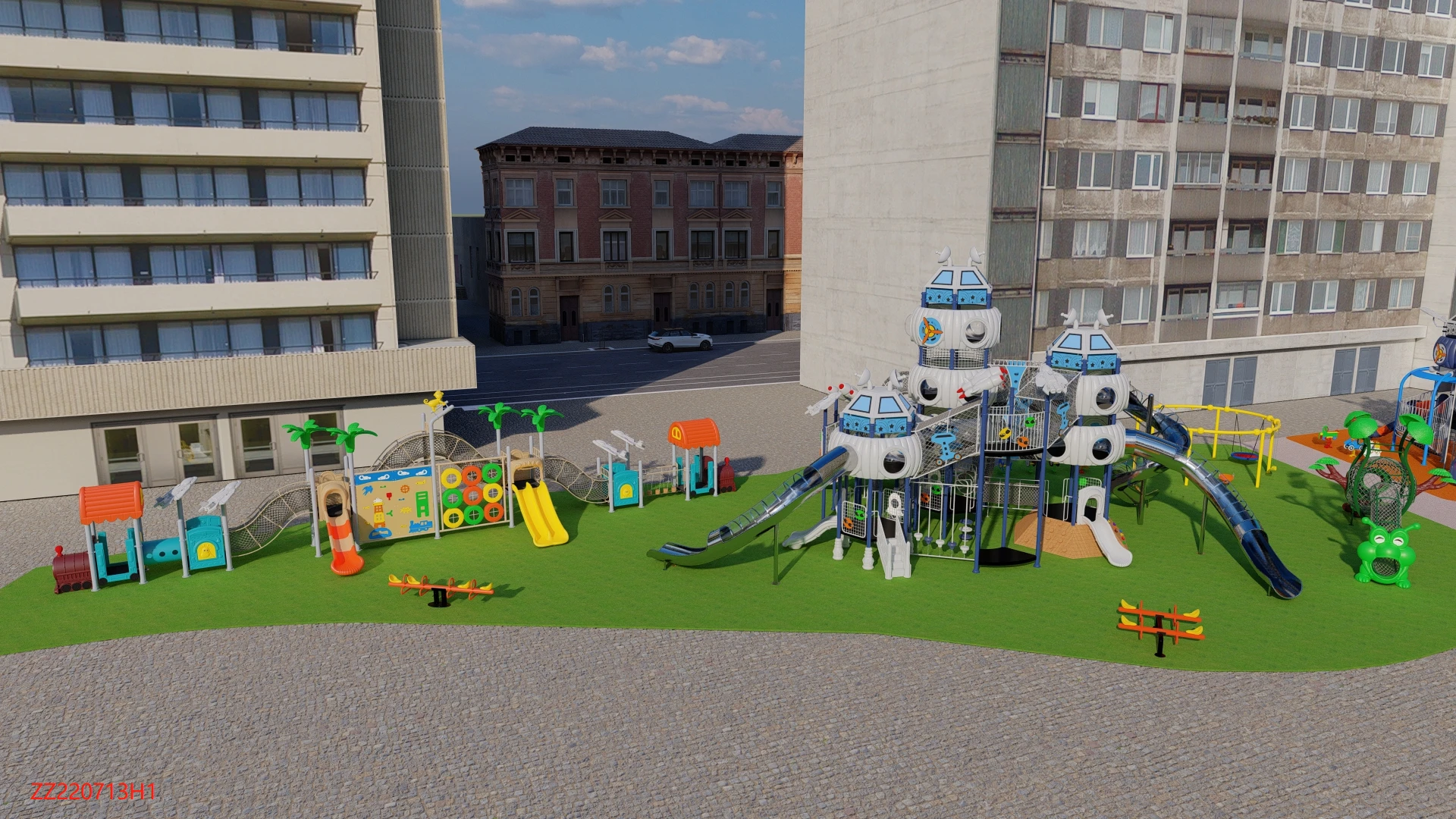
If you have a larger space — say over 1000 square meters — we can split it into different themed zones. We’ll design separate areas for sliding, climbing, sand & water play, balance training and resting, plus a dedicated viewing zone for teachers. Everything will be neatly arranged and well planned out.
Even more important is this: we’ve got your back on customization. Not only can our factory handle whatever dimensions, colors, themes, or feature combos you’re dreaming of, but also we’ll deliver a solution that’s truly made for your specific space. Whether you’re running your own daycare or designing a play space for a client, rare is the challenge we can’t meet.
Outdoor Space Planning Reference Table
| Space Type | Recommended Layout | Suitable Equipment |
|---|---|---|
| Small Courtyard | Compact linear layout | Low slides, wall panels, sensory play units |
| Rooftop Area | Lightweight and safety-focused layout | Low platforms, enclosed play panels, soft surfacing |
| Downstairs Outdoor Area | Open-flow activity layout | Combo slides, climbing units, balance equipment |
| Large Area Over 1000㎡ | Multi-zone themed layout | Sliding zone, climbing zone, sand & water play, rest area |
| Commercial Shared Space | Customized corner layout | Interactive panels, mini play systems, themed decorations |
Durable Materials And Easy Maintenance For Daily Daycare Use
The Core Pain Point — Kindergarten Playgrounds That Don’t Even Last Two Years
So what do procurement managers and kindergarten principals really dread? You know what it is. Equipment that’s been up for less than two years, and already the support columns are rusting, plastic parts are cracking, slides are fading and falling apart. Kids play on this stuff dozens of times a day. At that frequency, if the materials can’t handle it, forget about any educational philosophy — it’s just pointless.
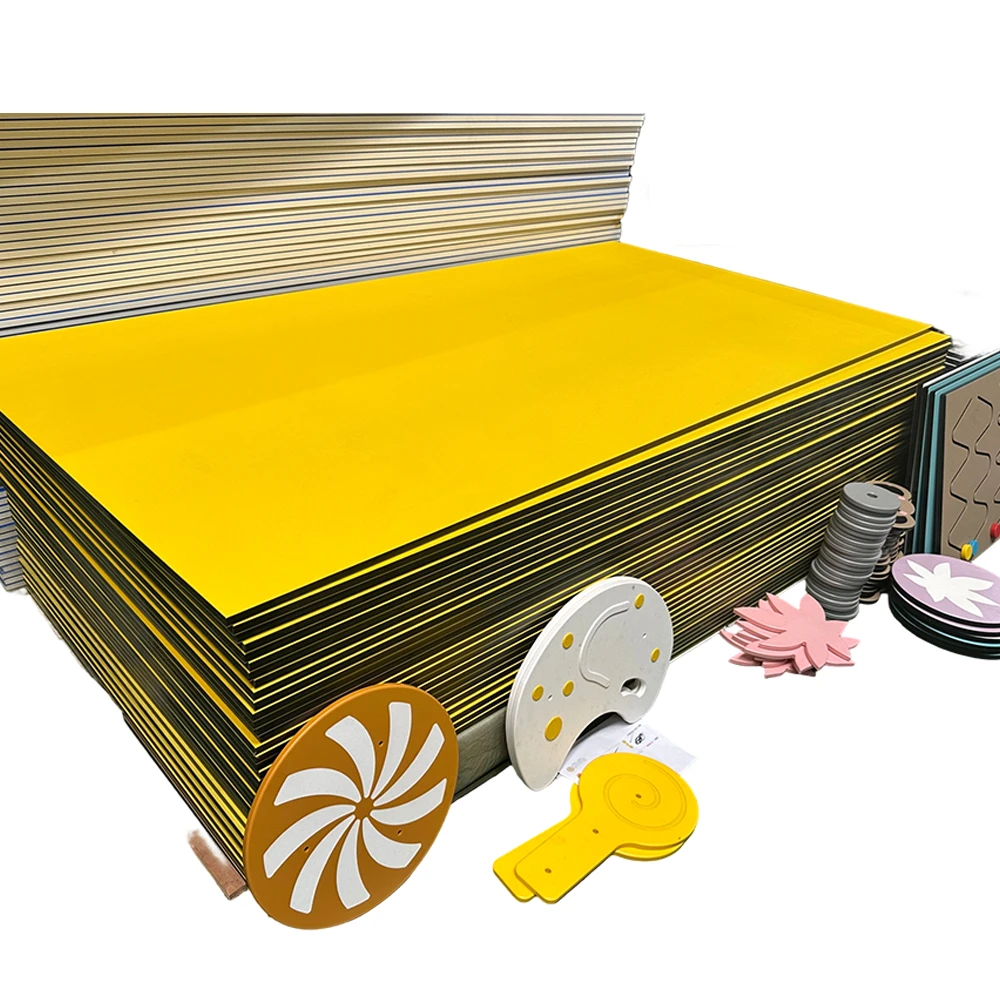
How To Pick PE Sheets
A lot of manufacturers use ordinary plastics, sometimes even recycled scrap. One summer in the sun and it turns gray, fades. Scratch it with your fingernail? Powder flakes right off. And it doesn’t have enough impact strength either — a kid can crack it with a single kick.
The HDPE we use is UV-resistant grade. The color isn’t just sprayed on the surface — it’s mixed all the way through. Try scratching it with a key — the mark comes out light gray, not white. That’s because we don’t use calcium carbonate fillers.
Even after three years straight outside, the color change stays within one color difference unit, and impact strength holds over 90% of its original value.
Why does a daycare need this specific material? Because kids are constantly touching, climbing, bumping into these things. The panels have to take repeated, sudden hits.
Metal Component Treatment
Some cold-galvanized pipes used near the coast — they start yellowing and rusting in just six months. We use hot-dip galvanizing. That gives us a zinc coating over 85 microns thick. Then we electrostatically apply an outdoor-grade powder coating.
On a good galvanized pipe, the cut edges have a nice uniform zinc layer — no rings of white rust. Also, every metal part has rounded corners. That stops sharp edges from hurting anyone, and it gets rid of weak spots in the coating at the sharp angles.
Slide And Plastic Component Details
Rotomolded slides with uneven wall thickness? They crack easily. Ours don’t. Ours have a minimum wall thickness of 5 mm, and the sliding surface is textured so kids won’t slip when it’s rainy or dewy.
All our plastic parts have rounded corners straight from the mold — no sanding later. That way they don’t wear down over time. And at the connection points, we use stainless steel anti-loosening screws with embedded nuts. So the whole structure stays tight — no loosening from everyday vibration.
Rope Net Durability
Most nylon ropes start fraying after three months, and within six months the strands start breaking. Ours? Six-strand galvanized steel wire core, covered with PES polyester yarn, and the ends are heat-sealed — so no fraying at all.
How do we test quality? We give the rope mesh a good hard rub. If any fibers come off, it’s no good. Only if nothing comes loose does it pass. This design doesn’t soak up water, and it resists mold — even in humid coastal environments, it lasts over three years.
One Solution For Outdoor Protection
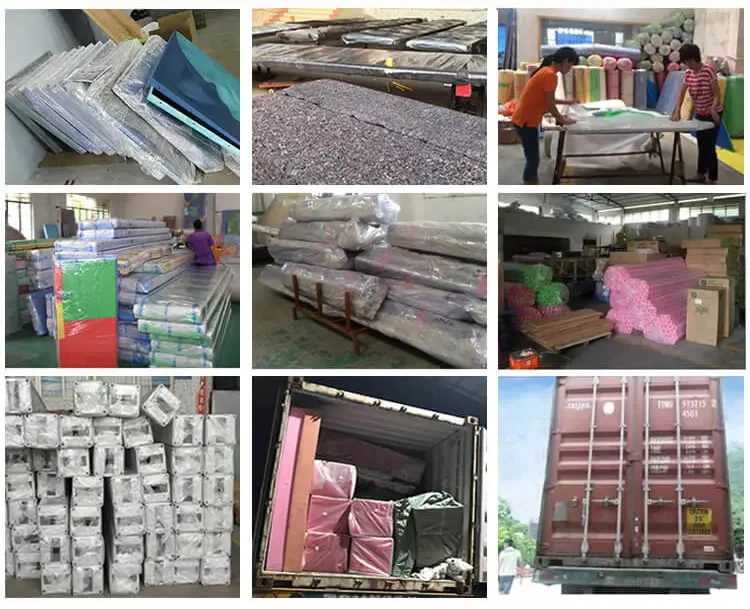
The PE panels have built-in UV resistance. For metal parts, we rely on hot-dip galvanizing plus powder coating. Rope nets get a PES sheath. And the slides are made with thick-wall rotomolding. Every material goes through serious weathering and aging tests before it ever leaves the factory.
One more detail you won’t find everywhere: we put insulating gaskets between the PE panels and any metal parts. That stops electrochemical corrosion cold — because different metals or materials touching each other can become a problem over time.
What Makes Us Different
We manufacture our own materials in-house. Our PE panels have stable coloration and great impact resistance. We don’t skip a single step when treating our metal parts — shot blasting, hot-dip galvanizing, electrostatic powder coating, curing — we do all of it. All plastic parts are made from brand-new virgin materials and have passed CE and ASTM safety tests.
Here’s the thing — as long as you choose the right materials, your kindergarten playground should need almost no maintenance for at least five years.
And if you want to give it a try yourself? Just contact us to request samples — we can provide both PE panels and galvanized pipes. Take them back and put them through their paces. Smash them with a hammer. Burn them with fire. Soak them in saltwater. Test them however you like. You’ll see exactly where their quality lies the moment you put them to the test.
Material Durability Reference Table
| Material Part | Our Material Choice | Main Advantage |
|---|---|---|
| PE Panels | UV-resistant HDPE | Stable color, high impact resistance, long outdoor life |
| Metal Pipes | Hot-dip galvanizing + outdoor powder coating | Strong rust resistance, suitable for coastal areas |
| Slides | Thick-wall rotomolding, minimum 5 mm wall thickness | Better strength, safer sliding surface |
| Rope Nets | Steel wire core + PES polyester yarn | Anti-fraying, mold-resistant, suitable for humid environments |
| Fasteners | Stainless steel anti-loosening screws | Reduces loosening from daily vibration |
| Connection Points | Insulating gaskets | Helps prevent electrochemical corrosion |
How To Choose The Right Supplier For A Daycare With Outdoor Playground Project
Finding a good supplier? That’s a big deal. And for a daycare outdoor playground, it’s an even bigger one. One thing goes wrong — shipping, quality, installation, support — and you’re looking at problem after problem. So we put together some plain, real-world tips to help you find someone you can actually trust.
Have They Done Daycare Projects Before?
Not just anyone can make outdoor gear for kids. Standard park equipment is a whole different animal from what a daycare needs. Daycares need stuff that handles way more use every day, and the age groups have to be really specific. For example, safety rules for climbing heights and platform spacing — 1- to 3-year-olds vs. 4- to 6-year-olds — are totally different.
The right supplier should be able to show you a few real daycare or preschool projects they’ve done. And you want them to walk you through how they handled safety zones, fall-soft surfacing, that kind of thing. Honestly? You can usually tell how experienced they are just by asking two or three smart questions right off the bat.
Can They Design Around Specific Age Groups?
A good proposal for a daycare with outdoor playground never just throws big-kid stuff and toddler stuff together. A good supplier will ask you first: what age range are the kids? They’ll also ask about any special needs you have. Then they’ll come back with zoning ideas — say, a “little kids’ zone” with low platforms, short slides, and touch panels, and a “big kids’ zone” with climbing nets and balance beams.
Big names like KOMPAN and Landscape Structures talk about end-to-end service on their websites — from design consultation to age-based planning. That’s pretty much the baseline for a professional.
Customization Matters More Than You Think
Every daycare has its own site shape, total area, and budget. A reliable supplier won’t try to jam a generic, off-the-shelf blueprint onto your project. Instead, they’ll either send someone out to measure the site or ask you for detailed dimensions. Then they’ll show you two or three different layout options to pick from.
Customization isn’t just about size — colors too. You can match the equipment to your daycare’s brand colors, which looks great in photos and ties everything together nicely.

You Really Need To Check Their Factory — Or At Least See It On Video
A lot of trading companies claim they make the equipment themselves, but they don’t even own a factory. So how do you verify? Here’s a simple thing: ask for their factory address and request a video tour of the production lines. Then watch for two key details. First, is the PE for the panels virgin material, not recycled? Second, do the metal parts go through a full galvanization and powder coating process — no steps skipped?
And here’s another one — does their quality control department keep proper records of retained samples? A quick way to check: have them cut a piece of PE board on video. Look at the cut edge. See any bubbles or dark spots? That means recycled material is mixed in — and that stuff won’t last more than a year outside.
Don’t Take Quality Inspection Lightly
Here’s the thing with exporting — the last thing you want is to find quality problems after your goods have already landed at the destination port. So when you talk to a supplier, ask for three specific things. First, raw material test reports — UV aging, impact tests, that kind of stuff. Second, the first-article inspection records from during production. And third, the final spot-check reports they do right before shipping.
A reliable manufacturer has all these procedures, and they’ll show them to you upfront without hesitation.
Export Packaging — Don’t Overlook It
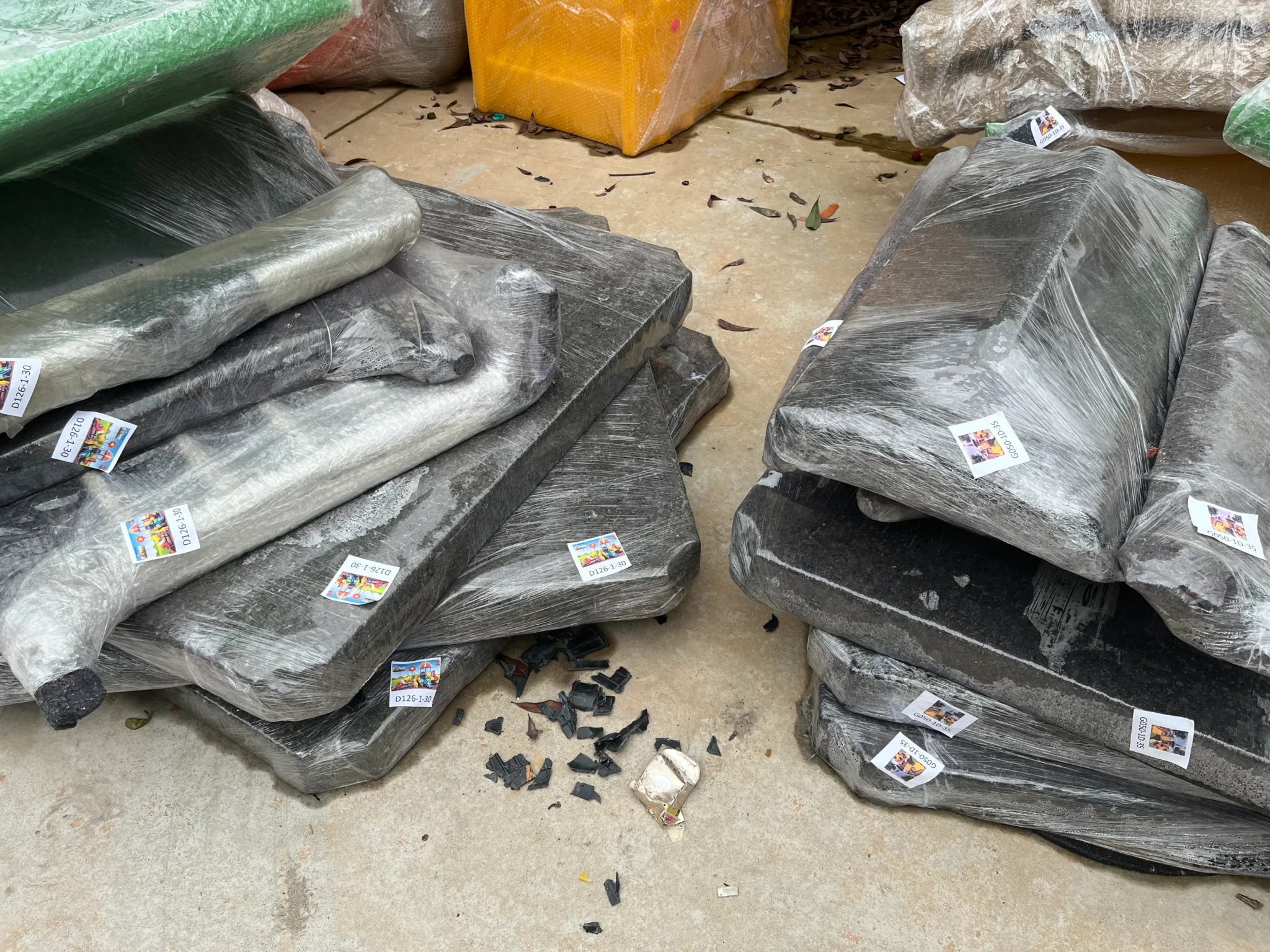
Overseas equipment spends weeks on a ship, getting loaded and unloaded at multiple ports. If the packaging isn’t good enough, things can arrive scratched, bent, or even broken.
A dependable supplier uses stretch wrap, foam corner protectors, and heavy-duty cardboard or wooden crates — and they bag and label every single small part individually.
And don’t forget to ask: how do you pack the container to maximize space? Got a loading plan? Those little things can save you serious shipping money and a ton of claim headaches later.
Installation Guidance & After-Sales Support
Most of our overseas clients don’t install the playgrounds themselves. That said, some engineering firms just need the technical drawings. A good supplier will give you detailed installation manuals, video tutorials, or even hop on a remote video call to walk you through it.
On the after-sales side, here’s what you should ask: how long is the warranty? Can you buy replacement parts like plastic pieces or rope netting separately? How fast do they respond when something comes up? We’ve actually had clients ask, “I lost a screw — can you send one?” Honestly, if a supplier is willing to ship a free replacement screw, that tells you they really take after-sales seriously.
Supplier Selection Checklist Table
| Supplier Checkpoint | What To Ask | Why It Matters |
|---|---|---|
| Project Experience | Have they done daycare or preschool projects before? | Confirms they understand early childhood safety needs |
| Age-Based Design | Can they separate toddler and preschool zones? | Prevents mixed-age safety risks |
| Factory Ability | Can they show real production lines? | Helps avoid trading-company risks |
| Material Quality | Can they provide PE, metal and aging test proof? | Reduces outdoor durability problems |
| Packaging | Do they provide labeled parts and loading plans? | Prevents shipping damage and missing parts |
| Installation Support | Do they provide manuals, videos or remote guidance? | Makes overseas installation easier |
| After-Sales Service | Can replacement parts be supplied quickly? | Supports long-term project operation |
About Us
We’re a manufacturer that designs custom daycare facilities with outdoor playgrounds. Everything — from the initial idea, manufacturing, quality control, export packaging, installation guidance, to after-sales support — is done in-house. No middlemen. You talk directly to us, no runaround.
To get an accurate quote and design proposal, just share a few details with us:
Where’s the site located? Is it a humid or dry climate? Is the ground flat or sloped?
What age group is it for? For example, 2- to 5-year-olds, or a mix of ages?
What’s your rough budget?
What style do you like? Natural wood tones, bright and colorful, or more of a nature theme?
Once we have that, we’ll put together 2 to 3 simple layout sketches. We’ll label each area with the right age range and activity types. You’re welcome to take a look at the designs before making any final decisions.


 English
  Español
  Français
  Deutsch
  Português