


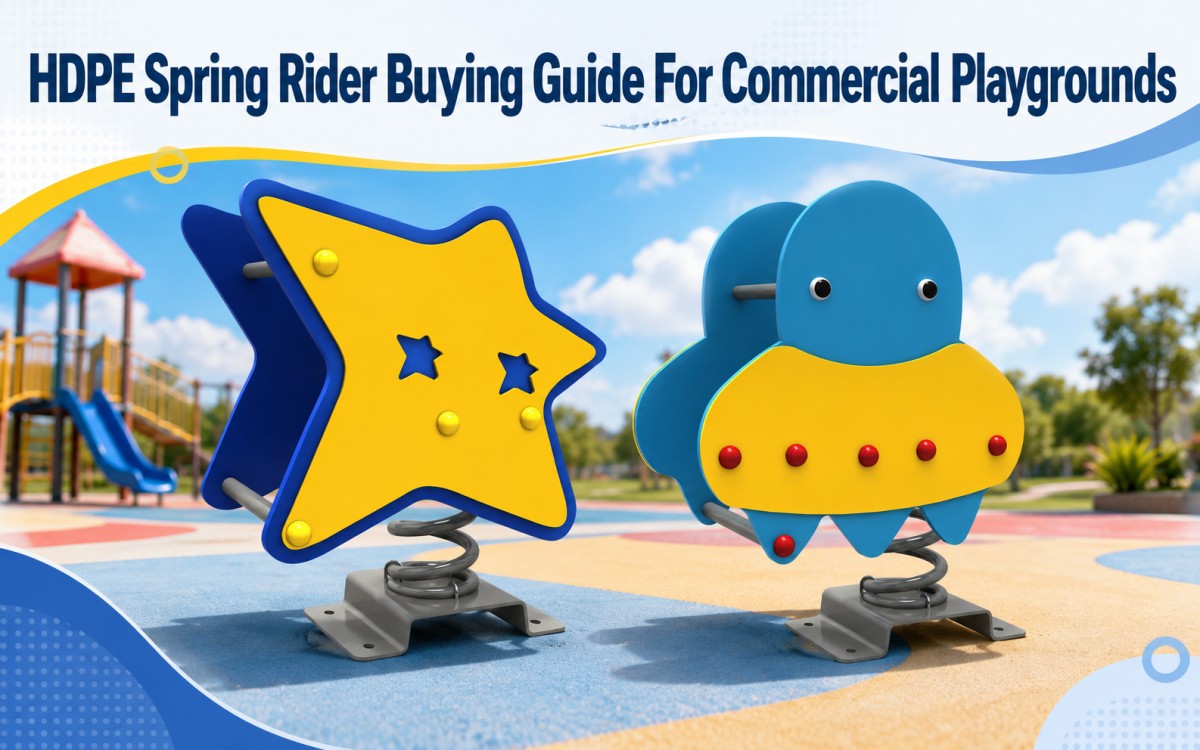
A HDPE spring rider looks simple, but buyers usually need to evaluate much more than the animal shape or color. For a school, park, residential community, kindergarten, resort, or commercial play area, the real questions are about durability, rider age, spring performance, installation, maintenance, safety documentation, customization, and total project cost. Leading commercial playground suppliers commonly emphasize age suitability, handgrips, footrests, mounting methods, commercial-grade materials, and themed designs because these are the details that determine whether a rider works well after installation.
This guide combines product introduction, material education, purchasing advice, safety planning, customization, and installation maintenance. It is written for project owners who want to compare products clearly before requesting a quotation. A reliable HDPE spring rider should not be purchased as an isolated toy; it should be selected as part of a complete playground plan that considers the user group, site conditions, expected traffic, surfacing, delivery schedule, and long-term replacement needs.
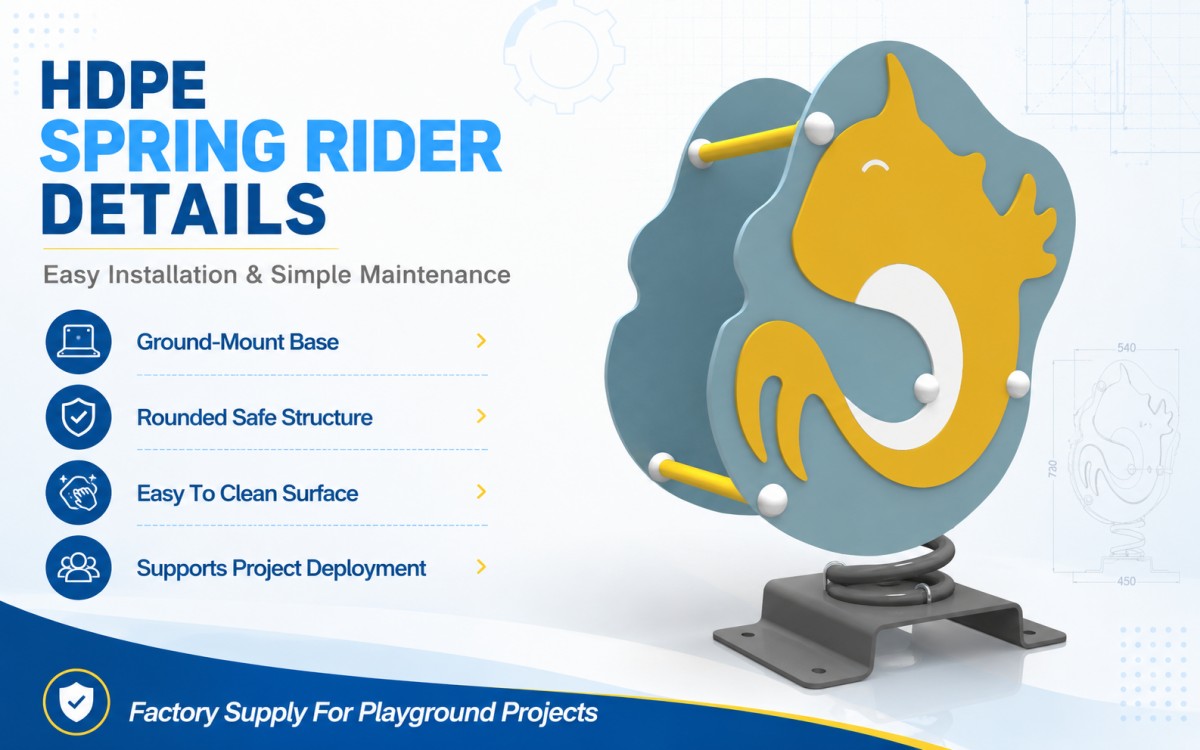
What Buyers Should Know Before Choosing A Spring Rider
The first HDPE spring rider decision is the intended user group. A compact HDPE spring rider is usually selected for toddlers or preschool children, while larger models may be developed for older users. The seat height, handle position, footrest position, rocking range, body width, and access space should match the target age. Buyers should ask the supplier for a product drawing instead of judging suitability from a catalog image alone.
The second HDPE spring rider decision is capacity. A single-seat HDPE spring rider is easier to place in a small area and allows independent play. Double-seat or multi-user models create more social interaction but require greater clearance and stronger structural design. The rider should not encourage more children to use it than the design allows. This point is especially important for schools and public parks where equipment may be used continuously during busy periods.
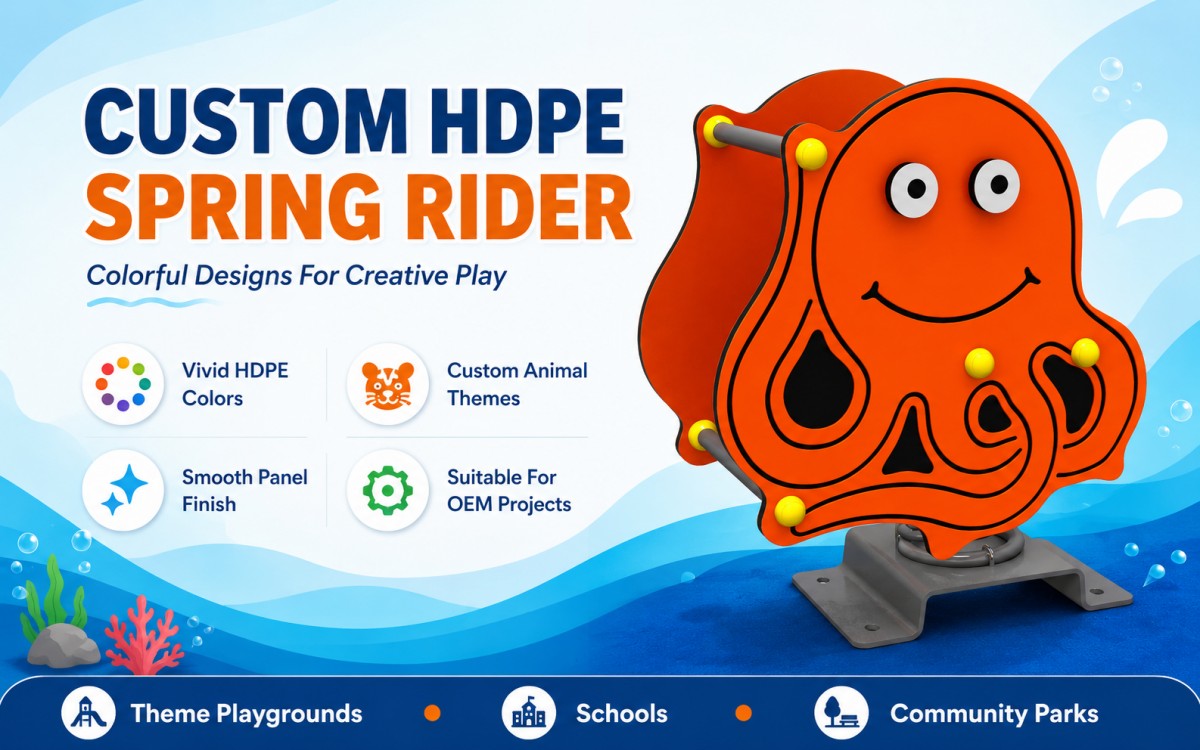
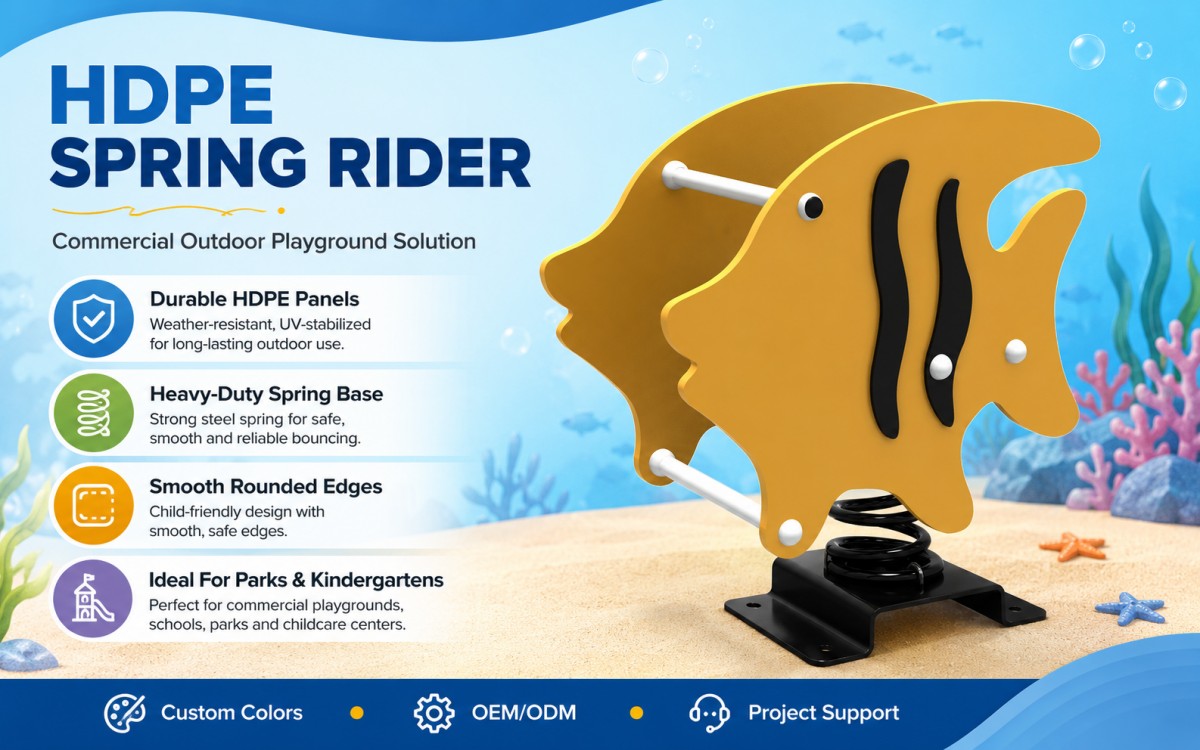
The third HDPE spring rider decision is the play objective. Animal, vehicle, ocean, forest, dinosaur, and transportation themes can support imaginative play. A horse can become part of a farm theme, a fish can fit a coastal playground, and a rocket can strengthen a space theme. The best HDPE spring rider should visually connect with nearby slides, panels, flooring, signs, and landscape elements rather than looking like an unrelated accessory.
Buyers should also confirm what is included in the quotation. The body panel, seat, handles, footrests, spring, connectors, base plate, anchor hardware, packaging, installation drawing, and spare-part list should be identified. A lower HDPE spring rider quotation may exclude important mounting parts or surface treatment. Comparing the complete supply scope is more useful than comparing unit price alone.
Why HDPE Is A Practical Material For Outdoor Use
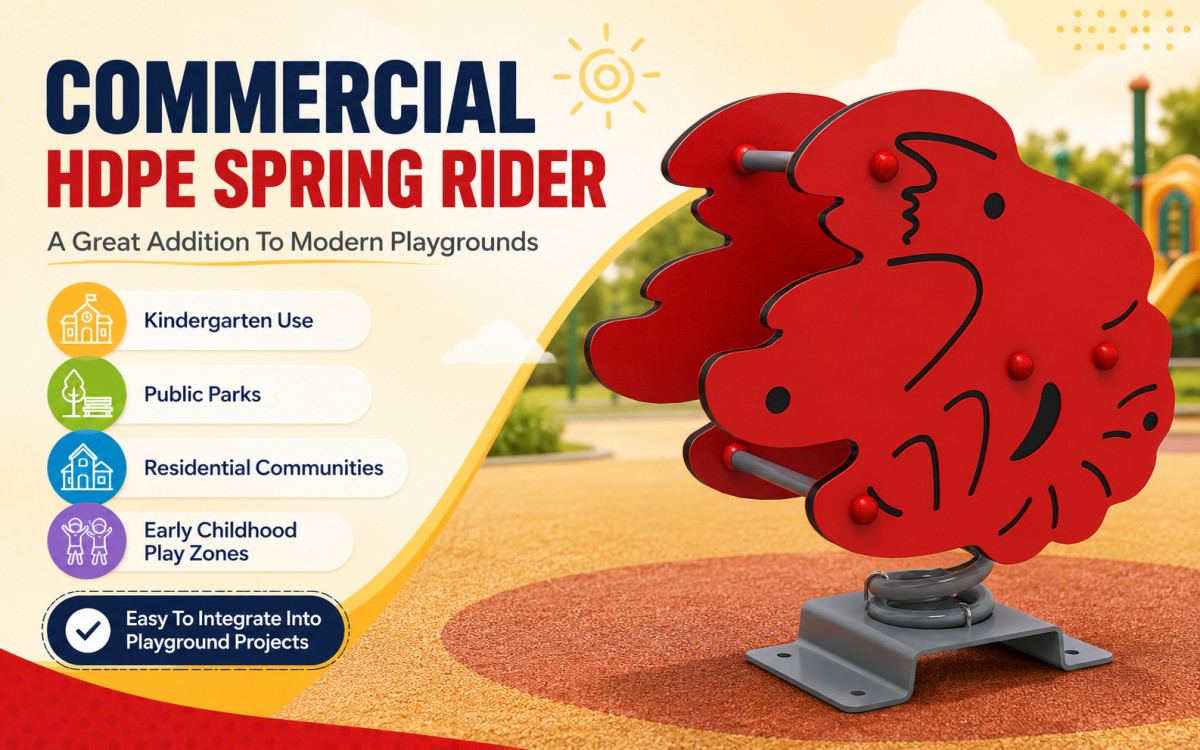
High-density polyethylene is widely used in commercial playground products because it can be cut into detailed shapes, produced in different colors, cleaned easily, and used without repainting the panel surface. Commercial suppliers frequently describe HDPE bodies, seats, and panels together with steel springs and corrosion-resistant hardware.
For an outdoor HDPE spring rider, the panel should have suitable thickness, consistent color, smooth machining, and rounded edges. Solid-color or multi-layer HDPE sheets can be CNC-cut and engraved to create eyes, doors, wheels, scales, numbers, or brand graphics. Because the color runs through the sheet, normal surface scratches on an HDPE spring rider are less visually obvious than scratches on a thin painted coating.
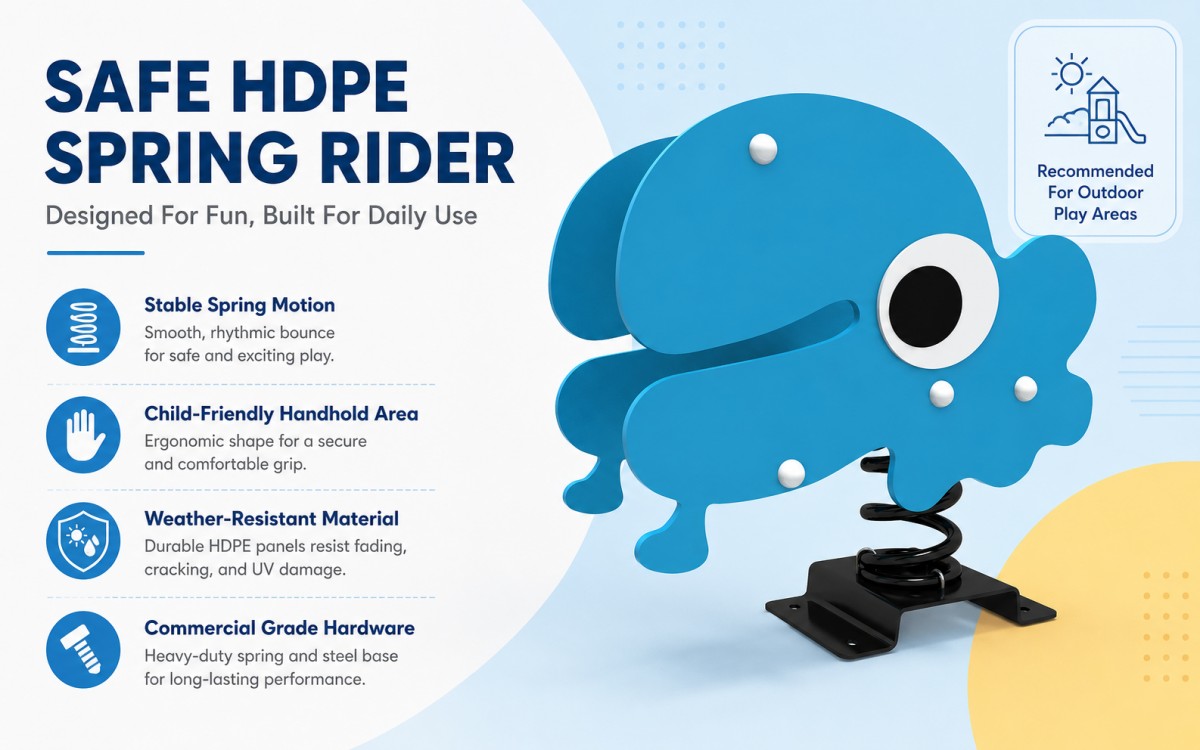
Material quality for an HDPE spring rider should be checked through specifications rather than broad descriptions such as “strong plastic.” Ask about sheet thickness, UV stabilization, temperature suitability, impact resistance, edge finishing, and color options. The HDPE spring rider body should not feel excessively flexible around the seat, handle, or spring connection points. Reinforcement plates may be needed in high-load areas, especially for larger designs or products intended for frequent public use.
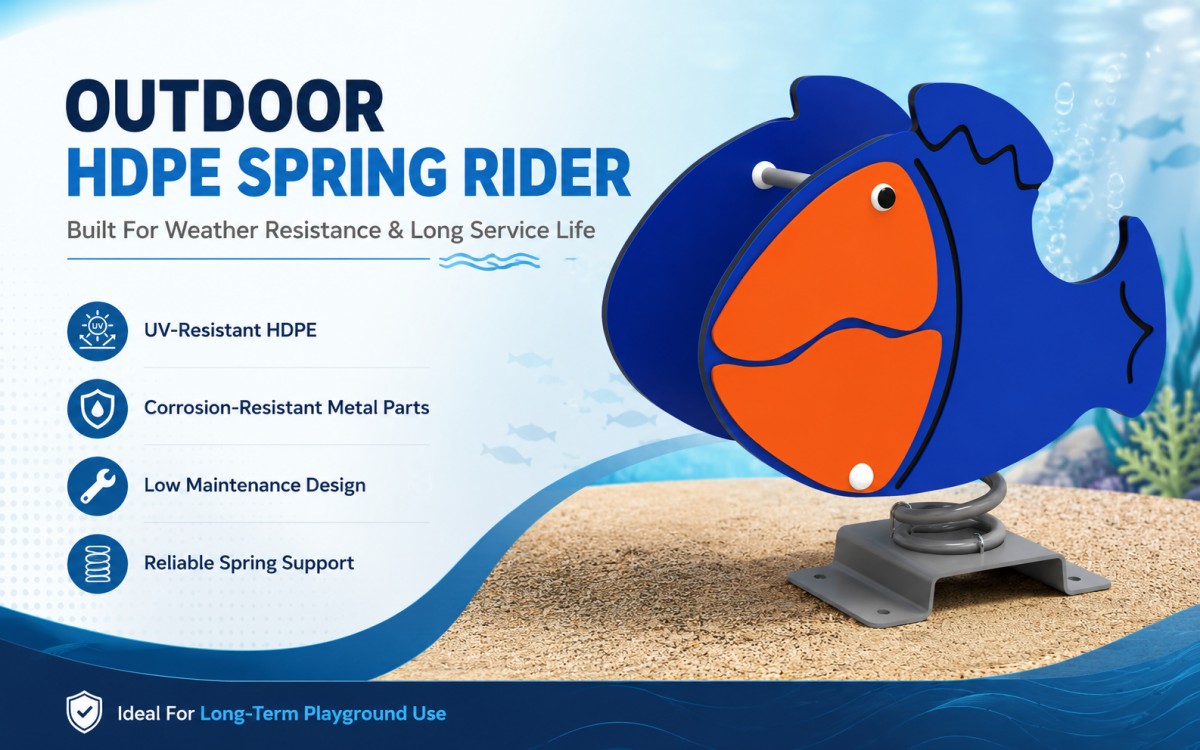
The spring and metal components are equally important. The rider body may remain attractive while a poorly protected spring, base, or fastener deteriorates. For every HDPE spring rider, buyers should ask about spring steel grade, wire diameter, surface treatment, welding quality, galvanized or powder-coated parts, stainless-steel fasteners, and replacement availability. A durable HDPE spring rider depends on the complete material system, not only the HDPE panel.
How To Compare Designs, Prices, And Supplier Quotations
Price differences usually come from size, number of users, HDPE thickness, spring specification, metal treatment, hardware grade, design complexity, packaging volume, order quantity, and certification or testing requirements. Therefore, a professional buyer should prepare one comparison sheet for every HDPE spring rider quotation.
The sheet should include overall dimensions, seat height, recommended age, user capacity, panel thickness, spring dimensions, handle and footrest materials, fastener grade, base type, anchoring method, unit weight, packing size, warranty terms, spare parts, production time, and shipping terms. Without these details, two HDPE spring rider products that look similar online may have very different structural performance and landed cost.
MOQ also matters. For a small project, buyers may need one to five units in mixed designs. For a distributor, school chain, or municipal project, the order may include several models and colors. A flexible supplier can combine different HDPE spring rider designs in one order while keeping common springs, handles, and connectors standardized. This reduces inventory pressure and makes future maintenance easier.
Ask for clear HDPE spring rider drawings before confirming the order. The drawing should show dimensions, anchor locations, use direction, finished floor level, concrete foundation requirements, and recommended clearance. For customized designs, approve the side profile, color combination, logo position, engraving, handles, and seat before production. A sample rendering or production preview can prevent misunderstandings that are expensive to correct after shipping.
Finally, compare the supplier’s response quality. A factory that asks about site type, user age, local standard, quantity, installation team, delivery address, and project deadline is usually evaluating the application rather than simply quoting a generic HDPE spring rider.
Safety Standards, Clearances, And Project Documentation
Public playground buyers should confirm which standard applies in the destination market. ASTM F1487 covers safety and performance requirements for public playground equipment, including materials, performance, layout, installation, structural integrity, maintenance, and labeling. In the United States, the CPSC handbook is an important planning reference, while European projects commonly request evaluation against the applicable EN 1176 requirements.
For spring rockers, the current CPSC handbook states that toddler seat height should generally be 12 to 16 inches, preschool seat height should be 14 to 28 inches, and each seating position should have handgrips and footrests. It also advises minimizing crush risks around the coils and recommends a use zone extending at least 6 feet from the equipment’s at-rest perimeter.These figures should not be copied blindly into every international project; the final HDPE spring rider layout must follow the required local standard, supplier documentation, and site-specific risk assessment.
A compliant project involves more than buying a product described as “safe.” The HDPE spring rider should be reviewed together with protective surfacing, neighboring equipment, circulation paths, supervision needs, drainage, and anchoring. The fall height, moving envelope, pinch points, exposed threads, sharp edges, and access direction should be checked before opening the playground.
Useful HDPE spring rider documents may include a technical data sheet, material list, product drawing, installation manual, maintenance schedule, packing list, inspection record, test report, and warranty statement. Tender projects may also require load information, color references, factory qualifications, and previous project experience. Buyers should list the required documents before placing the order so the manufacturer can confirm what is available.
Customization Options For Themes, Brands, And Project Layouts
Customization is one of the main advantages of an HDPE spring rider. The side panels can be shaped into animals, insects, vehicles, boats, construction machines, fantasy characters, or abstract forms. Multi-layer sheets allow engraved details in contrasting colors, while rounded panel profiles can create a friendly appearance without adding fragile decorative pieces.
Project owners should start with the site theme. A nature playground may use deer, bees, turtles, or leaves. A transportation playground may use cars, trains, airplanes, or excavators. A coastal project may select fish, dolphins, or boats. The customized HDPE spring rider can repeat the same color language used on the main play structure, safety surfacing, fences, benches, and signs.
Brand customization for an HDPE spring rider can include a school emblem, park name, community symbol, simple mascot, or distributor logo. However, HDPE spring rider graphics should not create sharp projections, weak sections, or difficult-to-clean recesses. The visual design must remain secondary to structural performance and safe use.
Our factory can support color selection, panel cutting, engraving, edge rounding, metal fabrication, surface treatment, trial assembly, packaging, and drawing preparation. For project orders, standardizing springs, handles, footrests, and fasteners across several HDPE spring rider models can simplify production and future spare-part management. Buyers can send a theme reference, site plan, target age, quantity, preferred colors, and local requirements to develop a more accurate proposal.
Installation, Maintenance, Delivery, And Long-Term Value
Installation quality directly affects product life. The HDPE spring rider must be anchored according to the manufacturer’s drawing, with the correct foundation size, bolt position, finished floor level, and curing time. The CPSC handbook advises following manufacturer instructions, completing secure anchoring, and inspecting equipment before first use. For each HDPE spring rider, installers should also confirm that protective surfacing does not cover drainage paths or hide loose connections.
A practical maintenance plan should include frequent visual checks and scheduled detailed inspections. Look for loose fasteners, spring corrosion, cracked welds, unusual movement, worn handles, damaged footrests, sharp edges, panel cracks, exposed anchors, and displaced surfacing. The HDPE spring rider should be removed from service if structural damage or unstable movement is discovered.
Cleaning an HDPE spring rider is usually straightforward. Use water, mild detergent, and non-abrasive tools unless the manufacturer provides different instructions. Avoid aggressive solvents that may affect plastic or coating surfaces. In coastal, humid, or high-pollution environments, metal parts may require more frequent inspection and cleaning. Spare fasteners, handles, footrests, and springs should be available for long-term operation.
Delivery planning should consider production time, customization approval, packaging method, container loading, shipping route, customs clearance, and local installation schedule. Compact HDPE spring rider packing can reduce freight cost, but panels and coated metal parts must be separated to prevent scratches. Each HDPE spring rider should be labeled so installers can match components with the correct drawing.
The lowest purchase price does not always create the lowest lifecycle cost. A well-designed HDPE spring rider can reduce repainting, simplify cleaning, support fast component replacement, and maintain a consistent playground appearance. For owners, contractors, and distributors, the better HDPE spring rider investment is a product with clear specifications, reliable materials, practical installation guidance, documented quality control, and spare-part support.


 English
  Español
  Français
  Deutsch
  Português