


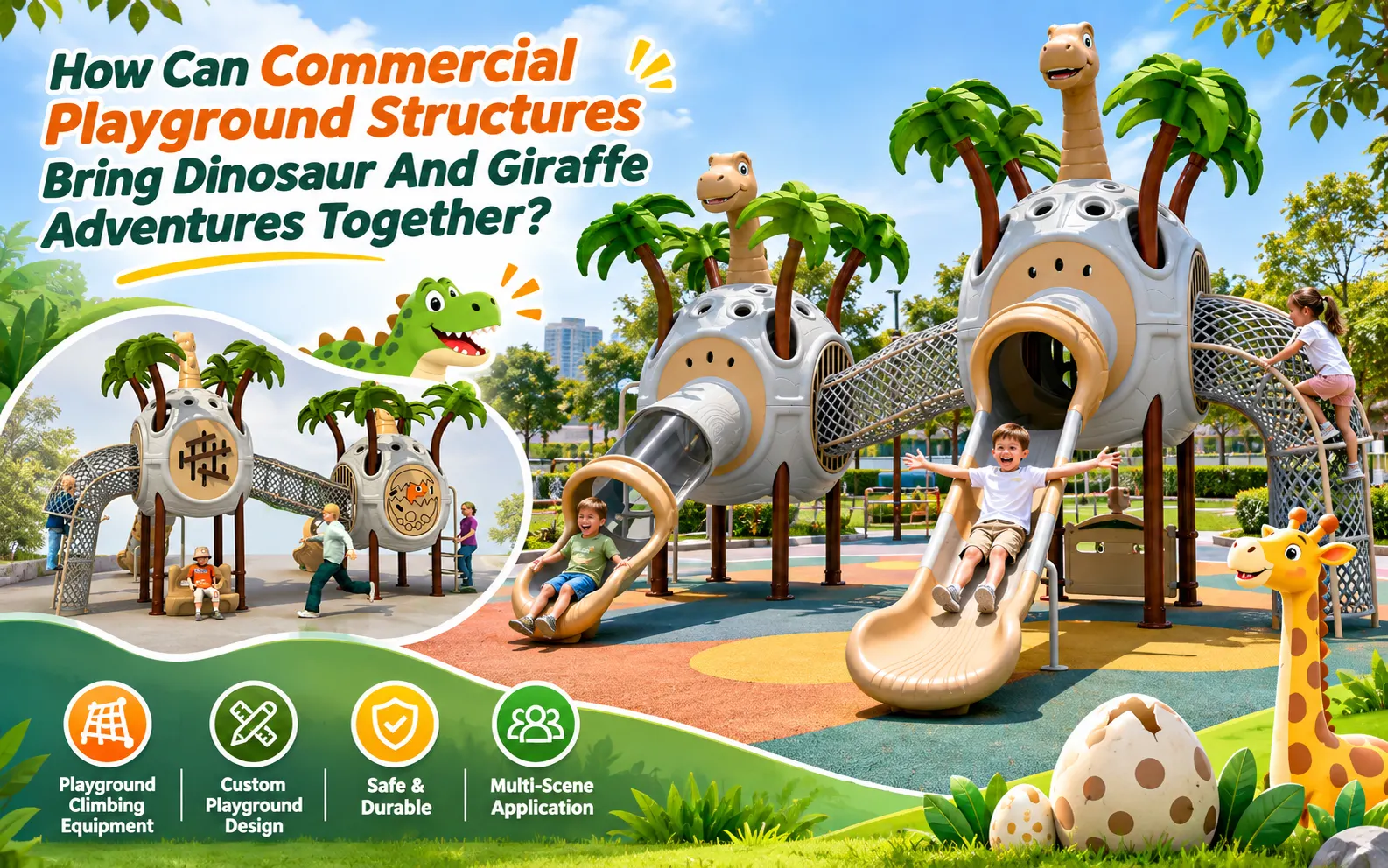
A themed playground can look spectacular in a catalog yet disappoint once children start using it. Poorly connected activities, awkward climbing routes, limited space and generic decorations can turn an expensive attraction into an underused installation. For park operators, community developers and commercial buyers, those mistakes affect both visitor experience and long-term investment. The solution is to combine imaginative animal styling with purposeful movement, age-appropriate challenges and realistic project planning. This guide explores how dinosaur and giraffe playground concepts can become functional, memorable places that children want to explore.
The best Commercial Playground Structures combine recognizable themes, connected activities, accessible routes and project-specific planning. Dinosaur and giraffe designs can integrate elevated play areas, rope-net passages, climbing challenges and imaginative animal details. Effective Playground Climbing Equipment supports movement and exploration, while thoughtful Playground Design considers safety, site dimensions, supervision and long-term maintenance.
Discover how individual design choices become a complete play experience worth investing in.
1. Why Are Commercial Playground Structures More Than Decorative Landmarks?
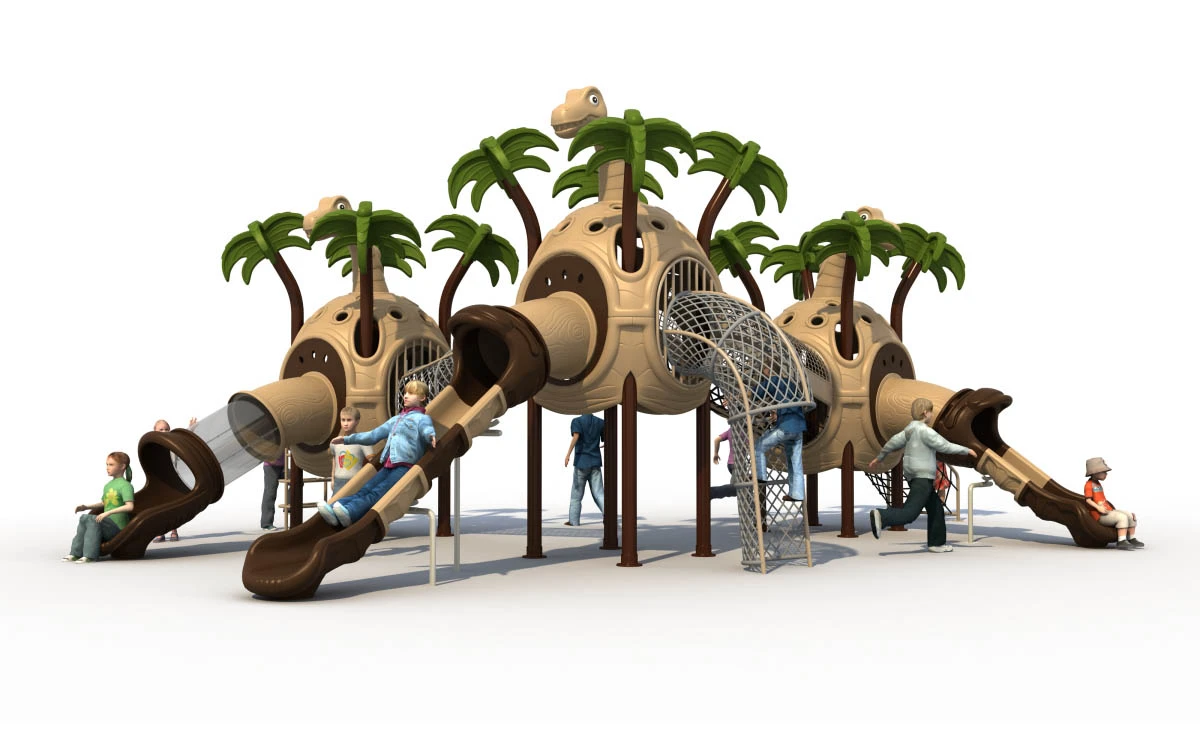
Imagine a child approaching a playground for the first time. A dinosaur-shaped feature immediately captures attention, but the real experience begins when the child discovers somewhere to climb, a route to follow and a new destination beyond the first platform. This difference between visual attraction and actual play value is fundamental to successful Commercial Playground Structures.
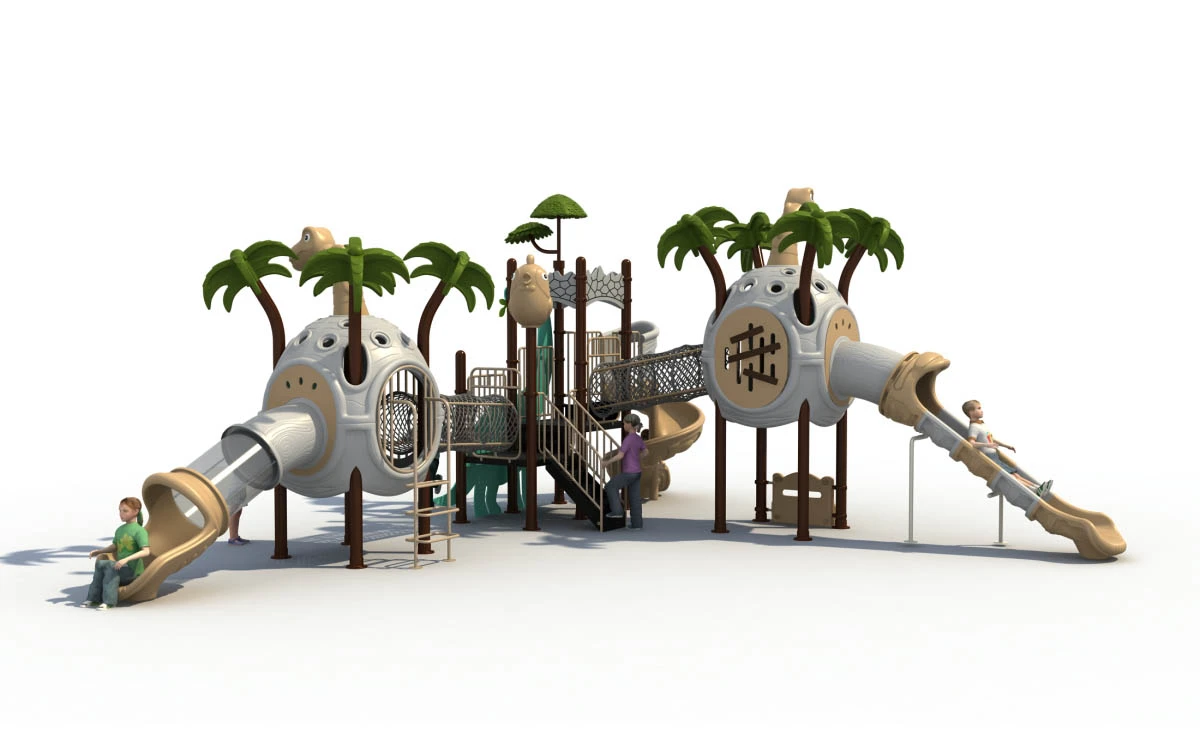
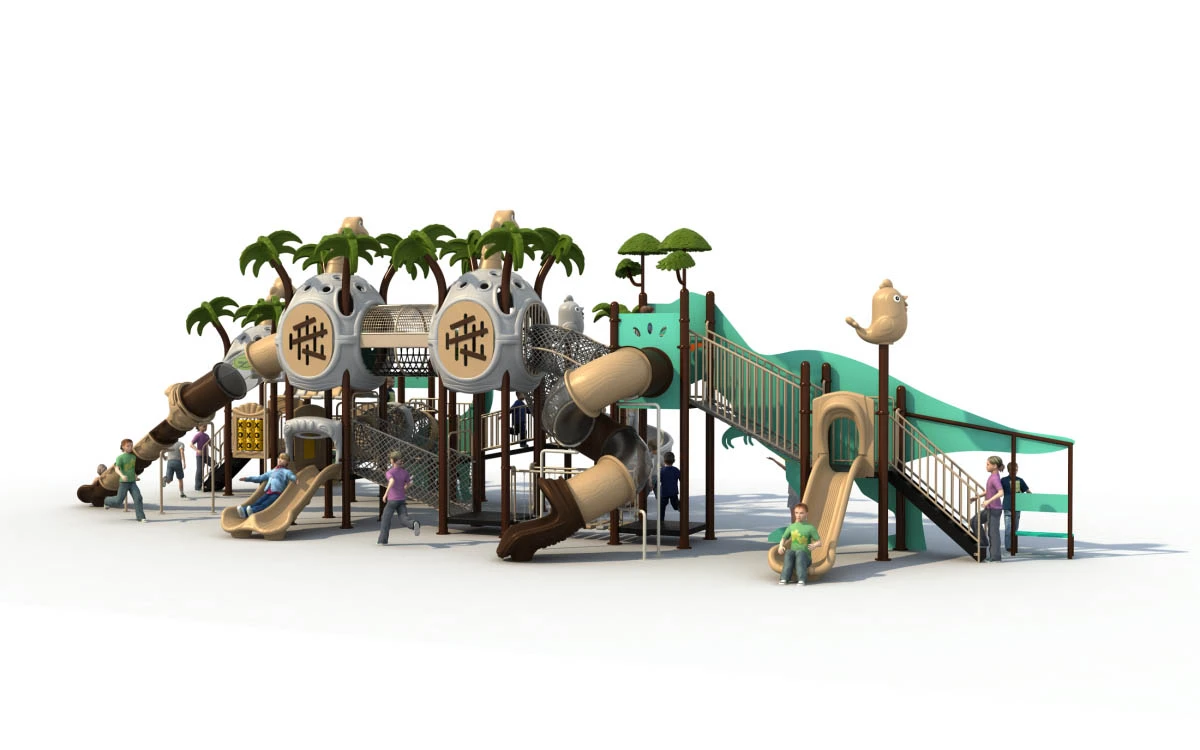
The dinosaur and giraffe combination offers two recognizable visual landmarks with contrasting personalities. A dinosaur can introduce a prehistoric discovery theme, while a tall giraffe form suggests observation, exploration and movement through a jungle environment. Rather than placing animal figures around an ordinary structure, designers can use the animals as meaningful parts of the play journey.
From Visual Attraction To Active Exploration
A thoughtfully organized playground gives children decisions to make. They might enter through a lower activity area, move toward a net-connected platform, explore an animal-themed detail and choose a different route back. This encourages repeat visits because the experience is not limited to completing one obvious activity.
Commercial buyers should evaluate the number and variety of meaningful activities rather than judging a structure by its height or decorative complexity alone. Consider physical movement, imaginative play, social interaction and opportunities to pause. A beautiful playground may create the initial impression, but an engaging activity sequence helps sustain interest.
For residential communities, public parks and family-oriented developments, the objective is to create a welcoming local destination. The strongest animal-themed concepts offer both a memorable appearance and a practical reason for children to stay, explore and return.
2. How Can Playground Climbing Equipment Connect Dinosaur And Giraffe Zones?
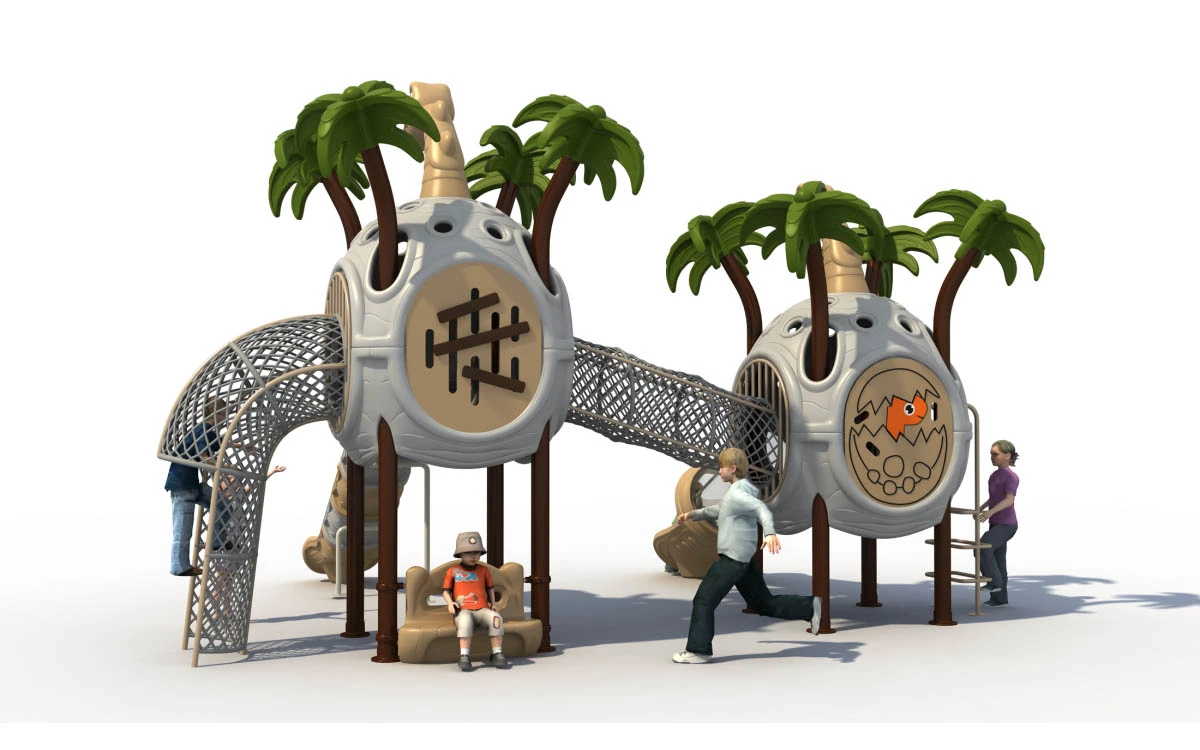
A rope-net connection is more than a passage between two elevated areas. It can turn separate animal features into one continuous adventure. Within the dinosaur and giraffe concept, children can imagine traveling from a prehistoric discovery zone toward a jungle lookout, with the connecting net becoming part of the story.
When selecting Playground Climbing Equipment, buyers should examine how children enter, cross and leave each activity. A good route feels understandable without becoming predictable. Children need clearly identifiable destinations, suitable handholds and transitions that match the intended user group.
Designing The Connected Adventure Route
🦕 The Animal Adventure Play Loop
The sequence above is a conceptual planning model, not a fixed specification for every configuration. On an actual project, designers should check whether the net connects compatible platform heights, whether users can see the next destination and whether the route creates conflicting traffic.
Horizontal passages can encourage balance and coordination, while more demanding climbing elements can introduce problem-solving. These experiences should be selected according to age range and the approved product configuration, rather than adding difficulty simply to make the structure look more adventurous.
The final layout also needs safe entry and exit points, appropriate enclosure details and clear visibility for caregivers. By considering movement first and decoration second, a connected animal playground becomes an interactive experience rather than a collection of visually related objects.


3. Which Climbing Shapes Offer The Right Challenge Without Confusing Users?
Not every climbing activity needs to lead upward. Children may enjoy moving sideways across a net, navigating a short transition, exploring an opening or testing a sequence of handholds. Different movement directions create variety without relying entirely on greater structure height.
Effective Playground Climbing Equipment should offer challenges that correspond to the intended users. Vertical climbing can provide a clear achievement goal, while lower-level and horizontal activities can give younger or less confident children opportunities to participate.
Choosing Between Nets, Open Climbers And Transitional Routes
Rope nets can introduce flexible route choices and a distinctive sense of movement. Open climbing frames make the intended climbing path more visible and may be useful where supervision and clear orientation are priorities. Transitional bridges help connect separate destinations, especially when the design contains several recognizable play zones.
A freestanding climber may be valuable when the project has room for an additional challenge area, but it should complement the main theme rather than interrupt pedestrian flow or required safety clearances. For a compact site, integrating appropriate climbing activities into the primary structure may be more practical.
🧗 Practical Climbing Selection Guide
Select climbing components according to the site’s target ages, available space, intended challenge level and applicable safety requirements. A more complicated structure is not automatically a better playground.
One useful design test is to follow the playground from a child’s perspective. Can the next activity be identified easily? Are the movement steps reasonably progressive? Is there a comfortable way to leave the challenge? Does the journey create opportunities for friends to interact?
These questions make equipment selection more meaningful than comparing product photographs alone. They also help buyers communicate activity priorities clearly when requesting a customized layout.
4. How Do Dinosaur Eggs, Giraffe Platforms And Tropical Details Build A Cohesive Story?
A successful animal playground does not need every surface covered with dinosaurs or jungle graphics. The design becomes more memorable when a few distinctive elements establish a recognizable environment, and the surrounding details support those elements without overwhelming the space.
Dinosaur egg forms can suggest discovery and curiosity. A giraffe-shaped platform can become a recognizable destination within the structure. Tropical palm decorations introduce a contrasting silhouette and help connect the prehistoric and safari-inspired features. Together, these elements can create a playful animal adventure rather than an unrelated collection of shapes.
Use Color To Guide Exploration
Color can help children distinguish activity zones and understand movement through the playground. For example, a warm orange or sand-colored dinosaur area can transition toward natural greens around the giraffe feature. Small accents of yellow, blue or coral can highlight interactive destinations without making every component compete for attention.
With customized Playground Design, buyers can discuss visual consistency across decorative panels, platforms and supporting structures. The final palette should also consider nearby buildings, landscaping, strong sunlight and the maintenance expectations of the site.
🌴 A Recognizable Theme Without Visual Clutter
The most effective animal details support the play experience: a dinosaur egg can become a discovery landmark, a giraffe silhouette can identify an elevated destination, and palm-style elements can visually connect separate activity zones.
Decorative parts should be evaluated for suitable placement, visibility, durability and potential interaction with children, rather than selected only for appearance.
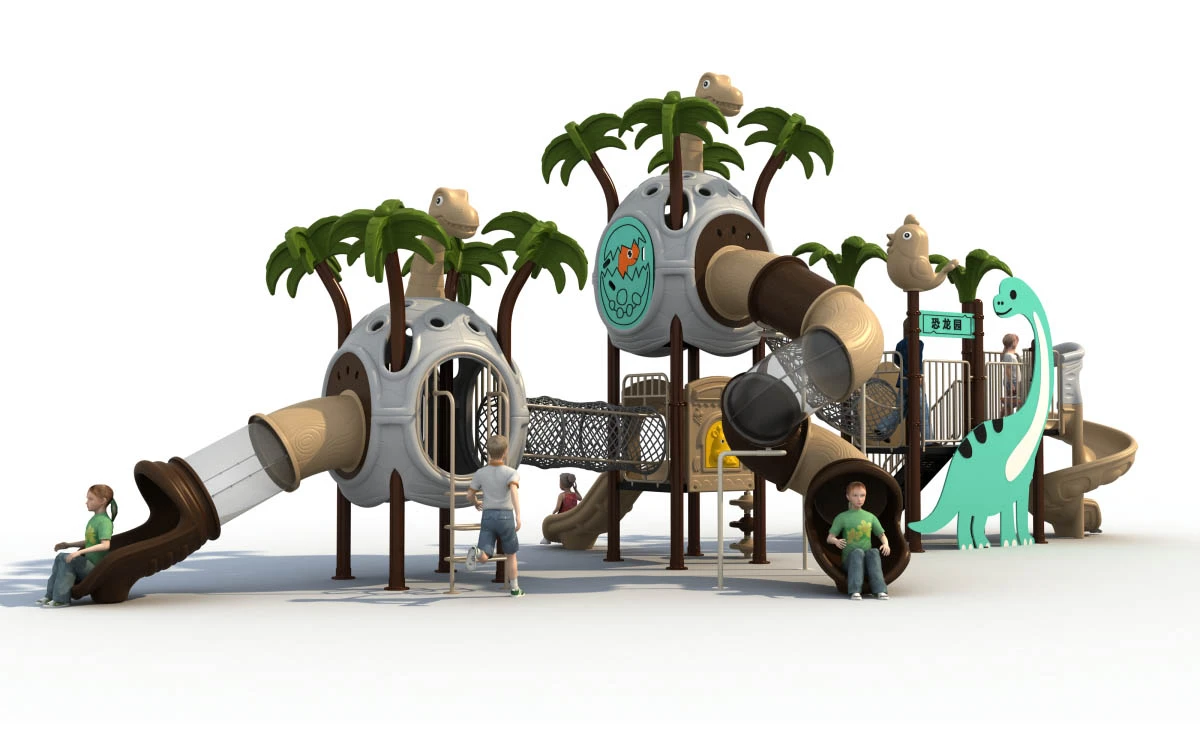
The featured dinosaur-and-giraffe playground also has a design-patented appearance. This distinction is especially relevant for customers seeking a recognizable commercial attraction. Buyers can request the relevant patent documentation and discuss which design elements belong to the protected appearance before making project-specific adjustments.
Customization should preserve the character of the design while ensuring that any proposed structural or decorative changes receive appropriate engineering and safety review.
5. How Can Parks And Residential Communities Use The Same Design Differently?
Two buyers may select the same dinosaur and giraffe concept for completely different reasons. A municipal park may need a visible attraction within a larger recreational landscape. A residential community may prioritize convenient access, daily use and comfortable supervision from nearby seating areas.
For public parks, Commercial Playground Structures should be evaluated alongside pathways, surrounding amenities, pedestrian movement and expected visitor patterns. A memorable animal-themed structure can provide a focal point, but its orientation must work with entrances, landscape features and accessible circulation routes.
Adapt The Layout To The Actual Site
In a residential development, the layout may benefit from clear sightlines, a compact activity arrangement and separation from vehicle movement. A family entertainment destination might emphasize the visual impact of the dinosaur and giraffe features while providing nearby facilities for parents and other visitors.
School playground projects introduce different questions, including the intended student age groups, supervision practices, activity distribution and compatibility with school operations. A design suitable for an open public park should not automatically be transferred to a preschool environment without review.
📐 Start With The Available Site, Not A Catalog Dimension
Record the usable length and width, access points, ground condition, drainage direction, nearby buildings, shade requirements and intended age groups. The final installation area must accommodate equipment dimensions plus applicable use zones, circulation and maintenance access.
For smaller settings, relevant examples of Playground Design may help buyers compare space-efficient play arrangements, although public-use equipment requirements must be considered separately from residential home-use products.
Rather than requesting an exact structure based on photographs, buyers should begin with a site plan and a description of how visitors will use the space. This helps determine whether the animal concept should remain a standalone attraction or become part of a larger recreational area.

6. How Can Children With Different Abilities Participate In The Adventure?
A playground should offer meaningful activities for different children, not simply a single climbing challenge that only confident climbers can enjoy. Children vary in age, mobility, coordination, sensory preferences and willingness to explore unfamiliar heights. Designing for that variety can make an animal-themed environment more welcoming.
A practical approach is to consider what children can experience before reaching an elevated platform. Ground-level activities, accessible circulation and approachable animal details can help broaden participation. Where appropriate, designers may also consider transfer opportunities and varied play challenges that support the applicable accessibility requirements.
Balance Challenge With Choice
Some children enjoy demanding climbing routes, while others prefer a slower journey. The goal is not to eliminate challenge; it is to provide different ways to participate. A lower activity zone near a dinosaur egg feature can provide a contrasting experience to a more demanding net-connected route, subject to the actual product configuration.
The design should also consider the needs of supervising adults. Clear sightlines, suitable pathways and understandable activity transitions make the environment easier to monitor. Decorative animal panels should not create unnecessarily concealed areas or obstruct important views.
🦒 Questions That Support Inclusive Planning
- Can children participate in meaningful play without reaching the highest platform?
- Are there clear and accessible routes to appropriate ground-level activities?
- Does the layout provide different levels of physical challenge?
- Can caregivers supervise important movement and transition areas?
- Have accessibility requirements been reviewed for the destination market?
Incorporating these questions into Playground Design discussions helps identify the right activity mix before the project reaches detailed engineering. However, home-use playground examples must not replace commercial accessibility or safety planning.
Inclusive design is a project-specific process. An attractive animal theme alone does not establish accessibility compliance, so buyers should request relevant plans and confirm the required accessible activities, routes and surfaces with qualified project professionals.
7. What Should Buyers Verify About Safety, Materials And Structural Details?
The visible animal shapes may be the first thing buyers notice, but the most important purchasing questions often concern the components behind the design. Connections, supporting structures, climbing transitions, barriers, surface finishes and installation conditions all affect the suitability of a playground for its intended setting.
Before approving Commercial Playground Structures, buyers should request material information and technical drawings for the exact proposed configuration. A description such as “weather-resistant” is not a substitute for documented material specifications and appropriate project review.
Review The Structure Beyond Its Appearance
Outdoor playground projects may use combinations of structural metal, molded components, decorative panels, rope assemblies and connection hardware. The actual materials, grades, finishes and component designs should be confirmed with the manufacturer rather than assumed from photographs.
For rope-based Playground Climbing Equipment, buyers should examine connection points, net geometry, tension requirements, inspection access and replacement procedures. Areas where children enter or leave elevated routes deserve particular attention because they combine movement, changes in level and potential congestion.
Check The Rules For The Destination Market
For U.S. public playground projects, ASTM F1487-25 and the U.S. Consumer Product Safety Commission’s Public Playground Safety Handbook are important references. European projects may require evaluation against applicable EN 1176 and related standards. The relevant requirements depend on the installation location, equipment type and project scope.
Buyers should request applicable test reports, component documentation, installation instructions and project-specific compliance information. Standards should never be treated as automatically satisfied merely because the product is designed for commercial use.
🛡️ Safety Review Before Final Approval
- Confirm the intended age group and approved equipment configuration.
- Review fall heights, protective surfacing and required use zones.
- Check guardrails, barriers, openings and potential entrapment hazards.
- Request structural and material documentation where applicable.
- Verify installation requirements and local inspection responsibilities.
Reference: CPSC Public Playground Safety Handbook.
Safety review should also include the surrounding environment. Drainage, nearby landscaping, ground conditions and sun exposure can affect how a playground performs after installation. A product design patent does not replace any required safety assessment or certification.
8. What Information Makes A Custom Playground Quotation Reliable?
A quotation based only on a product photograph and a request for the “best price” rarely gives a commercial buyer enough information to compare proposals. Two playgrounds may look similar while differing substantially in dimensions, activity selection, material specification, installation requirements and included services.
The first step is to define the project. Describe whether the destination is a public park, residential development, school or commercial recreation venue. Provide the usable space, target age groups, preferred activities, country of installation and any visual customization requirements.
Request A Complete Project Proposal
Professional Playground Design discussions should connect appearance with practical specifications. Buyers can ask for an equipment layout, dimensions, proposed materials, activity descriptions and the applicable safety information. If the dinosaur-and-giraffe theme is being customized, the proposal should identify which decorative and functional elements are included.
| Project Information | What Buyers Should Request |
|---|---|
| Site And Layout | Available dimensions, proposed footprint, equipment layout and required clearances |
| Product Configuration | Activity components, age suitability, dimensions and material specifications |
| Customization | Theme, colors, decorative details and design approval process |
| Commercial Terms | Price basis, inclusions, packaging, shipping terms and estimated production schedule |
| Installation And Support | Assembly documents, installation responsibilities, warranty terms and replacement-part process |
Commercial buyers should also clarify what is excluded from the equipment quotation. Site preparation, foundations, safety surfacing, freight, taxes, installation labor and local inspection services may require separate budgeting depending on the supplier and contract.
Instead of requesting an unsupported universal price range, ask for a quote tied to a defined configuration. This makes technical review easier and reduces unexpected differences between the initial proposal and final project requirements.
JQ Playground can be contacted to discuss the featured animal-themed concept and available customization options. Final technical specifications, pricing and delivery terms should be confirmed through the project quotation.
9. How Can Operators Maintain, Repair Or Expand A Patented-Themed Playground?
A commercial playground is not a one-time decorative purchase. It is a recreational asset that requires inspection, cleaning and maintenance throughout its service life. That reality should influence the initial design conversation, particularly when a project includes interconnected climbing elements and custom animal-shaped components.
Operators should ask how frequently the manufacturer recommends inspecting structural connections, ropes, fasteners, protective surfaces and high-contact areas. The maintenance plan should distinguish routine visual checks from periodic detailed inspections and repairs carried out by qualified personnel.
Plan For Maintenance Before Installation
Make sure inspection personnel can access important connections without unnecessarily dismantling the structure. Request cleaning instructions appropriate for the confirmed materials and coatings. Document any damage, loosening, wear or environmental deterioration and follow the applicable manufacturer’s guidance when arranging repairs.
For Commercial Playground Structures, replacement components should be compatible with the approved design. Substituting visually similar ropes, connectors or panels without the necessary technical review can create risks that were not present in the original configuration.
Understand The Value And Scope Of Design Protection
🦕 Design-Patented Dinosaur And Giraffe Appearance
The featured dinosaur-and-giraffe playground has a design-patented appearance. This can help distinguish the original product design in commercial purchasing discussions. Buyers should request the applicable patent number, jurisdiction, protected design illustrations and ownership or authorization details when relevant to procurement.
Patent protection is territory-specific and does not automatically establish product safety compliance, exclusive rights in every country or approval for unreviewed modifications.
If a project may be expanded later, discuss compatible add-on components during the original planning stage. The same applies to site renovations or changes in intended user groups. Expansion may require updated drawings, engineering checks, safety clearances and revised installation documentation.
A well-planned Playground Design considers not only opening day, but also future operation. Choosing maintainable equipment and a clear replacement-part process can be just as valuable as choosing an eye-catching animal silhouette.
🌴 Bring Your Dinosaur And Giraffe Playground Concept To Life
Planning a playground for a park, residential development, school or commercial recreation venue? Share your project location, available space, target age groups and preferred theme with JQ Playground. Our team can discuss product options, customization requirements and the information needed to prepare a project-specific proposal.
Explore JQ Playground & Request A QuoteConclusion: A memorable dinosaur and giraffe playground combines imaginative appearance with purposeful climbing, suitable site planning and maintainable construction. For commercial buyers, the right design balances children’s experiences with safety requirements, practical project specifications and long-term operating needs.


 English
 Español
 Français
 Deutsch
 Português