


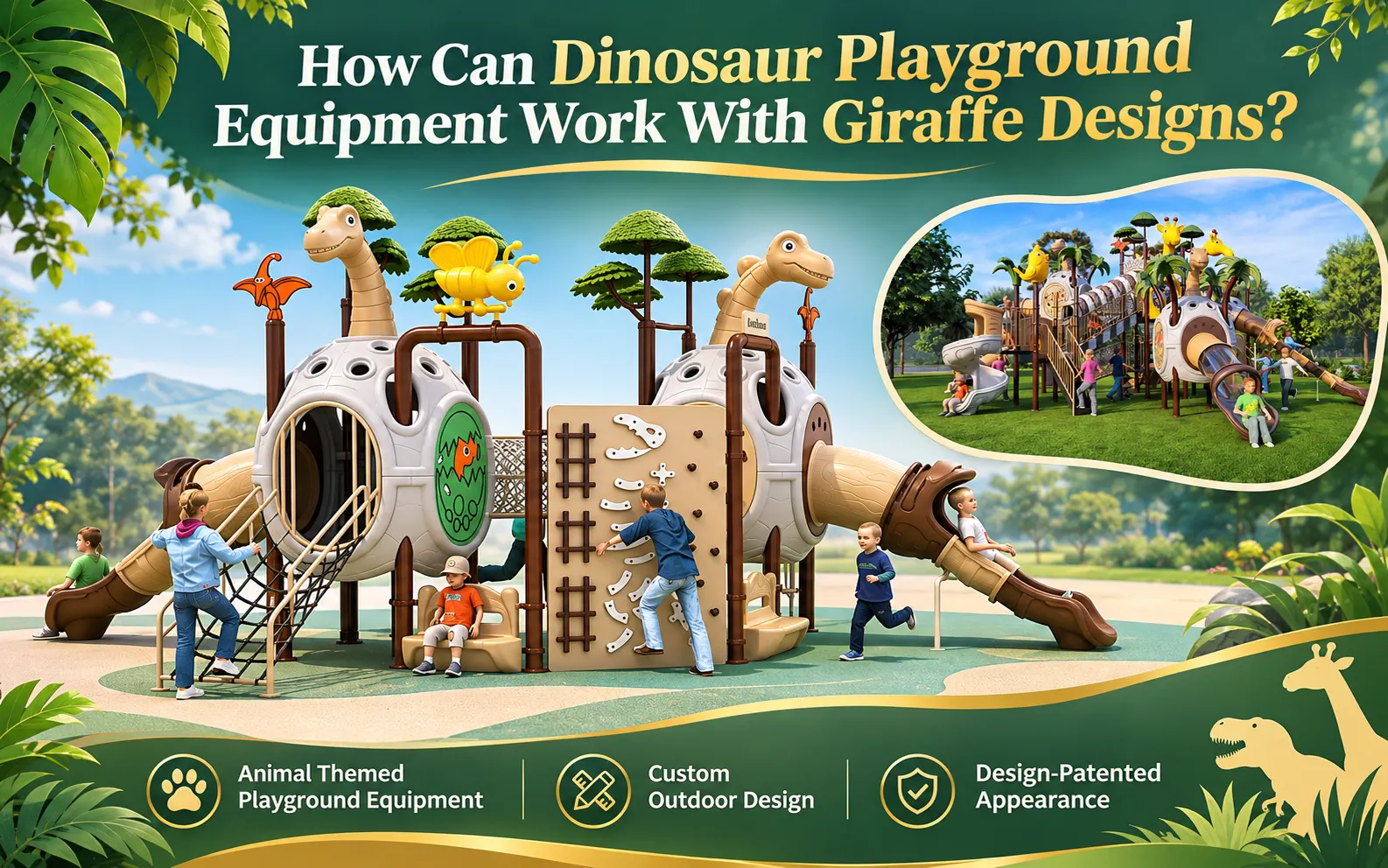
A spectacular animal-shaped playground can win attention in a rendering but disappoint once children arrive. Oversized decorations may consume valuable space, awkward climbing routes may interrupt play, and unclear specifications can create expensive changes after ordering. For commercial buyers, the challenge is finding an imaginative design that also works as reliable equipment. Combining Animal Themed Playground Equipment with practical site planning, varied activities, and carefully reviewed construction details provides a better starting point.
Successful Dinosaur Playground Equipment combines recognizable animal shapes, age-appropriate play activities, suitable materials, and a layout adapted to the available site. By integrating Giraffe Playground Equipment into a coordinated jungle setting, buyers can create one distinctive attraction instead of separate decorative structures. Effective Animal Themed Playground Equipment should support climbing, sliding, discovery, supervision, accessibility, and long-term maintenance while meeting applicable project safety requirements.
The following nine questions reveal what matters before selecting, customizing, and ordering a themed playground.

How Can Dinosaur And Giraffe Characters Create One Coherent Playground Theme?
A dinosaur belongs to a prehistoric world, while a giraffe suggests an African savanna. Combining both characters can seem unusual until the designer establishes a shared visual language. The solution is not necessarily to make every animal look realistic. Instead, buyers can build an imaginative expedition theme with tropical vegetation, playful animal silhouettes, warm earth colors, and a recognizable path through the space.
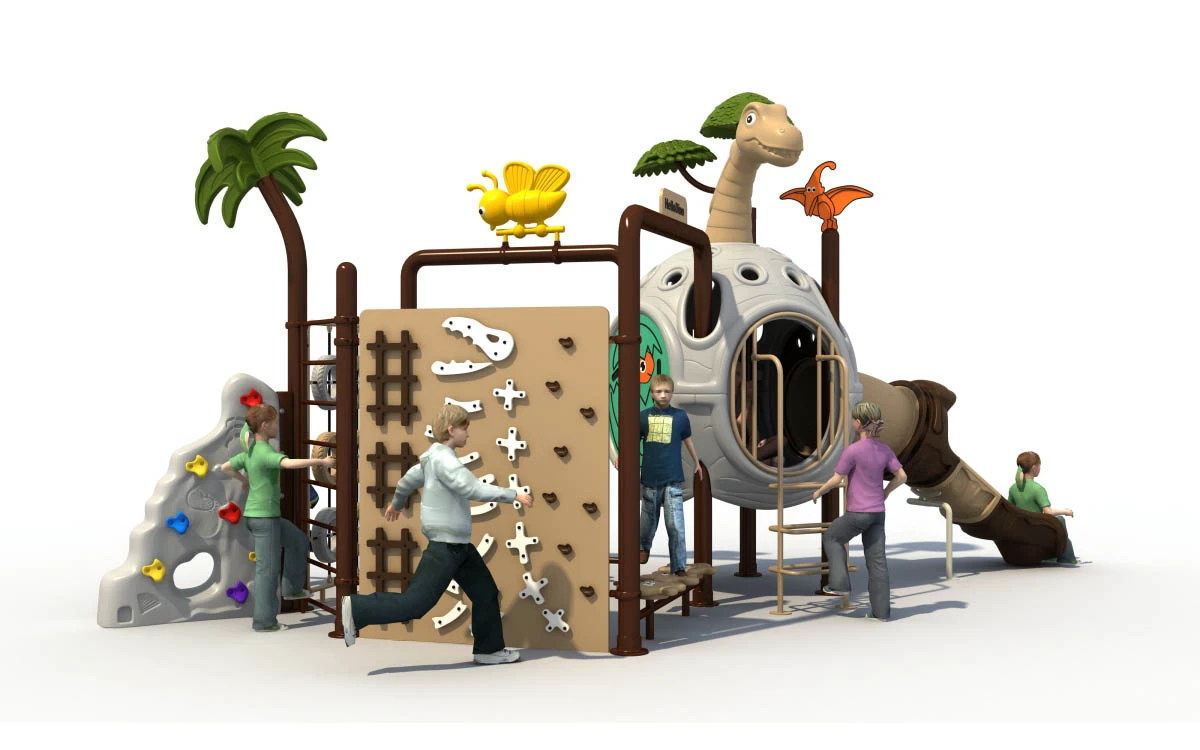
Imagine children entering an explorer’s garden. A giraffe-shaped tower becomes a lookout point, while dinosaur-inspired decorations suggest hidden discoveries nearby. Curved slides represent movement through the landscape, and bridges connect different parts of the adventure. This approach gives Dinosaur Playground Equipment a consistent identity without requiring every component to resemble an animal.
How Should The Characters Be Positioned?
Start by deciding which figure is the main visual landmark. The tallest giraffe elements may establish a recognizable skyline, while dinosaur characters, eggs, fossil-inspired panels, or jungle details support the story at a smaller scale. From the entrance, visitors should understand the attraction quickly. From inside the playground, children should discover new details rather than see everything at once.
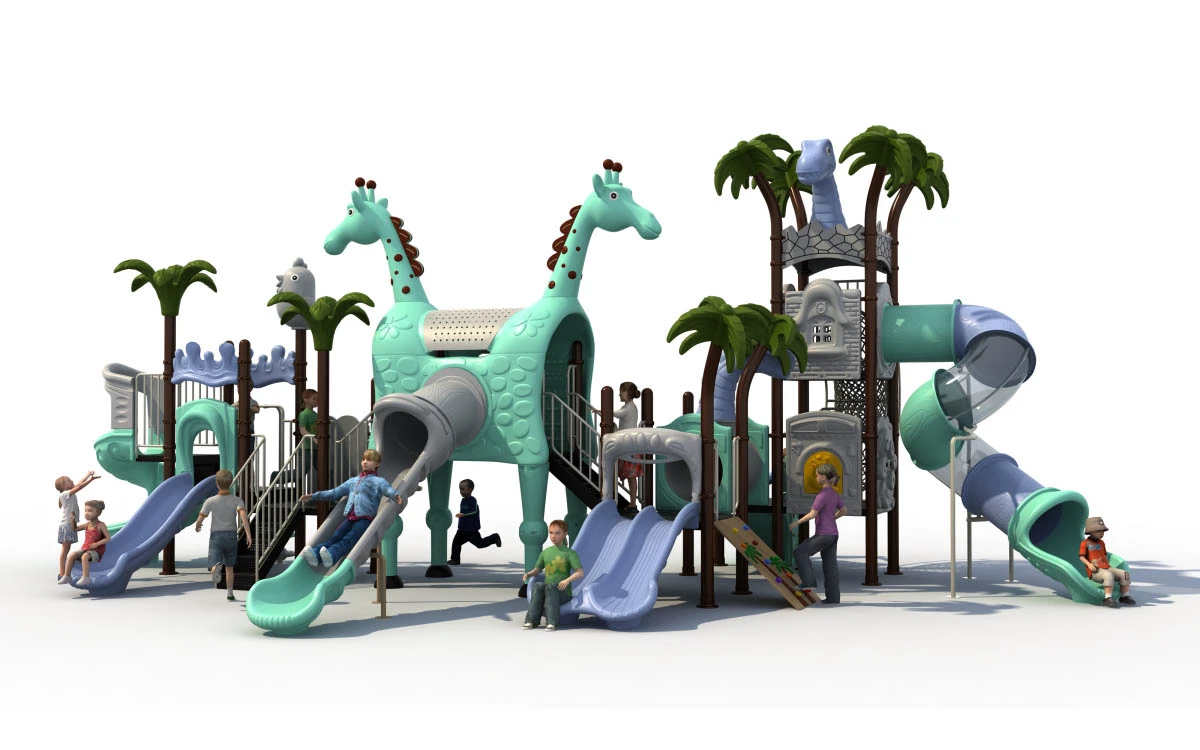
Color consistency also matters. Turquoise and pale green can create a fresh, contemporary interpretation, while yellow, brown, and stone gray produce a warmer explorer aesthetic. Maintain coherent proportions between figures, platforms, slides, and connecting elements. Finally, leave visual openings so adults can supervise movement. A theme succeeds when its storytelling strengthens the experience instead of obscuring play.


Which Play Activities Make An Animal-Shaped Playground More Than Decoration?
A beautiful playground should not depend on visual appeal alone. Buyers need to understand what children can actually do after approaching the structure. Slides offer an obvious destination, but the journey matters just as much. A carefully designed route may begin with accessible entry points, continue through steps or suitable climbing challenges, and lead to a platform where children choose another activity.
Consider different types of movement instead of simply increasing the number of slides. A short climbing sequence can offer one level of challenge, while a net connection or enclosed passage creates another. Interactive panels introduce quieter exploration between active play sessions. In a well-planned set of Animal Themed Playground Equipment, these activities should connect logically rather than compete for the same narrow platform.
How Can Play Routes Support Different Activity Levels?
Design a main circulation route that is understandable and easy to supervise. Where the approved structure permits, add alternative paths for children who enjoy more demanding climbing or prefer a slower experience. Keep slide exits clear of approaching children, provide convenient ways to return to entry points, and avoid creating unnecessary dead ends.
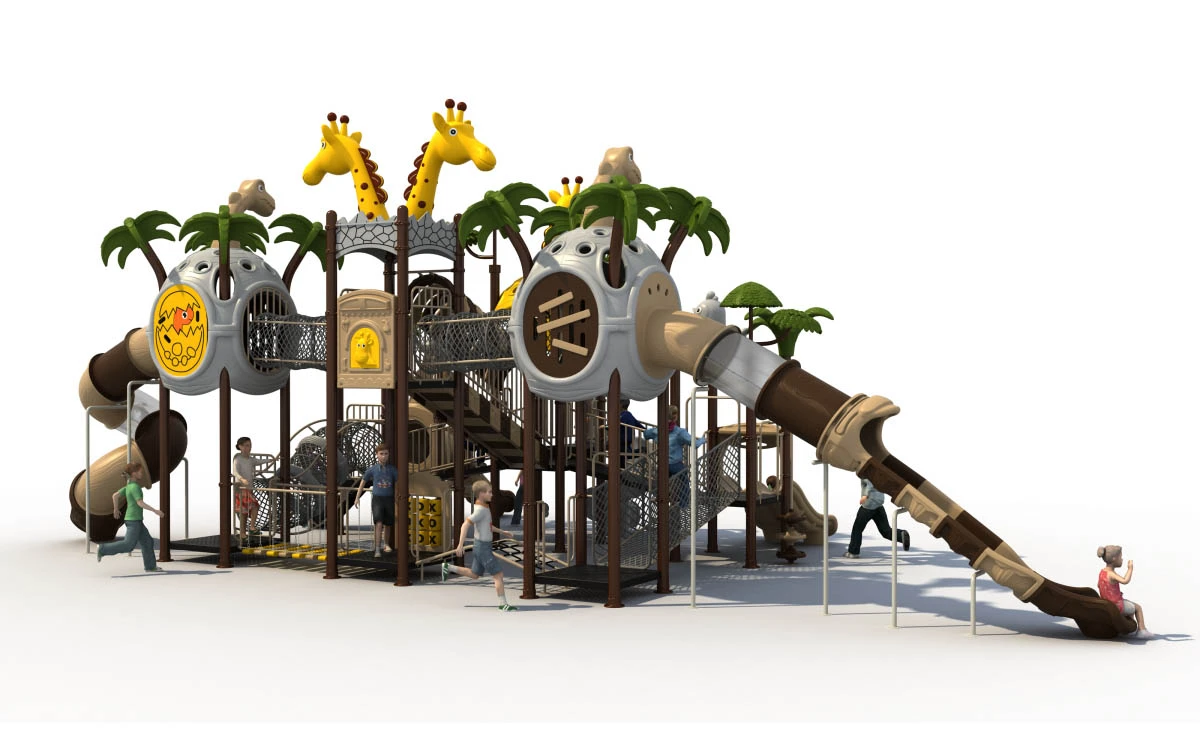
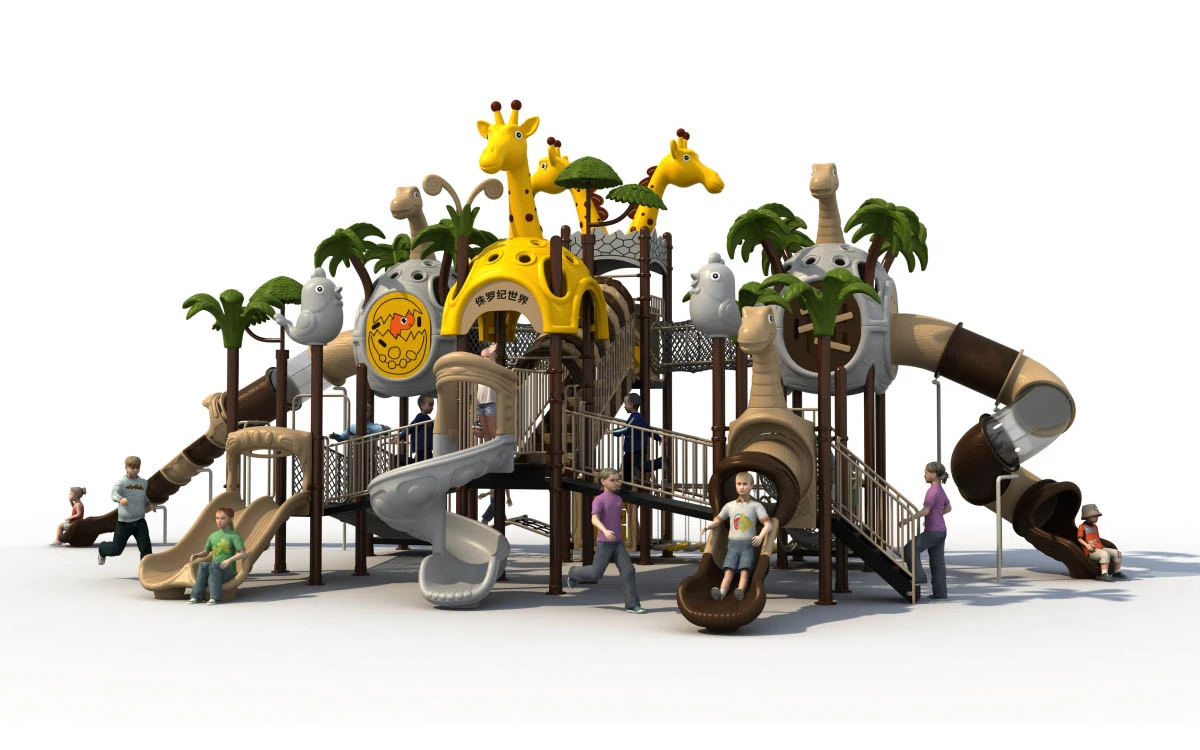
The supplied JQ designs illustrate combinations of giraffe-shaped towers, stairways, open slides, enclosed slides, elevated connections, and decorative features. Exact activities depend on the selected model. For each proposed feature, ask whether it introduces a genuinely new experience. The strongest commercial play structures create opportunities for exploration, cooperation, movement, and repeat visits without relying on unnecessary complexity.
How Should Age Groups And Inclusive Play Shape The Final Design?
Children’s interest in animals crosses age groups, but their movement skills and tolerance for physical challenges vary considerably. A friendly giraffe character may attract younger visitors, while older children are more interested in elevated routes, climbing tasks, and multiple ways to move through the equipment. Buyers should therefore begin with the intended users rather than assume a single configuration works for everyone.
For example, a preschool project may prioritize manageable access heights, shorter activity sequences, clear supervision, and age-suitable movement. A public park serving older children may require more varied climbing and crossing opportunities. When evaluating Giraffe Playground Equipment, request the recommended age range and maximum fall height for the exact model. Do not infer either value from the height of a decorative animal head.
What Makes An Animal Playground More Inclusive?
Inclusion begins before children reach the equipment. Consider how families approach the playground, where caregivers can observe, whether accessible routes connect to meaningful activities, and whether children with different physical abilities can participate in shared experiences. Ground-level interactive elements, sensory details, and social play opportunities can complement elevated structures when appropriately designed.
A tall tower should not be the only interesting part of the space. Children who cannot use a particular climbing route should still have worthwhile activities available. Review the local accessibility requirements and involve qualified designers when accessibility is part of the project brief. The objective is neither to eliminate challenge nor to promise universal access to every feature; it is to create thoughtful opportunities for participation across the play environment.
How Much Space Does A Dinosaur And Giraffe Playground Actually Require?
One of the most expensive planning mistakes is confusing the equipment footprint with the space needed for safe operation. A structure may fit within the available dimensions while its slides, access points, circulation paths, and required clearances extend beyond the intended boundary. This is particularly relevant for large animal-shaped playgrounds because sculptural heads and projecting components can make the product appear bigger or smaller than its functional layout.
Before requesting Dinosaur Playground Equipment, prepare an accurate site plan that shows usable length and width, slopes, boundaries, entrances, nearby structures, and known underground services. Include trees, overhead obstacles, drainage points, and any access restrictions for delivery equipment. The supplier can then assess the play structure against the usable area rather than a rough estimate.
What Should A Site Layout Drawing Include?
A useful proposal should distinguish equipment dimensions, the applicable use zone, fall-height information, surfacing requirements, and normal circulation space. The approved fall heights and destination standards determine critical safety details; decorative features do not provide a shortcut for calculating them. Ask whether slide exits, entry routes, and any other activity zones interact, and confirm that the layout follows the requirements governing those combinations.
Finally, study supervision lines and maintenance access. Can adults see the main transition areas? Is there enough room to inspect and clean components? Can installers reach the foundations without disturbing surrounding construction? A compact layout can be excellent, but only when these questions are resolved before manufacturing. Accurate measurements protect both the project budget and the eventual user experience.
Which Materials And Finishes Are Suitable For A Commercial Outdoor Playground?
Outdoor playground materials face a demanding combination of sunlight, rain, temperature changes, repeated contact, cleaning, and continuous use. Buyers should evaluate the entire material system rather than focus only on the visible animal decorations. Supporting structures, platforms, slides, panels, connecting hardware, and protective finishes each have different performance requirements.
Depending on the selected configuration, Animal Themed Playground Equipment may incorporate engineered plastic components, metal support structures, stainless steel elements, and climbing ropes or nets. Polyethylene-based materials are often considered for molded playground parts because they allow distinctive forms and colors. However, the actual grade, UV stabilization, structural strength, surface treatment, and suitability for the intended application must be verified in the approved specification.
How Should Buyers Compare Maintenance Requirements?
Ask which components can be individually replaced, how surfaces are cleaned, and whether exposed connections remain accessible for inspection. Decorative animal forms deserve special attention: complex recesses may collect debris, while removable panels can simplify maintenance if their fixing method is properly engineered. Metal parts should have finishes suitable for the local environment, especially where coastal exposure or high humidity creates corrosion concerns.
Request written information about material thicknesses, coatings, fasteners, warranty exclusions, and recommended inspection procedures. Also confirm the availability of spare parts for high-contact components. Durable equipment is not simply equipment that feels heavy. It is a system whose materials, connections, protective finishes, and maintenance plan have been chosen for the conditions in which it will operate.
| Component | What Buyers Should Verify |
|---|---|
| Animal-Shaped Parts | Material grade, UV resistance, edge treatment, and secure attachment. |
| Support Structure | Steel specification, protective finish, connections, and corrosion resistance. |
| Slides And Platforms | Surface finish, load requirements, drainage, and maintenance access. |
| Ropes And Netting | Rope construction, connections, inspection guidance, and replacement options. |
What Makes Giraffe And Dinosaur-Shaped Components Both Distinctive And Practical?
A recognizable animal form is valuable only when its proportions work with the playground underneath. The giraffe’s long neck creates a striking landmark, but that visual height should not interfere with clearances, movement, inspection, or the supporting structure. Similarly, dinosaur-inspired forms should be designed around the function of the component rather than force an uncomfortable climbing position simply to preserve a particular silhouette.
The featured Giraffe Playground Equipment concepts illustrate different ways to combine recognizable animal figures with activity platforms and slides. Some references use turquoise giraffe bodies as play towers; others introduce yellow giraffe heads above an adventure-style structure. These variations show why the visual character and the functional layout should be considered together.
How Does A Design Patent Add Value?
JQ Playground identifies the dinosaur-and-giraffe top design featured in this range as design-patented. This is relevant to buyers seeking a distinctive commercial attraction because the appearance is associated with a specifically developed design rather than a generic decorative concept. However, design protection concerns the registered appearance and its legal scope; it does not automatically establish product safety, technical performance, or exclusive rights in every country.
Buyers can request the applicable patent registration details, jurisdiction, protected design illustrations, and the relationship between the patented appearance and the model being quoted. They should also confirm whether planned changes to character shapes or decorations affect the original appearance. The final goal is a memorable design supported by accurate drawings, practical construction, and transparent product documentation.
Which Safety Documents And Design Records Should Buyers Request?
Safety verification is a project-specific process, not a slogan. A supplier may manufacture several families of playground equipment, but a certificate or test report for one configuration does not automatically cover another. Buyers should identify the intended destination market, installation environment, age group, and applicable requirements before deciding which documents are necessary.
Depending on the destination and project, relevant references may include ASTM F1487 in the United States or EN 1176 in European markets. Local rules, owner requirements, accessibility provisions, installation conditions, and surfacing standards may introduce additional obligations. When assessing Dinosaur Playground Equipment, request evidence that applies to the approved model and configuration rather than relying on a general claim that all playground products are certified.
What Should Be Checked Before Production Approval?
Review the dimensioned layout, intended age range, relevant fall heights, component specifications, anchoring details, installation instructions, and applicable test reports. If the project includes unusual decorative heads, bridges, or enclosed play passages, ensure that these features are included in the technical review. The final drawing should be consistent with the quotation, production specification, and required installation clearances.
Intellectual property documentation is a separate matter. A design patent can support the originality of an appearance, but it must not be described as a safety certification. Likewise, general factory qualifications do not replace technical evidence for the selected equipment. A reliable supplier should explain which documents are available, which model they cover, and which additional checks must be completed for the buyer’s specific project.
- Approved layout and complete equipment dimensions.
- Applicable safety standards and model-specific evidence.
- Installation, anchoring, and inspection documentation.
- Design-patent information where relevant.
How Can Buyers Customize The Theme Without Losing Budget Control?
Customization should solve a project problem, not simply increase the number of decorative details. Start by distinguishing changes that affect appearance from changes that affect engineering. Adjusting an approved color scheme is not the same as redesigning a support structure, adding another activity platform, or changing the geometry of a large molded animal component.
For commercial Animal Themed Playground Equipment, useful customization priorities include adapting the overall layout, selecting appropriate play activities, coordinating colors, and refining the positions of themed figures. Owners should identify which elements are essential to the visitor experience and which are optional. This makes it easier to compare a base proposal with an upgraded design without changing the project objectives repeatedly.
Which Decisions Have The Greatest Cost Impact?
Important pricing factors include equipment scale, structural complexity, molded-part requirements, material selection, slide configurations, finishing processes, packaging volume, and destination logistics. New molds or specially developed decorative components may affect tooling costs and lead times. Site preparation, protective surfacing, foundations, freight, duties, and installation can also contribute significantly to the complete project budget.
Instead of requesting one undefined total price, ask the manufacturer to separate the equipment quotation from other services and project expenses. Compare proposals using the same dimensions, functions, material specifications, and delivery terms. Where the budget is limited, prioritize a strong character identity and useful play routes before introducing expensive secondary decorations. A good custom design preserves the experience while making commercial decisions easier to understand.
What Should Buyers Prepare Before Requesting A Custom Playground Quotation?
The quality of a quotation depends heavily on the quality of the project brief. A supplier cannot accurately compare structural options, transportation requirements, or installation responsibilities when the request contains only an attractive reference image and an approximate budget. Providing practical project information from the beginning reduces unnecessary revisions and helps buyers evaluate different proposals on equal terms.
Start with the installation country, site dimensions, target users, expected project schedule, and preferred play activities. Explain whether the location is a public park, school, residential development, resort, or other commercial environment. If Giraffe Playground Equipment is intended as the main attraction, identify the desired character appearance, visual scale, and any model references. Include photographs or CAD drawings wherever available.
How Should The Design And Delivery Process Be Organized?
A practical process moves from initial consultation to concept review, technical confirmation, quotation approval, production, inspection, packing, shipping, and installation support. JQ Playground offers customized playground design and project assistance, but the exact scope should always be stated in the commercial agreement. Ask which drawings, inspection records, packing lists, spare parts, and assembly instructions will be supplied.
Confirm the quotation currency and Incoterm, production schedule, payment milestones, estimated package dimensions, freight responsibilities, and after-sales conditions. Distinguish factory completion from arrival at the site and final installation. Before authorizing production, ensure that the same approved configuration appears in both the technical documents and the quotation. These steps turn an exciting playground concept into a project that contractors, procurement teams, and owners can manage with confidence.
- Country, project type, and usable site dimensions.
- Target age groups and preferred activities.
- Dinosaur and giraffe design references.
- Estimated budget, required documents, and project schedule.
- Preferred delivery terms and installation arrangements.
A memorable dinosaur-and-giraffe playground combines imaginative characters with useful activities, responsible engineering, clear documentation, and realistic project planning. Evaluate the complete play experience, not just the appearance, and choose a design that fits your site and long-term operating needs.


 English
 Español
 Français
 Deutsch
 Português