


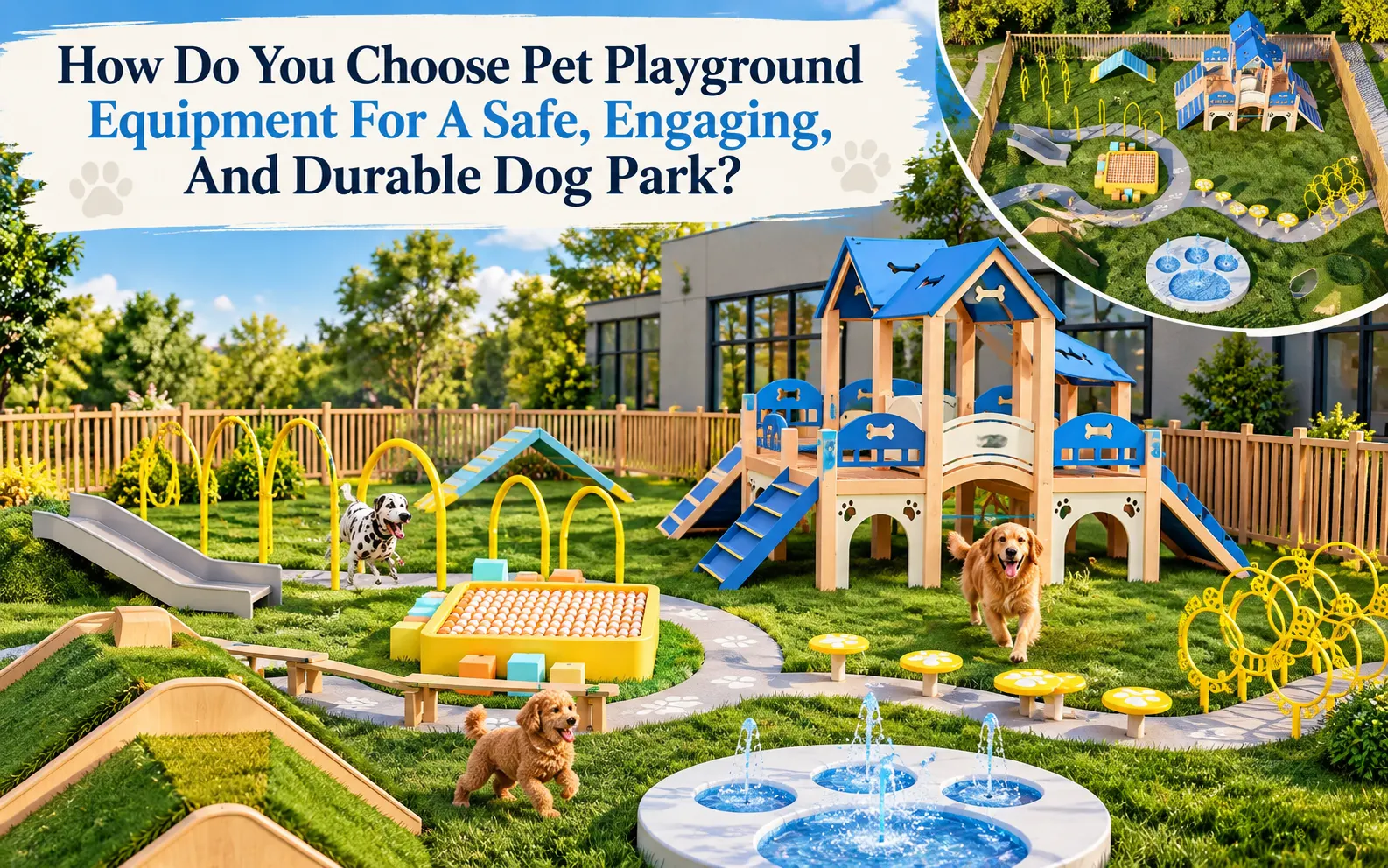
Building a successful dog park requires more than selecting attractive obstacles. The right pet playground equipment should support natural canine movement, suit different dog sizes, withstand frequent use, and fit the long-term operating needs of the facility.
Whether you are developing a public dog park, residential pet amenity, dog daycare center, or commercial pet destination, choosing suitable commercial pet playground equipment involves careful decisions about layout, activity difficulty, materials, safety, maintenance, and project cost.
A thoughtfully designed dog park gives pets opportunities to explore, exercise, and interact with their owners. However, poorly positioned obstacles, slippery surfaces, unsuitable platform heights, and congested activity routes can make even an expensive project difficult to operate.
When selecting outdoor pet playground equipment, buyers should consider the site environment, expected users, installation conditions, and ongoing maintenance responsibilities. Working with an experienced manufacturer can simplify equipment selection, custom design, production coordination, and installation planning.
Choose equipment around how dogs will actually use the park, not simply how many structures can fit into the available space. A successful project balances active play, clear movement routes, owner supervision, and practical maintenance.

1. What Kind Of Pet Play Space Do You Actually Need?
Start by defining the purpose of the facility. A residential dog park, public recreation area, pet resort, and professional daycare center may use similar obstacles, but their operational requirements can be very different.
The ideal selection of pet playground equipment depends on visitor frequency, expected dog sizes, supervision arrangements, available land, and whether the project focuses on free play, structured enrichment, or guided agility activities.
Public Dog Parks And Residential Communities
Public facilities typically require simple, recognizable activities that owners can supervise easily. Low ramps, wide tunnels, stepping platforms, and ground-level obstacles can provide different experiences without making the park unnecessarily complicated.
For apartment complexes and residential developments, compact commercial pet playground equipment can become part of a broader pet-friendly amenity program. Equipment should leave adequate space for walking, social interaction, and comfortable movement around each activity station.
Dog Daycare Centers, Pet Hotels, And Resorts
Commercial pet businesses often need flexible activity areas for scheduled, supervised sessions. Dog agility tunnels, balance platforms, climbing ramps, and interactive obstacles can form short exercise routes that staff can adjust to different groups.
Here, outdoor pet playground equipment should be selected with cleaning access, routine inspection, manageable group sizes, and convenient supervision in mind.
Prioritize durability, open space, accessible circulation, and intuitive play.
Prioritize supervised activity routes, cleanability, and adjustable challenge levels.
Combine visual appeal, practical recreation, owner comfort, and easy maintenance.
2. Location And Layout: Let The Site Guide The Design
A dog park layout should follow the actual conditions of the land rather than forcing an equipment arrangement into the available area.
Before ordering pet playground equipment, collect accurate measurements and identify property boundaries, ground slopes, drainage points, existing trees, utility lines, fencing, entrances, maintenance access, and nearby pedestrian routes.
Separate Activity Areas Without Creating Bottlenecks
Where space permits, dividing small and large dogs into separate fenced areas can make the environment easier to manage. Different activity levels may also justify a quiet zone and a more energetic exercise area.
Position outdoor pet playground equipment so that dogs have space to approach obstacles, move through them, and exit without immediately encountering another structure or a crowded pathway.
Double-gated entrances can help reduce accidental escapes. Avoid placing narrow entrances directly beside popular activity stations, and maintain clear sightlines for owners and supervisors.
Evaluate Drainage, Shade, And Ground Conditions
Ground conditions influence both equipment installation and daily park maintenance. Poor drainage can create muddy entrances, slippery approaches, standing water, and premature wear around heavily used obstacles.
Depending on the project, suitable ground treatments may include properly designed pet-use synthetic turf systems, natural grass, engineered surfaces, or other locally approved options. Consider drainage, temperature, hygiene, paw comfort, and cleaning requirements rather than selecting flooring only by appearance.
When planning commercial pet playground equipment, allow space for shade, drinking water, waste stations, seating, accessible owner pathways, and equipment servicing.
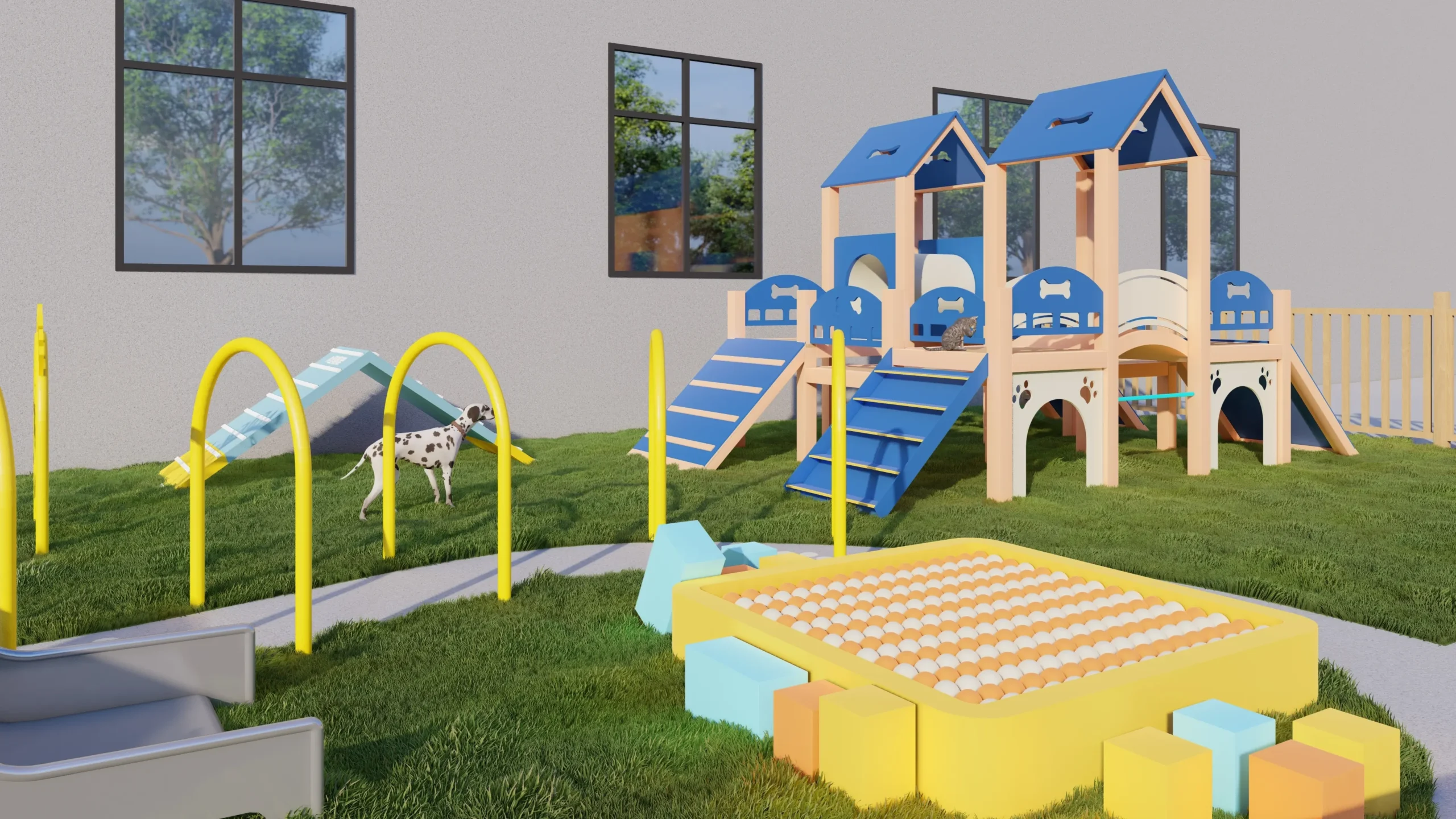
Before approving the final design, confirm these essential considerations:
- Appropriate circulation around every obstacle.
- Separate areas for different dog sizes where practical.
- Secure entrance and exit arrangements.
- Suitable drainage and slip-resistant approaches.
- Owner visibility and access to drinking water.
- Space for cleaning, inspection, and emergency access.
3. Match Playground Equipment To Dog Size, Ability, And Behavior
Dogs differ in height, weight, mobility, confidence, experience, and physical condition. A challenging obstacle for an athletic adult dog may be unsuitable for a puppy, senior dog, or smaller breed.
Choosing appropriate pet playground equipment therefore involves more than assigning equipment by a simple weight category.
Low-Intensity Activities For Smaller Or Less Confident Dogs
Wide, low platforms, gentle ramps, short tunnels, and ground-level exploration features can offer approachable activities. These structures allow handlers to introduce movement gradually without requiring unnecessary jumping or elevated balancing.
For beginner-friendly parks, commercial pet playground equipment should offer several optional routes rather than forcing dogs to complete one obstacle before accessing another.
Progressive Challenges For Active Adult Dogs
More experienced dogs may benefit from weaving poles, agility tunnels, balance challenges, controlled climbing activities, and structured obstacle sequences.
However, elevated structures and jumping activities require careful attention to platform height, approach angle, landing space, traction, and intended users. Dogs should never be forced to complete obstacles beyond their physical ability or comfort level.
A flexible selection of outdoor pet playground equipment can create increasing levels of challenge while retaining easier alternatives and sufficient open space.
| User Profile | Suitable Activity Approach | Planning Priority |
|---|---|---|
| Small Dogs | Low platforms, short tunnels, gentle ramps | Accessible dimensions and manageable heights |
| Active Adult Dogs | Weaving, tunnels, balance and agility routes | Secure footing and adequate movement space |
| Senior Or Mobility-Limited Dogs | Ground-level exploration and optional gentle activities | Comfort, accessibility and low physical demands |
| Mixed-Use Commercial Parks | Multiple difficulty levels and optional routes | Supervision, separation and flexible use |
4. Build A Balanced Equipment Mix: Tunnels, Ramps, Platforms, And Agility Obstacles
The most effective dog parks combine different movement experiences rather than filling every available corner with similar obstacles.
A coordinated group of pet playground equipment can support climbing, crawling, weaving, balancing, stepping, exploring, and interacting with handlers.
Dog Agility Tunnels And Crawl-Through Features
Dog agility tunnels offer enclosed passage activities and can form useful transitions between exercise stations. Their diameter, length, internal surface, visibility, and installation method should suit the dogs using them.
For commercial settings, inspect tunnel openings and connection points carefully. The structure should be stable, easy to clean, and positioned so dogs have unobstructed entry and exit routes.
Climbing Ramps, Bridges, And Balance Platforms
Ramps and elevated platforms introduce height changes and controlled balance challenges. The selected angles, heights, widths, and walking surfaces should correspond to the intended level of activity.
Outdoor installations require dependable weather resistance and secure footing. When comparing outdoor pet playground equipment, buyers should review the walking surface, structural connections, exposed edges, anchoring requirements, and availability of replacement parts.
Weaving Poles, Hurdles, And Interactive Stations
Weaving poles can support guided directional movement, while adjustable or appropriately sized hurdles can introduce more structured agility exercises. For general public parks, challenging equipment should be optional and clearly identified.
Good commercial pet playground equipment provides varied experiences without requiring every visiting dog to jump, climb, or balance at the same difficulty level.
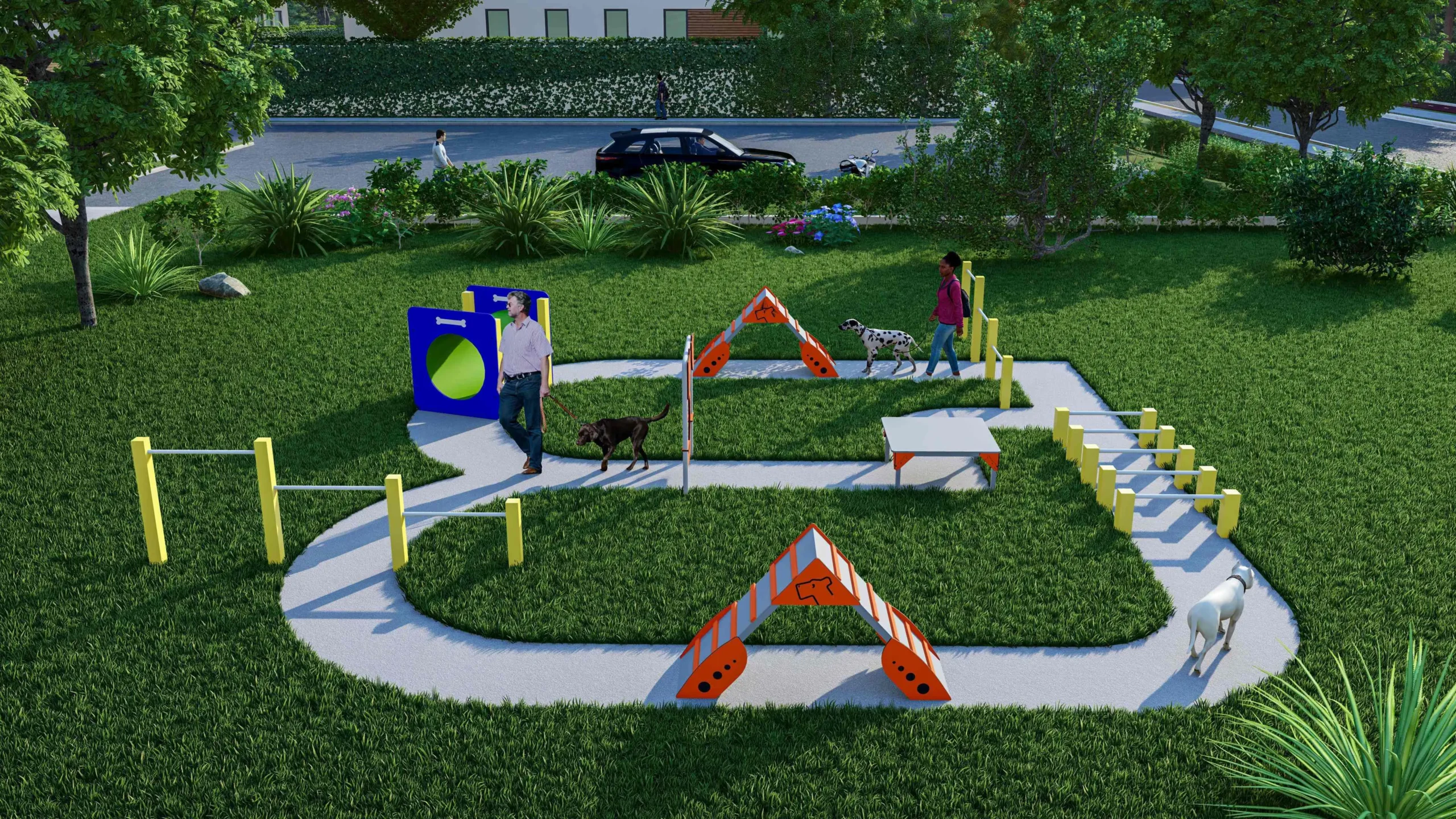
Example Equipment Combination For A Commercial Dog Park
A balanced equipment package could include:
- One or more dog agility tunnels for crawling activities.
- Low climbing ramps for gradual elevation changes.
- Balance platforms for controlled stepping and exploration.
- Weaving poles or low hurdles for guided exercise.
- Open areas where dogs can move freely or rest.
The final quantity and arrangement should be based on the site survey, user profile, equipment dimensions, and the space needed between activities.
5. Safety, Materials, And Weather Resistance: What Should Buyers Check?
Equipment safety is not determined by appearance or material thickness alone. Structural stability, secure fastening, grip, comfortable movement, hygiene, and appropriate installation are equally important.
Before purchasing pet playground equipment, request specifications explaining how the proposed materials and designs suit the intended environment and user group.
Choose Durable Materials For Outdoor Exposure
Depending on product design, manufacturers may use coated metal structures, suitable plastic panels, engineered boards, or other weather-resistant components. Material suitability must be evaluated for each application rather than assumed from the material name.
For outdoor pet playground equipment, ask about corrosion protection, UV exposure, water resistance, surface temperature, cleaning compatibility, and component replacement.
Dog-contact surfaces should provide appropriate traction and avoid sharp edges, protruding hardware, hazardous gaps, or finishes that become unsafe when wet. Particular attention is needed where dogs run, climb, turn, or land.
Verify Safety Documentation And Project Requirements
Commercial buyers should review installation drawings, material information, structural details, inspection procedures, and documents relevant to the destination market.
Standards associated with children’s playgrounds, such as EN 1176 or certain ASTM playground standards, should not automatically be treated as certification that a product is suitable for canine use. Ask which standards and test documents apply to the specific product and project.
When sourcing commercial pet playground equipment, request product-specific material reports, applicable testing documentation, and installation information. Confirm local dog park rules, accessibility requirements, and other obligations with qualified professionals and local authorities before installation.
Plan Maintenance Before Opening Day
A practical maintenance program should cover routine visual checks, fastening inspections, surface wear, cleaning, drainage, and damaged components. Structures showing unsafe movement, broken connections, or slippery surfaces should be taken out of use until repaired.
Choose pet playground equipment with accessible connections and clear replacement procedures. Long-term serviceability can be more valuable than a complicated structure that is difficult to inspect or maintain.
6. From Design To Opening: Budget, Customization, And After-Sales Support
Successful procurement connects the site plan, equipment specification, manufacturing process, delivery arrangements, and installation responsibilities.
The lowest initial quotation is not always the lowest project cost. Buyers comparing commercial pet playground equipment should examine the complete scope of supply and the long-term costs associated with operation.
Understand The Complete Project Budget
A realistic budget may include equipment design, selected components, ground preparation, foundations, surfacing, fencing, transportation, import charges, installation, inspection, signage, and future maintenance.
For international projects, confirm packaging details, loading arrangements, shipping terms, installation documentation, and the responsibilities of each contractor before ordering.
Consider Custom Sizes, Colors, And Equipment Combinations
Standard equipment may suit straightforward projects, while customized structures can respond to unusual site dimensions, specific themes, or different operational needs.
JQ Playground supports OEM and ODM projects, including customized layouts, colors, dimensions, and product combinations. The proposed outdoor pet playground equipment can be discussed according to the available space, intended users, and project budget.
Confirm Installation And Replacement-Part Support
Before production, approve equipment drawings, quantities, specifications, installation methods, and delivery requirements. Clarify which site preparations the buyer must complete before the equipment arrives.
Ask the supplier about warranty scope, maintenance guidance, replacement components, and available installation assistance. With properly documented responsibilities, the entire project becomes easier to coordinate.

7. How Do You Compare Pet Playground Equipment Suppliers?
Finding the right manufacturer requires more than comparing product photographs. A reliable supplier should be able to explain how the equipment will fit your project and what technical information is available before production.
When evaluating pet playground equipment manufacturers, examine design support, product specifications, customization flexibility, communication, and delivery responsibilities.
Commercial Buyer Checklist
- Project Suitability: Does the proposed equipment match the site, dog sizes, and activity goals?
- Design Drawings: Can the supplier provide dimensions and a coordinated layout?
- Material Specifications: Are construction materials, finishes, and walking surfaces clearly identified?
- Installation: Are anchoring details, manuals, and on-site responsibilities explained?
- Documentation: Are relevant reports and project-specific requirements addressed?
- Commercial Terms: Are the equipment price, packing, shipping terms, and lead time clear?
- After-Sales: Are spare parts, warranty boundaries, and maintenance guidance available?
For larger developments, request a coordinated quotation rather than purchasing disconnected obstacles. A complete selection of commercial pet playground equipment should be evaluated for overall layout consistency, ease of installation, and future expansion.
8. Common Mistakes To Avoid When Planning A Dog Playground
Many dog park problems begin during planning rather than manufacturing. Recognizing these risks early can prevent expensive changes after installation.
Crowded activity stations limit movement and create unnecessary conflicts. Leave enough open space between structures.
One challenge level cannot meet every dog’s needs. Consider separate areas and optional difficulty levels.
Poor ground preparation can lead to mud, slippery approaches, and recurring maintenance problems.
Photographs alone cannot confirm dimensions, materials, anchoring, installation needs, or suitability.
A well-planned purchase of outdoor pet playground equipment should address these issues before the final equipment list is approved.
9. Frequently Asked Questions About Pet Playground Equipment
Can A Small Outdoor Area Become A Functional Dog Playground?
Yes. A compact area may work well with a few carefully chosen obstacles, such as a low ramp, short tunnel, or balance platform. The important factor is preserving appropriate movement space, clear circulation, and safe access. A small collection of pet playground equipment can be more practical than an overcrowded layout.
What Equipment Works Best For An Outdoor Commercial Dog Park?
The best combination depends on the intended dogs and site conditions. Popular options include tunnels, low climbing ramps, weaving poles, balance platforms, and other agility activities. Choose commercial pet playground equipment according to movement patterns, durability, supervision, and maintenance requirements rather than popularity alone.
How Do I Choose Materials For An Outdoor Dog Playground?
Review climate conditions, expected frequency of use, corrosion resistance, surface grip, cleaning methods, and replacement options. Suitable outdoor pet playground equipment should use materials and finishes appropriate for the intended site and type of canine activity.
Can A Manufacturer Customize A Dog Park Layout?
Many manufacturers offer customizable component combinations, sizes, styles, and colors. JQ Playground provides design and customization support for projects with different site dimensions and requirements. Share a drawing or accurate measurements to discuss possible solutions.
What Information Should I Send To Request A Quotation?
Provide the installation location, site dimensions, expected dog sizes, preferred activities, required quantities, estimated budget, and delivery country. These details help the supplier prepare a more relevant selection of pet playground equipment and identify necessary customization.
10. Why Work With JQ Playground For Custom Pet Playground Projects?
JQ Playground has been involved in playground equipment manufacturing since 1995, supporting international buyers with product development, manufacturing, customization, and project services.
Our pet playground range includes dog agility tunnels, ramps, climbing structures, balance platforms, weaving obstacles, and other activity components for community, public, and commercial applications.
We help buyers select commercial pet playground equipment according to project dimensions, functional requirements, intended users, and visual preferences. OEM and ODM options are available for custom colors, layouts, product sizes, and equipment combinations.
From initial planning to manufacturing and installation guidance, JQ Playground aims to provide practical solutions for buyers developing new pet activity areas or expanding existing facilities.
Final Thoughts: Choose Equipment That Works Beyond Opening Day
Choosing a successful dog park equipment package is a long-term planning decision. Start with the users, assess the space, select an appropriate combination of activities, verify materials and technical requirements, and consider maintenance from the beginning.
Well-selected pet playground equipment can support varied exercise and exploration while helping operators maintain a welcoming, organized, and manageable facility.
For buyers planning new commercial dog parks, residential pet amenities, or pet service facilities, the right outdoor pet playground equipment should offer practical benefits throughout its service life, not only an attractive appearance on opening day.
Looking for a reliable manufacturer for your next pet activity project? Share your site dimensions, target dog sizes, preferred obstacle types, and project location. Our team can discuss suitable equipment combinations and customized layout options.
Explore Pet Playground Products Request A Custom Project Quote


 English
 Español
 Français
 Deutsch
 Português