


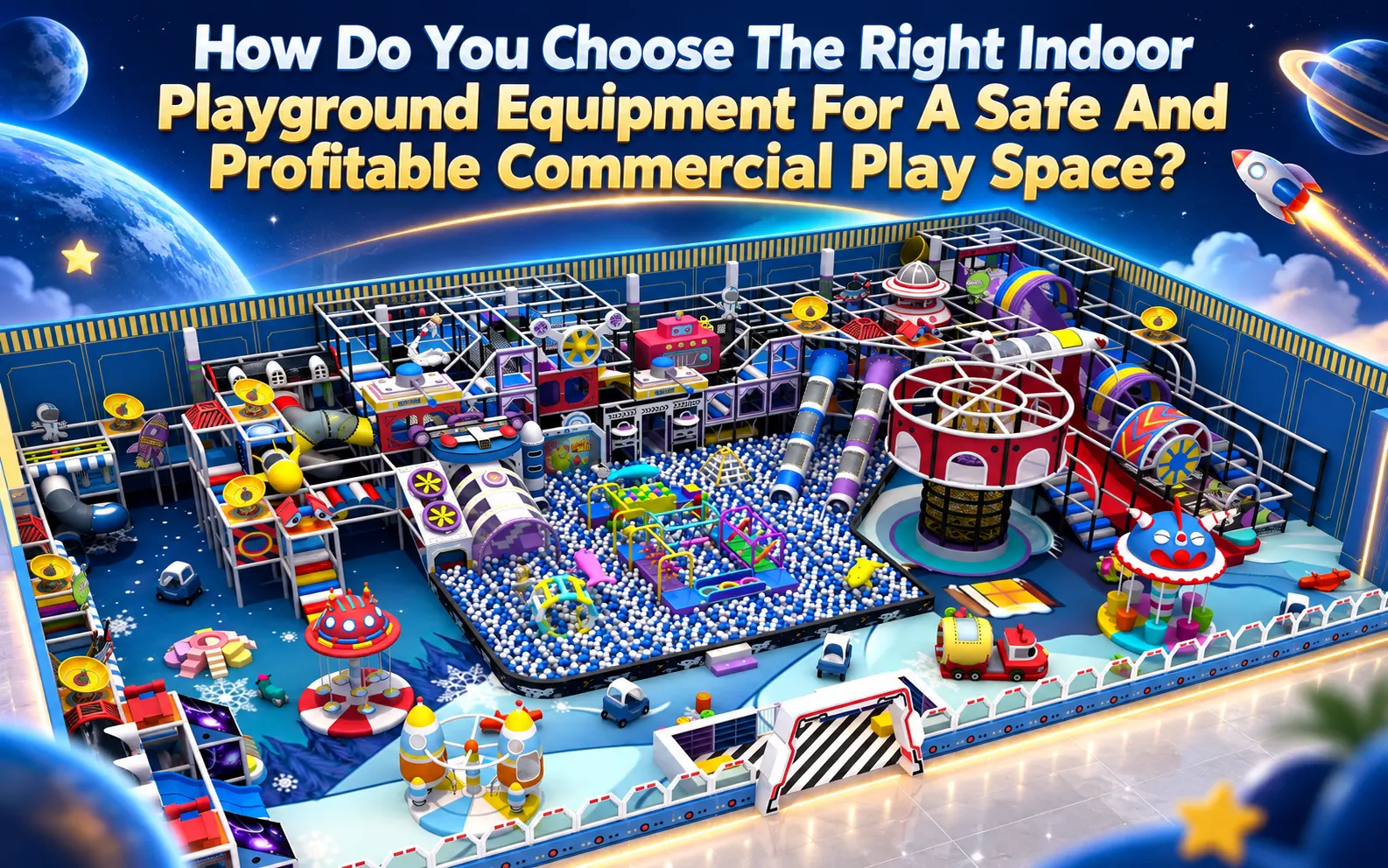
Choosing indoor playground equipment looks simple until floor limits, mixed ages, safety rules, budget pressure, and opening deadlines collide. A weak plan can create blind spots, overcrowded routes, costly revisions, delayed approvals, and attractions children quickly abandon. Those failures damage revenue and parent trust long after installation. The answer is not buying more features; it is building one coordinated system around your site, users, standards, and business model. This guide explains the decisions that turn a difficult equipment purchase into a safe, durable, engaging, and commercially practical play space.
The right indoor playground equipment fits the building, target ages, local safety requirements, operating model, and total project budget. Begin with an accurate site survey, separate toddlers, preschoolers, and older children, then balance soft play, climbing, slides, and interactive activities. Confirm applicable standards, certified materials, impact surfacing, clear sightlines, emergency access, installation responsibilities, maintenance plans, and spare-parts support before approving production. A qualified manufacturer should connect design, customization, manufacturing, delivery, installation guidance, inspection, and after-sales service in one accountable process.
The following six decisions will help you turn an empty venue into a play destination families choose repeatedly.
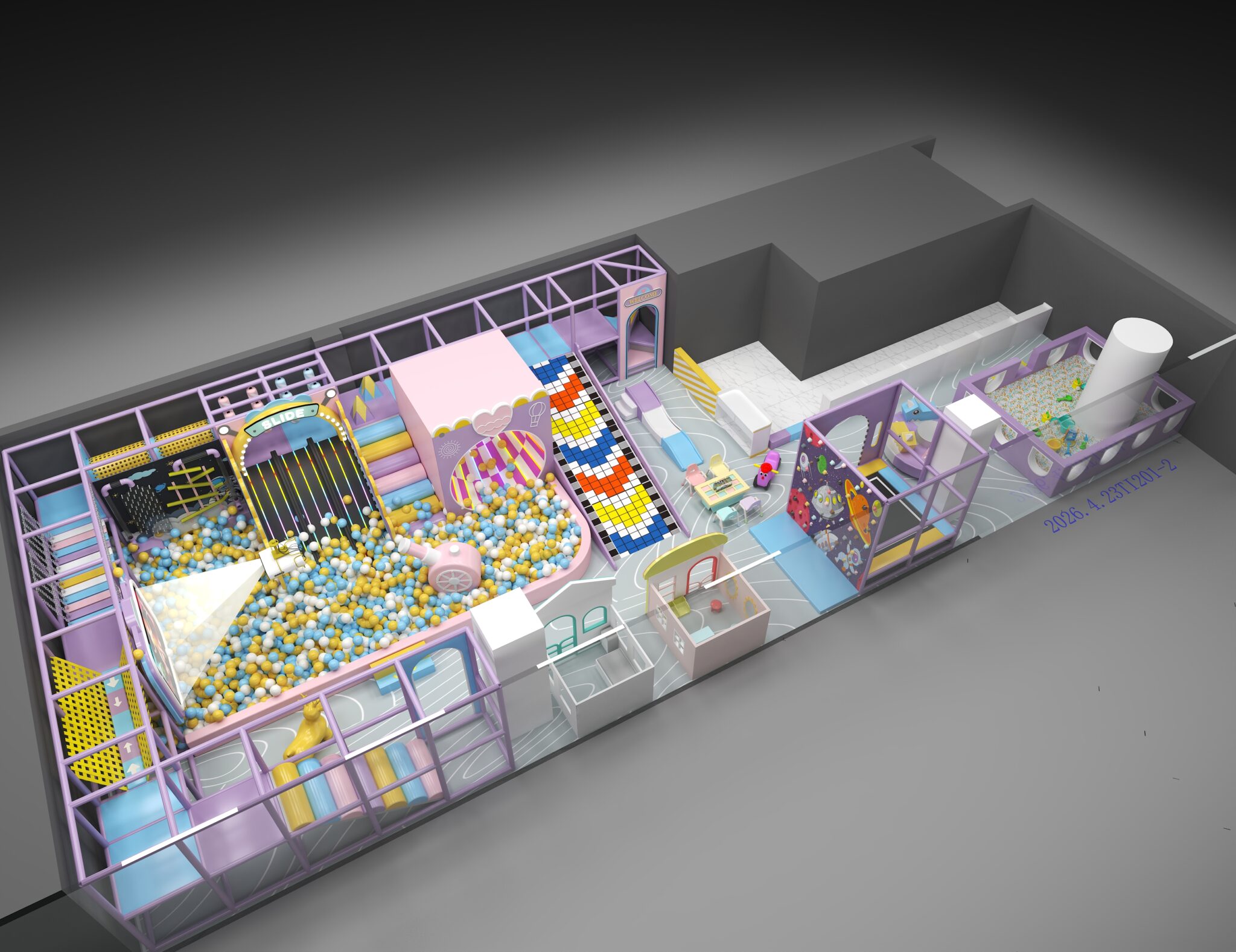
Six Decisions For Choosing Indoor Playground Equipment
What Kind Of Play Space Do You Actually Need?
Start with the business purpose, not a catalog. An indoor playground inside a preschool serves a different daily rhythm from one in a shopping mall, family entertainment center, hotel, restaurant, community facility, or municipal project. Define who will visit, why they will come, how long they should stay, and which outcomes matter. A school may prioritize development and manageable supervision; a mall may seek family dwell time; a ticketed center may depend on admissions, memberships, parties, food, and repeat visits. Each model changes capacity, staffing, seating, equipment intensity, and the acceptable balance between attraction value and operating cost.
Write a practical project brief before discussing themes. Record expected peak attendance, target ages, session length, admission model, party requirements, caregiver behavior, cleaning frequency, staffing level, planned opening date, and future expansion. Decide whether the venue needs a compact modular system, a signature custom attraction, or a hybrid. Kids indoor playground equipment for a café may emphasize low-height play, visibility, and quiet engagement, while a destination venue may need multi-level routes, challenging climbs, and strong visual identity.
The brief should define measurable success through capacity, throughput, visit duration, party bookings, repeat visits, downtime, and revenue per square meter. Do not let a dramatic indoor playground equipment rendering replace operating questions. Every indoor playground equipment feature should serve a user need or business goal, and every square meter should have a role.
Compare indoor playground equipment by capacity, user value, service access, and lifetime cost. The selected indoor playground equipment should preserve room for future programs and expansion. Indoor playground equipment should support future programs, expansion, and audience needs without disruptive revisions.
A manufacturer should challenge contradictions early. If capacity is too high for the usable area or the age range is too broad, revise the indoor playground equipment concept before detailed design. With more than 30 years of experience, our team develops indoor playground equipment around site conditions, local requirements, project goals, and long-term operation—not a standard package.
Location & Layout: Where The Space Decides The Design
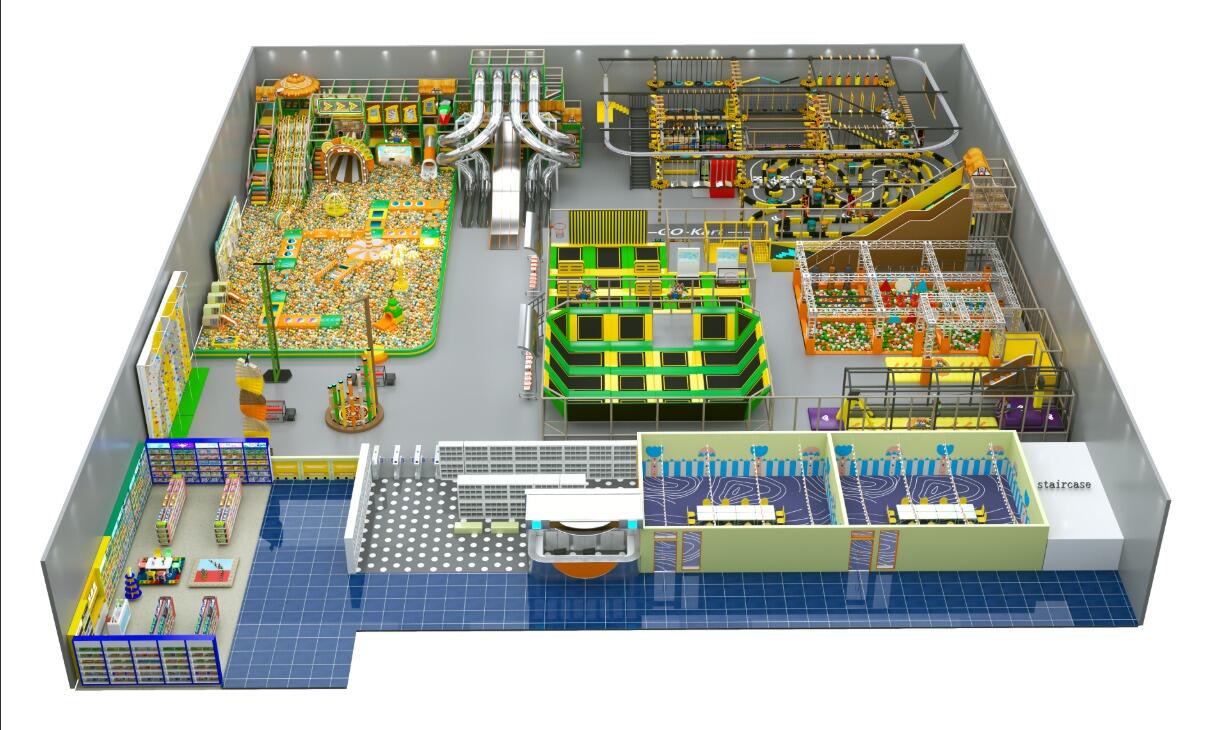
The building is an active design constraint. Before selecting children indoor playground equipment, collect accurate floor dimensions, clear ceiling heights, column locations, wall conditions, doors, windows, stairs, lifts, utilities, sprinkler positions, emergency exits, and restricted areas. Mark reception, toilets, storage, party rooms, food service, staff access, and caregiver seating. Photographs are useful, but a verified dimensioned survey is essential because one hidden beam or misplaced column can change platform heights, slide routes, installation access, and production drawings.
Separate gross floor area from usable play area. Circulation, queues, supervision points, accessible routes, evacuation paths, and slide exits all consume space. Protect movement between reception, seating, toilets, party rooms, and the indoor playground equipment entrance. Fast traffic should not cross toddler activity, and slide users should not land in a main aisle. Controlled entry and exit points help staff monitor capacity.
Sightlines influence safety and customer experience. Caregivers should follow children across key zones, while staff need rapid access to elevated indoor playground equipment and enclosed activities. Low partitions, transparent netting, positioned openings, and sensible heights preserve visibility. Separate high-energy attractions from cafés, calm corners, and party spaces where practical.
Use irregular architecture as a design opportunity. Custom indoor playground equipment can wrap around columns, respond to ceiling changes, create landmarks, and turn awkward corners into sensory, role-play, or seating areas. Customization must not obstruct fire equipment or inspection access. Our design and R&D team coordinates site planning, indoor playground equipment drawings, manufacturing details, and installation guidance so the layout matches the approved concept. This discipline prevents late changes and ensures that the space—not a catalog image—decides the design.
Age Zoning: One Space, Three Worlds
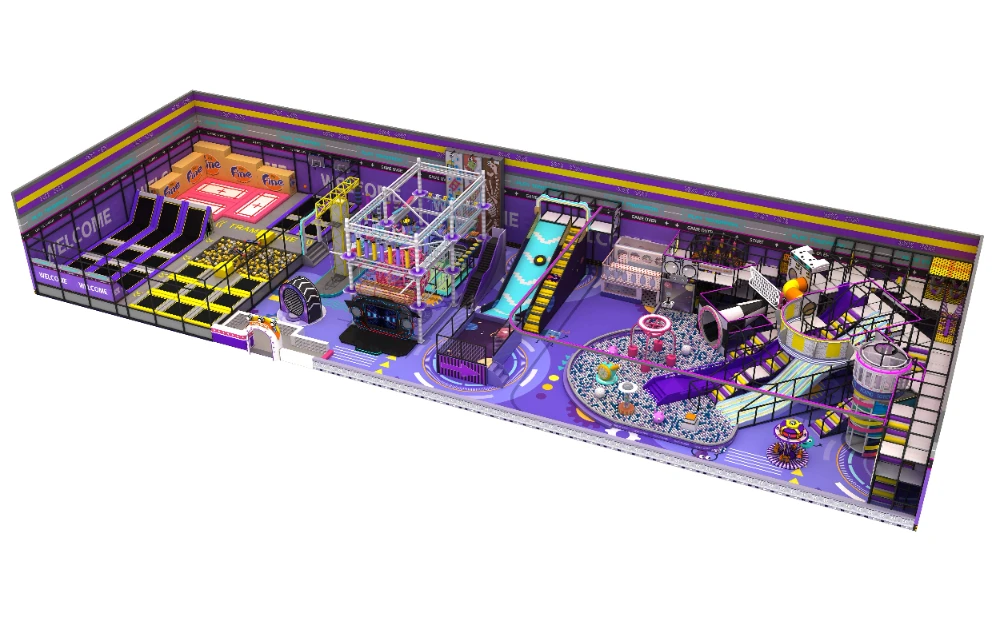
A successful venue does not treat all children as one audience. Toddlers, preschoolers, and school-age children differ in balance, reach, judgment, speed, confidence, and preferred challenge. Dividing the venue into three connected worlds makes kids indoor playground equipment safer and more rewarding without separating families completely.
The toddler world should stay low, soft, open, and close to caregivers. Suitable kids indoor playground equipment includes padded forms, crawl tunnels, sensory panels, ball activities, gentle ramps, mini slides, and pretend play. Entrances should discourage older children from rushing through, and furniture should support supervision. Keep toddlers away from fast exits, swinging activities, and larger slide landings.
Preschoolers need progression. Their children indoor playground equipment may include bridges, moderate climbing, short obstacle routes, role-play, interactive games, and repeated loops. School-age children seek height, speed, competition, problem-solving, and greater independence. Multi-level indoor playground equipment, longer slides, climbing challenges, obstacle courses, and timed activities can provide intensity when the building and applicable rules permit.
Boundaries can be physical and visual: low gates, floor colors, themed transitions, signs, and controlled access points all help. State age, height, capacity, and behavior expectations clearly. Maintain family connections by positioning zones around shared seating or a central supervision area, but prevent faster children from using toddler routes as shortcuts.
Inclusive planning should run through all three worlds. Add step-free access, ground-level play with real value, reachable controls, sensory variety, cooperative activities, and a calm area for children who need lower stimulation. Children indoor playground equipment should offer several ways to participate rather than one token accessible panel. Good age zoning reduces collisions, supports development, improves staff control, and gives siblings reasons to stay longer in the same venue.
The Equipment Mix: Soft Play, Climbing, Slides & Interactive
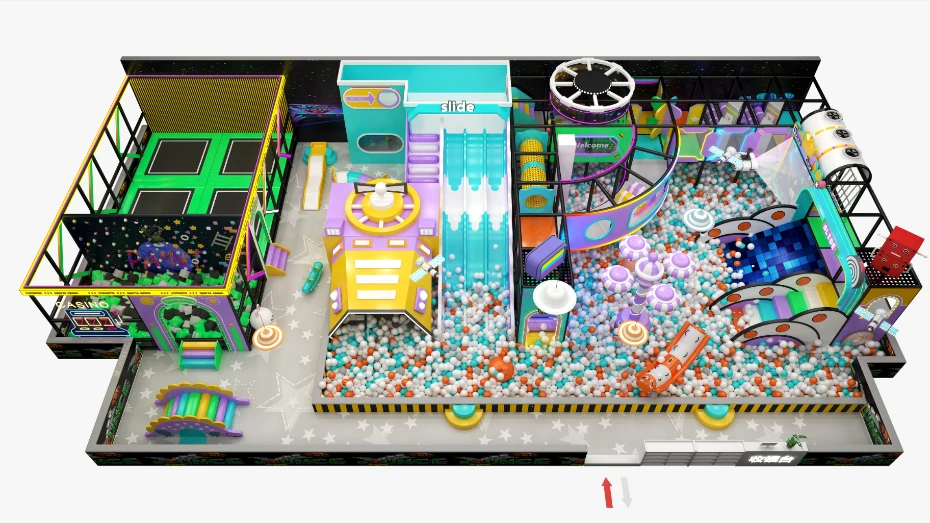
The strongest equipment mix creates a rhythm of discovery instead of a crowded checklist. Begin with core movement patterns: crawling, climbing, balancing, sliding, jumping, turning, reaching, building, imagining, cooperating, and resting. Then select indoor playground equipment that combines these actions in clear loops with alternative routes. Children should be able to enter, choose a challenge, complete it, and continue without blocking others.
Soft play provides approachable movement for younger users. Foam shapes, padded steps, tunnels, ramps, and soft obstacles support confidence and motor development. Climbing indoor playground equipment adds progression through nets, inclined walls, ladders, bridges, and multi-level routes. Slides create excitement, but their height, speed, access, runout, and capacity must match users and the floor plan. Interactive indoor playground equipment—such as projection games, reaction challenges, light panels, or cause-and-effect activities—can refresh repeat visits when maintainable and separated from quiet zones.
Balance high-energy indoor playground equipment with imaginative and sensory play. A themed market, construction area, tactile wall, building table, or calm corner extends engagement. Create more than one popular route so queues do not dominate. Offer a first step for hesitant children and optional difficulty for confident visitors. Variety is not component quantity; it is the number of meaningful ways children can play.
Commercial durability must guide the mix. Ask how indoor playground equipment covers, nets, fasteners, moving parts, electronics, and padding will be inspected, cleaned, repaired, and replaced. Modular sections simplify changes, while a customized centerpiece creates recognition. Our 60,000-square-meter production base, automated equipment, and design team support mass production and customized projects. The objective is a coherent indoor playground equipment journey that fits capacity, staffing, maintenance, and budget—not disconnected attractions.
Safety & Compliance: The Non-Negotiables
Safety begins before the first sketch. Identify the standards, building rules, fire requirements, accessibility obligations, permits, inspections, and operating licenses that apply in the project location. Requirements vary by country and use case, so buyers should confirm them with local authorities and qualified inspectors. A certificate name alone does not prove that every component, layout, installation, and operating practice is compliant.
Ask the manufacturer for material specifications, test reports, quality records, installation manuals, maintenance instructions, and market documents. Commercial indoor playground equipment should address structural loads, guarded heights, safe openings, entrapment, secure fasteners, protective netting, clearances, impact surfacing, and age-suitable access. Indoor playground equipment materials should be durable and cleanable. Electrical systems need protected cables, controlled access, and service procedures.
Compliance must continue through layout and installation. Keep evacuation routes, exits, firefighting equipment, and staff access clear. Verify that slide runouts, climbing zones, moving indoor playground equipment, and entrances do not conflict. Installation should follow approved drawings, numbered components, specified connections, and documented checks. Review every site change rather than improvising.
Opening day begins safety management. Establish daily visual checks, scheduled inspections, cleaning routines, incident records, capacity control, and a process for isolating damaged indoor playground equipment immediately. Train staff to identify loose hardware, worn padding, torn nets, exposed edges, blocked exits, and unusual movement. Keep critical spare parts and document repairs before reopening children indoor playground equipment.
Our factory and products are certified or audited to ISO, BSCI, Sedex, TÜV, ASTM, CE, and CPC requirements as applicable. Buyers should still match evidence to the destination market and project scope. This disciplined approach protects children, reassures families, reduces downtime, and preserves long-term asset value.
From Drawing To Opening: Budget, Timeline & After-Sales
A reliable project plan connects scope, money, schedule, and responsibility. The budget should extend beyond the purchase price of children indoor playground equipment. Include design, site preparation, flooring, freight, customs, taxes, installation, travel, lifting equipment, third-party inspection, permits, signage, staff training, opening inventory, spare parts, and contingency. Also estimate recurring costs such as cleaning, inspections, utilities, software, repairs, and component replacement. Comparing suppliers only by headline equipment price can hide major differences in scope and lifetime cost.
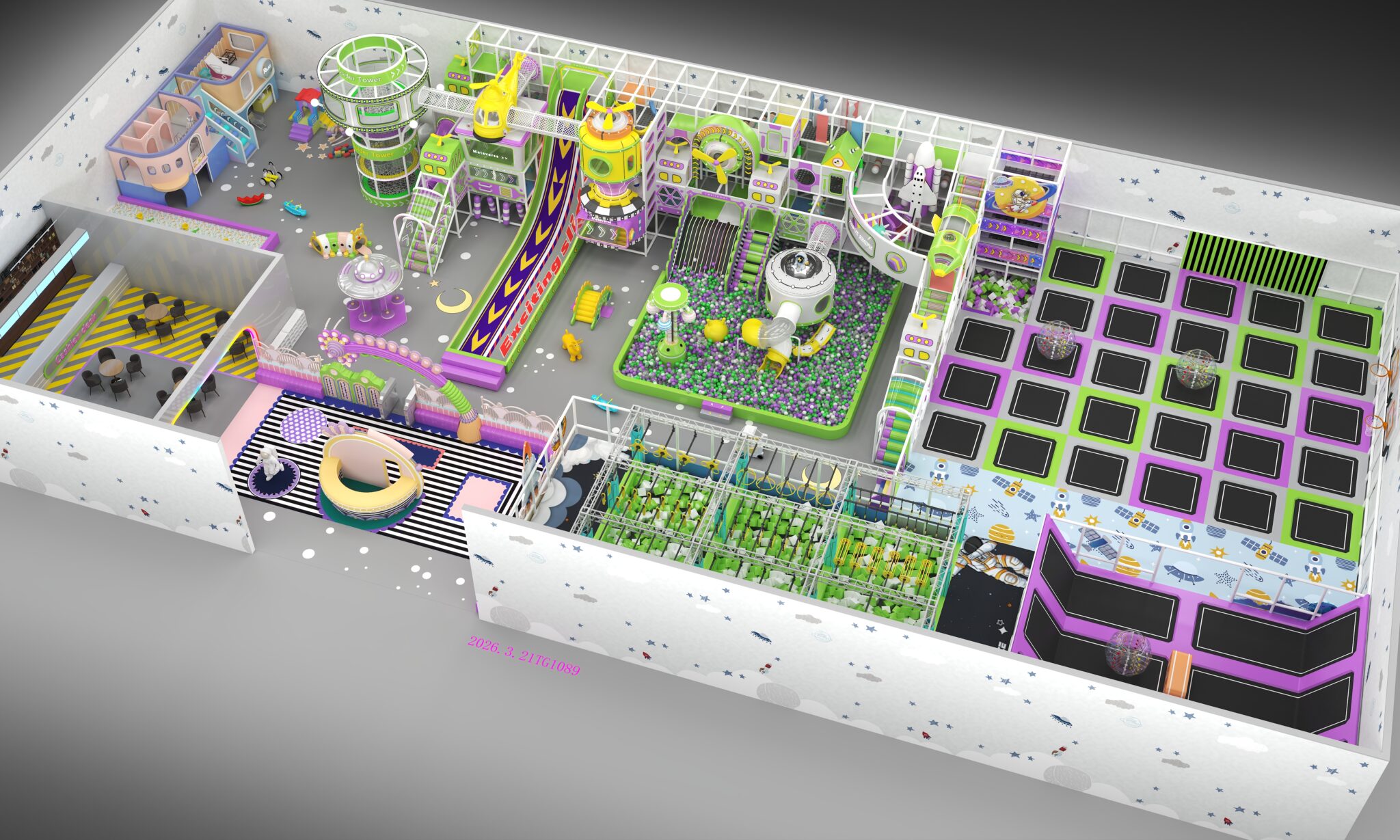
Create approvals before indoor playground equipment production: confirmed survey, concept layout, equipment list, colors and theme, safety review, technical drawings, quotation, contract, production drawings, and packing plan. Changes cost more after materials are ordered, so appoint one decision-maker and use written change control. The timeline should include revisions, document review, manufacturing, inspection, packing, shipping, customs, site readiness, installation, staff preparation, and contingency. Do not fix the opening date until dependencies are understood.
Clarify every handoff. The buyer may prepare utilities and flooring while the indoor playground equipment manufacturer supplies numbered parts, drawings, videos, remote guidance, or on-site supervision. Confirm packaging, loading, inventory checks, damage reporting, and acceptance before shipment. During installation, compare the completed indoor playground equipment with approved drawings and resolve deviations before use.
After-sales capability is part of indoor playground equipment. Request warranty boundaries, response channels, maintenance manuals, spare-parts lists, recommended stock, lead times, and refurbishment or expansion support. The partner that designed and manufactured the system should trace components and explain repairs clearly.
We integrate design, customization, large-scale manufacturing, sales, installation guidance, and after-sales support. Our experience includes more than 50 government projects and participation in projects related to FIFA World Cup Qatar 2022. For distributors, contractors, and government buyers, this one-stop structure reduces coordination risk and keeps accountability connected from the first drawing to long-term operation.
Choosing indoor playground equipment is a systems decision. Define the goal, let the site guide the layout, zone ages intelligently, balance play, verify compliance, and plan lifetime support. The result is a durable venue children enjoy, families trust, and operators manage confidently.


 English
  Español
  Français
  Deutsch
  Português