


Most buyers ask suppliers, “Is your quality good?” and receive the same answer: “High quality material.” That vagueness is the problem. When specifications are never written down, you discover the truth after installation—posts that rust, equipment that fails inspection, or a commercial opening delayed while replacement parts ship. For businesses sourcing soft play equipment, undocumented padding, structural components, and material specifications create similar risks. The solution is simple: stop asking about quality and start asking for measurable evidence.
A genuine playground manufacturer can provide exact specifications on demand. For outdoor steel structures, these include post wall thickness (2.0–2.5mm on Ø114mm galvanised tube), powder-coating cure temperature (180–200℃), weld thickness (V-groove ≥6mm), and fastener grade (201/304 stainless). For commercial soft play equipment, buyers should instead examine structural frames, protective padding, material performance, and product-specific safety documentation. Traders quote prices; manufacturers explain specifications.
Whether purchasing outdoor playground structures or indoor soft play, the right technical questions can reveal substantial differences between suppliers.
Here are nine essential checks that separate a genuine factory from a reseller.
What Does A Playground Manufacturer Do?
A real playground manufacturer controls the production chain from raw materials to the container door. That includes product design, material selection, structural engineering, tooling, production, quality control, packing, and after-sales support—not merely forwarding an order to another company.
For soft play equipment, manufacturing responsibilities also include coordinating protective materials, structural components, play features, and installation dimensions.
The work starts before any product exists. For an outdoor project, the factory needs site dimensions, ground conditions, target age group, and expected traffic. Age range influences equipment design, fall heights, and clearance requirements. Ground type determines the anchoring method, while climate influences material selection.
For indoor soft play, manufacturers must consider available floor space, ceiling height, structural columns, emergency exits, and activity zones. These constraints directly influence the configuration and functionality of the finished play area.
Design output then becomes engineering reality. On a standard outdoor combination structure, the referenced platform measures 116×116cm to the supplier’s EU specification but 110×110cm to its national specification, with the lowest slide platform at 90cm and 85cm respectively. These are product-specific design figures that must be checked against the approved drawings and applicable standards.
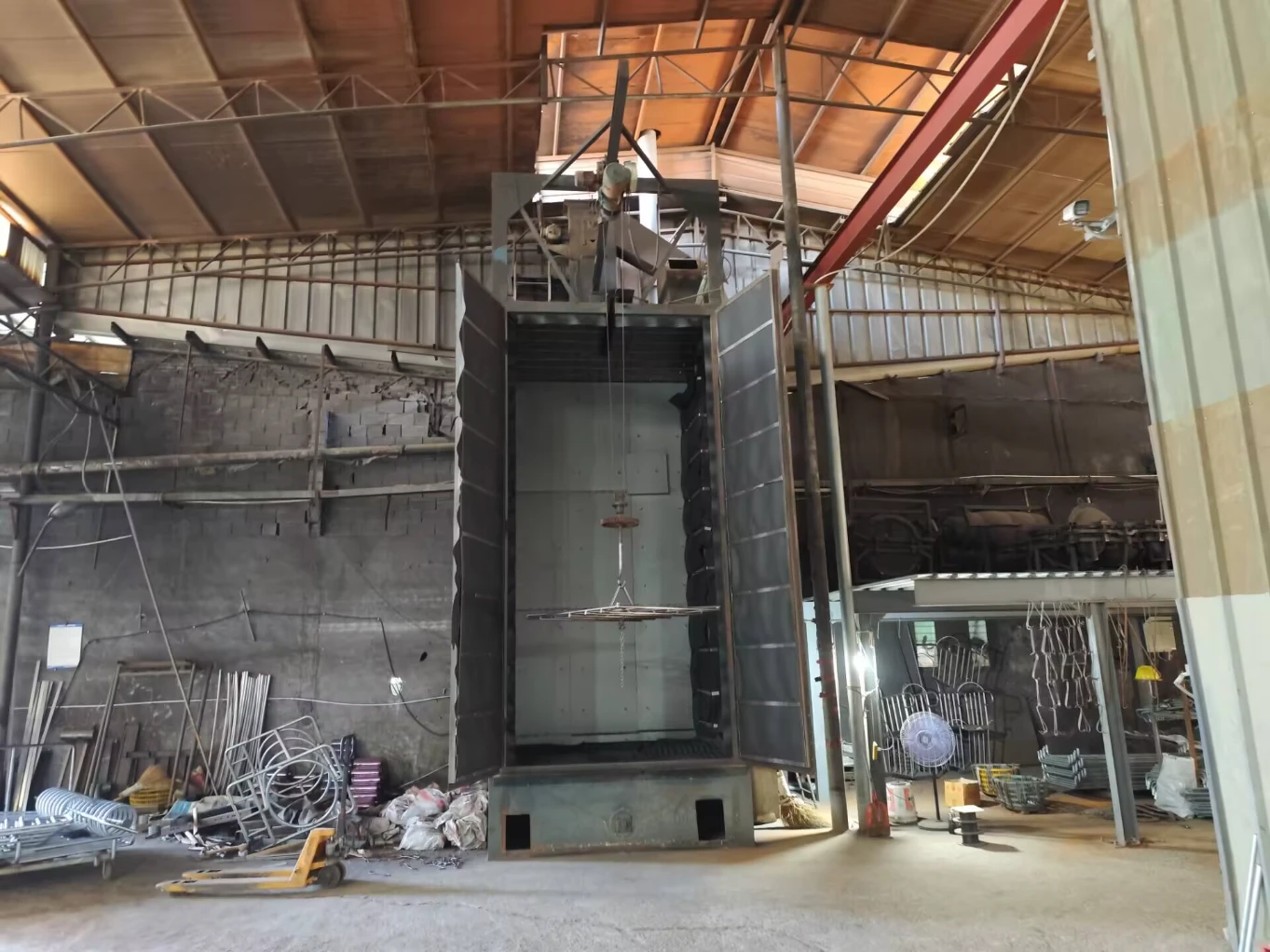
Production follows. Galvanised steel is cut and welded, LLDPE components are rotomoulded, surfaces are sandblasted and powder-coated, and products are assembled, inspected, and packed.
A manufacturer producing commercial soft play equipment should similarly demonstrate the processes used to prepare structural components, protective padding, coverings, and the finished play system.
Finally, reliable manufacturers provide installation drawings, hardware lists, material documentation, and spare-parts support.
When a component needs replacement months after installation, having direct access to the original factory can substantially simplify the process.
Manufacturer Vs Trading Company
One practical way to identify a genuine manufacturer is to ask a technical question that requires direct knowledge of production.
For outdoor equipment, ask for the vertical post’s wall thickness. A factory familiar with the specified structure may immediately explain that a two-tier design uses 2.0mm steel while a three-tier design uses 2.5mm steel on Ø114mm tubing.
For soft play equipment, ask about protective padding, structural frame dimensions, and material documentation.
A reliable manufacturer should explain its specifications and identify the relevant quality-control procedures.
| Question | Real Manufacturer | Trading Company |
|---|---|---|
| Post wall thickness | Provides dimensions by product design | May need to consult another supplier |
| Change a platform size | Engineering team revises drawings | Coordinates changes externally |
| Coating cure temperature | Identifies the specified treatment process | May lack production details |
| Workshop evidence | Identifies workshops and their functions | May rely on supplied photographs |
| Spare parts in year 3 | Retained drawings and tooling support reproduction | Depends on original supplier |
| Material substitution | Controls purchasing and production | Has limited direct visibility |
Verifiable production facilities provide important evidence.
Our production base includes ten production workshops covering 14,000㎡, an indoor playground workshop of 19,000㎡, a 12,000㎡ warehouse, a 3,600㎡ customised product workshop, a 3,000㎡ wooden product workshop, and dedicated rotomoulding, polishing, welding, and packing areas.
The stated total facility area is 60,000㎡.
For buyers evaluating commercial soft play equipment, the dedicated indoor playground workshop is particularly relevant. Request production photographs, workshop videos, and information about the manufacturing stages completed on-site.
This matters when problems arise.
Mid-production changes, material substitutions, and warranty claims require direct authority over manufacturing operations.
Businesses developing multiple indoor soft play locations can also benefit from consistent specifications, retained drawings, and direct communication with engineering teams.
How To Evaluate A Playground Factory
Skip the catalogue. Ask five technical questions and evaluate the answers for specificity, supporting documentation, and relevance to your project.
1. What Is The Wall Thickness And Diameter Of The Main Post?
Expect measurable figures rather than vague descriptions.
For the referenced outdoor equipment, main structures use Ø114mm tubing at 2.0–2.5mm wall thickness. Smaller systems use Ø89mm or Ø76mm tubing at 1.7mm, while square posts measure 50×50mm at 1.2mm.
“Thick enough” is not an acceptable technical specification.
For commercial soft play equipment, request the actual frame specifications and details of the protective coverings.
Because indoor soft play systems differ from outdoor steel structures, their dimensions must be assessed according to the intended product design.
2. What Is Your Surface Treatment Sequence?
For the specified outdoor steel system, the production sequence is hot-dip galvanising, sandblasting, and powder coating cured at 180–200℃.
Sandblasting prepares the surface for coating adhesion. A manufacturer should explain each stage and provide evidence that the specified process is consistently followed.
For soft play equipment, buyers should also examine the finishes applied to structural components and the suitability of protective coverings for indoor use.
3. Which Certifications Apply And What Is Their Scope?
EN 1176 and ASTM F1487 address safety requirements for playground equipment within their respective scopes.
ISO certifications and BSCI or Sedex assessments relate to other aspects of management systems or factory operations.
These documents are not interchangeable.
For commercial soft play equipment, request applicable product test reports, material documentation, and relevant safety assessments.
A factory assessment does not establish that every product meets a particular safety standard.
Before purchasing indoor soft play, verify which documents apply to the specific configuration and destination market.
4. How Do You Anchor Equipment To My Specific Ground?
For outdoor structures, concrete installations may use expansion bolts through base plates.
Sand, soil, or ground still under construction may require embedded installation, with posts manufactured longer and secured within concrete foundations.
The appropriate method must be determined before production.
For soft play equipment, manufacturers should examine floor conditions, structural limitations, fixing points, and available installation space.
An accurate site assessment reduces the likelihood of expensive modifications during installation.
5. What Changes For A Coastal Site?
For coastal outdoor projects, a manufacturer may recommend PVC-coated platforms and stairs or corrosion-resistant materials such as stainless steel or aluminium.
Galvanising can delay corrosion, but it does not eliminate corrosion risk.
For coastal indoor venues, commercial soft play equipment may also require attention to humidity, cleaning conditions, and corrosion resistance.
These decisions should be documented before quotation approval.
Vague answers to technical questions suggest that further factory verification is necessary.
Production Capabilities
Production capability is measurable, and outdoor playground manufacturing demands several distinct processes.
Manufacturers supplying indoor soft play also need processes appropriate for structural frames, protective materials, and specialised play components.
Metalwork
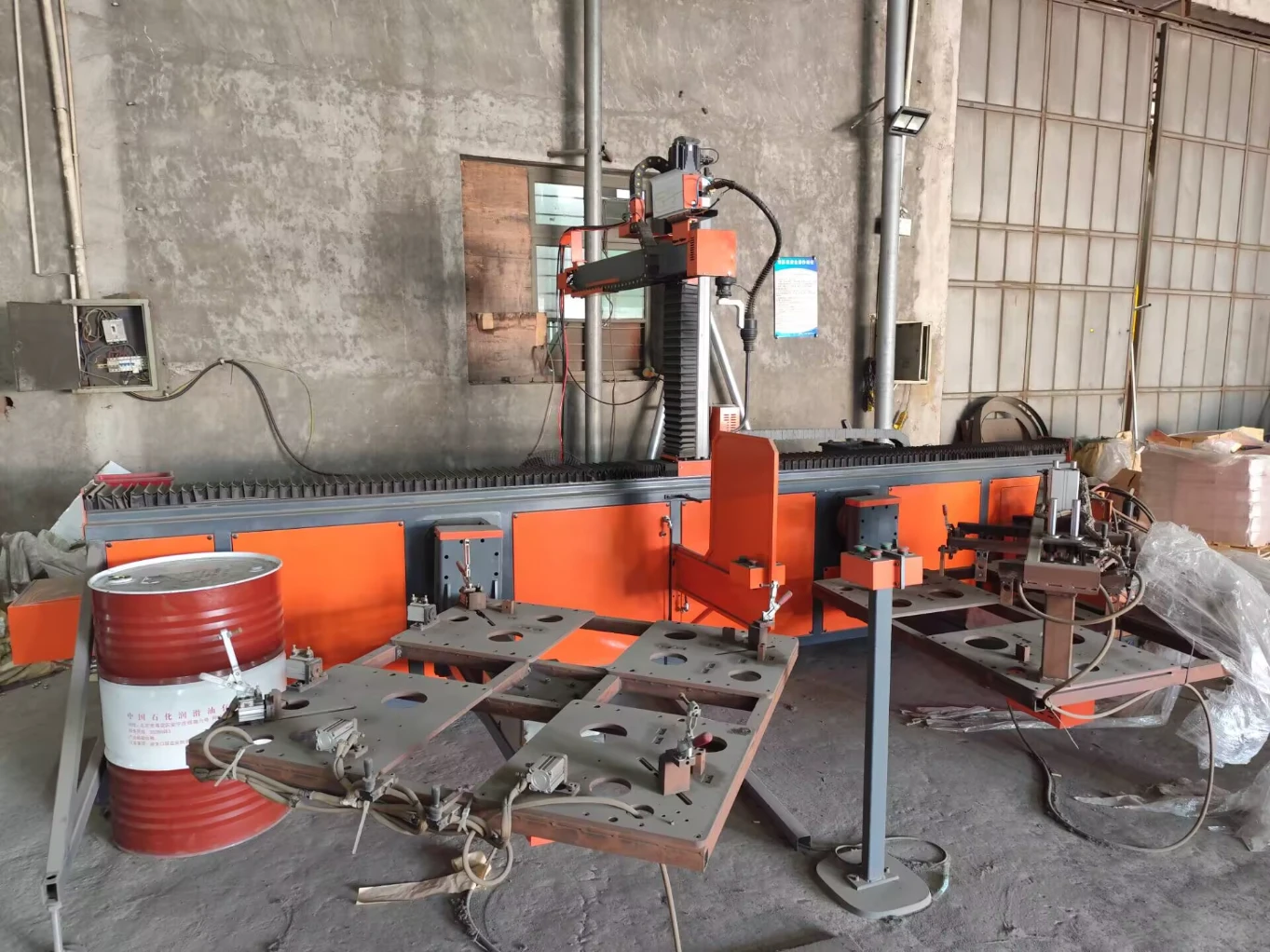
Galvanised steel is cut and welded using a V-groove joint with weld thickness of at least 6mm, then automatically sandblasted to remove slag.
On our outdoor fitness range, structural posts reach a specified tensile strength of 19.4 kgf/mm².
Accessory tubing includes Ø25/32/38/40/50/60mm sizes at 1.8mm wall thickness.
These figures describe the referenced outdoor products and should not automatically be applied to soft play equipment without verifying the actual structural design.
Surface Treatment
For the specified outdoor system, metal parts are hot-dip galvanised, sandblasted, electrostatically powder-coated, and oven-cured at 180–200℃.
The coating is an outdoor polyester/TGIC system containing UV stabilisers to help protect its appearance during prolonged sun exposure.
Powder storage and application conditions require consistent process control.
For commercial soft play equipment, the manufacturer should identify the finishes used on metal components and explain how exposed surfaces are protected within the finished play structure.
Rotomoulding
LLDPE powder is blended with pigment and loaded into a mould that rotates on two axes.
The material is heated, cooled by forced air or water spray, removed from the mould, and finished by hand.
This process produces seamless, one-piece plastic components.
Some play structures use rotomoulded plastic elements, while indoor soft play systems may require additional padded and enclosed components.
A factory should explain which manufacturing processes apply to the actual items being supplied.
Assembly And Packing
Structures are trial-assembled, inspected, and prepared for shipping.
The referenced packing methods include stretch film and cotton cloth for most products, with timber crates used for impact-sensitive items such as outdoor musical instruments.
For soft play equipment, packing procedures should also protect padded elements, covering materials, and specialised components from transport damage.
Our dedicated facilities include 2,000㎡ for welding, 2,000㎡ for rotomoulding, 2,000㎡ for polishing, and 2,400㎡ for packing.
Ask prospective suppliers to identify their production areas and explain which processes are performed in-house.
Custom Design Capabilities
Most commercial playground projects involve constraints that buyers cannot easily change.
These may include irregular site boundaries, fixed budgets, mandatory age ranges, existing drainage systems, structural columns, or restricted ceiling heights.
Customisation allows the manufacturer to work within these conditions.
Our in-house R&D team includes more than ten designers who work from CAD files, survey plans, or dimensioned hand sketches.
Site design and layout services are provided free of charge.
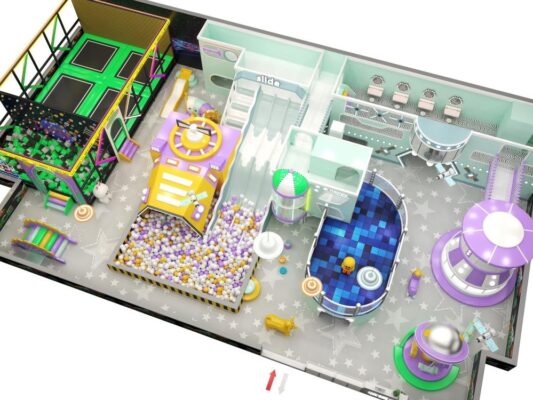
For indoor soft play, early layout planning is particularly important because the available building dimensions directly determine the practical arrangement of play activities.
A custom commercial soft play equipment project should consider circulation, age separation, supervision, and installation requirements before production begins.
What Can Be Customised?
Outdoor playground customisation includes visual themes, structure layouts, dimensions, colours, materials, logos, graphic panels, and accessory selection.
Full OEM and ODM projects are accepted, including customer-branded elements incorporated into the equipment.
For soft play equipment, customisation may involve the configuration of climbing activities, padded obstacles, enclosed play areas, thematic decorations, and age-appropriate interactive features.
A well-designed indoor soft play environment should reflect both the available space and the intended visitor experience.
Material substitution is part of design, not an afterthought.
The referenced outdoor product range includes LLDPE, galvanised steel, PE board, aluminium alloy, HPL fire-rated board, PVC, polycarbonate, Finnish pine, African padauk, stainless steel, GRP, and steel wire rope.
These materials serve different functions and are not automatically interchangeable.
For commercial soft play equipment, proposed material changes should be reviewed for durability, safety, maintenance, and compatibility with the approved design.
The design process typically follows a clear sequence: collect site data, create the layout, revise the proposal, confirm technical requirements, prepare production drawings, obtain written approval, and begin manufacturing.
Reliable manufacturers should not start fabricating custom components before final approval.
Materials
Materials influence how playground equipment performs, how it looks after years of use, and how frequently it requires maintenance.
Buyers should require specific material information rather than accepting general claims.
For soft play equipment, structural materials and protective surfaces must be evaluated separately because they perform different functions.
LLDPE Plastic
The referenced LLDPE components are rotomoulded in one piece and described as non-toxic and odourless.
The material formulation includes UV absorbers, light stabilisers, and antistatic agents.
The supplier states a service-temperature range of −100℃ to +125℃, along with high impact strength, tear resistance, and resistance to environmental stress cracking.
Buyers should verify these performance claims using material data sheets and relevant testing information.
Galvanised Steel
The referenced outdoor structures use Ø114mm posts at 2.0mm wall thickness for two-tier systems or 2.5mm for three-tier systems.
Handrails have 1.70mm wall thickness, with diameters of Ø3.2cm on Ø114mm systems, Ø2.5cm on Ø89mm systems, and Ø1.9cm on Ø76mm systems.
Outdoor fitness posts are specified at ≥2.5mm across Ø32–114mm diameters.
Platforms use perforated steel plate.
These are outdoor product specifications rather than universal requirements for commercial soft play equipment.
Fasteners
Structural bolts are specified as 201 or 304 stainless steel, while expansion anchors are galvanised.
Moving connections use stainless fasteners, spring washers, bearings, bushings, and waterproof caps.
Tamper-resistant socket screws with a centre pin prevent removal using ordinary tools.
For indoor soft play, accessible hardware and connections should be appropriately protected in accordance with the product design and applicable safety requirements.
Timber
African padauk is described as dense, knot-free, and resistant to warping and splitting, with three coats of oil-based paint applied as a protective finish.
Finnish pine is softer and requires preservative treatment.
It can be suitable for school and community projects where budget is an important consideration.
Surfacing
The referenced EPDM surfacing system includes an SBR rubber base of 10–50mm and a coloured EPDM granule layer of 5–15mm.
A total thickness of 2.5cm is described as the supplier’s standard configuration beneath certain equipment.
Actual surfacing requirements must be determined from the equipment’s fall height, installation conditions, and applicable standards.
Artificial grass uses PE or PE+PP fibres on woven backing secured with SBR latex.
Pile height and density can be specified according to project requirements.
Protective Materials For Indoor Play Areas
For soft play equipment, buyers should request documentation for foam, padding, protective coverings, netting, and other accessible materials.
Relevant specifications may include foam density, padding thickness, covering construction, seam durability, cleaning requirements, and fire-performance classifications where applicable.
High-quality commercial soft play equipment should be evaluated using documented material performance rather than appearance alone.
A supplier unwilling to include agreed material specifications in the contract creates avoidable purchasing risks.
Safety Standards
Safety is an engineering requirement, not a certificate purchased at the end of production.
Different types of playground equipment may be subject to different standards, depending on their design, installation location, and destination market.
ASTM And EN Playground Requirements
ASTM F1487 is a US safety performance specification for public playground equipment.
Its F1487-25 revision was published in June 2025.
The standard addresses materials, performance, access and egress, layout, structural integrity, maintenance, labelling, and potential hazards within its defined scope.
In Europe, the EN 1176 series establishes safety requirements and test methods for applicable playground equipment.
The US CPSC also publishes guidance addressing public playground safety.
For indoor soft play, manufacturers and buyers must confirm which standards apply to the proposed product rather than assuming that all outdoor playground provisions apply unchanged.
How Should Indoor Playground Safety Be Evaluated?
Design-level safety measures include anti-pinch detailing, rounded corners, smooth surfaces, guarded hardware, and appropriate clearances.
For soft play equipment, additional considerations include impact protection, accessible padding, enclosure netting, supervision, maintenance, and the intended age range.
Buyers of commercial soft play equipment should request relevant product test reports and verify that the documented product corresponds to the proposed configuration.
The referenced powder-coating specification states compliance with ASTM F963-07 Clause 8.3 requirements concerning migratable heavy metals, including antimony, barium, cadmium, chromium, lead, mercury, selenium, and arsenic.
The factory’s documentation identifies EN 1176, ASTM, TÜV, CE, CPC, ISO, BSCI, and Sedex references.
Each document should be checked individually for its actual scope, issuing organisation, and validity.
Product compliance and factory assessments are separate matters.
A credible manufacturer of indoor soft play should explain that distinction clearly.
Installation Support
Installation methods depend on the physical characteristics of the project site.
Choosing the wrong method can lead to additional construction costs, delays, and potential safety problems.
Expansion Bolt Installation
Expansion bolt installation is suitable for appropriately designed concrete foundations and certain prepared surfaces.
Base plates are secured using specified galvanised expansion anchors.
This can provide a practical installation method for an experienced local crew when the structural design and substrate are suitable.
Embedded Installation
Embedded installation is used for specified structures installed in sand, soil, or areas where construction has not yet been completed.
Posts are manufactured longer, foundation pits are excavated to the approved dimensions, and the posts are secured in concrete.
This requirement must be confirmed before production because it changes the manufactured post length.
Outdoor fitness equipment may also support ground-embedded, drilled-fixing, and pre-buried pile methods.
Installation Planning For Indoor Play Areas
For indoor soft play, installation planning begins with the building layout, floor condition, structural limitations, and access requirements.
The installation team should verify approved fixing points, clearances, and the proposed arrangement of play zones.
Properly documented commercial soft play equipment should arrive with installation drawings, numbered components, and hardware lists appropriate to the project.
Every order includes detailed installation manuals and drawings. Professional installation services can also be arranged where required.
Shipping terms matter.
DDP delivery is available on request and can simplify import arrangements, depending on the agreed terms and destination.
Before ordering, confirm six points in writing: site conditions and anchoring method, responsibility for foundations, whether installation is included, required tools, installation crew size and duration, and procedures for damaged or missing components.
For soft play equipment, buyers should additionally clarify replacement arrangements for protective padding, coverings, and other specialised play components.
Long-term after-sales support is particularly valuable when multiple facilities use the same product specifications.
MOQ
Playground minimum-order quantities rarely follow the same rules as ordinary consumer products.
For custom outdoor equipment, the practical minimum often depends on project value, production complexity, and engineering requirements rather than the number of individual units.
A single bespoke combination structure for a community park may be a normal order.
Ten identical structures for a housing development can also be a normal order.
The economics differ, but neither necessarily requires an arbitrary minimum quantity.
For commercial soft play equipment, minimum-order requirements should similarly be evaluated according to the project’s dimensions, custom components, and manufacturing complexity.
What Drives Costs At Low Volumes?
Tooling is an important factor.
Standard LLDPE components can use existing moulds without additional new-mould costs.
A genuinely new moulded component requires new tooling, and that expense must be distributed across the quantity ordered.
Consequently, one unusual custom component can have a greater effect on pricing than numerous standard components.
For soft play equipment, specialised shapes, thematic elements, and unique structures may also add design and fabrication costs.
Ask which parts require new tooling or custom manufacturing before finalising the design.
Important purchasing questions include whether the minimum is expressed in units, order value, or container volume; which components already have tooling; whether standard and custom items can be shipped together; and whether future projects can repeat the same specifications.
For businesses expanding indoor soft play across several locations, repeatability is especially important.
Operators moving from one location to five need consistent designs, compatible replacement components, and retained production documentation.
A manufacturer that preserves drawings and tooling can simplify future procurement.
Free site design and layout support also allows operators to explore additional facilities before committing to manufacturing.
Summary
Verify a playground manufacturer with numbers, not adjectives.
For outdoor equipment, examine wall thickness, coating temperature, weld specifications, applicable certifications, and anchoring methods.
For soft play equipment, prioritise structural specifications, protective materials, product-specific test reports, manufacturing evidence, and installation requirements.
A successful indoor soft play project requires more than attractive designs and competitive prices. Reliable technical documentation, appropriate material selection, and direct communication with the manufacturing team are essential.
Before purchasing commercial soft play equipment, demand workshop evidence, approved drawings, written specifications, and clearly defined after-sales responsibilities.
The manufacturer that answers technical questions precisely before the order is better positioned to provide consistent quality and dependable support after installation.


 English
 Español
 Français
 Deutsch
 Português