


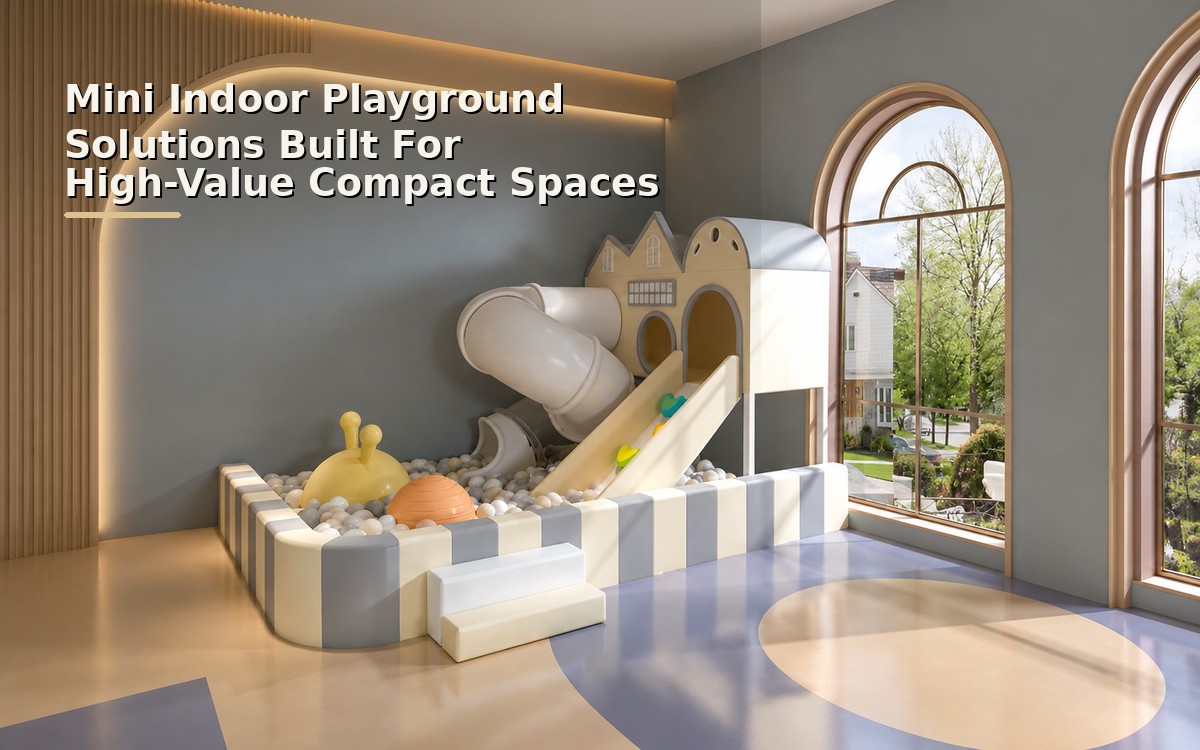
Urban malls, schools, and family entertainment centres compete for limited floor space, and demand for compact play solutions has risen sharply. A mini indoor playground is a space-efficient indoor play area combining slides, ball pits, climbing structures, and soft play elements designed for young children in tight footprints.
Smaller layouts now deliver steady visitor flow without the square metre overhead of full-scale venues. The commercial and specification angles below cover venue expectations, equipment configurations, and grade selection for your next sourcing project.
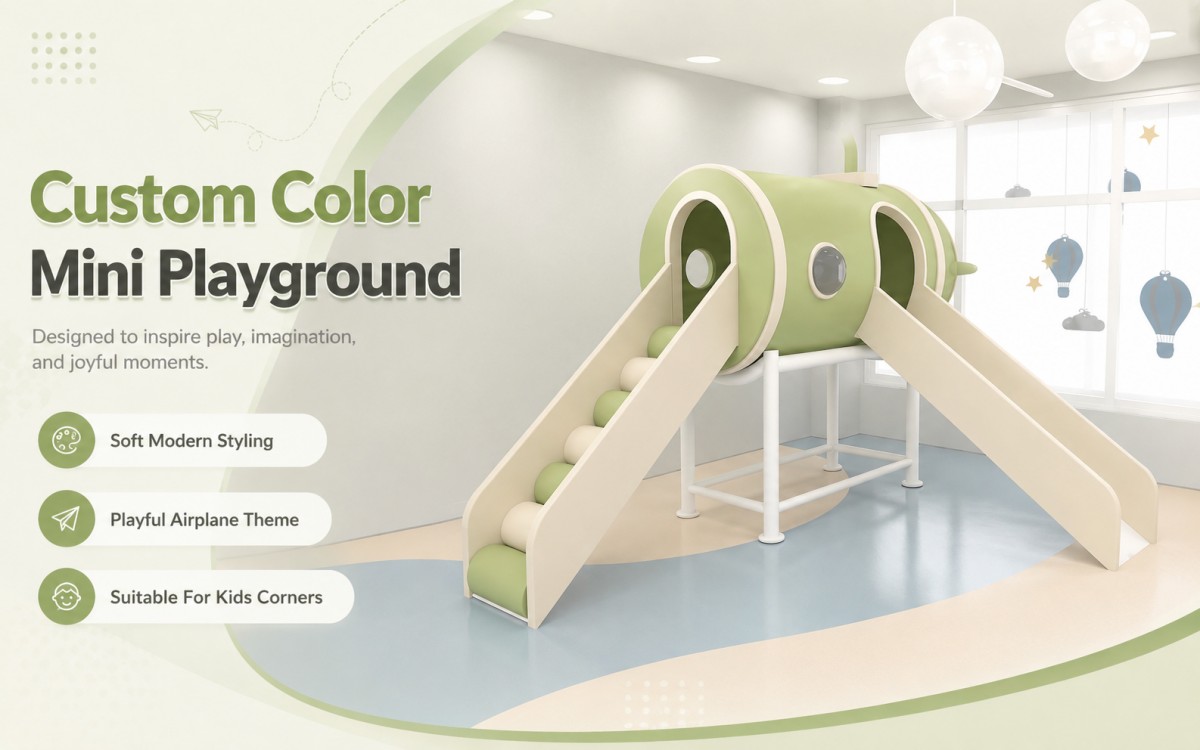
Mini Indoor Playground Venues That Define Current Demand
Three venue formats dominate local search results. Each signals a distinct equipment package.
- Boutique play spaces (Yelp’s highest-rated category) pair café seating with compact indoor soft play zones. Expect themed ball pits, toddler slides, and low climbing towers that keep sightlines open for supervising parents.
- Family entertainment centres, following the Chuck E. Cheese model, pair a mini indoor playground structure with arcade zones. Multi-level towers and wave slides extend dwell time.
- Standalone indoor playgrounds, like Jumpin’ Jellybeans, run on dense play value. Climbing towers, interconnected ball pits, and themed zones (jungle, castle, ocean) are crowd-pullers.
These patterns are demand signals. Commercial buyers in the Middle East, Southeast Asia, Europe, and the Americas request modular indoor playground equipment fitted to 50–200 m² footprints. They add themed soft play zones and quick-install climbing structures. Your equipment package must answer those expectations.
Core Equipment Configurations for Compact Indoor Playgrounds
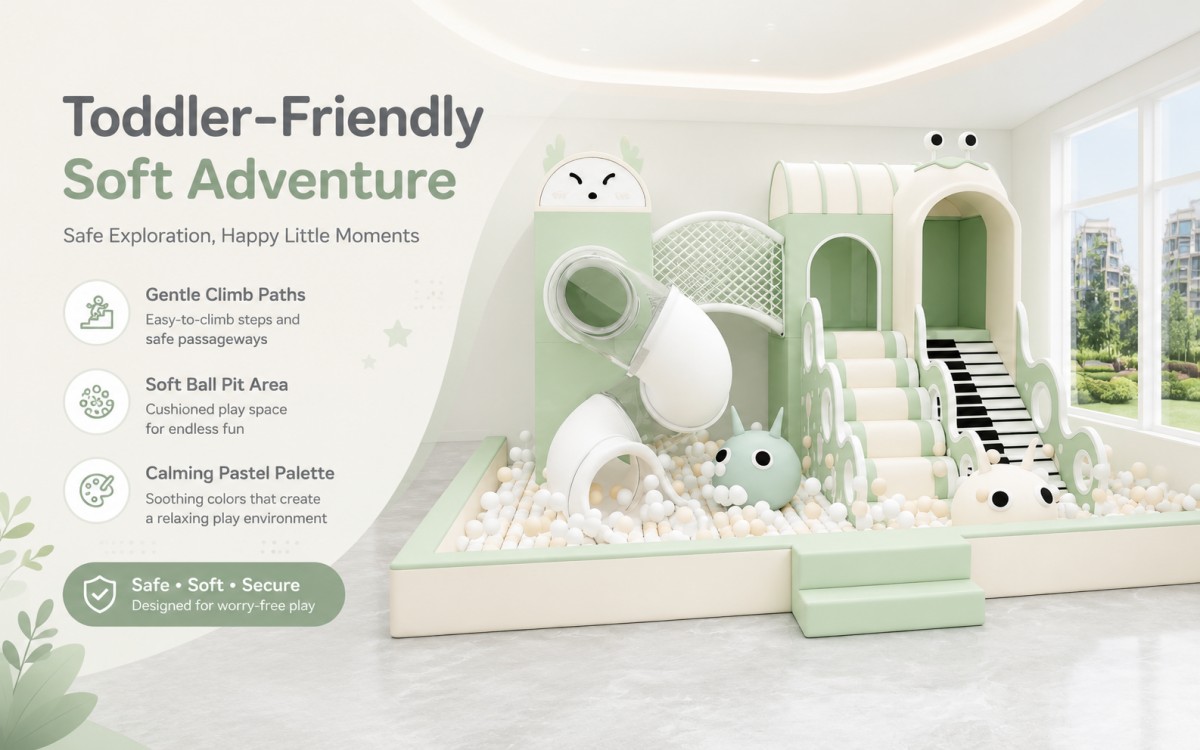
Compact layouts start with a climbing tower and wave slide as the centrepiece, then add ball pits and soft play blocks around the edges. Home-use sets such as the woodandhearts toddler indoor playground demonstrate the space-saving principle, but commercial buyers should choose modular, commercial-grade systems matched to their ceiling height and floor area.
- Compact climbing towers: 1.8–2.4 m platform heights, steel or PE board playground frames
- Wave slides: 1.5–3 m lengths, rotationally moulded PE with anti-static surface
- Ball pits: 1–2 m² modules holding 500–1,500 balls
- Soft play blocks: 10–15 cm thick foam shapes with wipe-clean PU covers
- Multi-level structures: mezzanine decks linking separate towers
Suppliers configure these as standalone units or connected play zones, so the same component set adapts to tight corners or open halls.
Age-Segmented Design: Toddler Zones vs Multi-Level Structures
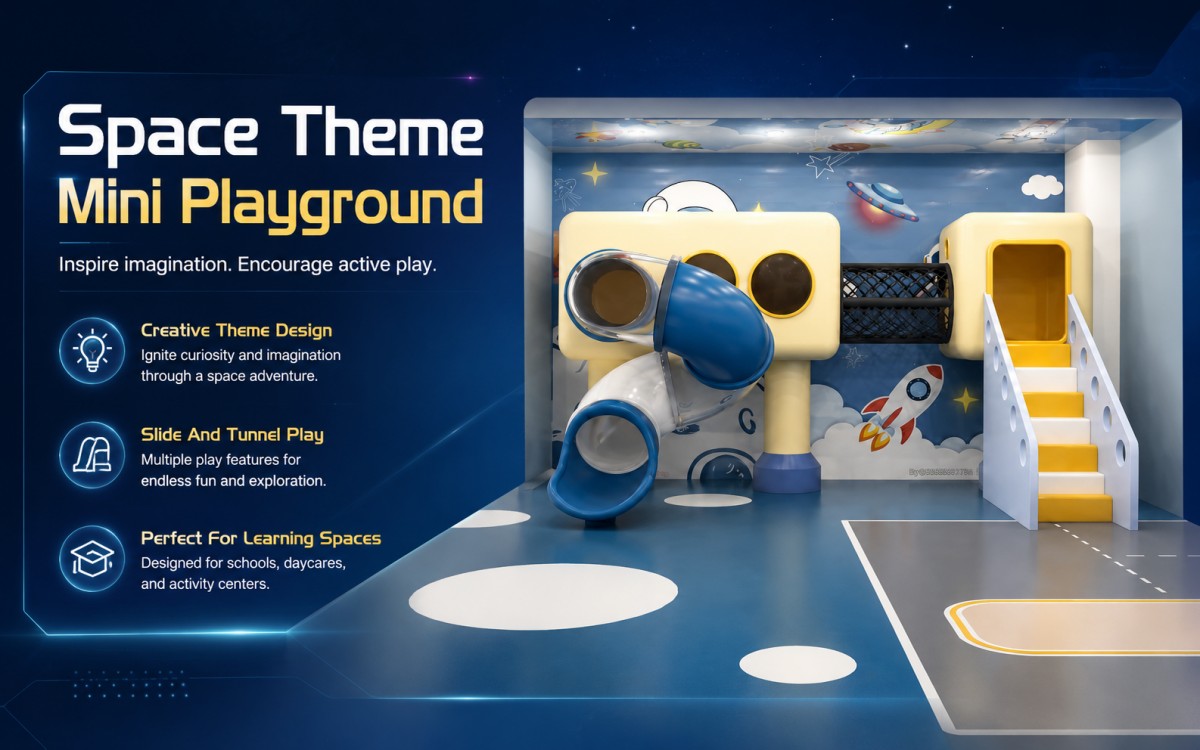
Age segmentation turns a compact mini indoor playground into distinct risk zones. SERP evidence shows buyers sourcing dedicated toddler indoor playground products alongside three-story climbing structures for the same venue, so one layout rarely serves both groups well.
Toddler Zones
For children under four, specify soft play blocks, low platforms under 60 cm, crawl tunnels, and gentle ramps. Keep sightlines open so caregivers can supervise from perimeter seating. Use impact-absorbing surfacing at least 40 mm thick around fall zones. A typical toddler zone spans 20–40 m² with a maximum fall height of 1 metre.
Multi-Level Structures
For ages five to twelve, install taller slides, climbing walls, and obstacle challenges that reward progression. Three-story configurations suit halls with ceiling heights above 4.5 metres; add guardrails on every level and staggered exits to prevent crowding. Spec example: a 6-metre-wide tower with two slides, one net climb, and a bridge connector.
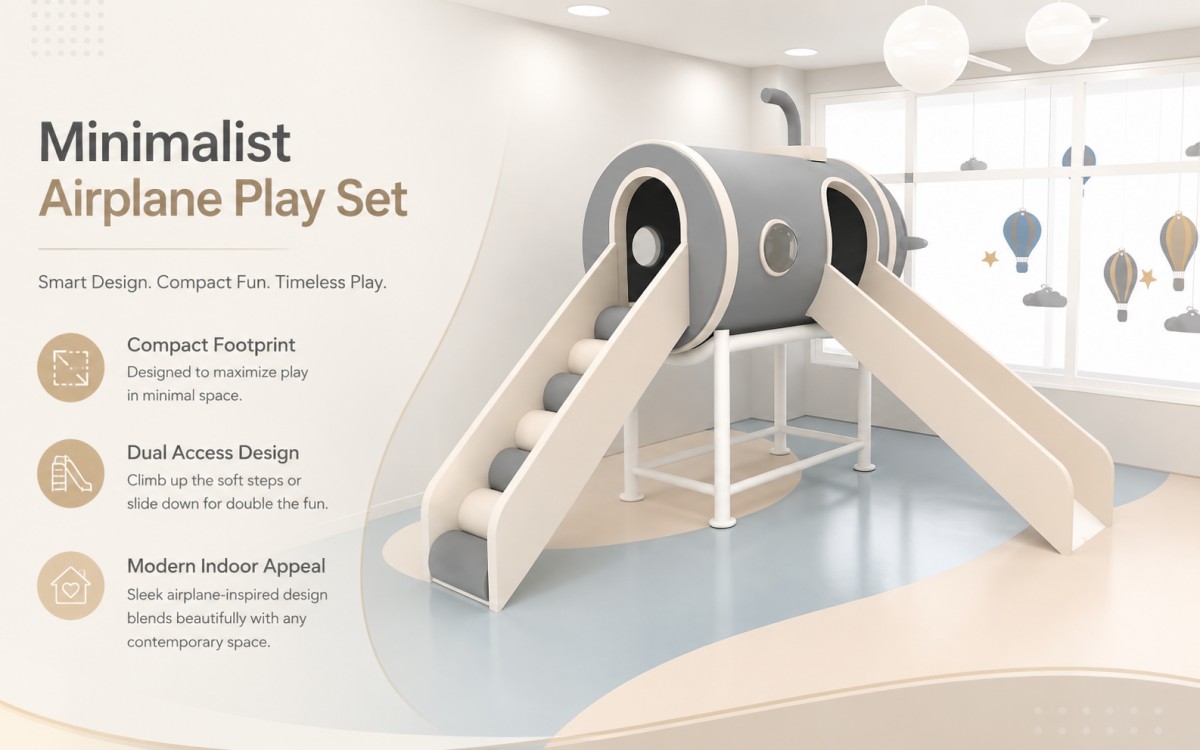
Home-Use vs Commercial-Grade Mini Indoor Playground Specifications
A residential mini indoor playground suits family spaces; a commercial unit must survive daily high-traffic cycles and public liability scrutiny. Weigh these differences before specifying:
| Specification | Home-Use | Commercial-Grade |
|---|---|---|
| Frame materials | Lightweight steel or plastic | Heavy-gauge galvanised steel with reinforced joints |
| Weight capacity | 50–100 kg per platform | 150 kg+ per platform, load-tested for sustained use |
| Safety certifications | Basic EN71 or ASTM toy compliance | Full documentation: EN 1176, ASTM F1918, or local codes |
| Installation complexity | DIY bolt-together assembly | Engineer-signed floor plans and professional installation |
| Maintenance demands | Occasional wipe-down | Daily inspections plus replaceable wear parts |
| Customisation flexibility | Fixed sizes and colours | Modular layouts, branded theming, bespoke dimensions |
For B2B buyers, treat home-grade products as reference points only. Commercial projects demand industrial durability, compliance documentation, and modular layouts that handle high-traffic use and future expansion.
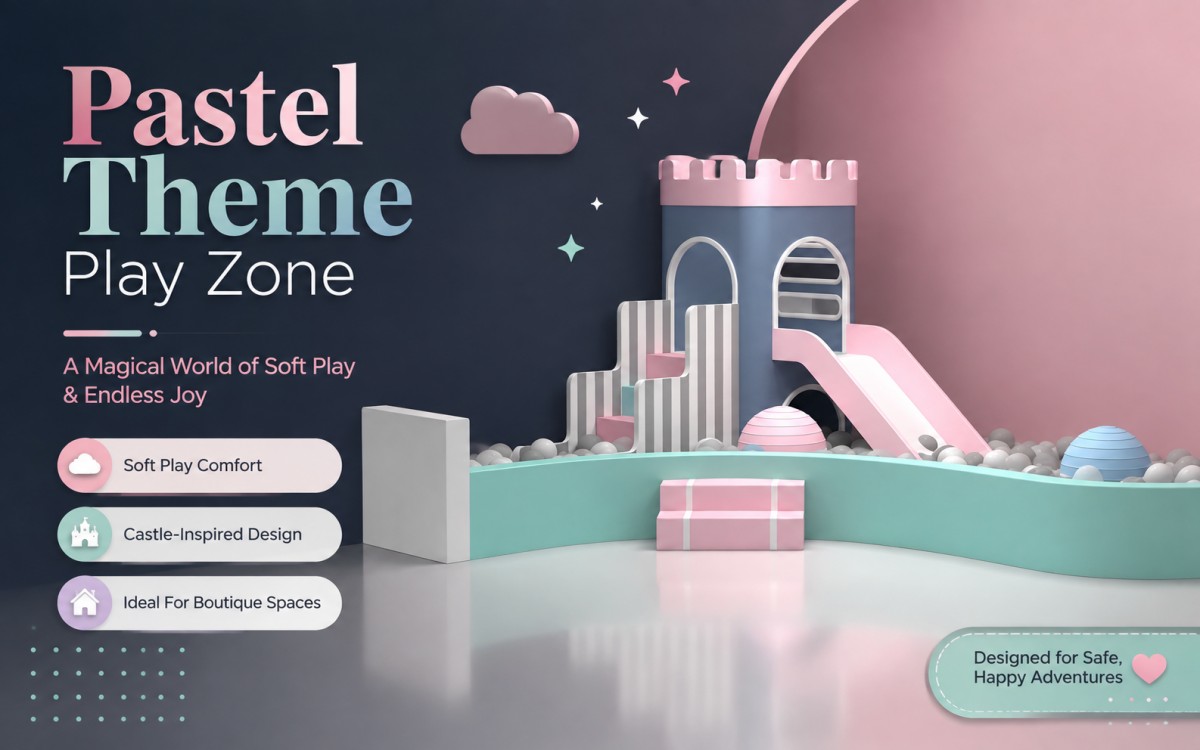
About JQ Playground (Wenzhou Jiqi Amusement Equipment Co., Ltd.)
JQ Playground (Wenzhou Jiqi Amusement Equipment Co., Ltd.) is a leading children’s playground equipment manufacturer with 30+ years of industry experience. The company integrates design, customization, large-scale manufacturing, sales, and after-sales service. Main product range: Outdoor Playground, Indoor Playground, Indoor Soft Play, Water Playground, PE Board Playground, Custom Playground, Children Furniture, Outdoor Fitness Equipment, Pet Playground, and Playground Facility. Factory: 60,000+ square metres, 100+ patents, ISO/BSCI/Sedex/TÜV/ASTM/CE/CPC certified. Services cover site planning, design, manufacturing, installation guidance, and after-sales support for parks, communities, schools, commercial complexes, tourism projects, and government facilities worldwide.
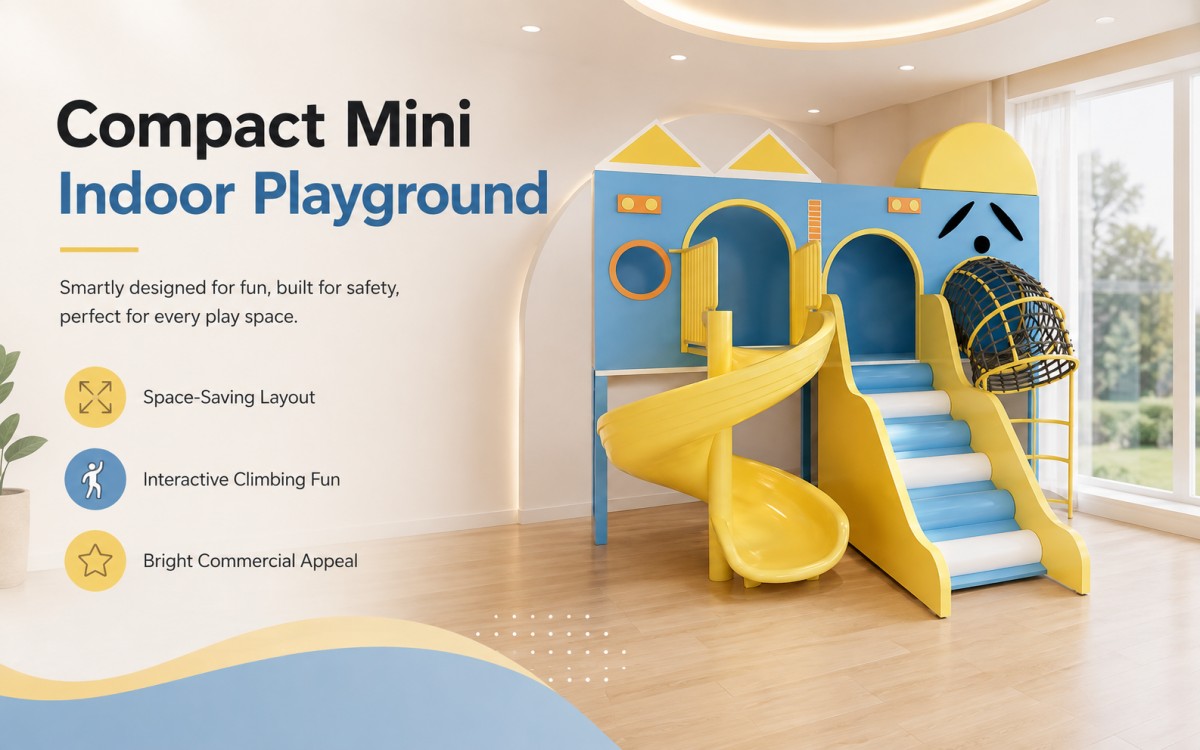


 English
  Español
  Français
  Deutsch
  Português