


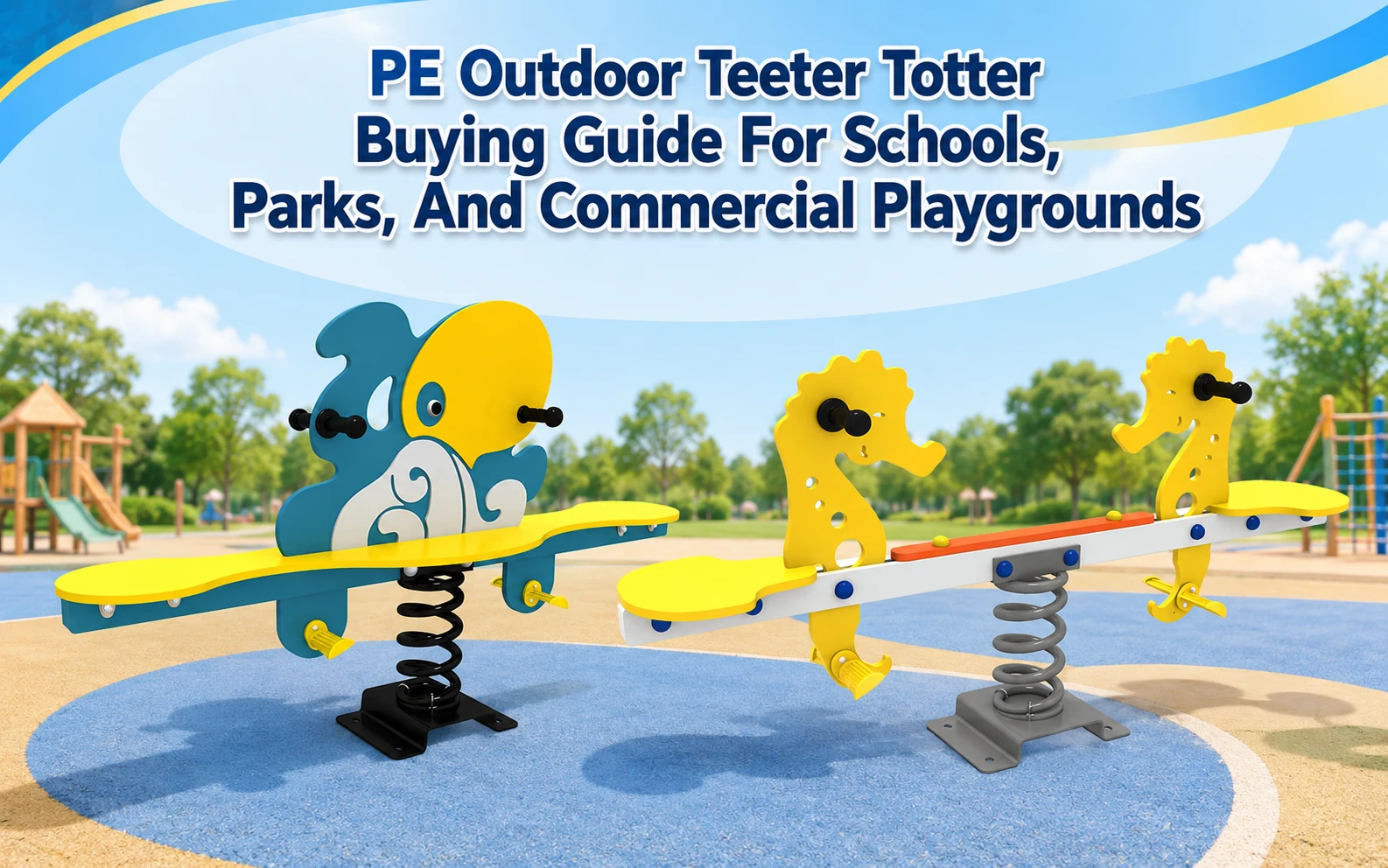
Choosing a seesaw for a professional playground is not the same as buying a lightweight backyard toy. Project buyers evaluating a PE outdoor teeter totter need to know who will use it, how many children it should serve, what safety space is required, whether the material can handle long-term outdoor exposure, and whether the supplier can provide drawings, hardware, installation support, and replacement parts. A well-specified PE outdoor teeter totter can become a compact but high-value play component for kindergartens, schools, community parks, resorts, commercial playgrounds, and real-estate projects.
This guide combines product introduction, material education, procurement advice, safety planning, customization, and factory-service information. A complete PE outdoor teeter totter specification should let the buyer compare function, risk, cost, and long-term service. Its purpose is to help buyers compare a PE outdoor teeter totter by practical project value rather than by product photos or unit price alone.
What Buyers Should Understand Before Ordering A PE Outdoor Teeter Totter
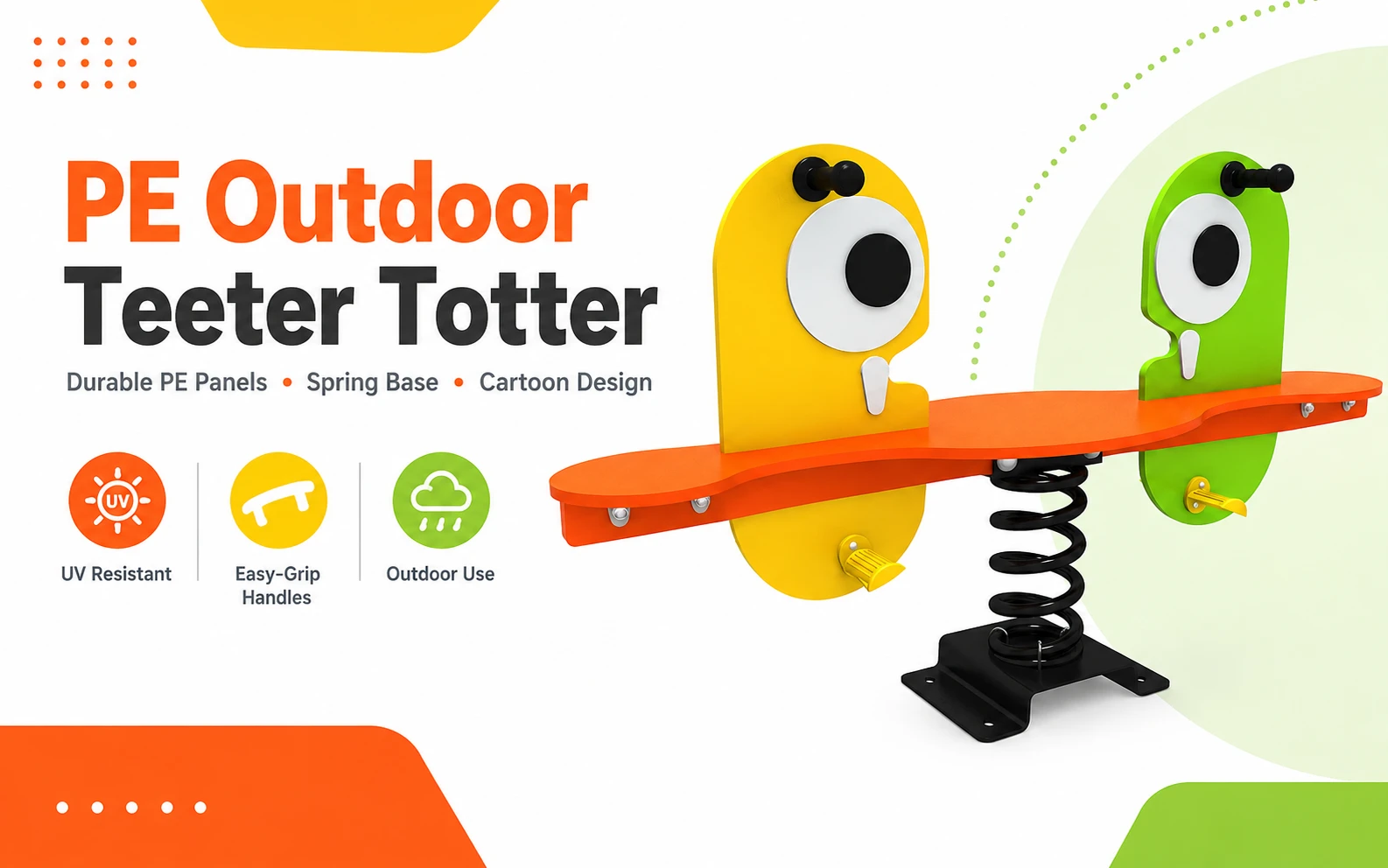
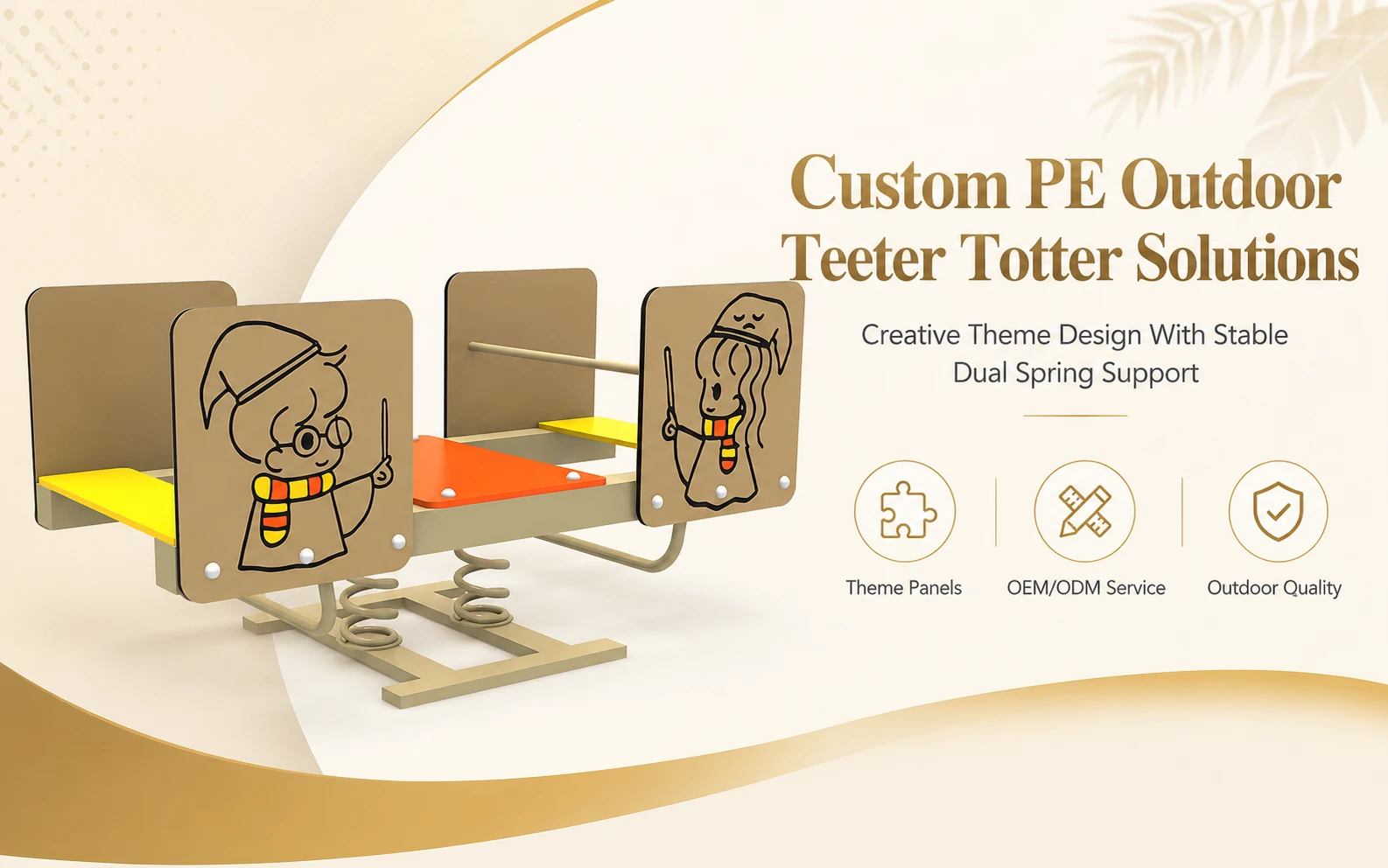
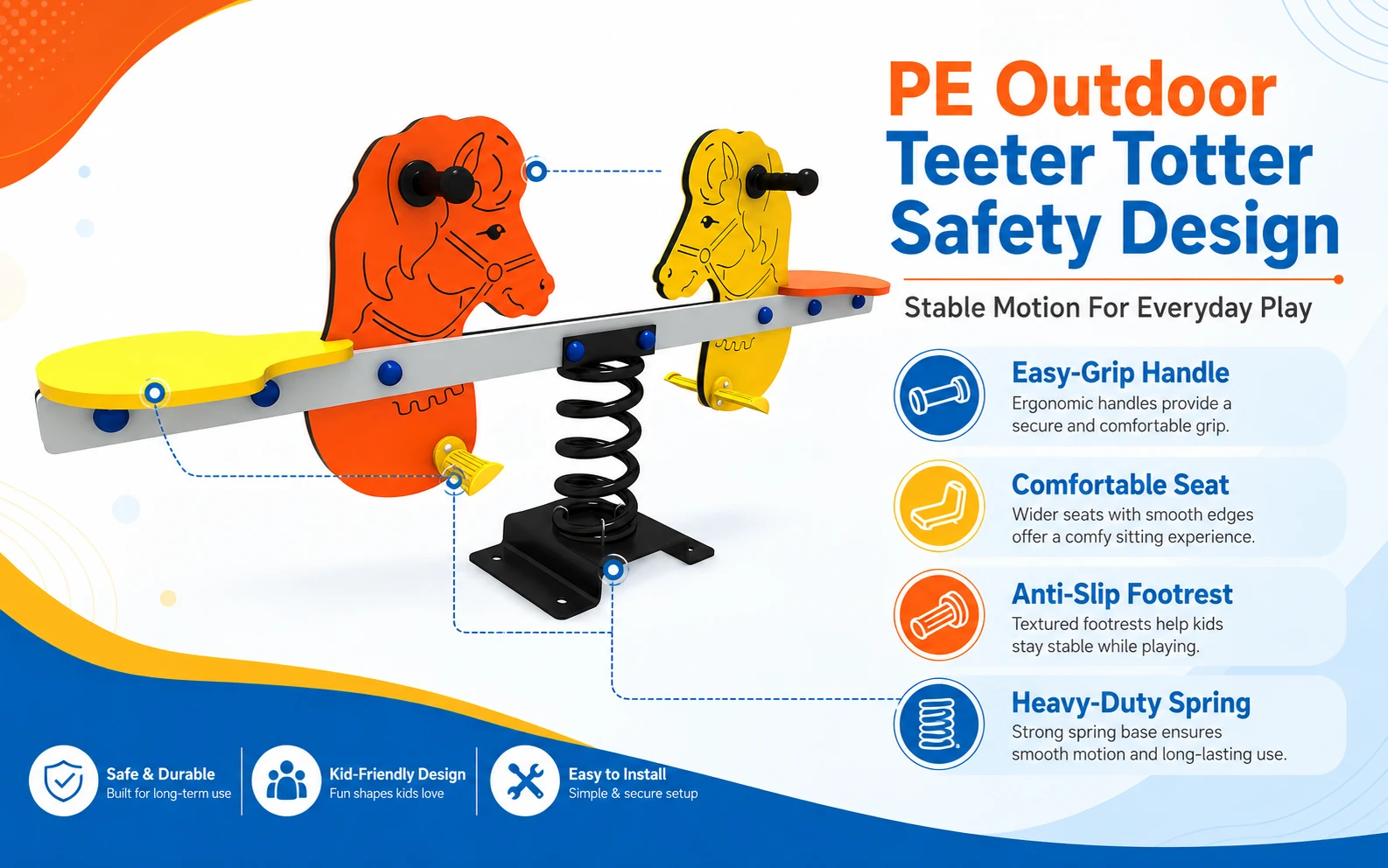
A PE outdoor teeter totter is a rocking playground unit that uses machined PE or HDPE panels as major visible and load-supporting components, normally combined with a central rocking or pivot system, seats, handholds, fasteners, and ground-fixing parts. Depending on the design, it may be a traditional two-end fulcrum model, a spring-centered model, a multi-seat model, or a themed animal or vehicle shape. The motion system defines how the PE outdoor teeter totter responds when users have different weights or one child dismounts.
The first question should be age suitability. The correct PE outdoor teeter totter category should be confirmed before colors, themes, or price are discussed. A buyer should never assume that every seesaw works for every child. Traditional fulcrum seesaws require two users to coordinate their movements, while spring-centered products can control the return motion differently. Current commercial playground brands therefore publish age ranges, capacity, equipment dimensions, required space, and fall height instead of describing a product only as “for kids.” A professional quotation for a PE outdoor teeter totter should provide the same information.
The second question is play value. Children do more than move up and down. They learn to respond to another user, adjust force, wait, communicate, and maintain body balance. Commercial manufacturers describe seesaw play as supporting cooperation, turn-taking, rhythm, spatial awareness, and balance. For a school or community project, this means a PE outdoor teeter totter can add social and physical play without taking the space required by a large combination structure. A carefully selected PE outdoor teeter totter can also diversify a site that otherwise relies too heavily on climbing and sliding.
The third question is operating capacity. Two-seat products are easy to supervise and suitable for smaller sites. Four-seat or multi-user designs can increase participation and reduce waiting, but they also require a larger safety zone and a structure designed for the intended number of users. Ask the supplier to state the designed capacity, recommended age group, maximum fall height, product dimensions, and installed footprint in writing. This is the minimum information needed to compare one PE outdoor teeter totter with another.
Why PE Board Material Matters For Outdoor Use
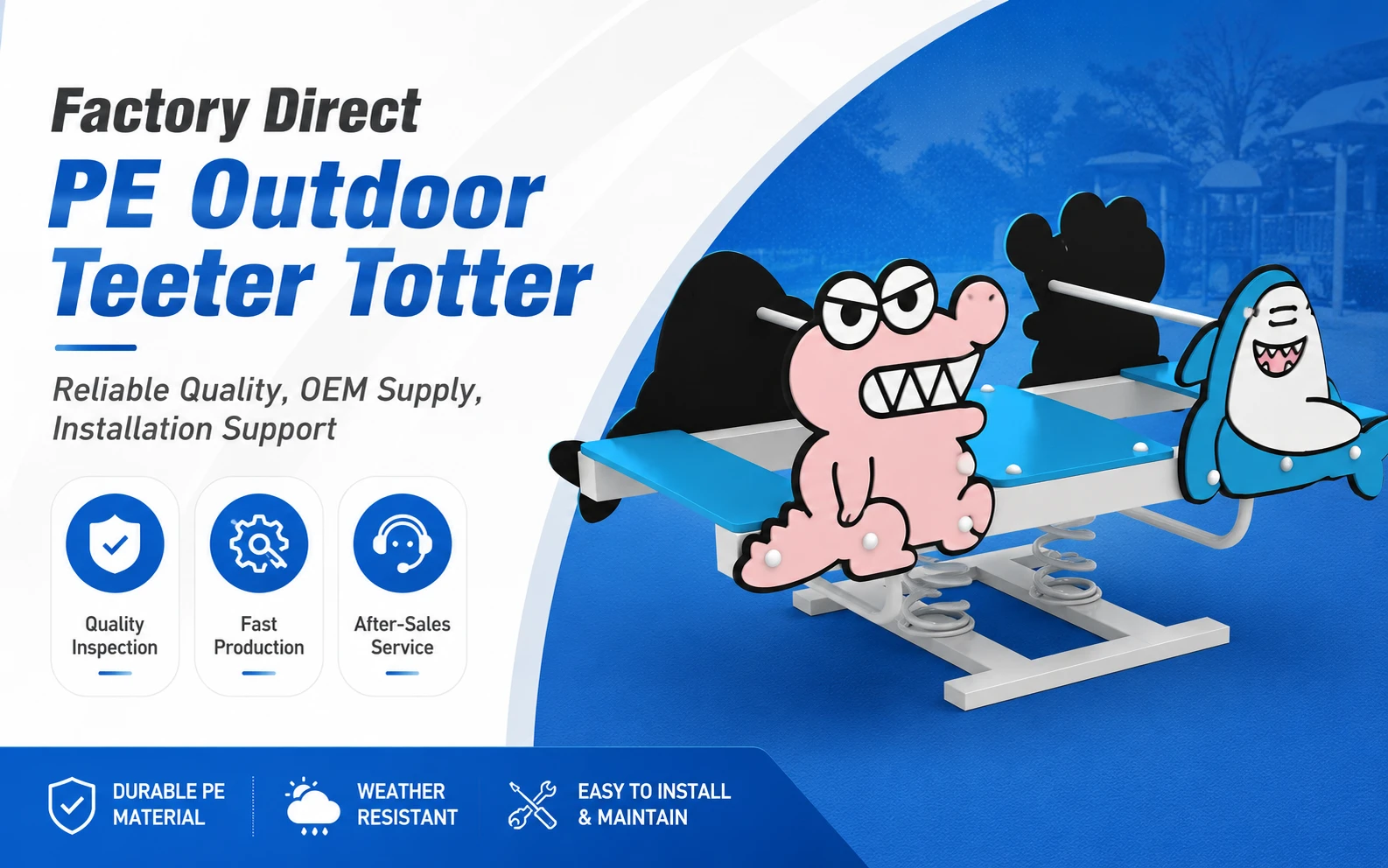
The material name alone is not enough. A PE outdoor teeter totter should use a panel grade selected for the actual climate, duty level, and fabrication method. Buyers should ask whether the panel is ordinary PE, outdoor-grade HDPE, UV-stabilized HDPE, or a dual-color sheet intended for CNC engraving. The grade, thickness, formulation, panel geometry, edge finishing, fastener design, and supporting structure all influence the finished product. These details determine whether the PE outdoor teeter totter remains stable, presentable, and serviceable under repeated use.
Outdoor-grade HDPE sheets are widely selected for playground and recreational applications because suitable grades can offer impact resistance, moisture resistance, color stability, and UV resistance. Some engineered sheets use contrasting color layers, allowing a CNC router to cut graphics, names, animals, numbers, or brand elements into the surface without adding a separate painted sign. For a customized PE outdoor teeter totter, this makes the panel both a structural design element and a visual feature. It also allows the PE outdoor teeter totter to match a school identity, park theme, or distributor product range without relying only on surface paint.
PE board also helps solve common maintenance concerns in a PE outdoor teeter totter. It does not need the same repainting routine as a painted wooden panel, and it will not splinter like poorly maintained timber. Smooth, rounded machining can create child-friendly edges, while replaceable flat panels make localized service easier when the product is designed with accessible fasteners. However, buyers should not accept vague claims such as “weatherproof forever.” They should request the sheet specification, thickness, UV-stabilization information, color options, edge treatment, and recommended service environment for the exact PE outdoor teeter totter being quoted.
Material comparison should include the entire product, not only the PE panel. Check the pivot assembly, springs or bearings, shaft, steel brackets, bolts, caps, seats, handles, and anchors. A thick panel cannot compensate for a weak moving joint. For coastal, humid, high-UV, or high-traffic projects, ask how metal parts are treated and which components are expected to wear first. The best PE outdoor teeter totter specification clearly separates decorative panels, load-bearing parts, moving parts, and replaceable wear parts. When a supplier explains only the panel and not the joint, the PE outdoor teeter totter quotation is incomplete.
How To Match The Right Model To Your Site And Users
Start with the site, not the catalog. The correct PE outdoor teeter totter model follows the users, site plan, supervision level, and local project requirements. Send the supplier the available dimensions, surface type, drainage condition, target age group, expected daily traffic, preferred colors, and project standard. A product suitable for a supervised kindergarten may not be the right choice for an open public park with mixed ages and heavy use.
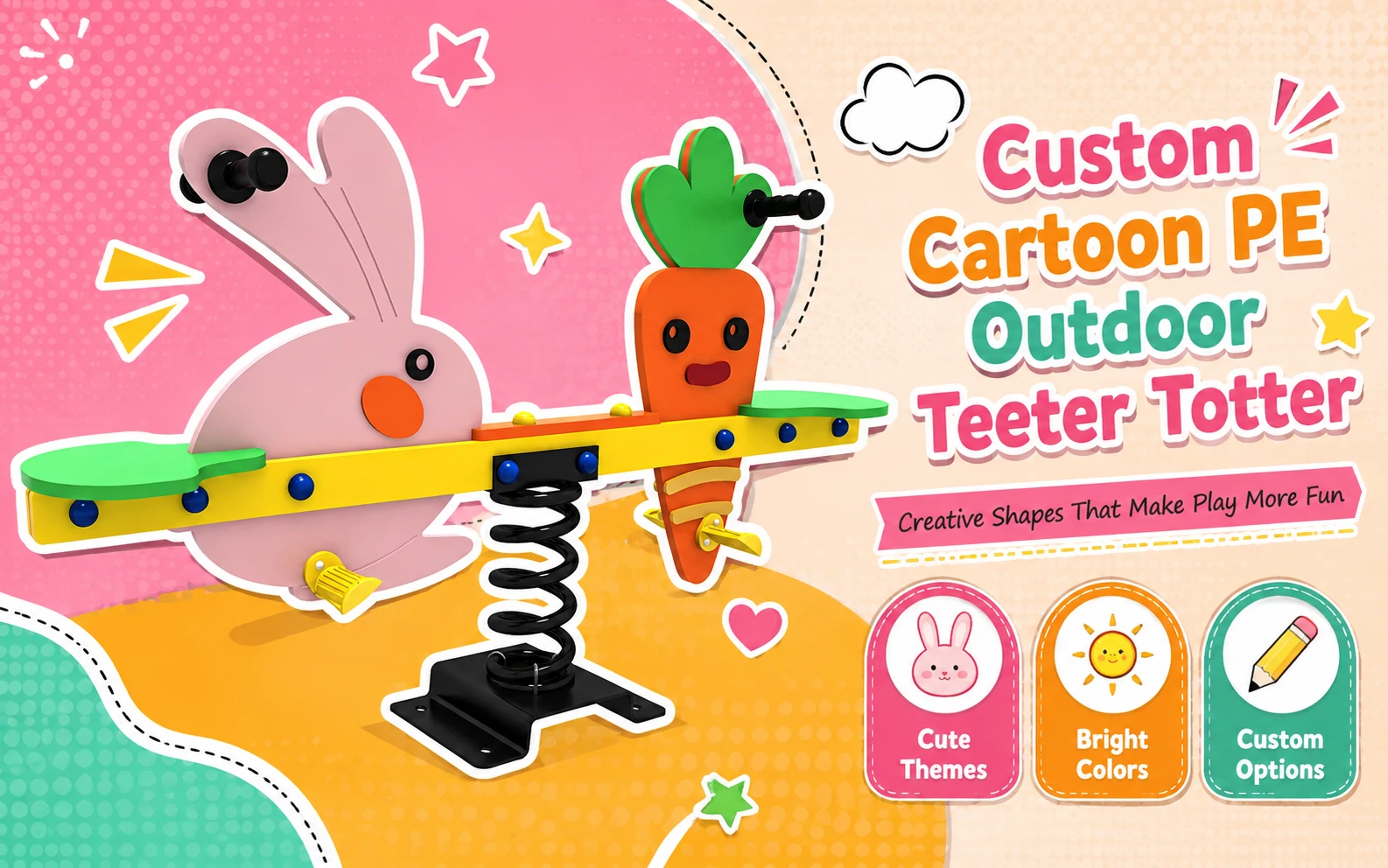
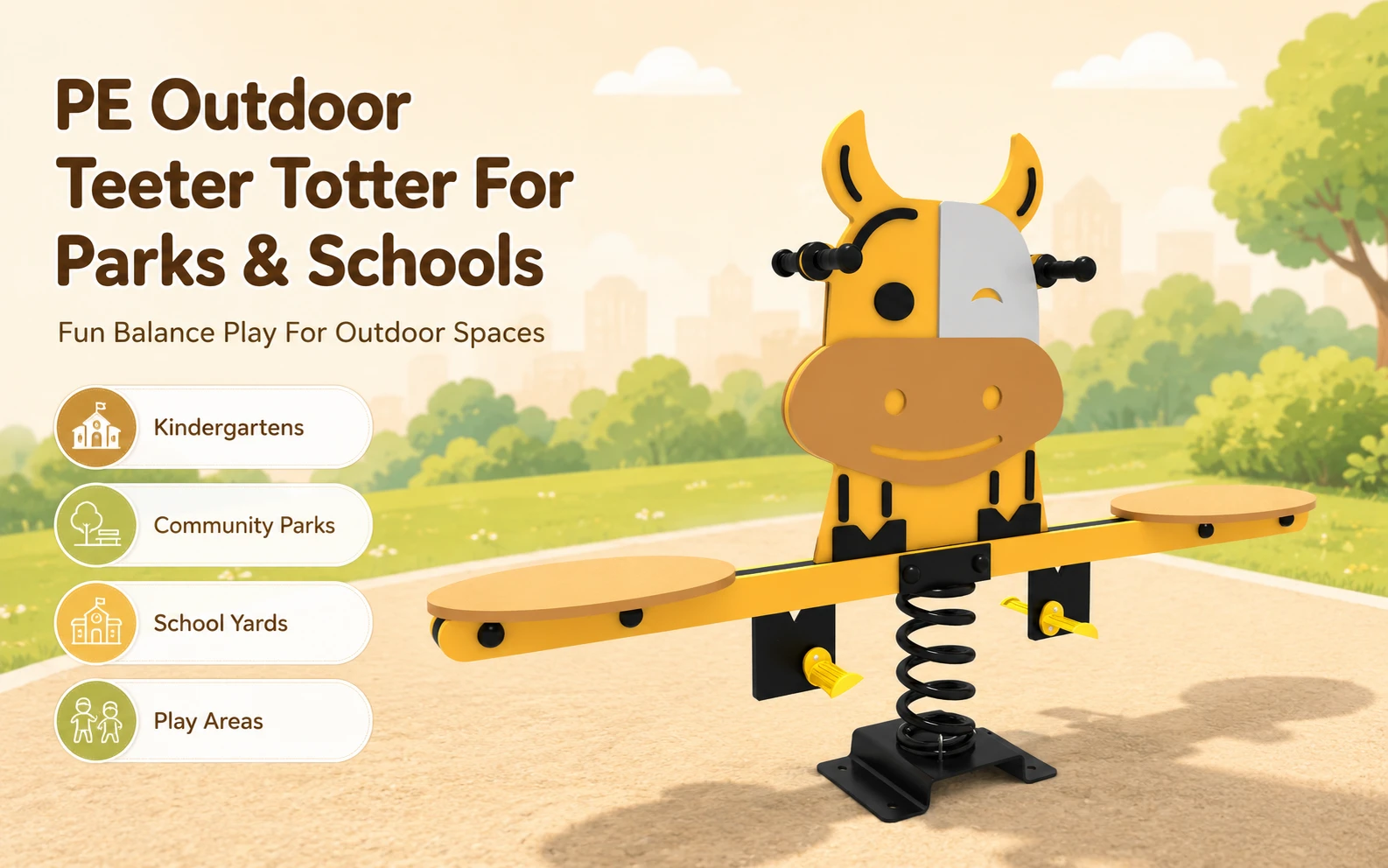
For kindergartens, buyers often prioritize low movement, easy entry, supportive handles, rounded seats, and a controlled return action. For primary schools, a more active model may be appropriate, provided the age range, movement limits, and surfacing are suitable. Community parks need strong anchoring, durable moving components, and maintenance access. Resorts and commercial playgrounds may place greater value on themed shapes, recognizable colors, photo appeal, and integration with the wider landscape. One PE outdoor teeter totter can be shaped as an animal, boat, car, leaf, or abstract form, but appearance should never hide the need for correct geometry and safety clearance. The selected PE outdoor teeter totter must still fit the movement zone and supervision plan.
Location inside the playground also matters. Moving equipment should not be placed in a circulation route where running children cross the ends of the seesaw. It is normally better positioned in a clearly defined active-play zone with unobstructed visibility for supervisors. The installed layout should show the product footprint and the full use zone, not just the outline of the equipment.
Before purchasing, compare models with a simple project matrix: intended age, user capacity, type of motion, installed size, safety-zone size, fall height, surfacing requirement, anchoring method, panel thickness, moving-joint design, standard or test requirement, customization options, lead time, and spare-parts policy. This comparison prevents a visually attractive but unsuitable PE outdoor teeter totter from entering the final plan. For phased projects, a coordinated PE outdoor teeter totter family can also simplify colors, spare parts, and future expansion.
Safety, Installation, And Maintenance Questions Buyers Should Ask
Safety begins with product type. A safety review for a PE outdoor teeter totter should therefore begin with its motion system, target users, and foreseeable misuse. The U.S. Consumer Product Safety Commission distinguishes traditional fulcrum seesaws from spring-centered seesaws. Its current public-playground guidance says fulcrum seesaws are not recommended for toddlers or preschool-age children because coordinated action is complex. It also calls for crush-hazard control, impact cushioning beneath the seats, stable two-hand handholds, and a use zone extending at least six feet from each outside edge. Project requirements vary by country, so the final PE outdoor teeter totter should be evaluated against the standard and approval process required at the installation location.
Buyers should ask five direct questions. Can a child’s hand, foot, or leg enter a pinch or crush point? What happens if one user suddenly gets off? Can the handles rotate or project beyond the seat? What is the highest reachable point and corresponding fall height? What protective surfacing and use zone are required? These questions are more useful than asking only whether the product is “safe.” They turn the PE outdoor teeter totter safety discussion into verifiable design and site requirements.
Installation documents should identify each anchor, fastener, panel, pivot part, and assembly direction. The supplier should provide a foundation or anchoring plan, product dimensions, use-zone drawing, hardware list, assembly instructions, and torque or inspection guidance where applicable. After installation, the PE outdoor teeter totter should be checked for level, anchor stability, free but controlled movement, exposed threads, loose caps, sharp machining marks, abnormal noise, and interference between moving and fixed parts.
Maintenance should be planned before opening. Establish a visual inspection schedule for loose bolts, worn bushings, damaged handles, cracked panels, corrosion, movement changes, and displaced surfacing. High-use public sites may need more frequent checks than controlled-access school sites. Keep the model number, installation record, spare-parts list, and supplier contact with the maintenance file. A PE outdoor teeter totter is easier to manage when wear parts can be identified and ordered without replacing the complete unit. A written maintenance checklist protects the long-term value of the PE outdoor teeter totter.
Customization, Pricing, Production, And Delivery Planning
Customization should solve a project problem, not merely change color. A customized PE outdoor teeter totter should improve site fit, user experience, brand consistency, or maintenance efficiency. Useful options include product length, seat count, age positioning, motion type, panel thickness, handle layout, engraved graphics, bilingual labels, school colors, park themes, logo integration, and anchoring for different foundations. For a themed playground, the PE outdoor teeter totter can repeat the visual language of nearby slides, rocking horses, fences, activity panels, or PE play structures.
Price depends on more than the amount of plastic. Buyers should expect the quotation to reflect panel grade and thickness, number of CNC-cut parts, steel and moving-joint specification, seat capacity, hardware, surface treatment, testing or certification needs, packaging volume, order quantity, customization work, and delivery terms. Freight, installation, safety surfacing, customs charges, and local civil work may be separate. A PE outdoor teeter totter budget should therefore include both factory supply and site-side costs. Leading commercial product pages explicitly distinguish equipment pricing from freight, surfacing, installation, and other project costs; procurement teams should ask every PE outdoor teeter totter supplier to define the quotation boundary just as clearly.
For an accurate proposal, send the supplier the site drawing, destination country, required standard, quantity, target age, preferred design, installation surface, deadline, and budget range. Ask for an itemized quotation rather than a single total. The package should identify the product, anchors, spare hardware, packaging method, documents, production time, estimated shipment volume, and available installation support.
A reliable production process also reduces project risk. Confirm the drawing before manufacturing, approve colors and engraved graphics, inspect finished edges and moving assemblies, verify the packing list, and obtain installation documents before shipment. If the order contains several PE outdoor teeter totter models, request component labels so the local team can match each crate or bundle to the correct product. For repeat orders, a standardized PE outdoor teeter totter bill of materials can make reordering and spare-parts support easier.
Why JQPlayground Is A Practical Manufacturing Partner
According to the company’s project materials, JQPlayground has more than 30 years of amusement-equipment experience, a production base of more than 60,000 square meters, an in-house design and development team, and support covering design, production, quality inspection, export packing, installation guidance, and after-sales service. For a PE outdoor teeter totter project, this integrated approach matters because panel machining, metal fabrication, moving components, packaging, and installation documents must match one approved drawing. This allows each PE outdoor teeter totter order to be managed as a complete project rather than as unrelated parts.
The cooperation process begins with practical information: site size, users’ ages, quantity, destination, budget, style, required standard, and schedule. JQPlayground can then prepare a suitable product recommendation or customized drawing, confirm the quotation, arrange production, inspect the product, plan export packaging, and provide installation guidance. Buyers can also request color matching, themed PE-panel shapes, CNC engraving, logo details, and coordination with other PE board playground products. This helps the PE outdoor teeter totter look like part of a planned playground rather than an isolated purchase.
Quality control should focus on the areas that affect real use: smooth panel edges, correct hole positions, secure inserts and fasteners, stable handles, controlled motion, protected pivot points, reliable anchoring, complete hardware, and readable part labels. Before shipment, the buyer should receive the confirmed drawing, packing list, installation information, and spare-parts contact. This makes the PE outdoor teeter totter easier to install and maintain after it arrives. It also gives contractors and distributors a clearer basis for handing the PE outdoor teeter totter over to the end user.
For schools, parks, contractors, distributors, and commercial playground investors, the best PE outdoor teeter totter purchasing decision is not the lowest unit price. It is a product that fits the users, site, safety requirements, maintenance capacity, visual plan, and delivery schedule. A project-ready PE outdoor teeter totter proposal should show what is supplied, what must be prepared locally, and who is responsible for each stage. Send JQPlayground your site dimensions, target age group, quantity, destination country, preferred colors, and required standard to receive a focused PE outdoor teeter totter proposal instead of a generic catalog recommendation.


 English
  Español
  Français
  Deutsch
  Português