


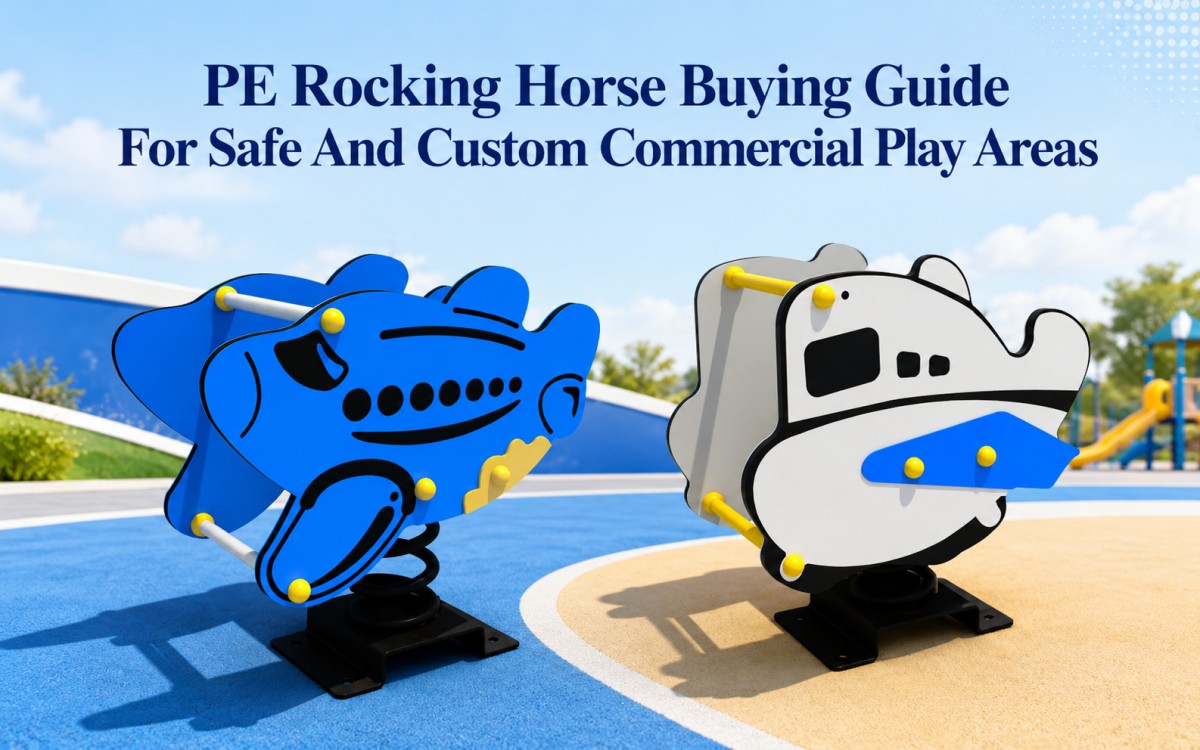
A PE rocking horse may look like a simple piece of playground equipment, but commercial buyers usually need to evaluate much more than its appearance. Schools want a model that is easy to supervise. Kindergartens need child-friendly dimensions and smooth contact surfaces. Parks and residential communities focus on outdoor durability, stable installation, and low maintenance. Shopping malls, supermarkets, and amusement venues also expect attractive shapes that can increase the visual appeal of a children’s play zone.
For these reasons, selecting a PE rocking horse should involve material quality, age suitability, spring performance, base structure, safety space, customization, production control, and after-sales support. This guide explains what procurement managers, playground contractors, distributors, school owners, and project developers should check before requesting a quotation or placing a bulk order.
What A PE Rocking Horse Is And Why Buyers Choose It
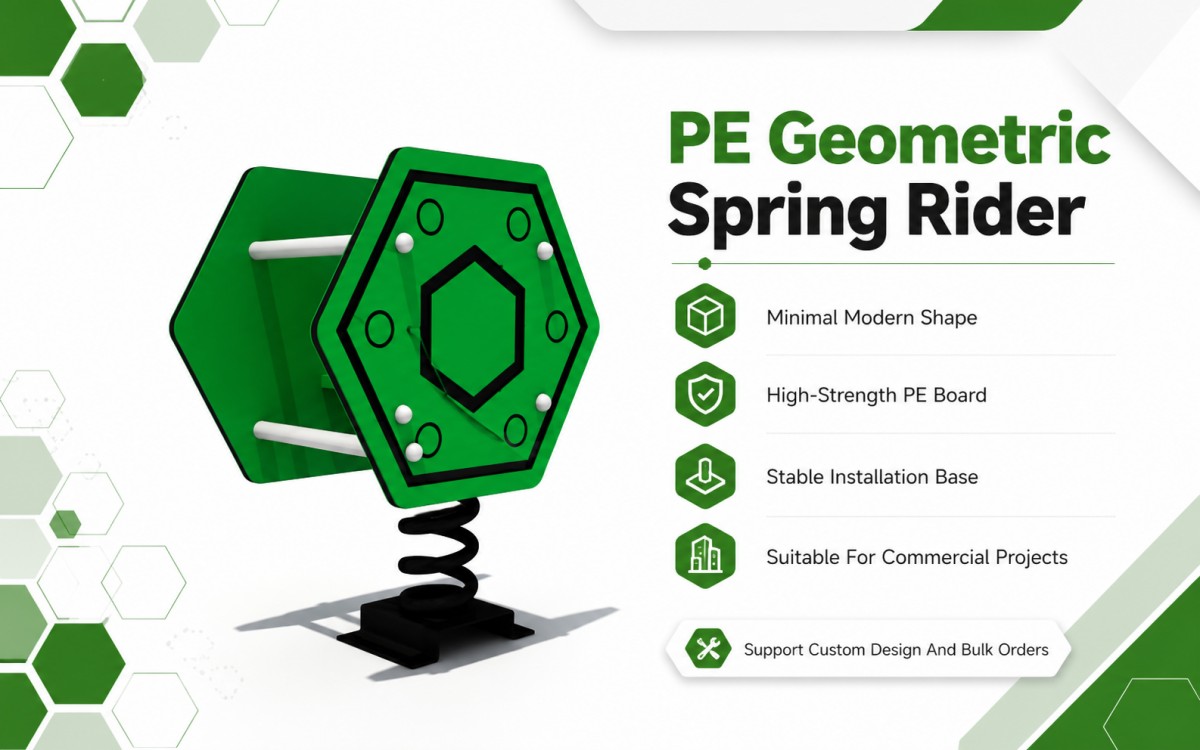
A PE rocking horse is a compact rocking play unit made with polyethylene panels or molded PE components, usually combined with a metal spring, handles, foot supports, fasteners, and a ground-fixing base. After the child sits on the body and holds the handles, the spring creates a controlled forward, backward, or multi-directional rocking motion. The PE rocking horse shape gives children a familiar theme and makes the product easy to include in animal, farm, forest, or colorful kindergarten playground designs.
Commercial buyers often choose a PE rocking horse because it adds motion play without requiring a large structure. It can fill an unused corner, expand a small playground, create a toddler activity point, or complement slides, swings, seesaws, and sensory equipment. Its compact format can also simplify transport and installation compared with a large combination playground.
The play value should not be judged only by size. A well-designed PE rocking horse can encourage children to hold, balance, coordinate body movement, and use imaginative play. The PE rocking horse is especially useful when a project needs a lower-intensity activity between active climbing zones and rest areas. Buyers should still confirm the recommended age range, seat height, user capacity, and maximum load for the selected model rather than assuming every rocking horse fits every child.
How To Evaluate PE Material, Spring Quality, And Structural Details
The PE rocking horse body material directly affects appearance, cleaning, and outdoor performance. A commercial PE rocking horse should use durable PE material with a smooth surface, consistent thickness, rounded edges, and colors suited to the installation environment. For outdoor projects, buyers should ask whether the material is intended for long-term sunlight, rain, temperature changes, and frequent public use. For indoor shopping malls or supermarket play areas, the priorities may shift toward easy cleaning, compact dimensions, and coordinated brand colors.
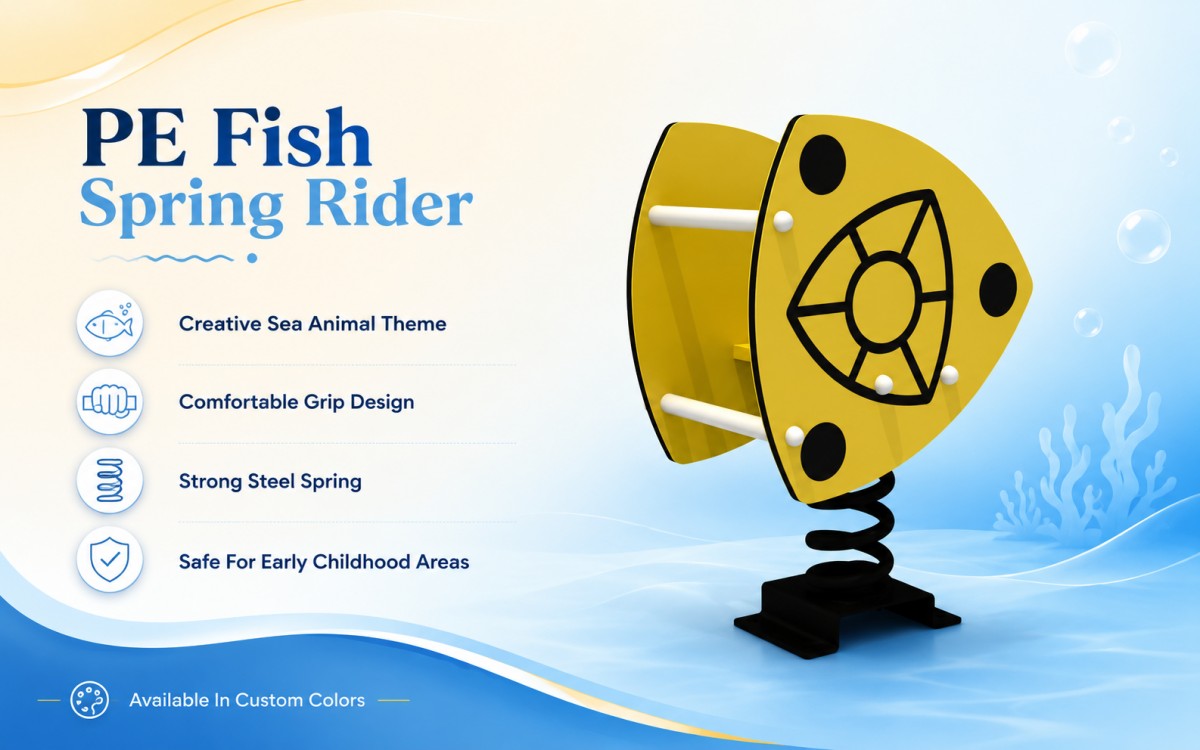
The spring is the main moving component of a PE rocking horse. Buyers should request information about spring steel grade, spring diameter, coating process, fatigue resistance, and replacement availability. A spring that is too soft may create excessive movement, while an overly rigid spring may reduce play comfort for younger users. The connection between the spring, PE body, and base should distribute force evenly and prevent unstable movement during repeated use.
Handles and footrests also deserve close inspection. They should be positioned so children can maintain a stable riding posture without stretching awkwardly. Exposed fasteners should be covered or designed to reduce contact risk. The bottom base should match the planned installation method, such as fixing to concrete with expansion bolts or using an embedded foundation for soil installation. Before ordering a PE rocking horse, ask the supplier for product drawings, assembled dimensions, fixing details, hardware lists, and clear installation instructions.
Where A PE Rocking Horse Works Best In Commercial Projects
Different sites use a PE rocking horse for different reasons. In kindergartens and preschools, it can create a recognizable animal-themed activity that teachers can easily observe. Bright but coordinated colors can help the product fit classroom extensions, outdoor learning areas, and small physical-development zones. The product should be positioned away from busy running routes and other moving equipment.
In public parks and residential communities, a PE rocking horse works well as an independent play point near low-height slides, play panels, sand areas, or benches for caregivers. Project planners should consider drainage, surfacing, shade, and the surrounding circulation route. A unit placed in a visually open area is easier for parents to supervise and less likely to create hidden collision points.
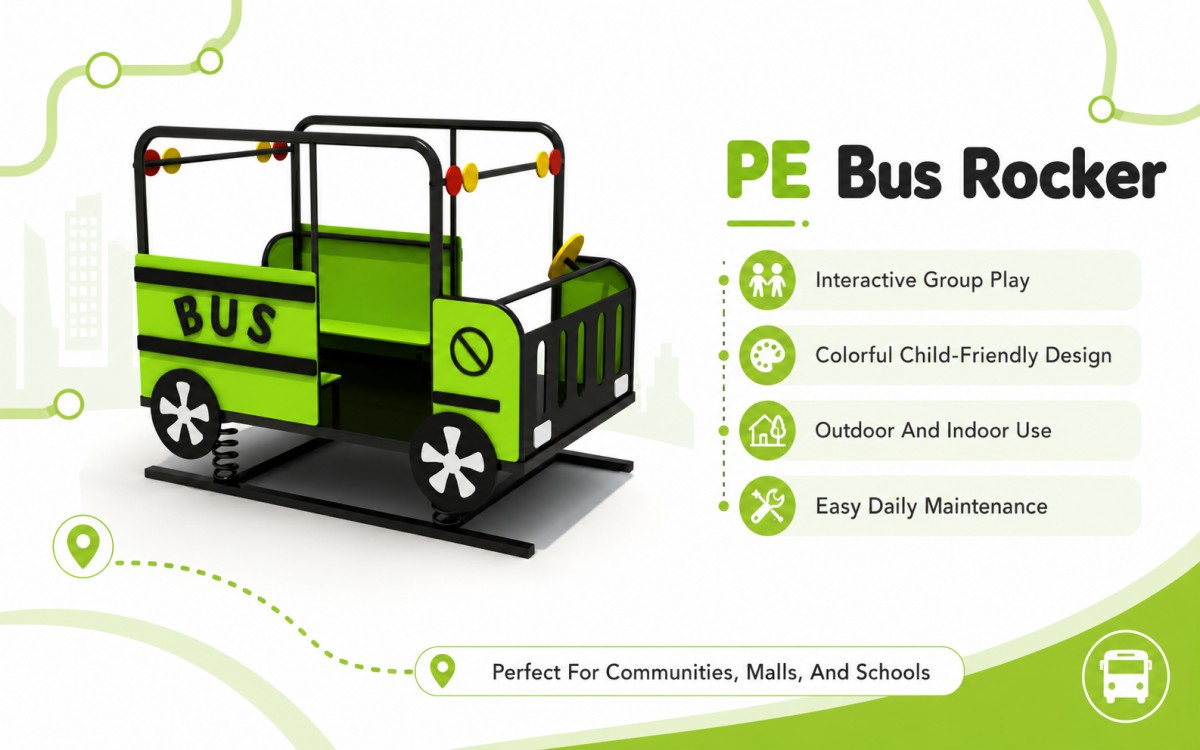
For indoor playgrounds, shopping malls, commercial play corners, and supermarket children’s areas, a PE rocking horse can add movement without occupying the footprint of a large ride. Buyers can select colors that match the venue identity, use themed graphics, and combine several models to create a small animal group. In amusement parks and larger playground projects, the unit can be used as a supporting product that improves activity variety for younger children.
The best placement depends on the target age group, expected daily traffic, available safety area, ground condition, and nearby equipment. A reliable supplier should not recommend the same layout for every customer. The PE rocking horse model and installation plan should be matched to the actual site rather than selected only from a catalog image.
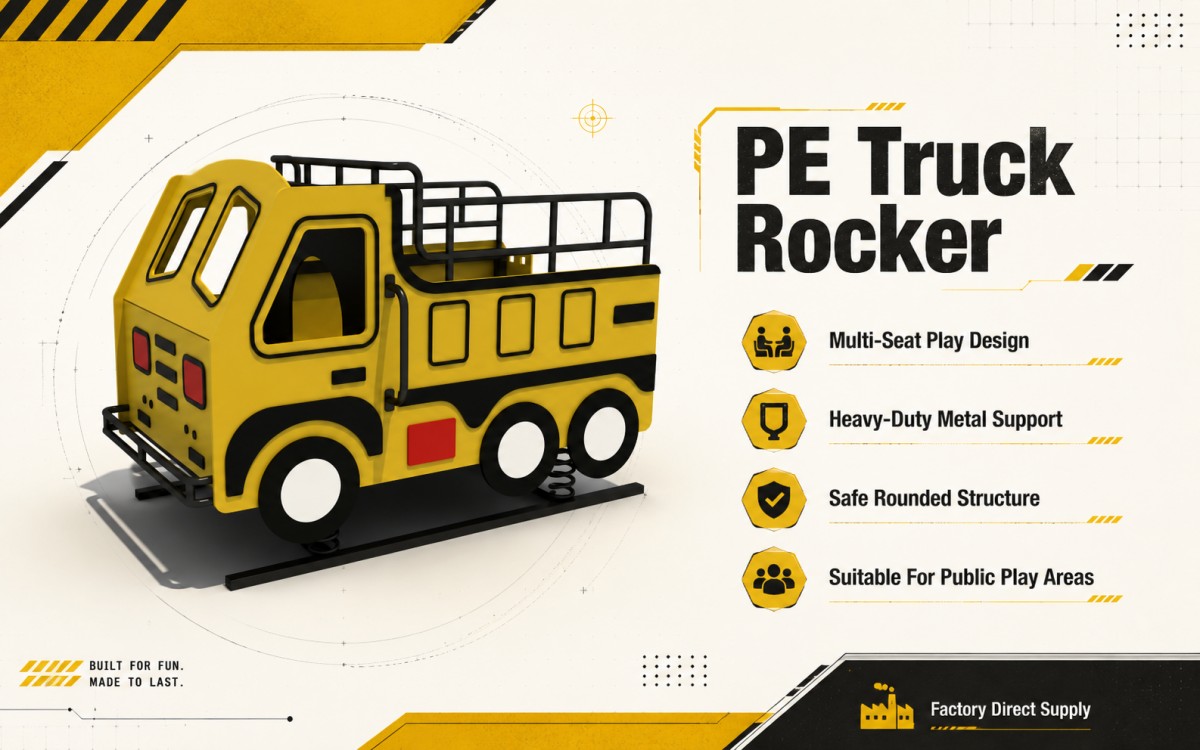
What Safety And Installation Information Buyers Should Request
Safety evaluation begins before production. Buyers should provide the destination country and intended use so the supplier can confirm which playground requirements, test reports, or certification documents may be relevant. A PE rocking horse used in a public school or municipal park may face different documentation expectations from a unit used in a private indoor play corner. Procurement teams should request current documents for the proposed model instead of accepting a general statement that all products meet every standard.
The PE rocking horse should have suitable handgrips, foot supports, a stable seat area, protected spring connections, rounded edges, and secure ground anchoring. The installation area should allow enough clearance for the complete movement of the PE rocking horse and for children entering or leaving the unit. Safety surfacing and the surrounding use zone should be planned according to the product’s movement, fall height, local standards, and site conditions.
Installation quality is as important as the quality of the PE rocking horse. Concrete thickness, anchor position, embedded depth, bolt tightening, and final level can affect stability. After installation, the contractor should check whether the unit returns smoothly, whether the spring or base produces unusual noise, whether fasteners remain covered, and whether the rocking path contacts the ground or nearby objects.
Buyers should also request an inspection and maintenance schedule. Routine checks should cover bolts, handles, footrests, spring coating, cracks, deformation, sharp damage, foundation movement, and surfacing condition. A commercial PE rocking horse should be supported by spare-part information so damaged handles, hardware, or spring components can be replaced without removing the entire unit.
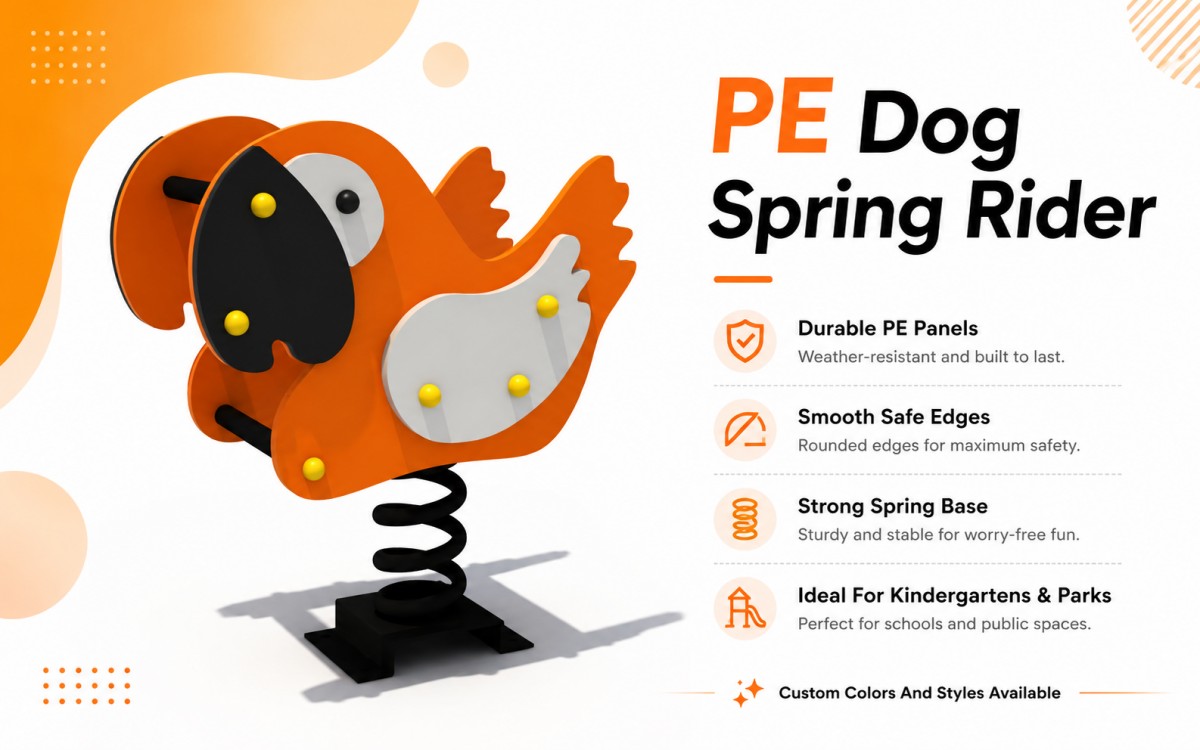
How To Compare Customization, Price, MOQ, And Delivery
The price of a PE rocking horse depends on more than the body shape. Material thickness, spring specification, base type, product size, color quantity, graphic complexity, order volume, packaging method, certification needs, and shipping terms can all influence the quotation. A very low price may exclude important items such as mounting hardware, export packaging, customized colors, or documentation.
When requesting a quotation, buyers should send the installation country, project type, target age group, required quantity, preferred design, color plan, ground condition, and delivery port. This information allows the manufacturer to recommend a suitable PE rocking horse instead of offering an incomplete price based only on a product photo.
Customization can include horse shape, panel outline, color combinations, printed or engraved graphics, handle colors, footrest positions, logo placement, packaging marks, and OEM labeling. For distributors, a customized PE rocking horse series can create a consistent local product line. For schools or themed parks, colors and graphics can be matched with the overall playground concept. Buyers should confirm the MOQ for standard colors and the MOQ for fully customized production because these may differ.
Delivery planning should cover drawing confirmation, sample approval when required, production schedule, quality inspection, packing list, carton or pallet dimensions, net and gross weight, CBM, loading photos, and shipping documents. For each PE rocking horse, the supplier should explain which parts arrive assembled, which parts require on-site installation, and what tools are needed. Clear delivery information helps buyers calculate the complete landed cost of each PE rocking horse, not only the factory price.
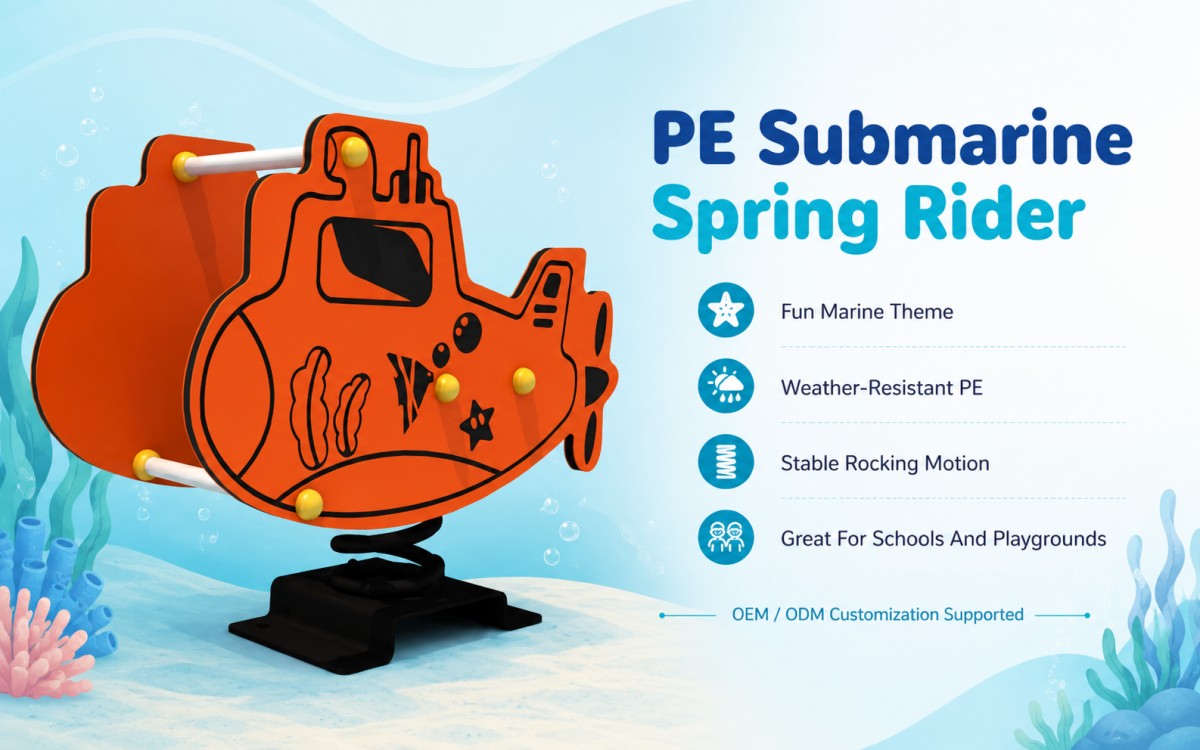
Why Factory Capability Matters For Long-Term Procurement
A dependable manufacturer should be able to control design, PE processing, metal fabrication, surface treatment, assembly, inspection, and export packaging. For a PE rocking horse, this means the PE body, spring connection, base, handles, footrests, and hardware should be checked as one complete system rather than purchased from unrelated sources without final testing.
Our factory can provide standard and customized PE rocking horse products and other playground equipment for schools, kindergartens, parks, communities, indoor venues, shopping malls, supermarkets, and amusement projects. Customers can choose different colors and styles, and our team can support product selection according to the site, age group, order quantity, and project positioning. Before shipment, the PE rocking horse can be checked for appearance, assembly accuracy, movement, hardware completeness, and packaging condition.
For project buyers and distributors, long-term cooperation also depends on response after delivery. Useful support includes installation drawings, hardware identification, packing records, replacement-part matching, maintenance suggestions, and assistance with repeat orders. These details reduce communication costs when a buyer manages multiple sites or resells the same PE rocking horse in different markets.
When comparing suppliers, ask for real factory photos, production-process information, material specifications, quality-control steps, packaging examples, export experience, and relevant project references. A capable PE rocking horse supplier should answer technical questions clearly and explain what can or cannot be customized. If you are planning a school, kindergarten, park, community, mall, supermarket, or amusement project, contact us with your required quantity, site type, destination country, and preferred design. We can recommend a suitable PE rocking horse solution and prepare a detailed quotation for your project.


 English
  Español
  Français
  Deutsch
  Português