


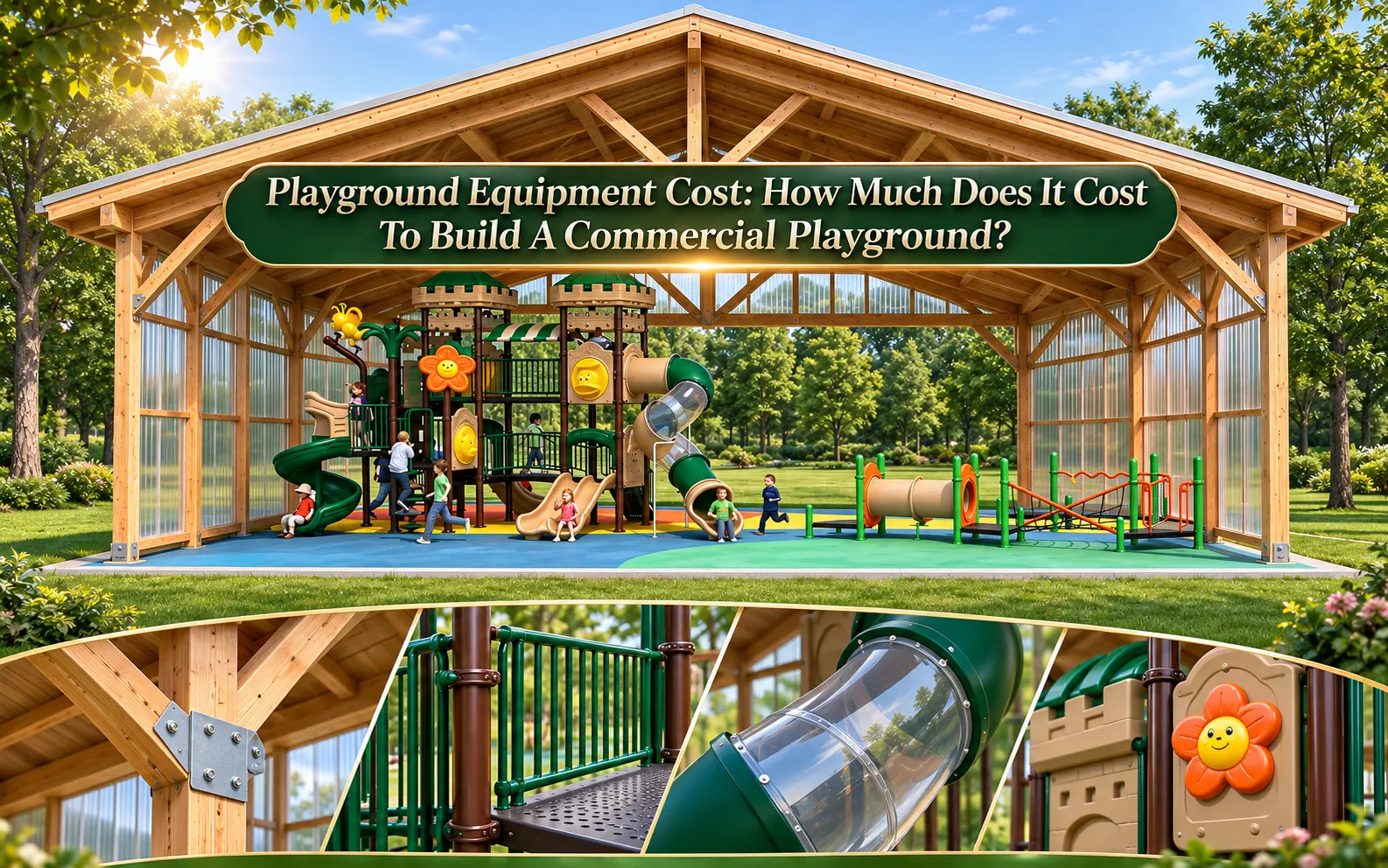
COMMERCIAL PLAYGROUND BUDGET GUIDE
What Is The Average Cost Of A Playground?
Understanding the total commercial playground cost is essential for schools, municipalities, property developers, childcare centers, and commercial recreation operators planning a new play space.
The average investment varies widely because no two sites have the same size, ground conditions, user age range, safety requirements, or design ambition. Equipment selection, safety surfacing, professional installation, freight, and site preparation all influence the final project budget.
As a practical planning rule, playground equipment often represents about 50% to 60% of the total project budget. Safety surfacing may account for roughly 15% to 25%, while playground installation cost commonly takes another 10% to 25%. Freight, site amenities, preparation, permits, and contingency reserves make up the balance.
These independent percentage ranges are general planning benchmarks, not a fixed allocation or formal quotation. Actual percentages depend on the project scope, destination, labor rates, and site conditions.
For illustration, a small daycare or housing-community playground may require a budget in the tens of thousands of U.S. dollars, while a large municipal destination playground can reach well above $100,000. The equipment line should never be treated as the complete project price.
The most reliable way to estimate playground equipment cost is to begin with a site plan, expected capacity, target age groups, equipment preferences, and local compliance requirements. Request an itemized proposal that separates equipment, surfacing, playground installation cost, freight, and other services.
Understanding Playground Project Scope
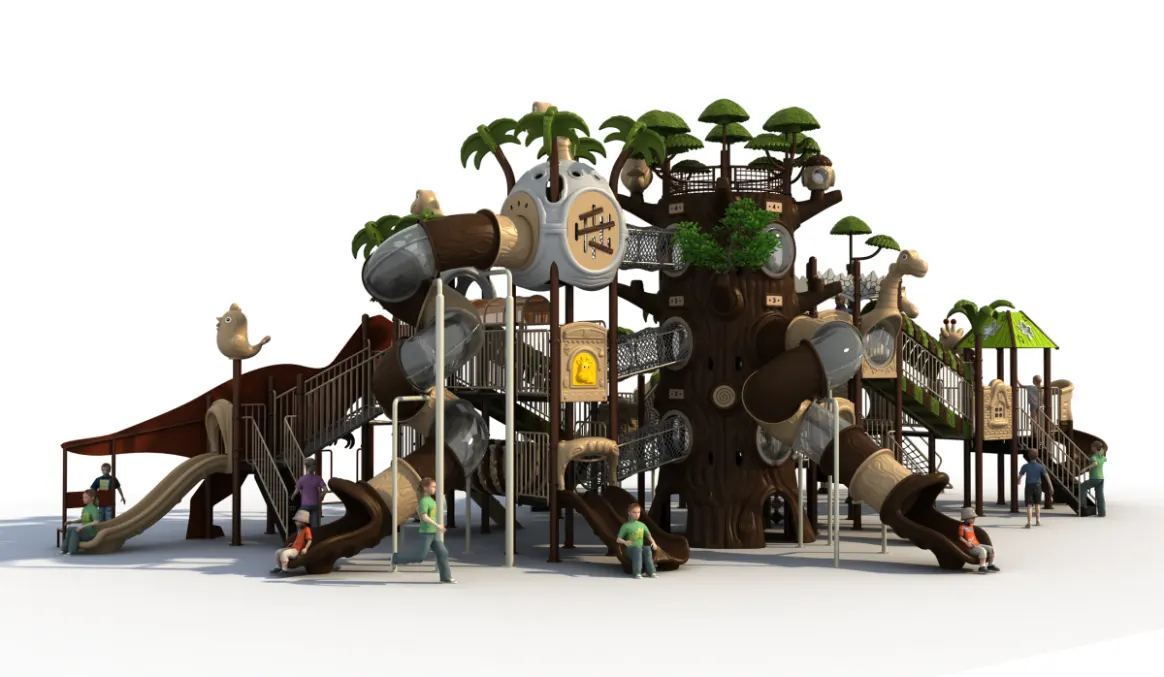
Your playground’s total cost depends on several interconnected factors. The size of your play space, the age groups you are serving, and your vision for the space all influence the final investment. A compact play space with basic equipment serves different needs than an expansive community destination with multiple play zones.
Smaller projects work well for daycares, small churches, places of worship, and housing developments serving approximately 15 to 25 children. Larger projects serve municipal parks, regional recreation centers, and schools where hundreds of students may use the playground throughout the day.
The equipment itself represents the largest single expense, but it is only part of the picture. Safety surfacing, professional installation, site preparation, and complementary features like playground benches all contribute to creating a complete, functional play environment.
Understanding how these elements work together helps buyers evaluate the total commercial playground cost and allocate available funding wisely.
Budget Planning For Different Playground Applications
School Playground Projects
Prioritize durability, high-capacity play activities, age-appropriate challenges, accessible circulation, and predictable maintenance requirements.
Municipal Park Playgrounds
Consider multiple age zones, inclusive equipment, weather resistance, attractive landscaping, public accessibility, and long-term maintenance.
Community Playgrounds
Balance compact layouts, everyday usability, family-friendly activities, practical equipment selection, and available development budgets.
Commercial Recreation Projects
Focus on distinctive themes, visitor engagement, attractive visual design, equipment capacity, and future expansion opportunities.
What Factors Affect Commercial Playground Cost?
1. Playground Size And User Capacity
The first factor is the size and capacity of the play space. A compact playground serving a small childcare center may need only a slide, a swing bay, a climbing element, and a small activity panel.
A municipal or school playground may need several age-separated zones, multiple circulation routes, inclusive play components, shade, seating, and enough capacity for high daily traffic. As the number of users and play functions increases, the playground equipment cost generally rises accordingly.
2. Intended Age Groups
Toddler equipment usually requires lower platforms, smaller slides, protective barriers, and developmentally appropriate activities. Equipment for children aged five to twelve may include taller climbers, challenging overhead elements, larger slides, and more complex play events.
Designing for several age groups can improve long-term usability, but it also increases the number of structures, safety zones, and surfacing areas, influencing the total commercial playground cost.
3. Materials And Manufacturing Quality
Powder-coated steel, galvanized components, high-density polyethylene panels, stainless-steel hardware, and UV-resistant plastics can have a higher initial price than basic alternatives.
However, commercial equipment must withstand repeated use, weather exposure, cleaning, and occasional misuse. A lower initial playground equipment cost may create higher maintenance, replacement, or downtime costs over the life of the site.
4. Site Conditions And Location
Slopes, rocky soil, poor drainage, buried utilities, existing concrete, old equipment removal, and limited access for installation crews can increase preparation expenses and playground installation cost.
Location also affects freight and labor. A remote site or a project requiring special unloading equipment may need a larger logistics allowance.
5. Customization And Safety Requirements
Themed structures, custom colors, accessible routes, fall-height calculations, local inspections, and documentation for public procurement all require additional planning.
A clear project brief helps a supplier identify the appropriate playground equipment cost before production begins.
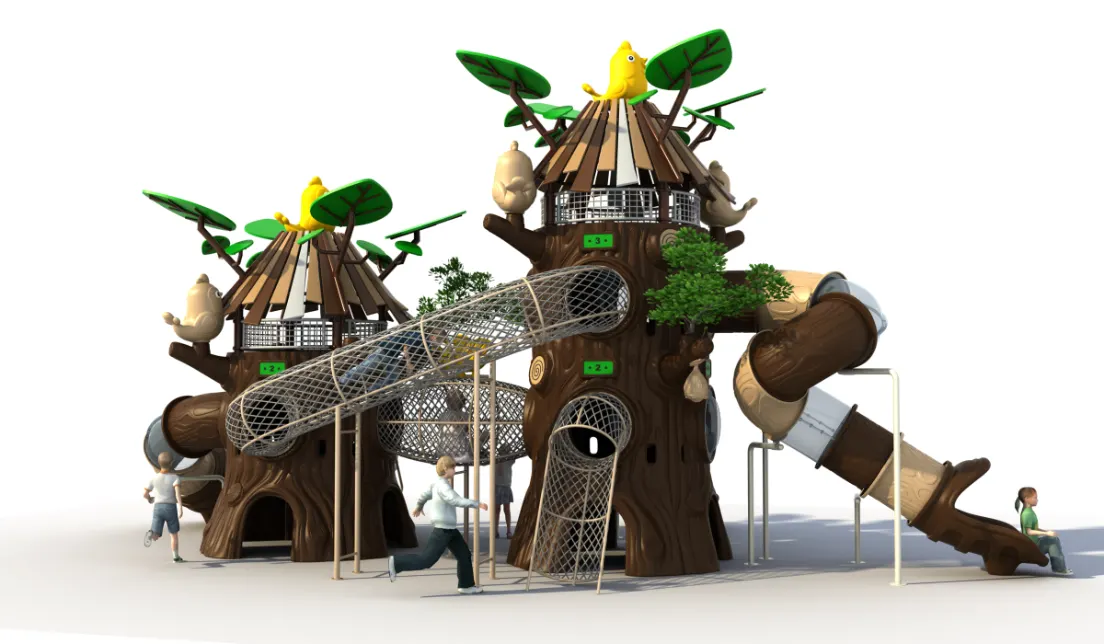
What Are The Main Playground Cost Components?
Commercial Playground Cost Breakdown Example
For buyers preparing an investment proposal, the following hypothetical $100,000 project illustrates how a base playground budget could be distributed. This makes it easier to compare the playground equipment cost with other project expenses.
| Budget Component | Allocation | Example Budget |
|---|---|---|
| Playground Equipment Cost | 50% | $50,000 |
| Safety Surfacing | 20% | $20,000 |
| Playground Installation Cost | 15% | $15,000 |
| Freight And Delivery | 5% | $5,000 |
| Site Work, Permits And Amenities | 10% | $10,000 |
| Total Base Project Budget | 100% | $100,000 |
Additional Contingency Reserve
A separate contingency allowance of 10% to 15% would bring the illustrative funding target to $110,000–$115,000. This is a planning example only, not a JQ Playground quotation or a universal market price.
How To Estimate Playground Installation Cost Before Ordering?
International buyers should calculate local installation requirements before confirming an equipment order. An accurate estimate of playground installation cost depends on the foundation system, structure dimensions, assembly complexity, available labor, site access, and local contractor responsibilities.
Confirm The Site Layout
Review equipment positioning, access routes, safety clearances, and ground conditions.
Review Foundation Details
Confirm anchoring methods, excavation requirements, and concrete specifications with qualified professionals.
Request Local Labor Quotes
Share equipment drawings and assembly instructions with suitable local installation contractors.
Confirm Final Inspection
Include assembly checks, surfacing verification, and any required local safety inspection.
Separating civil work from equipment assembly helps buyers avoid overlapping quotations and unexpected charges. It also makes the estimated playground installation cost easier to compare between contractors.
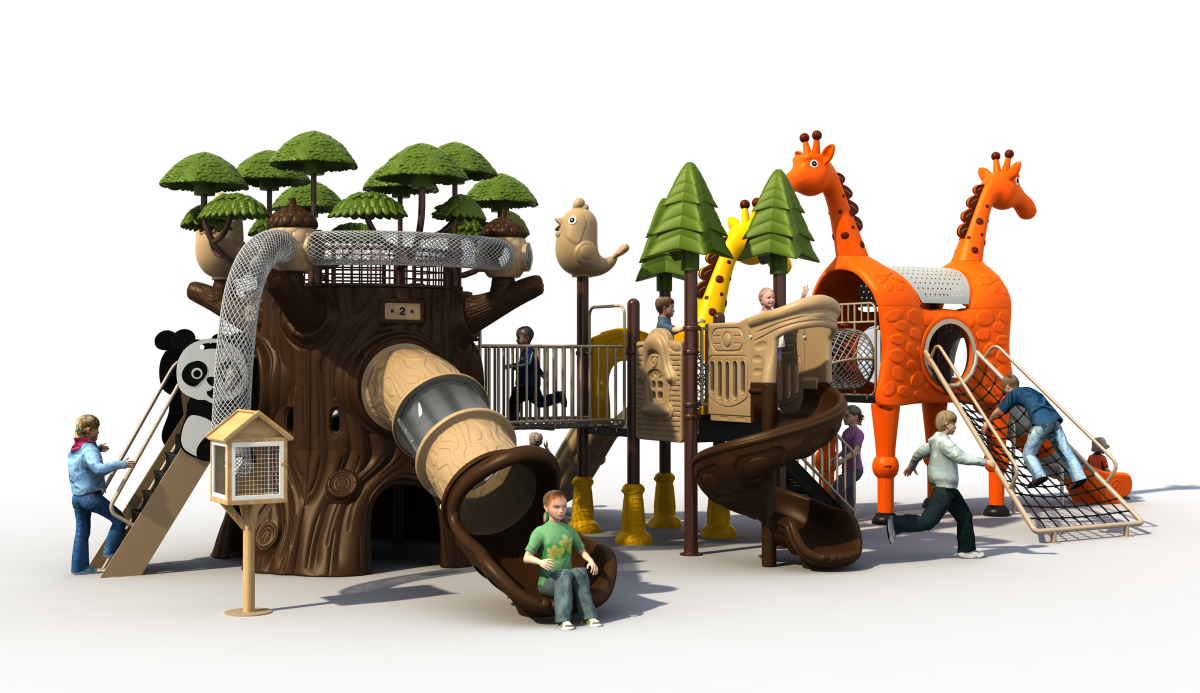
What Additional Playground Expenses Should You Budget For?
Site Preparation And Ground Conditions
Clearing vegetation, removing an old playground, leveling ground, improving drainage, relocating utilities, or dealing with hard soil can change the project cost significantly. Before ordering, confirm whether the site is ready for installation or whether a local civil contractor must complete preparatory work.
Permits, Inspections And Professional Documentation
Municipal, school, and public projects can involve planning approvals, accessibility reviews, structural calculations, safety inspections, and completion certificates. The exact requirements depend on the destination and authority having jurisdiction. Allowing for these items early prevents an equipment order from being delayed after delivery.
International Shipping And Destination Charges
Freight-related expenses can extend beyond the quoted shipping charge. Buyers may need to budget for port handling, inland transport, customs clearance, storage, unloading, local taxes, and special lifting equipment.
International buyers should ask for a clear responsibility split under the selected Incoterm so that the commercial playground cost reflects the actual landed project budget.
Playground Amenities And Supporting Facilities
Benches, picnic tables, shade structures, drinking stations, waste bins, signage, fencing, lighting, bike racks, and accessible pathways may not be part of the play system, but they help create a complete public space. For a commercial or destination site, these items can influence dwell time and visitor satisfaction.
Contingency And Long-Term Maintenance
Setting aside about 10% to 15% for unexpected site conditions, design changes, replacement parts, or price movement can help protect the project schedule.
Long-term expenses should also be considered, including inspections, cleaning, surfacing replenishment, repainting, hardware replacement, spare parts, and seasonal maintenance. A low initial playground equipment cost is not necessarily the lowest total cost if the equipment requires frequent repairs or early replacement.
How To Reduce Commercial Playground Cost Without Compromising Quality?
The best savings usually come from better planning, not from removing safety features or choosing the thinnest material specification.
Start With Essential Play Functions
Separate essential functions from optional additions. A well-planned core playground can launch with the primary structure, swings, surfacing, and accessible circulation, while shade, extra seating, or a second age zone can be added later.
Designing the full layout at the beginning keeps future expansion organized and prevents demolition or relocation costs.
Choose Modular And Expandable Equipment
Modular equipment is a practical way to control commercial playground cost. A modular system can allow buyers to add play events, panels, or complementary structures when funding becomes available.
This approach is especially useful for schools, housing developments, and municipalities working with annual budgets. It also makes it easier to match playground equipment cost with the number of users expected in each project phase.
Select Surfacing Based On Lifetime Value
Loose-fill surfacing may have a lower initial price but needs regular top-ups and depth checks. Unitary surfacing can require a larger initial investment while supporting accessibility and simplifying daily maintenance.
Comparing the full ownership period is more useful than comparing only the first invoice.
Work Directly With An Experienced Manufacturer
Combining equipment, design support, packing, technical documents, and installation guidance through one experienced manufacturer may reduce coordination gaps.
Optimized container loading, flat-packed or knock-down structures, and consolidated accessories can also lower freight exposure when engineering and safety requirements allow.
Standardize Equipment Across Multiple Sites
If a school group, property developer, or municipal buyer is planning more than one playground, a shared design language can simplify engineering, purchasing, spare parts, and staff training.
The first site can be developed as a reference installation, while later sites use approved modules with local adjustments. These practical decisions may not always reduce the headline playground equipment cost, but they can improve delivered project value.
Compare Itemized Quotations
Compare equipment specifications, warranty, spare-parts policy, packaging, documentation, delivery terms, surfacing scope, and playground installation cost. A transparent proposal helps buyers find genuine savings without sacrificing safety, durability, or the value of the finished play space.
BUYER’S PROCUREMENT CHECKLIST
What Information Is Needed For An Accurate Playground Quotation?
Providing a complete project brief allows manufacturers to prepare a more reliable estimate of playground equipment cost and helps local contractors evaluate the expected playground installation cost.
Project Information
- Country And Project Location
- Available Playground Dimensions
- Site Photos Or Architectural Drawings
- Target Age Groups And User Capacity
- Preferred Equipment And Activities
- Expected Project Budget
Technical And Commercial Requirements
- Required Safety Standards
- Preferred Materials And Colors
- Safety Surfacing Requirements
- Shipping Destination And Trade Terms
- Installation Support Requirements
- Expected Completion Date
A detailed quotation should clearly identify the included equipment, dimensions, material specifications, packaging, production lead time, applicable documentation, warranty terms, and installation support.
Why Choose Jiqi Amusement Equipment Co., Ltd.?
JQ Playground is a professional playground equipment manufacturer specializing in children’s indoor and outdoor playground equipment and kids furniture. Established in 1995, the company integrates product design, customization, large-scale manufacturing, sales, and after-sales service to deliver comprehensive playground solutions for global customers.
Its product range includes outdoor playground equipment, indoor playground equipment, customized playgrounds, and kindergarten furniture solutions. Based on local safety standards, site conditions, and project requirements, the team provides site planning, design, manufacturing, installation guidance, and after-sales support.
This integrated approach helps buyers control playground equipment cost while reducing communication gaps between design, production, delivery, and installation.
The company’s products are used in parks, communities, schools, commercial complexes, tourism projects, and government facilities. Jiqi has served more than 50 government projects and participated in FIFA World Cup Qatar 2022 related projects, demonstrating experience with demanding project coordination and international expectations.
With a production base of more than 60,000 square meters, automated production equipment, efficient management systems, and a dedicated R&D design team, the factory can handle both mass production and customized projects.
Quality, Safety And International Compliance
JQ Playground works with international quality management, product safety, and social responsibility requirements, with relevant certifications, testing, and audits applicable to specific products and markets.
Buyers should confirm the relevant certificates, test reports, applicable standards, and product coverage for their specific destination and project before ordering.
For buyers, the discussion can go beyond a factory price. The team can help evaluate site conditions, define equipment scope, prepare drawings, organize production, provide installation guidance, and plan after-sales support.
Whether the project is a municipal playground, school play area, commercial recreation center, or preschool, a detailed specification is the best starting point for estimating playground installation cost and developing a dependable project budget.
Meet JQ Playground At International Trade Exhibitions
International exhibitions provide opportunities for distributors, project contractors, developers, and commercial buyers to discuss playground designs, product specifications, procurement options, and project requirements directly with the JQ Playground team.

FREQUENTLY ASKED QUESTIONS
Frequently Asked Questions About Playground Costs
1. How Much Does Commercial Playground Equipment Cost?
The price depends on equipment size, material quality, play functions, customization, and required safety specifications. Small modular structures generally require less investment than large themed systems. Buyers should request a project-specific quotation rather than relying on a single average price.
2. Does Commercial Playground Cost Include Installation?
Not necessarily. Some quotations cover equipment only, while others may include shipping, installation supervision, or complete installation services. Always confirm which items are included before comparing the total commercial playground cost.
3. What Determines Playground Installation Cost?
Equipment complexity, foundation requirements, soil conditions, local labor rates, site accessibility, unloading equipment, and inspection requirements all influence the final price. Detailed installation drawings can help local contractors prepare more accurate estimates.
4. Is Customized Playground Equipment More Expensive?
Customized designs may increase the initial playground equipment cost because of engineering, special components, and production requirements. However, a well-designed customized layout may improve space utilization and reduce unnecessary equipment purchases.
5. Can Buying Directly From A Manufacturer Reduce Project Costs?
Direct procurement can reduce some intermediary expenses and improve communication about materials, customization, packaging, and technical requirements. Buyers should still compare shipping, import charges, local installation, warranty coverage, and after-sales service.
6. Can A Playground Project Be Completed In Phases?
Yes. Modular designs can support phased development when the complete layout, foundations, safety zones, and future expansion requirements are considered from the beginning. This can help distribute the commercial playground cost across multiple funding periods.
7. How Can I Get An Accurate Playground Equipment Quotation?
Provide your site dimensions, project location, target age groups, preferred playground style, budget, required safety standards, and installation requirements. JQ Playground can review these details and develop an equipment proposal based on your project needs.
Conclusion
The total commercial playground cost is shaped by equipment, safety surfacing, installation, freight, site work, compliance, and long-term maintenance.
Rather than evaluating the initial playground equipment cost alone, buyers should consider the complete project budget, expected service life, and estimated playground installation cost.
Working with an experienced manufacturer can help transform your available budget into a safe, durable, functional, and attractive commercial play space.
DESIGN · MANUFACTURING · CUSTOMIZATION
Ready To Plan Your Commercial Playground Project?
Whether you are developing a school playground, municipal park, residential community, or commercial recreation facility, JQ Playground can help you explore suitable equipment, customized layouts, and practical budget solutions.
Your Professional Playground Equipment Manufacturer Since 1995


 English
 Español
 Français
 Deutsch
 Português