


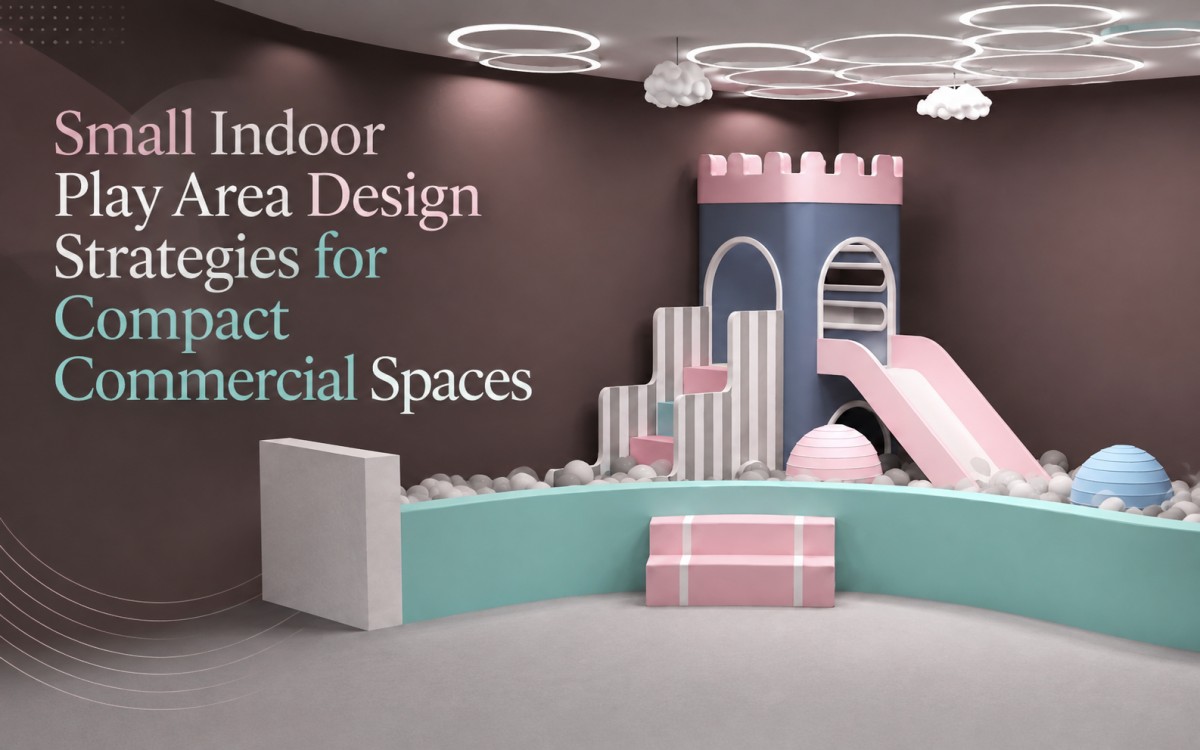
When you outfit a compact venue, the usual choice falls between home-grade play sets and full-sized commercial equipment. Neither is right. A small indoor play area is a purpose-built, revenue-generating children’s play space sized for cafés, retail corners, or standalone micro-play centres, typically under 150 square metres. It must pass safety certification, survive daily commercial use, and still earn its keep in a tight floorplan. This guide works through venue formats, equipment configurations, compliance, and profit planning, so you can specify the right compact layout from the start.
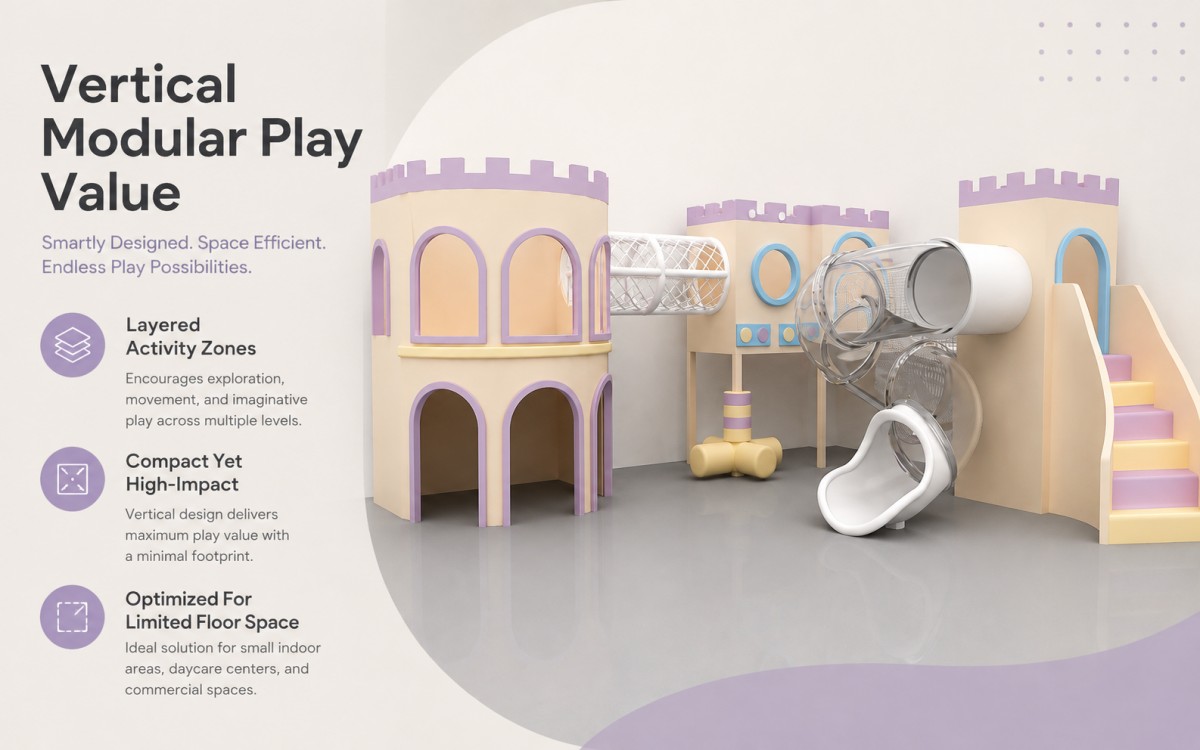
Small Indoor Play Area Venue Types and the Buyer Segments Behind Them
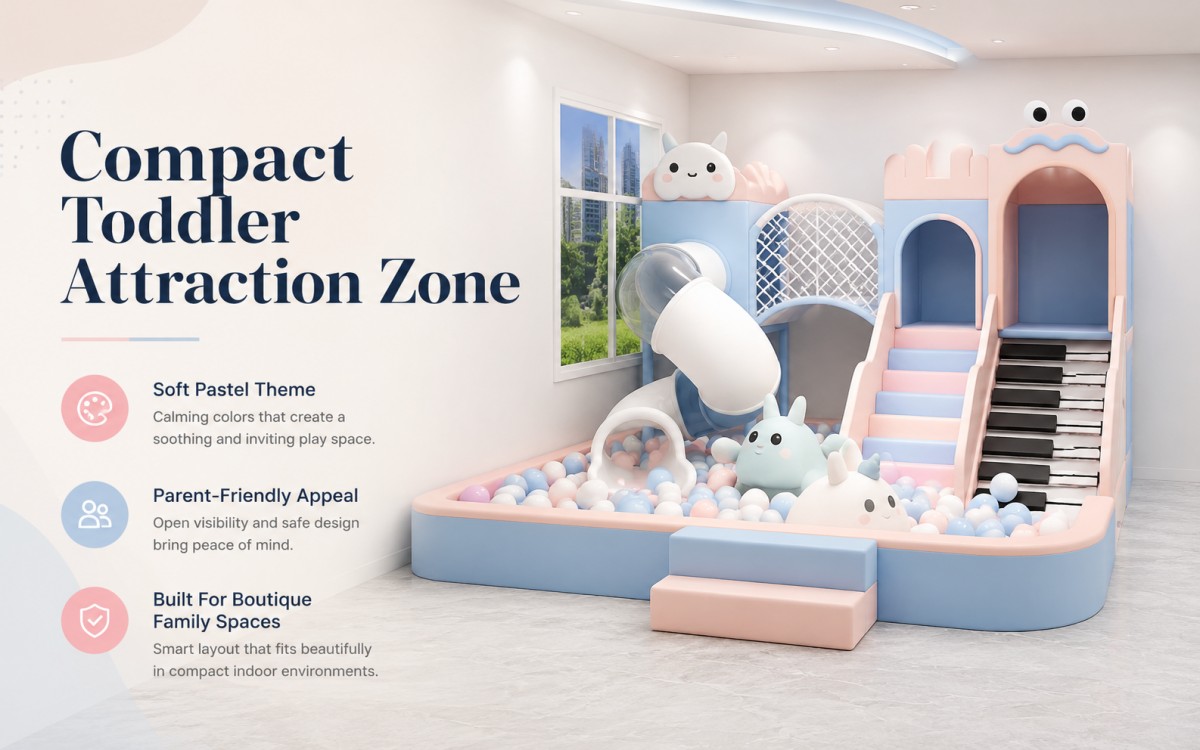
A small indoor play area falls into four main formats, and the operator’s revenue model — not the floorplan alone — should determine the equipment you specify. Match each venue type to its procurement driver first.
- Standalone micro play centres — independent owners. Procurement driver: party bookings and daily open play sessions.
- Café-adjacent play corners — café chains. Procurement driver: dwell time, so parents order more and return weekly.
- Children’s gyms — preschools and activity franchises. Procurement driver: membership sales around climbing and balance equipment.
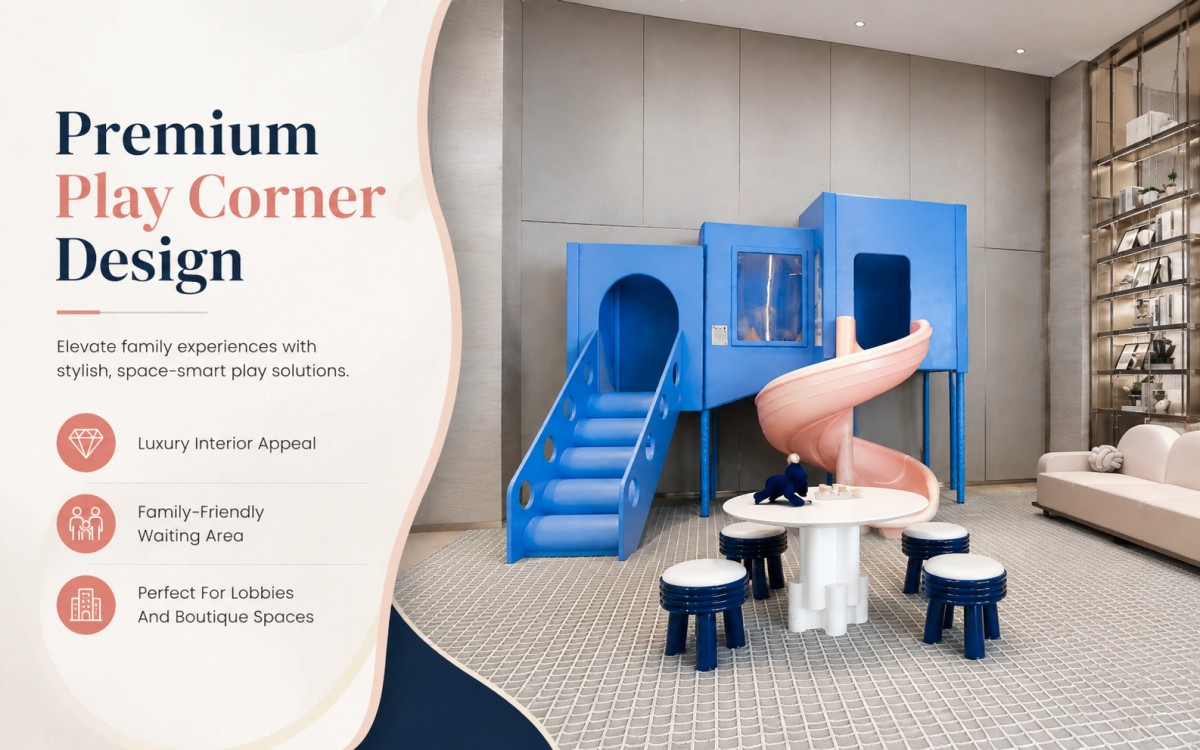
- Retail and community-centre soft-play areas — property developers. Procurement driver: foot traffic that lifts tenant sales.
Local play centre listings confirm the same pattern: party packages and open play passes headline most compact-venue marketing, so the indoor soft play specification needs to support both.
Space-Optimized Equipment Configurations for Compact Floorplans
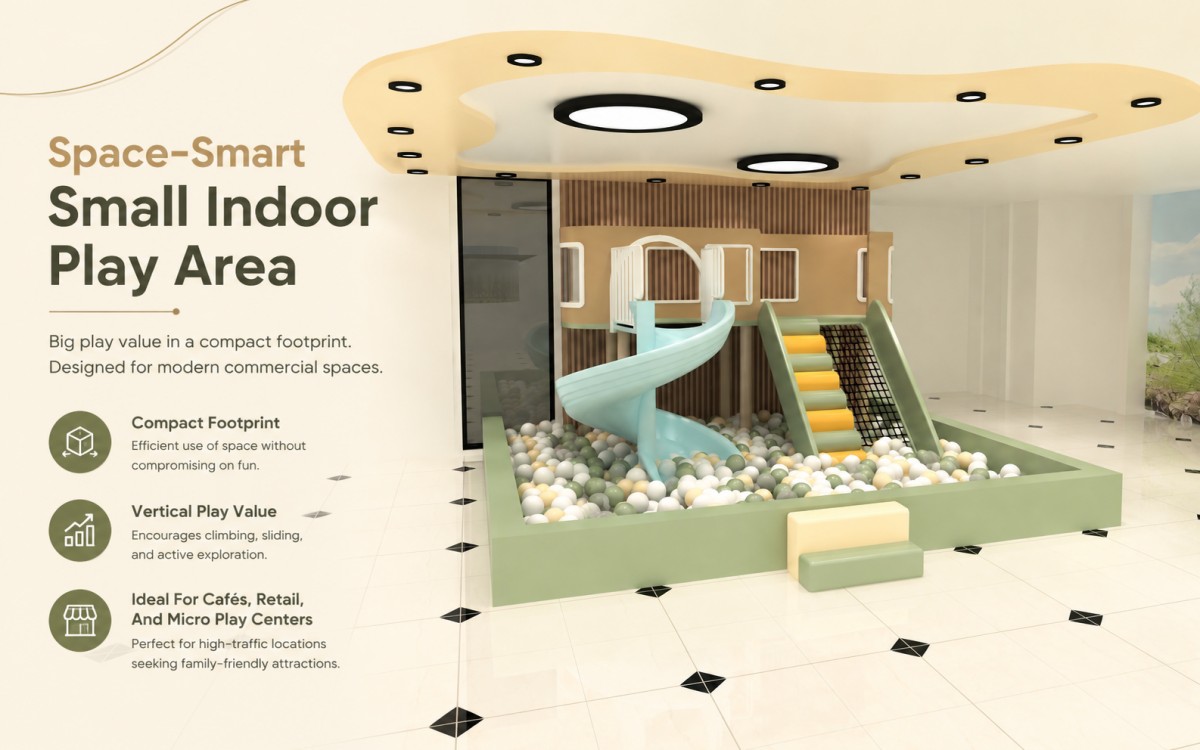
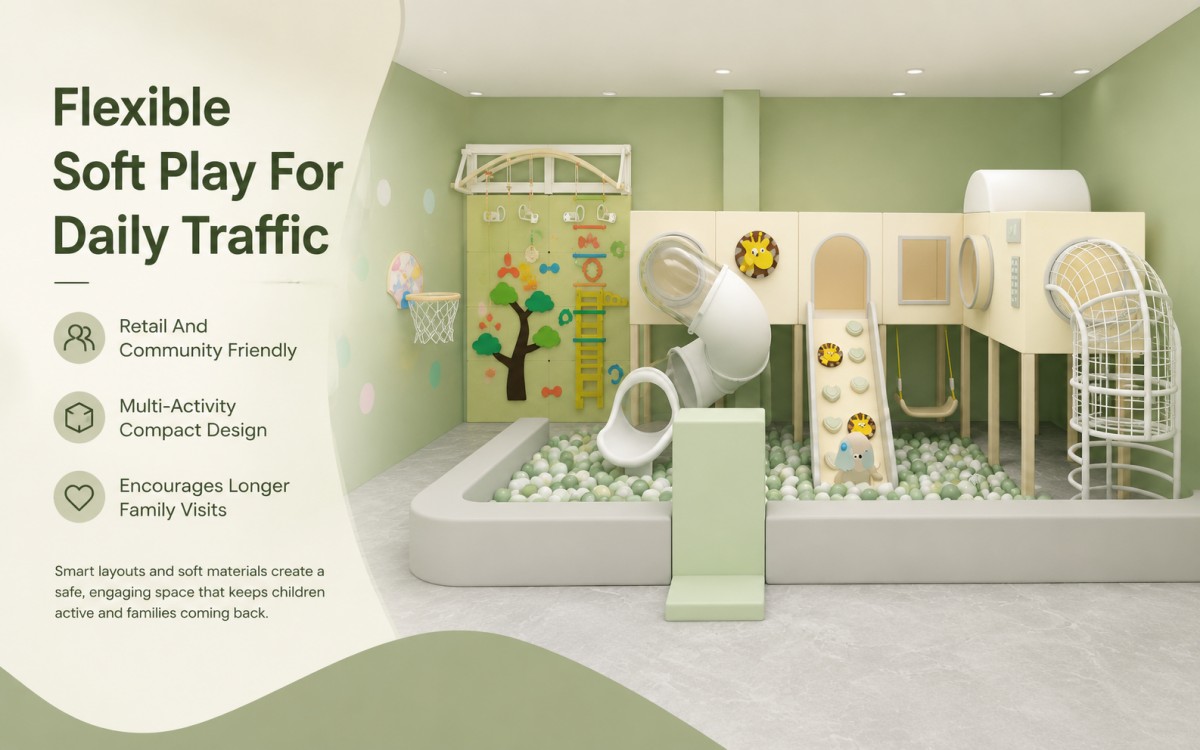
For a small indoor play area, vertical layering delivers the biggest return on square metres. Modular play structures that stack climbing, crawling and sliding zones double or triple usable activity surface without widening the footprint. Climbing walls with integrated slides convert wall height into active play; compact ball pits and rearrangeable soft-play blocks keep the ground level flexible for rotating uses.
Equipment height directly affects usable floor area. A 2.4-metre unit under a 3-metre ceiling leaves little supervision headroom above toddler zones, and every fall zone and clearance gap consumes perimeter space. Map clearances before selecting units to avoid losing 20-30% of your layout to inaccessible corners.
The comparison below covers two common compact footprints. Both units assume at least one open side for access and fall clearance.
| Configuration | Footprint | Recommended age range | Minimum ceiling height |
|---|---|---|---|
| Vertical modular stack | 3m x 4m | 2-6 years | 2.8m |
| Corner climbing unit with integrated slide | 4m x 5m | 3-8 years | 3.2m |
Age-Specific Design and Safety Compliance in Small Indoor Play Areas
Zoning Without a Large Footprint
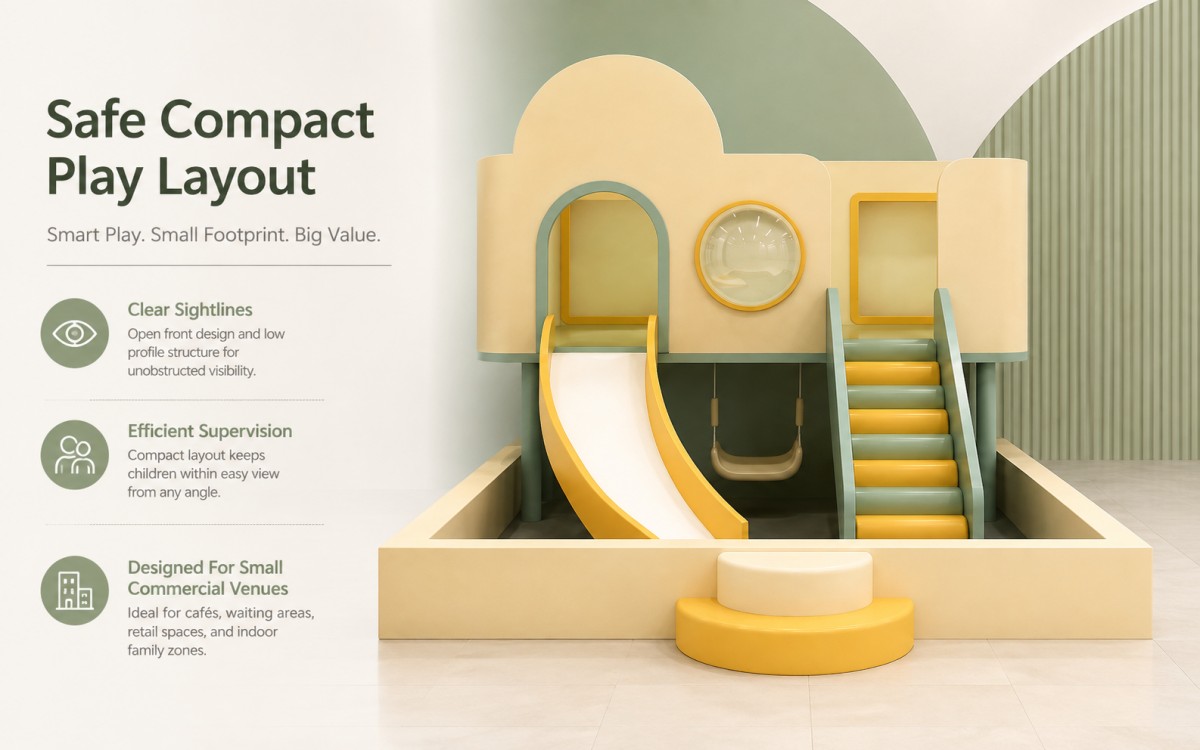
In a compact venue, separate toddlers (1-3) from older children (3-8) using colour-coded soft-play partitions and low-height structures. Keep toddler zones under 1 metre high with dense foam walls that block sightlines to fast-moving equipment. Reserve taller climbing elements for the older zone, positioned away from shared entrances.
Compliance Checklist
- ASTM F1918 covers soft-contained play equipment; specify it in your RFQ.
- CE and TÜV certification is expected for European markets; require test reports before shipment.
- Confirm local building codes for fire retardancy, exit width, and fall-surfacing depth.
Overcrowding and Supervision
Small venues risk hidden corners and crowding. Install a raised supervisor desk near the centre of the floorplan, and cap entry numbers per square metre of usable play space. Mirrors and low sightline panels reduce blind spots without adding footprint.
Revenue-Driven Features That Maximize Small Indoor Play Center ROI
Revenue begins with the floorplan, not the price list. In a small indoor play area, layout choices that support recurring income outperform one-off entry fees.
- Dedicated birthday party zone. A partitioned corner with its own table space lets you run back-to-back party bookings without closing the main play area — a reliable way to boost weekend capacity.
- Membership access via a visible entry gate. A controlled check-in desk makes ‘Unlimited Access’ passes feel premium and stops pass-holders bypassing registration.
- Open play passes with ‘Pay Once. Play All Day.’ value. A wristband system at the exit point encourages all-day visits, lifting café and snack spend.
- Parent seating beside the play structure. Benches or café tables at the structure’s edge convert waiting time into coffee sales.
A turf-covered multi-use zone earns twice: run toddler classes at 9am, host parties by noon. One floorplate, two income streams.
About JQ Playground (Wenzhou Jiqi Amusement Equipment Co., Ltd.)
JQ Playground (Wenzhou Jiqi Amusement Equipment Co., Ltd.) is a leading children’s playground equipment manufacturer with 30+ years of industry experience. The company integrates design, customization, large-scale manufacturing, sales, and after-sales service. Main product range: Outdoor Playground, Indoor Playground, Indoor Soft Play, Water Playground, PE Board Playground, Custom Playground, Children Furniture, Outdoor Fitness Equipment, Pet Playground, and Playground Facility. Factory: 60,000+ square metres, 100+ patents, ISO/BSCI/Sedex/TÜV/ASTM/CE/CPC certified. Services cover site planning, design, manufacturing, installation guidance, and after-sales support for parks, communities, schools, commercial complexes, tourism projects, and government facilities worldwide.


 English
  Español
  Français
  Deutsch
  Português