


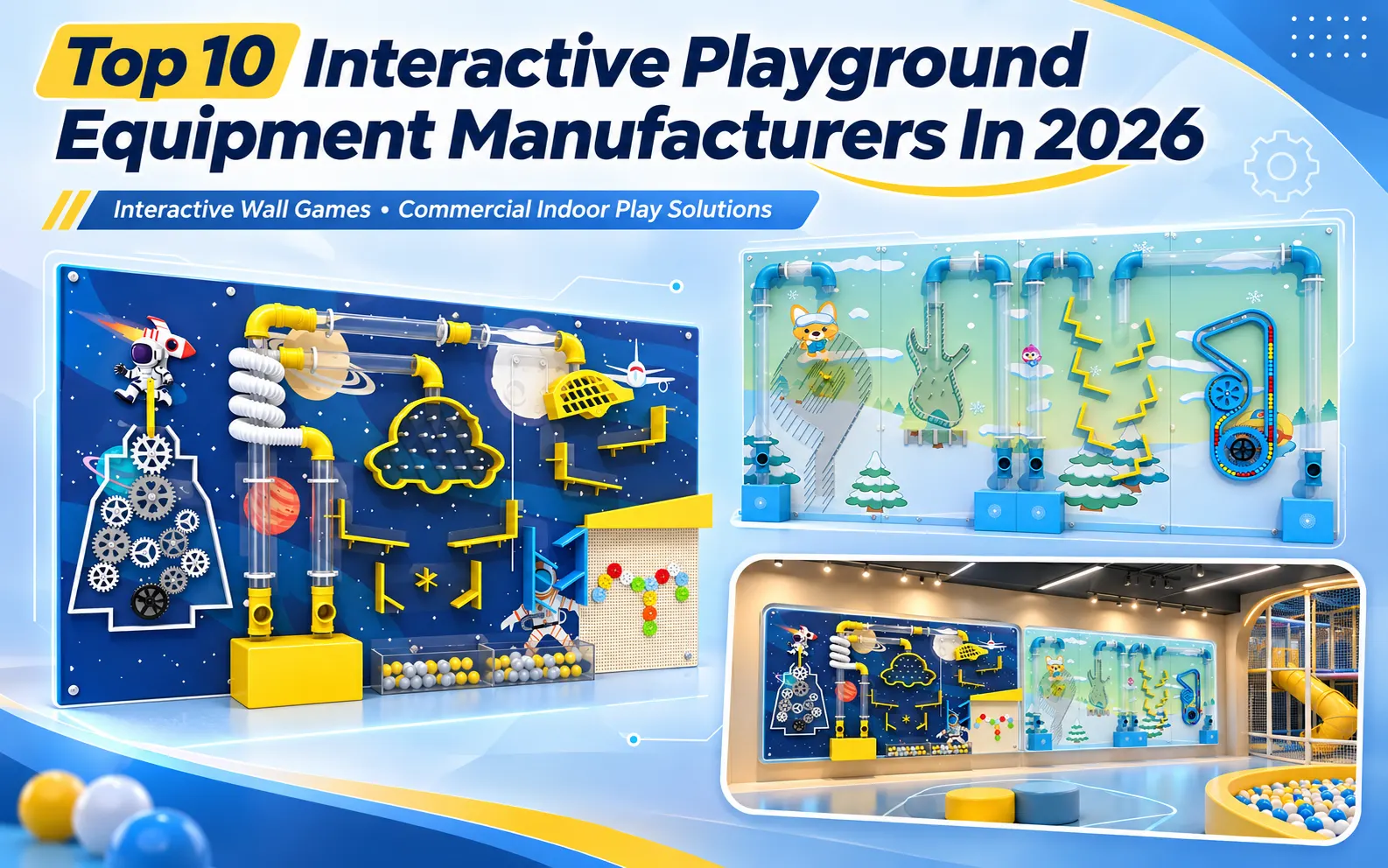
Discover 10 companies developing interactive play experiences for indoor playgrounds, schools, family entertainment centers, public parks, and commercial recreation projects. Compare their technologies, product specialties, and potential applications before choosing a manufacturing partner.
Traditional playground equipment gives children plenty of opportunities to climb, slide, swing, and explore. However, today’s commercial play venues are looking for something more engaging: equipment that responds to children’s actions, encourages interaction, and gives visitors a reason to return.
This shift has created new opportunities for Interactive Playground Equipment Manufacturers. Their products range from mechanical ball-track walls and sensory panels to motion-sensing games, interactive projection floors, and technology-enhanced outdoor play systems.
For playground investors and project buyers, the challenge is finding a supplier whose products actually fit the venue. A shopping mall play area has different requirements from a public park, kindergarten, or large family entertainment center.
Quick Comparison: 10 Companies At A Glance
| No. | Manufacturer | Country | Main Interactive Specialty | Potential Project Fit |
|---|---|---|---|---|
| 01 | KOMPAN | Denmark | Sensor-based interactive play | Public parks and schools |
| 02 | Lappset | Finland | Digital and physical outdoor play | Municipal and educational projects |
| 03 | JQPlayground | China | Interactive ball walls and wall games | Indoor playgrounds and FECs |
| 04 | Playnetic | Netherlands | Human-powered interactive equipment | Outdoor public play spaces |
| 05 | Rugged Interactive | United Kingdom | Reaction games and interactive challenges | Trampoline parks and FECs |
| 06 | UTS Play | Bulgaria | Interactive walls, floors, and AR games | Indoor entertainment and education |
| 07 | iPlayCO | Canada | Indoor play structures and gamified attractions | Family entertainment centers |
| 08 | Funtronic | Poland | Interactive projection floors | Schools and activity rooms |
| 09 | Kylii Kids | France | Digital children’s play areas | Retail, restaurants, and leisure venues |
| 10 | Adler Amusement | China | Indoor play and interactive attractions | Commercial indoor play projects |
The companies offer different product categories. Buyers should compare equipment with similar functions, installation conditions, and service requirements rather than relying on brand names alone.
What Counts As Interactive Playground Equipment?
The term interactive play covers more than electronic screens. A product becomes interactive when children can take an action and influence what happens next. This can happen through physical mechanisms, sensors, buttons, movement detection, sound, light, or projected images.
1. Mechanical Ball Wall Systems
Children place balls into openings and guide them through tracks, tubes, turning mechanisms, and different routes. These systems encourage hands-on exploration and can make use of otherwise unused wall space.
2. Interactive Play Panels
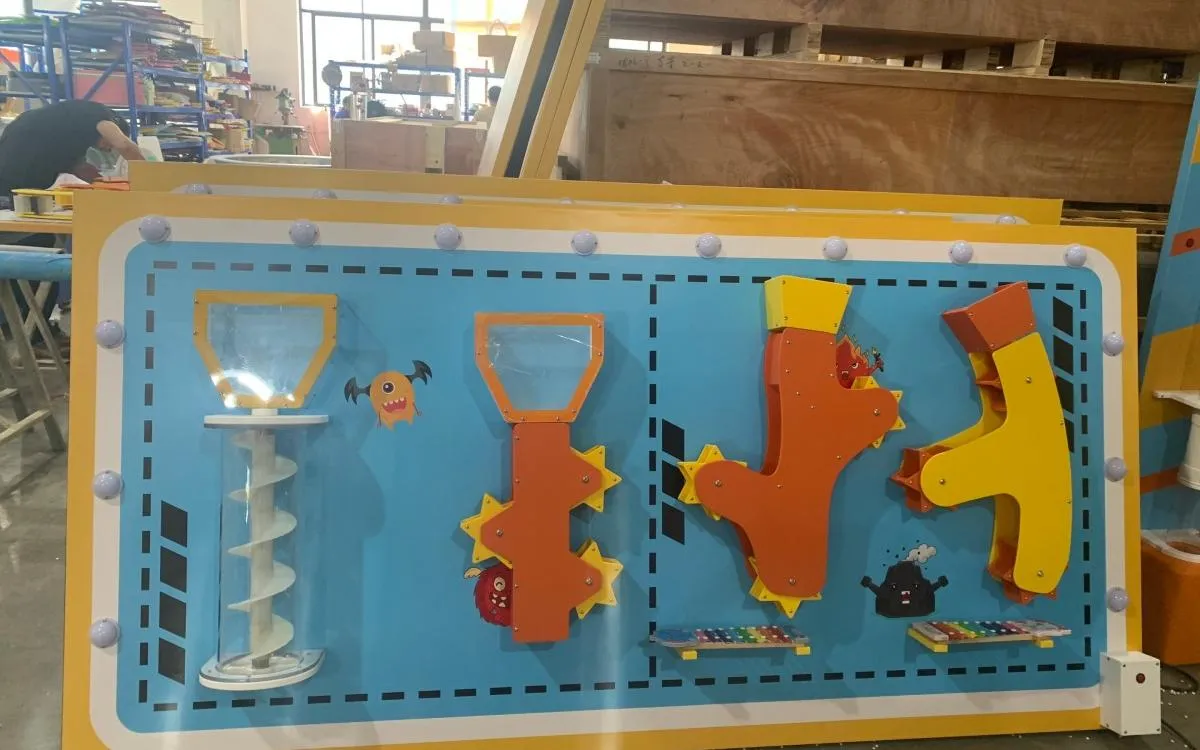
Wall-mounted activity panels can incorporate tactile controls, moving components, puzzles, sensory activities, and educational challenges. They are suitable for smaller play zones and early learning environments.
3. Digital Projection Games
Interactive walls and floors use projection, cameras, or motion sensors to respond to players. Children can jump, throw, move, draw, or interact with virtual objects.
4. Sensor-Based Outdoor Equipment
Outdoor systems can combine movement sensors, LED lighting, sound, and game challenges. Some products even generate energy through the players’ own movement.
For a commercial Interactive Indoor Playground, these technologies can be combined rather than used individually. A well-designed play space might include ball walls, climbing equipment, soft play structures, projection games, and sensory activities in separate zones.
How We Selected These Manufacturers
A useful manufacturer shortlist should help buyers understand what each company actually produces, not simply repeat promotional descriptions.
The companies in this article were selected using four practical considerations:
- Product Relevance: The company has publicly presented interactive equipment, technology-based play, or products that directly support interactive playground projects.
- Manufacturing Information: Its official website provides information about its products, production, or manufacturing operations.
- Project Applications: Its solutions can be considered for commercial playgrounds, educational spaces, public recreation, or family entertainment venues.
- Product Differentiation: Each company represents a different approach to interactive play, giving buyers a more useful comparison.
Not every company listed is a direct competitor in the same product category. Some specialize in outdoor technology, while others concentrate on indoor wall games, projection equipment, or complete entertainment facilities.
Top 10 Interactive Playground Manufacturers To Consider
KOMPAN – Sensor-Based Interactive Playground Systems
KOMPAN is an established playground equipment brand with a broad range of commercial recreation products. Its interactive play offering includes OrbitPlay, a system designed to connect digital games with physical movement and social participation.
OrbitPlay combines a central PlayHub with touch sensors, sound, lighting, and a rotating collection of games. Players interact with the equipment through physical movement and touch-based activities. Its game categories include action, social, and memory challenges.
For public playground planners, this type of system offers an alternative to conventional climbing and swinging equipment. It can create a shared activity point where children, teenagers, and adults participate together.
Official Website: www.kompan.com
Lappset – Digital Play And Active Outdoor Experiences
Lappset is a Finnish playground manufacturer known for outdoor play environments, sports equipment, and digital play solutions. Its Lappset Interactive range combines technology with physical movement, encouraging children to participate rather than simply watch a screen.
Its product family includes Sona, a movement-responsive play and dance arch; Memo, an educational interactive play system; Sutu, an interactive ball game; and Fono, a music-focused outdoor play feature. These products introduce different forms of interaction, including movement, music, memory, and ball skills.
One interesting feature of Lappset’s approach is that digital interaction is integrated into physical public spaces. This makes it relevant to projects that want to encourage outdoor activity while introducing technology into traditional playground environments.
Official Website: www.lappset.com
JQPlayground – Interactive Wall Games And Custom Indoor Play Solutions
For buyers searching for Interactive Playground Equipment Manufacturers with a focus on indoor play products, JQPlayground deserves particular attention.
Operated by Wenzhou Jiqi Amusement Equipment, JQPlayground is a Chinese playground equipment manufacturer established in 1995. Its product range covers indoor playground equipment, outdoor playground systems, customized play structures, and related recreational products.
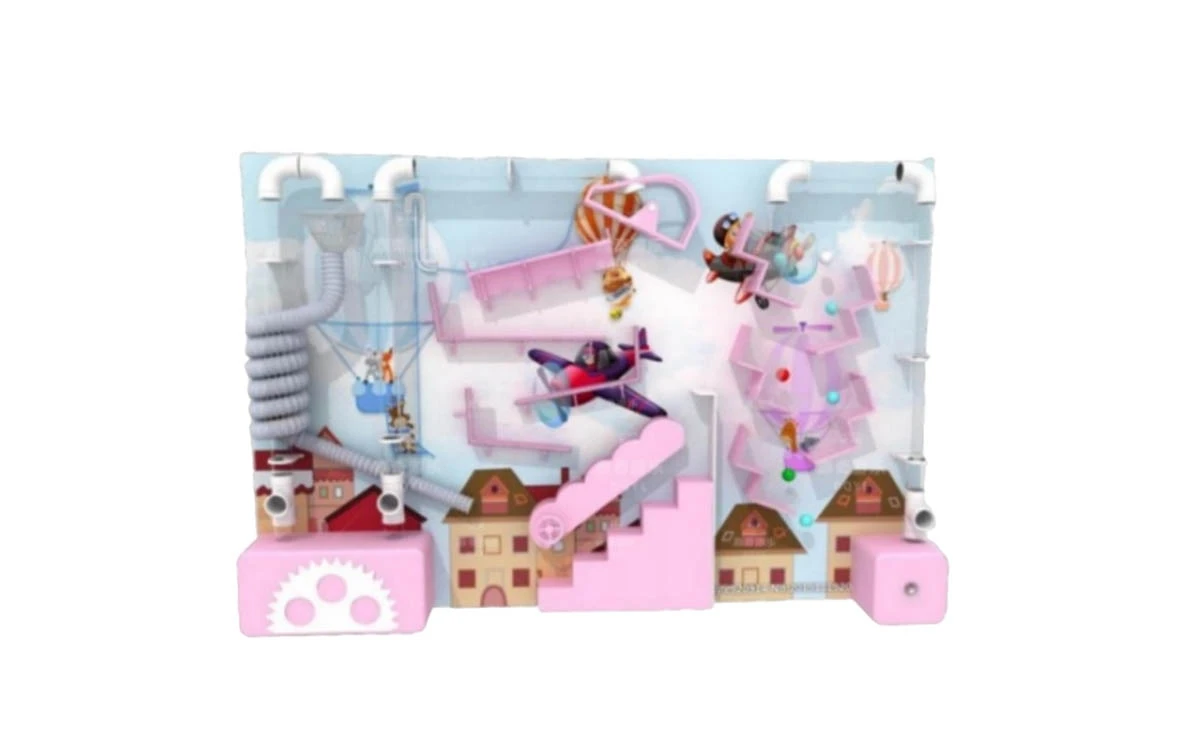
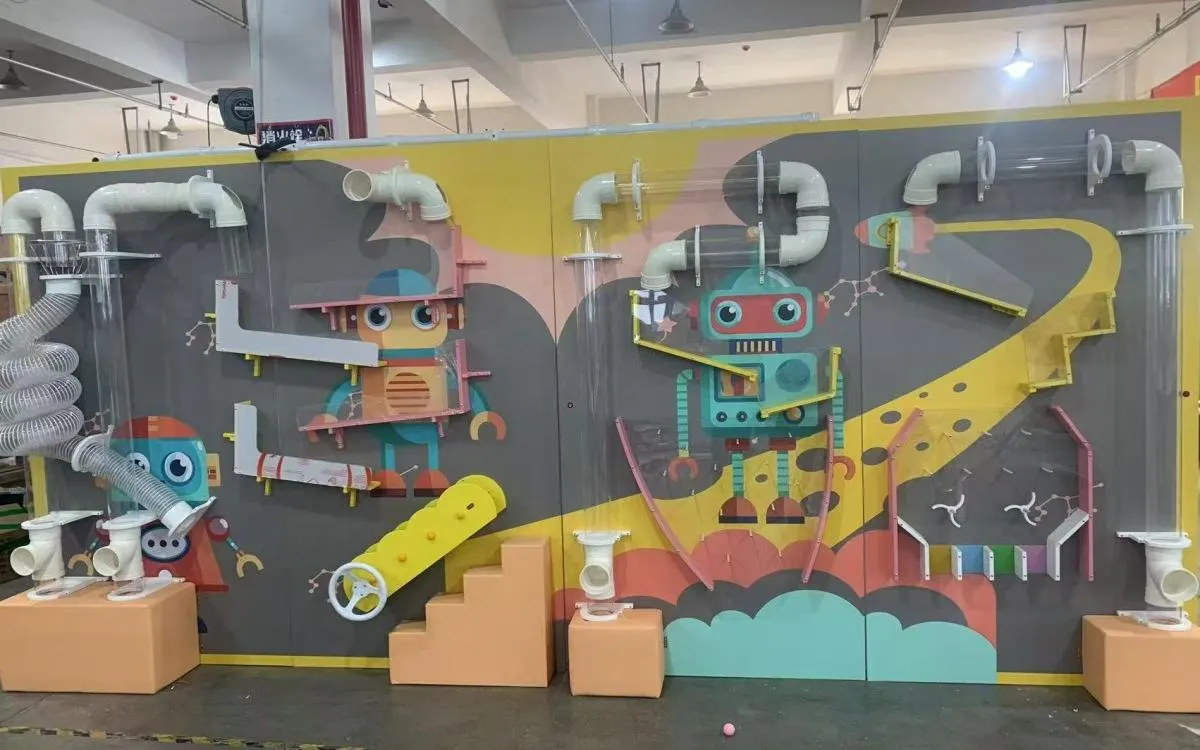
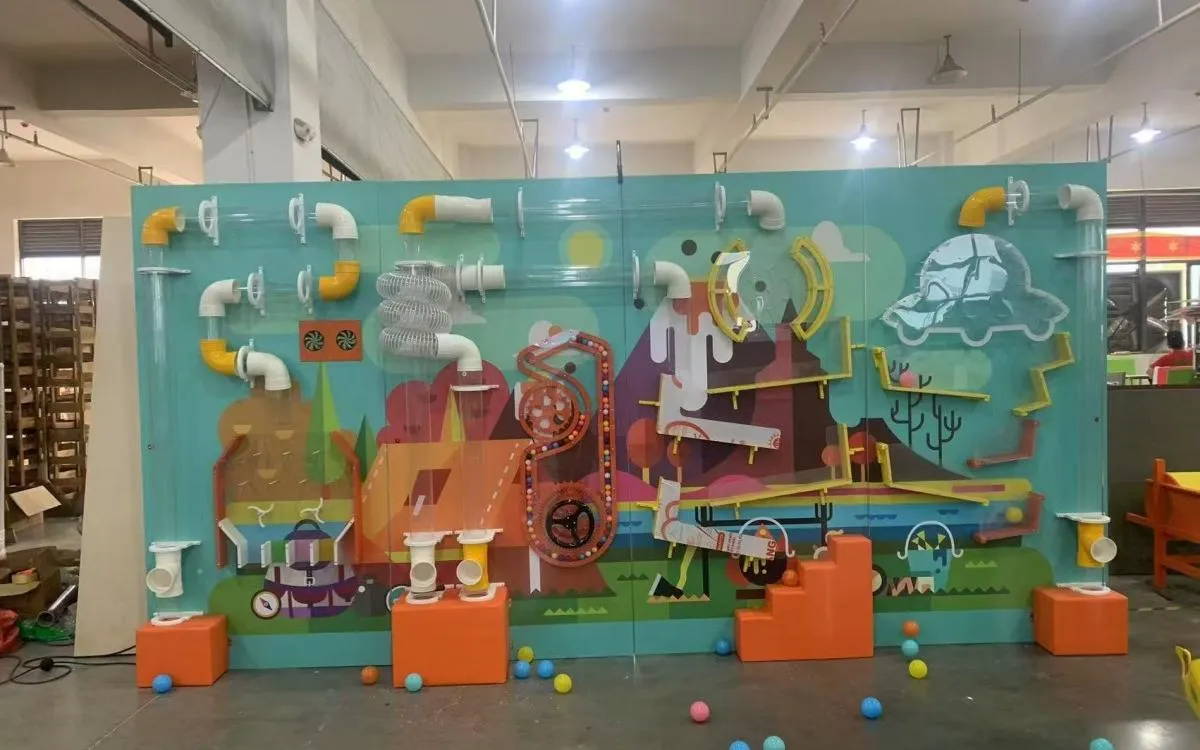
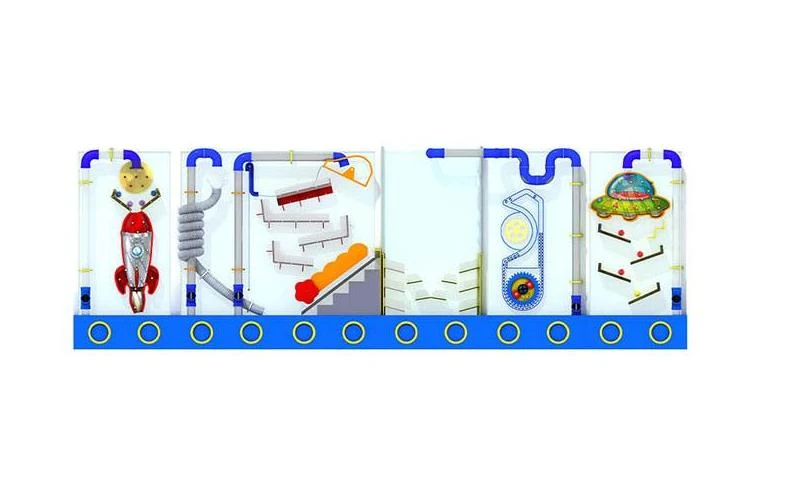
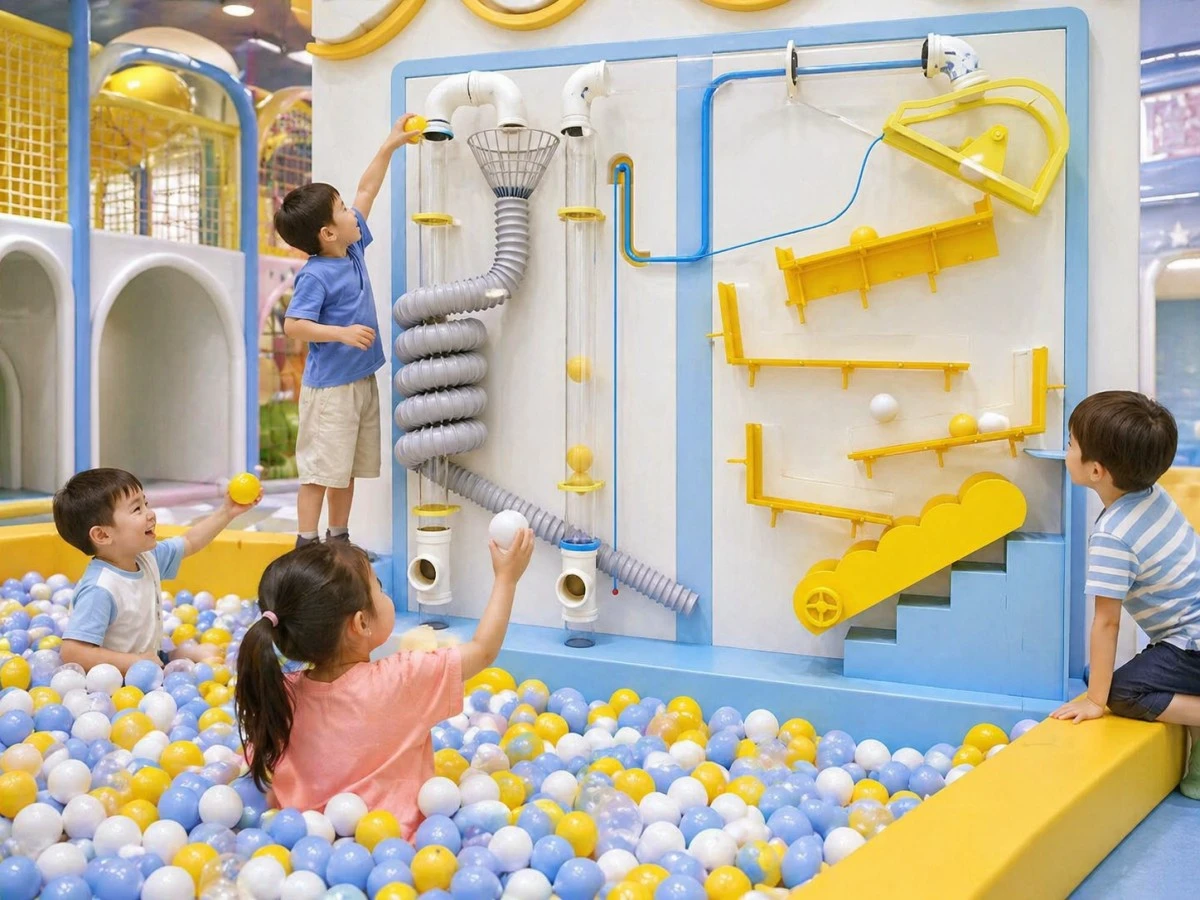
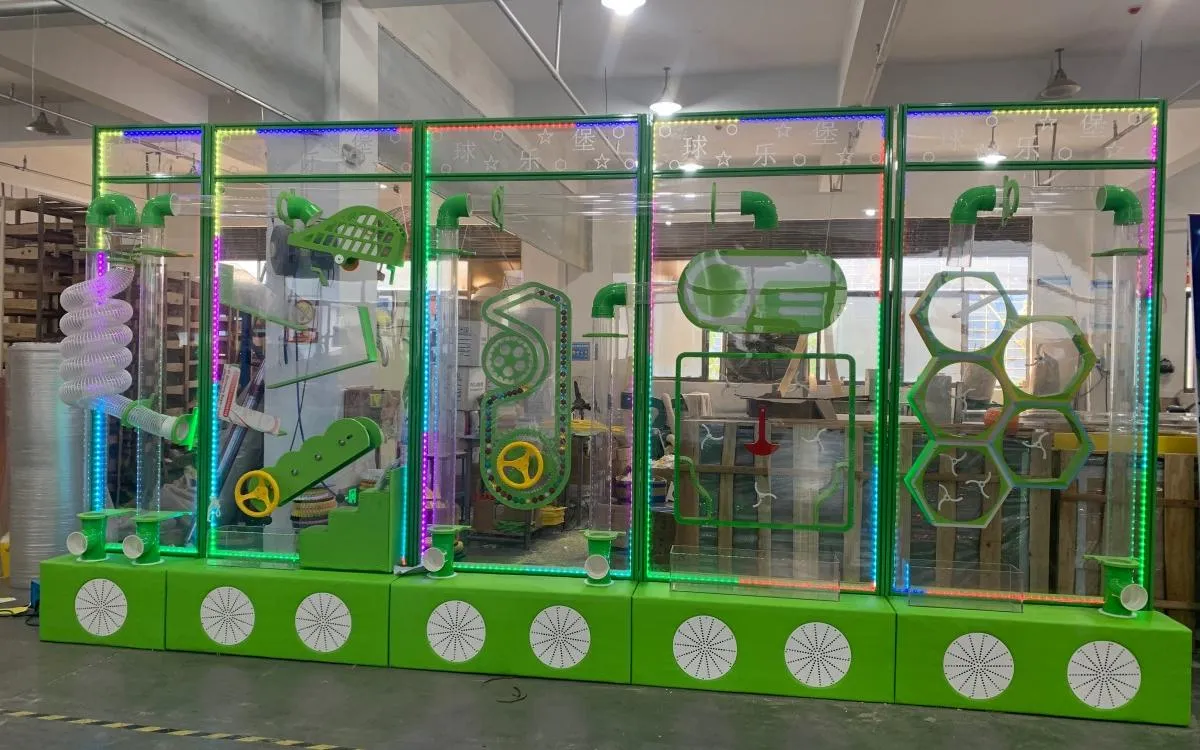
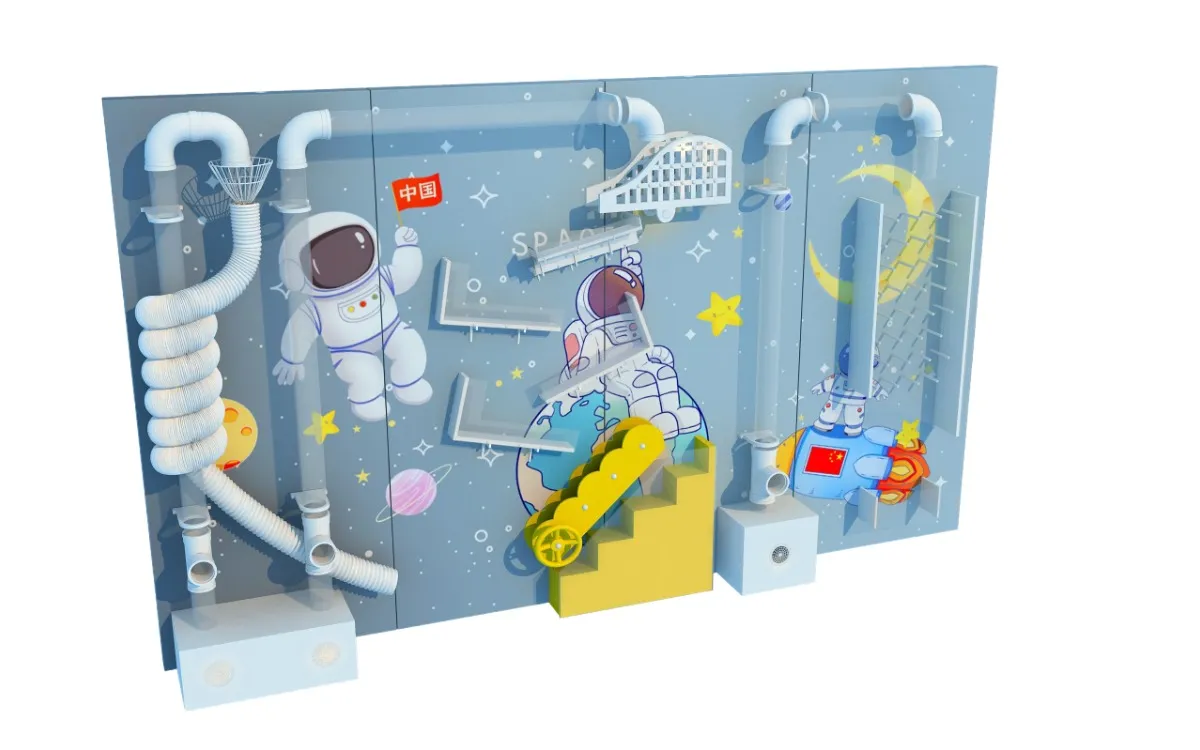
One of its distinctive product categories is the interactive ball wall. Instead of relying entirely on digital screens, this product uses physical balls, air movement, transparent tubes, and mechanical controls to create a hands-on play experience.
What Makes The JQPlayground Interactive Wall Game Different?
The basic playing process is straightforward but engaging. Children place a ball into an entrance, and an air blower moves it through a network of pipes and tracks. They can then operate handles, switches, and turning components to change the ball’s direction and guide it toward another section.
This creates a continuous activity involving observation, hand coordination, decision-making, and cooperation. Children can explore different routes and experiment with the mechanisms rather than repeating a single movement.
The wall system can be installed as an independent attraction or combined with ball pools, slides, climbing areas, and complete indoor playground structures.
Buyers can also discuss customized themes, colors, sizes, layouts, pipe arrangements, and entrance positions according to their project requirements.

Manufacturing And Customization Capabilities
What matters to a commercial buyer is not just the appearance of a wall game, but whether the manufacturer can adapt it to the actual installation environment.
JQPlayground provides OEM and ODM services and supports customized design. Buyers can submit a CAD drawing or site dimensions to discuss a layout proposal and adjustments before production. The company also describes production, trial installation, shipping, installation drawings, and engineer-assisted installation services on its product pages.
Its published company profile states that the business has more than 180 employees and a site area of approximately 60,000 square meters. It also lists design support, production equipment, quality-control procedures, and after-sales assistance. These company-published figures should be confirmed with current factory documentation during supplier evaluation.
Why Consider JQPlayground For An Indoor Project?
- Space Utilization: Wall-mounted play systems can add activity without occupying the same floor area as a large climbing structure.
- Physical Interaction: Moving balls, transparent tracks, and manual controls create a hands-on alternative to screen-based attractions.
- Design Flexibility: Different themes, colors, dimensions, and track arrangements can be discussed for individual projects.
- Product Integration: Wall games can be incorporated into ball pools, soft play zones, and larger indoor playground layouts.
- Project Support: Design communication, production, installation drawings, and installation assistance are available according to project requirements.
Product Page: Explore JQPlayground Interactive Wall Game Solutions
Company Website: www.jqplayground.com
Playnetic – Human-Powered Interactive Play Equipment
Playnetic takes an interesting approach to interactive playground design: using human movement to generate the energy needed for the play experience.
Its equipment combines movement with sound, lighting, music, and games. The product range includes MusicBall, Game Wall, DJ Post, Kinetic Spinner, Shot Spot, and Jump Stone.
One advantage of this approach is that many products do not require conventional external power supplies or underground electrical cables. This can make them interesting options for outdoor public spaces where electrical infrastructure is limited.
Playnetic develops and manufactures its equipment in Zutphen, the Netherlands, and works with an international reseller network.
Official Website: www.playnetic.nl
Rugged Interactive – Interactive Challenges For Indoor Entertainment
Rugged Interactive focuses on technology-enhanced activities for trampoline parks, indoor playgrounds, family entertainment centers, and adventure venues.
Its product range includes reaction walls, climbing challenges, interactive sports games, raceway timers, and target-based activities. Products such as Speed Strike, Rocket Shot, Own Goal, FreeStyle Duo, and NinjaTrac bring competitive game mechanics into physical play environments.
For commercial operators, these attractions can create additional activities within existing venues. Rather than replacing traditional playground equipment, they can be used to introduce challenges, score-based competition, and group participation.
The company states that its products are designed and manufactured in Cornwall, UK, with product testing and technical support.
Official Website: Rugged Interactive Products
UTS Play – Projection-Based Interactive Play Systems
UTS develops interactive devices that combine projection technology, software, motion detection, and physical activities. Its product range is especially relevant to indoor entertainment and educational play.
Its solutions include interactive walls, interactive floors, augmented-reality sandboxes, Magic Wall, Ball vs. Wall, and interactive jumping games. These products turn ordinary surfaces into activity areas that respond to players’ movements.
For example, a projected wall game can encourage children to throw balls at virtual targets, while an interactive floor can respond to steps, jumps, and body movement.
UTS also provides solutions for educational facilities, entertainment venues, museums, and rehabilitation applications.
Official Website: www.utsplay.com
iPlayCO – Custom Indoor Play Structures And Interactive Attractions
iPlayCO is an international indoor playground manufacturer specializing in custom-designed children’s play structures and entertainment attractions.
Its product portfolio includes indoor playgrounds, toddler soft play, climbing walls, trampoline equipment, Ballocity arenas, TAG Active attractions, and themed interactive entertainment such as Angry Birds attractions.
One of its strengths is the combination of physical play structures and branded entertainment experiences. This makes the company relevant to buyers developing larger family entertainment centers rather than purchasing a single interactive wall game.
iPlayCO reports manufacturing and operating locations in North America, Europe, and Asia, supporting customers in different international markets.
Official Website: www.iplayco.com
Funtronic – Interactive Projection Floors
Funtronic specializes in interactive floor technology. Its system uses projection and movement detection to create games and educational activities on ordinary floor surfaces.
Children can participate in movement-based challenges, educational exercises, and group games without needing traditional play structures. This makes the technology particularly useful where floor space is available but permanent equipment installation is difficult.
The company states that its interactive floor is manufactured in Poland and distributed internationally through authorized partners.
Interactive projection can also be used in educational and rehabilitation environments, where activities can be adapted to different users and movement abilities.
Official Website: www.funtronic.eu
Kylii Kids – Digital Children’s Play Areas
Kylii Kids focuses on digital play spaces and interactive children’s areas designed for public-facing commercial environments.
Its solutions are suitable for locations where businesses want to create a dedicated children’s activity area without constructing a large traditional playground. Examples include restaurants, shopping centers, retail spaces, leisure facilities, and family-oriented public venues.
The company’s wider Kylii ecosystem includes digital content development and customized interactive games. Its website describes in-house digital production at its Lille headquarters, allowing games and experiences to be adapted to different brand environments.
This approach is especially interesting for commercial operators looking to combine children’s entertainment with customer experience and venue differentiation.
Official Website: www.kylii-kids.com
Adler Amusement – Indoor Playground And Interactive Game Solutions
Adler Amusement is a Chinese manufacturer of indoor playground equipment and commercial amusement products. Its solutions cover different types of children’s play structures and family entertainment attractions.
Its product categories include ball pool wall games, climbing equipment, role-play areas, interactive games, trampoline attractions, and adventure activities.
Adler also presents turnkey project services covering consultation, design, production, transportation, and installation. This can be relevant for investors who prefer to coordinate multiple indoor entertainment attractions through one supplier.
When comparing a project with Adler, buyers should request specific drawings, product specifications, material details, and the exact scope of installation and after-sales support.
Official Website: www.adlerplay.com
Which Type Of Interactive Equipment Should You Choose?
Choosing a manufacturer becomes easier when you first decide what kind of interaction your venue needs. The following comparison can help project buyers narrow their options.
| Equipment Type | How It Works | Main Advantage | Suitable Locations |
|---|---|---|---|
| Interactive Ball Wall | Physical balls move through tracks, pipes, and mechanical controls. | Hands-on play with relatively compact floor requirements. | Indoor playgrounds, ball pools, malls. |
| Interactive Wall Games | Players use physical controls, touch, or projection to interact with wall activities. | Creates a dedicated activity area along a wall. | FECs, schools, activity centers. |
| Interactive Play Panels | Children explore buttons, moving components, puzzles, and sensory features. | Simple activities that can be used in modular play layouts. | Kindergartens, toddler areas, schools. |
| Interactive Projection Floors | Projected games respond to movement and body position. | Multiple game experiences on one floor area. | Museums, schools, indoor playrooms. |
| Sensor-Based Outdoor Games | Movement activates lights, sound, sensors, or digital challenges. | Encourages group participation and outdoor activity. | Parks, schoolyards, public spaces. |
| Interactive Sports Challenges | Players compete through reaction, accuracy, timing, and scoring. | Creates competitive attractions and repeat-play opportunities. | Trampoline parks, FECs, adventure centers. |
For smaller indoor venues, a wall-mounted ball game or modular panel may be more practical than a large digital attraction. For a large entertainment center, combining several technologies can create different activity zones and encourage visitors to explore the entire venue.
7 Important Factors When Choosing An Interactive Playground Manufacturer
1. Understand The Actual Play Mechanism
Ask whether the equipment uses mechanical movement, electronic sensors, projection, software, or a combination of technologies. These systems have different installation requirements and maintenance needs.
2. Match The Equipment To The Target Age Group
A kindergarten activity panel should not be evaluated in the same way as a competitive reaction game for older children. Consider the intended age range, player abilities, group size, and level of physical challenge.
3. Check Available Installation Space
Measure wall width, wall height, ceiling clearance, floor area, and access routes. For wall-mounted products, confirm the wall structure, fixing method, and required clearance in front of the equipment.
4. Confirm Electrical And Technical Requirements
Some systems require air blowers, projectors, cameras, sensors, speakers, or network connections. Others use movement-powered technology. Ask the manufacturer for power consumption, connection requirements, and installation drawings.
5. Request Product-Specific Safety Documentation
Ask for the applicable test reports, material information, and certification documents for the exact model being purchased. Requirements may vary depending on the destination country, installation type, user age, and product category. Standards such as EN 1176 and ASTM F1487 may be relevant to certain playground products, but certification must be verified for the specific equipment.
6. Evaluate Maintenance And Spare Parts
Interactive products may include mechanical controls, moving tracks, electrical components, projectors, software, or other replaceable parts. Understand cleaning procedures, software updates, spare-part availability, technical support, and warranty exclusions before ordering.
7. Compare The Complete Project Cost
Do not compare manufacturers using equipment price alone. Include customization, packaging, transportation, installation, electrical preparation, software licenses where applicable, spare parts, and long-term maintenance.
Information To Prepare Before Requesting A Quotation
- Project location and destination country.
- Venue type, such as an indoor playground, school, shopping mall, or FEC.
- Available floor area and wall dimensions.
- CAD drawings, site photos, and ceiling height.
- Target age groups and expected number of players.
- Preferred play mechanism and theme.
- Electrical and network conditions, if required.
- Expected budget and project opening date.
- Installation, warranty, and after-sales requirements.
Why Interactive Wall Games Are Worth Considering For Indoor Projects
One of the biggest challenges in indoor playground planning is balancing the number of attractions with the available floor area.
Large climbing structures, slides, and trampolines are important attractions, but they are not always the best solution for every corner of a venue. Some spaces have limited floor area, low ceilings, or existing structural restrictions.
This is where wall-based activities can provide additional value.
Interactive Wall Games can turn an otherwise unused wall into an active play area. Instead of requiring a large climbing footprint, children can interact with ball tracks, moving components, and different play mechanisms from a defined activity zone.
For example, an indoor playground can combine:
- A ball wall near the ball pool for continuous ball-based activities.
- Activity panels in a toddler zone for simple hands-on exploration.
- Projection-based games in a flexible open area.
- Climbing and sliding equipment in the main activity zone.
- Interactive sports games for older children and competitive group play.
This type of layout creates variety without relying on one attraction to serve every age group.
For operators, the objective is not to install as many machines as possible. It is to create a balanced play environment where different activities complement one another.
Frequently Asked Questions About Interactive Playground Manufacturers
1. What Is Interactive Playground Equipment?
Interactive playground equipment is play equipment that responds to children’s actions through physical mechanisms, touch controls, movement sensors, sound, lighting, projection, or digital games. It encourages active participation instead of passive observation.
2. What Is The Difference Between Interactive Wall Games And Digital Interactive Walls?
Mechanical wall games use physical balls, tracks, tubes, switches, and moving parts. Digital interactive walls generally use projection, cameras, sensors, or touch technology to create virtual activities. Both can encourage active participation, but their installation and maintenance requirements are different.
3. Are Interactive Wall Games Suitable For Small Indoor Playgrounds?
Yes. Wall-based systems can make use of vertical space and reduce the amount of floor area needed for an attraction. However, buyers should still check the wall dimensions, fixing structure, clearance, and access requirements.
4. Can Interactive Playground Equipment Be Customized?
Many manufacturers offer customization options. Depending on the product, these may include dimensions, colors, themes, game content, layouts, and play configurations. Buyers should request a design proposal and confirm which options are available for the selected model.
5. Does Interactive Playground Equipment Always Require Electricity?
No. Some systems use mechanical interaction or human-powered technology, while others require electricity for air blowers, sensors, projectors, screens, or lighting. The technical requirements depend on the equipment design.
6. Which Safety Standards Should Buyers Check?
Safety requirements depend on the product category and destination market. Buyers should request the relevant test reports and certification documents for the exact equipment and confirm whether applicable standards, such as EN 1176 or ASTM F1487, cover the proposed installation.
7. How Do I Compare Different Interactive Playground Equipment Manufacturers?
Compare the actual play mechanism, manufacturing capabilities, customization, product documentation, installation requirements, spare parts, warranty, and after-sales support. Request drawings and quotations based on the same project specifications to make the comparison meaningful.
8. Can Interactive Wall Games Be Combined With Traditional Playground Equipment?
Yes. Wall games and activity panels can be integrated into indoor playgrounds alongside ball pools, soft play structures, slides, climbing areas, and other attractions, provided that the layout and installation conditions are suitable.
9. Are The Companies In This List Ranked By Global Sales?
No. This article is a buyer-oriented shortlist based on publicly available product information and areas of specialization. It does not represent independently verified sales figures, market share, or a global quality ranking.
Final Thoughts: Finding The Right Manufacturing Partner
The market for interactive play is developing in several directions. Some manufacturers focus on digital technology and motion-sensing systems, while others create physical activity equipment that encourages children to explore, experiment, and cooperate.
There is no single solution that fits every playground project. The right choice depends on the venue, available space, target age group, budget, technical requirements, and expected visitor experience.
For buyers developing indoor playgrounds, shopping mall attractions, or family entertainment centers, wall-based ball games and modular play panels are worth considering alongside traditional equipment. They can introduce a different type of activity without requiring every attraction to occupy a large floor area.
Among the companies reviewed, JQPlayground is particularly relevant to buyers looking for customized indoor playground equipment and mechanical interactive ball wall solutions. Its combination of wall games, indoor play products, OEM/ODM support, and project design services provides an option worth evaluating for commercial indoor projects.
The most effective purchasing decision is one based on real product specifications, a suitable layout, verifiable documentation, and clear communication with the manufacturer before production begins.
Planning An Interactive Indoor Playground Project?
Looking for interactive ball walls, customized play panels, or a complete indoor playground solution? Share your project requirements with JQPlayground and discuss product selection, layout design, and manufacturing options.
Explore Interactive Wall Game SolutionsOfficial Manufacturer Websites And Further Research
The following official websites provide additional product information for buyers researching interactive play solutions.
- KOMPAN – Commercial Playground And Interactive Play Equipment
- Lappset – Interactive Playground Equipment
- JQPlayground – Indoor And Outdoor Playground Manufacturer
- Playnetic – Human-Powered Interactive Play Equipment
- Rugged Interactive – Interactive Indoor Play And Adventure Products
- UTS Play – Interactive Walls And Projection Equipment
- iPlayCO – Indoor Playground And Interactive Attractions
- Funtronic – Interactive Projection Floors
- Kylii Kids – Digital Children’s Play Areas
- Adler Amusement – Indoor Playground Equipment
Manufacturer descriptions are based on publicly available company information. Product specifications, certifications, availability, and service terms should be confirmed directly with each manufacturer before purchasing.


 English
 Español
 Français
 Deutsch
 Português