


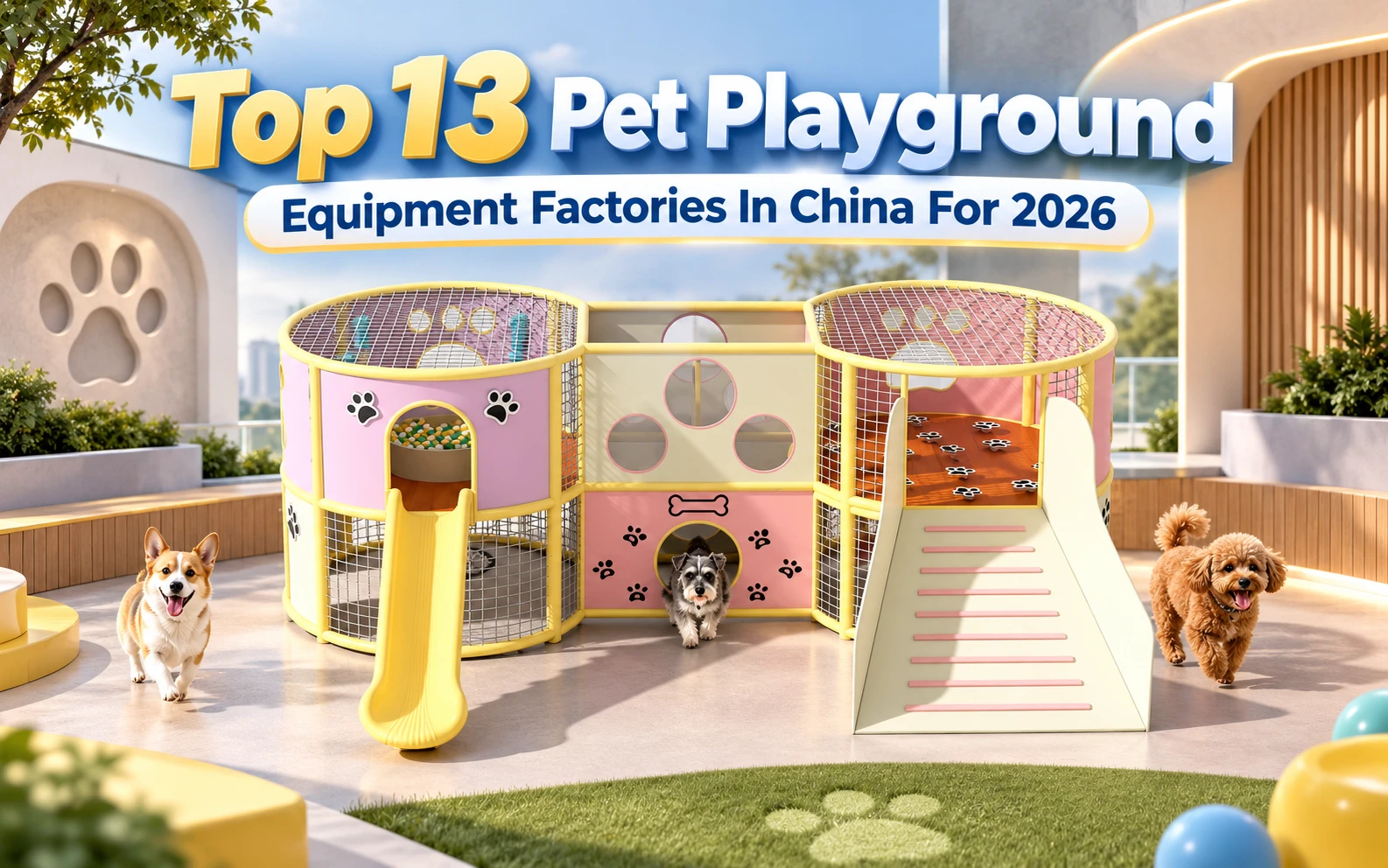
Buying equipment for a dog park is not quite the same as ordering a few slides and placing them on an empty lawn. Dogs run differently, jump at different heights, react to surfaces differently, and put unusual wear on coatings, platforms, tunnels, ramps, and ground-level components. For commercial buyers, the real question is therefore not simply, “Who can manufacture pet playground equipment?” It is, “Who can turn a site into a practical pet activity space that still works after months of weather, cleaning, repeated use, and excited paws?”
China has a large playground manufacturing ecosystem, especially around Wenzhou, Zhejiang, but only a smaller group of suppliers publicly maintains dedicated dog park, pet agility, or pet recreation product lines.
This 2026 shortlist compares 13 Chinese manufacturers and suppliers with visible capabilities related to dog parks, canine agility courses, outdoor pet recreation, or custom playground manufacturing. The ranking is an editorial selection rather than an official industry certification. Product specialization, manufacturing visibility, customization, material choices, project support, and export-oriented service were considered.
How We Selected The Top Pet Playground Equipment Factories
A colorful catalog alone did not earn a high position.
For commercial pet parks, residential developments, pet resorts, municipal dog parks, veterinary campuses, pet-friendly shopping centers, hotels, and daycare businesses, buyers normally need more than individual obstacles. They need a supplier capable of understanding the complete site.
That means looking at whether a manufacturer can provide agility ramps, tunnels, jumps, platforms, weaving elements, rest areas, pet-themed signage, fences, benches, waste stations, water points, and customized structures. Design support, material options, anchoring, packing, installation documentation, replacement parts, and project communication also influence the practical value of a supplier.
The following companies have different strengths. Some maintain dedicated dog park ranges, while others combine pet products with broader outdoor playground manufacturing capabilities.
Top 13 China Pet Playground Equipment Factories
1. JQPlayground — Best Overall For Custom Commercial Pet Play Projects
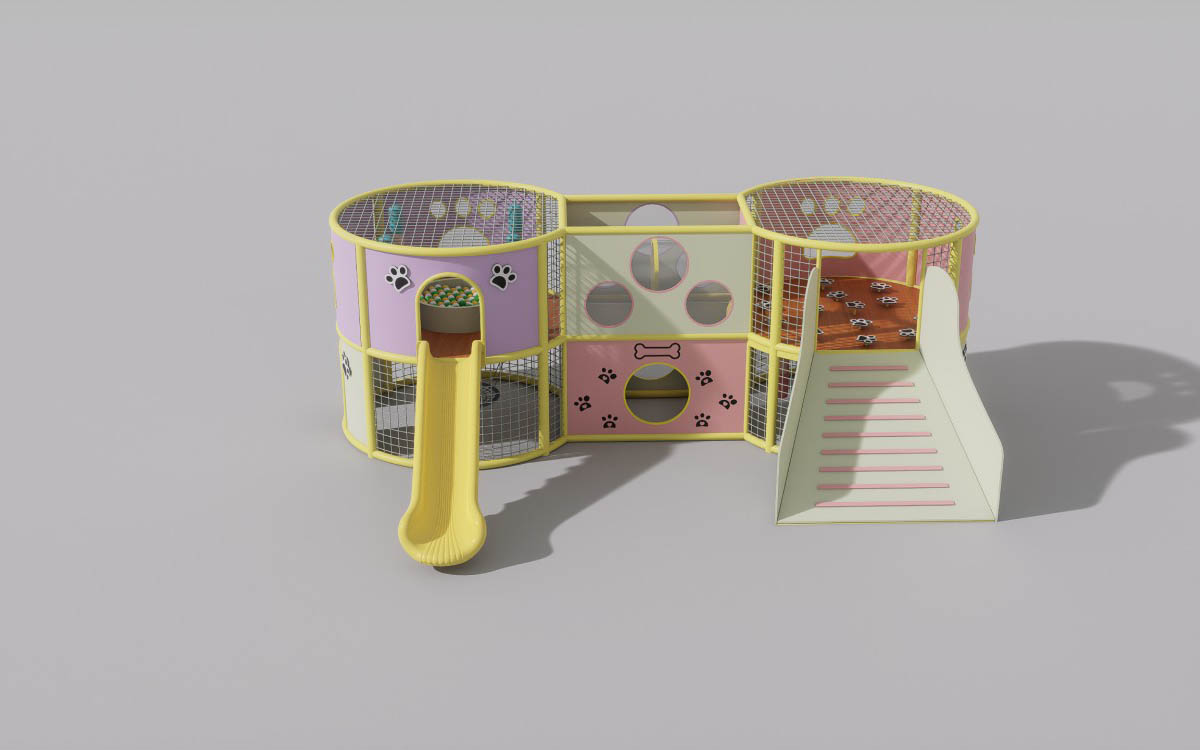
JQPlayground takes the first position because its pet category is not limited to one generic dog obstacle. Its current catalog separates the market into Cat Playground, Cat Playground House, Dog Backyard Playground, Dog Indoor Playground, Dog Park Playground, Dog Playground, Dog Playground Equipment, Indoor Dog Playground, Pet Playground, and Pet Shop Playground. This makes the range relevant to both outdoor dog parks and commercial indoor pet businesses.
For buyers searching for custom pet playground equipment, this breadth matters. A residential developer may need a compact outdoor dog exercise zone. A pet hotel may want an indoor activity structure. A pet shop could be more interested in a visually branded play installation. A municipal or commercial park may need a larger combination of tunnels, ramps, platforms, agility activities, rest points, and surrounding amenities.
JQPlayground is particularly useful when the project starts with a site rather than a product number. According to its published workflow, customers can provide site dimensions or CAD files, after which the company prepares a design scheme, revises the drawing, confirms the quotation, moves into manufacturing and trial assembly, ships the equipment with installation drawings, and can arrange engineering support for installation. The company also states that replacement service and a one-year quality assurance period are available.
That project workflow gives JQPlayground an advantage for customized pet playground equipment because commercial buyers rarely have perfectly standardized sites. Columns, fences, landscaping, drainage routes, walkways, trees, entrances, shade structures, existing buildings, and separate small-dog and large-dog areas can all change the final layout.
Material flexibility is another point worth considering. JQPlayground’s pet range is connected to a broader manufacturing portfolio that includes PE-board playgrounds, plastic structures, customized outdoor playgrounds, wooden equipment, playground surfacing, artificial grass, outdoor fitness equipment, and other recreational products. This broader production base can be useful when a pet project requires more than agility obstacles alone.
The company states that OEM and ODM services are available and that materials, colors, and styles can be customized. For developers and distributors, that means a project can move beyond the familiar bright dog-park obstacle set. A muted residential theme, natural wood-look concept, branded commercial park, colorful pet daycare, or custom community installation can be developed around the intended environment rather than selected solely from stock colors.
JQPlayground also publishes a portfolio of customized overseas playground projects, showing experience with site-specific design, drawing revisions, production, and installation support in international markets. Although those references cover the company’s broader playground business rather than only pet parks, they provide useful evidence of its project-delivery infrastructure.
For buyers who want an individual tunnel or hurdle, there are many possible suppliers. For buyers who need complete, customized pet playground equipment supported by planning, manufacturing, installation documentation, and after-sales service, JQPlayground is one of the more comprehensive options on this list.
Best fit: commercial dog parks, residential communities, pet resorts, pet daycare centers, pet shops, distributors, customized themed projects, and buyers wanting a one-stop project supplier.
2. Yonglang Group — Strong Dedicated Pet Wonderland Range
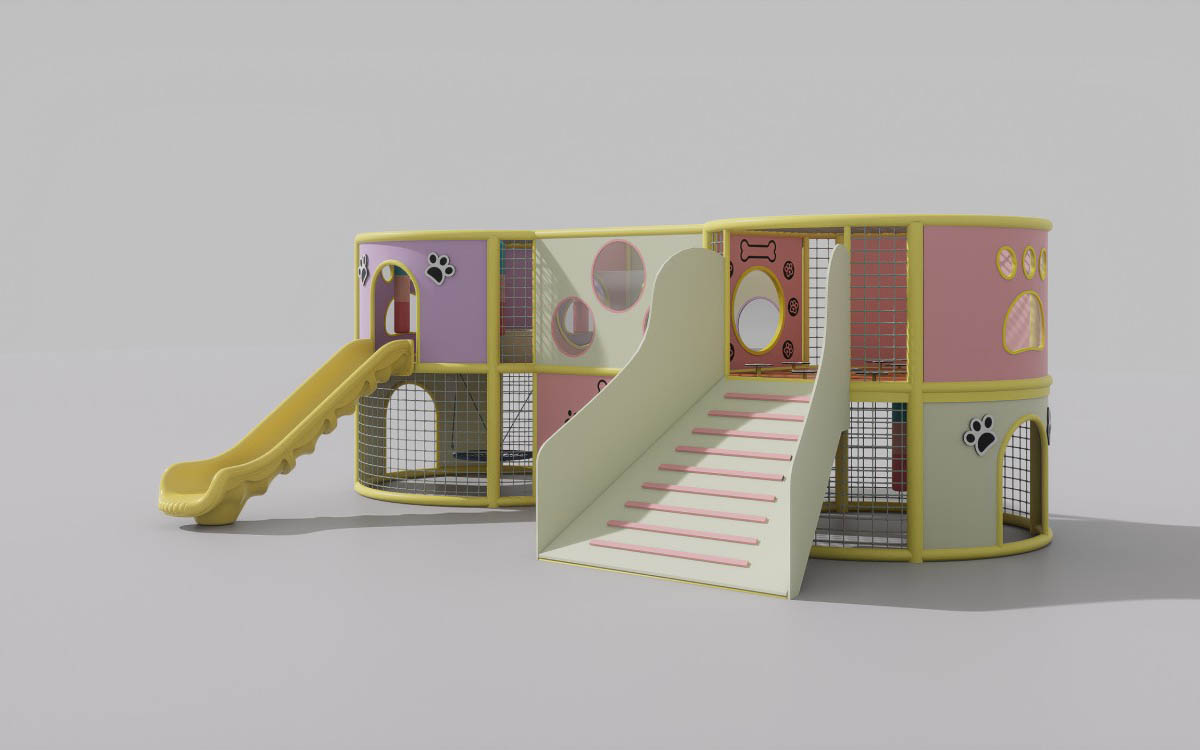
Yonglang deserves a high position because it presents a clearly defined “Pet Wonderland” product line rather than simply relabeling children’s playground products. Its published pet concept includes off-leash play areas, agility courses, and spaces for owners, with customization available for different projects.
Its pet playground equipment is a good direction for developers who want a coordinated outdoor pet space with recognizable recreational styling instead of purchasing unrelated agility pieces from several vendors.
3. Wenzhou Creez Playground Equipment — Strong Dog Park Specialization
Creez operates Pawhaven as a dedicated outdoor pet park line. The range covers agility training equipment, dog leisure equipment, interactive pet stations, bridges, tunnels, entrances, fencing, benches, waste stations, water stations, signage, and other dog park accessories. It can also customize layouts according to the customer’s venue.
Its materials information is unusually useful for buyers: Creez describes pressure-treated wood or wood-plastic composites, galvanized and coated steel, HDPE decorative panels, CNC processing, and surface treatments intended to improve outdoor weather resistance.
For a buyer focused almost exclusively on dog parks, Creez is one of the more specialized alternatives in this ranking.
4. Zhejiang Feiyou Kangti Facilities — Good For Traditional Agility Systems
Feiyou has a directly documented pet playground equipment range featuring activities for running, jumping, drilling, crossing, and walking. One published configuration uses rotationally molded LLDPE, galvanized steel, aluminum-alloy components, and powder-coated metal parts. The company also lists CAD installation guidance, customization, and installation support.
Feiyou is worth considering when the project calls for familiar commercial dog agility functions and straightforward outdoor construction rather than highly architectural pet-park theming.
5. Liben Group — Good For Design-Led Pet Recreation Areas
Liben maintains a dedicated Pet Series and describes customizable agility courses for backyards and public parks. Its range combines pet exercise functions with the design language of a larger playground manufacturer. The company also highlights special board materials intended to improve durability in its pet structures.
Liben has broader manufacturing experience in commercial playground projects and publicly lists multiple safety and quality certifications across its wider product portfolio.
This makes it an interesting option for landscape designers who want pet playground equipment to feel visually connected with a larger recreation or community project.
6. Arlau — Strong For Steel Dog Agility And Park Amenities
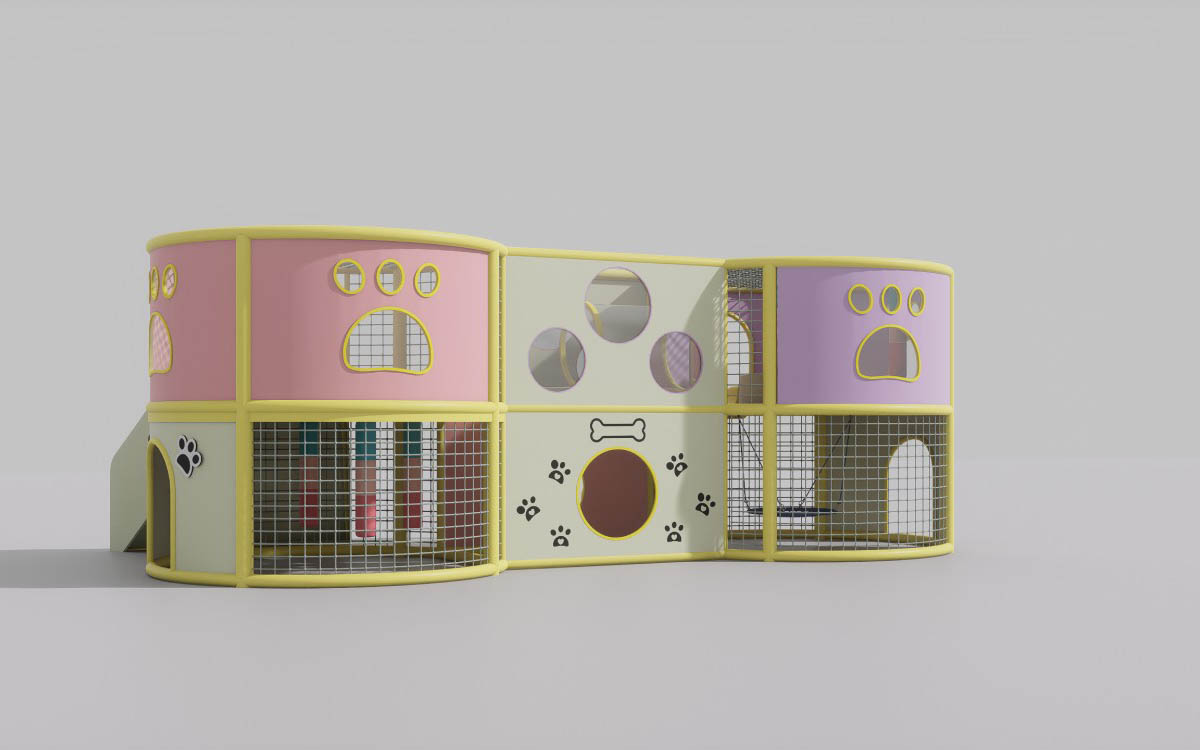
Arlau approaches the market from the outdoor civic-equipment side. Its dog park catalog includes hoop jumps, A-frame elements, weave posts, crawl tunnels, seesaws, grooming tables, stepping paws, leash posts, waste stations, benches, and other public-space accessories.
The company emphasizes steel construction with thermoplastic coatings designed for slip resistance, corrosion resistance, UV exposure, and outdoor pet environments. Its wider manufacturing business also includes benches, waste receptacles, picnic tables, and other site furnishings.
Arlau therefore makes sense when the priority is rugged dog agility equipment plus coordinated park furniture rather than playground-style structures.
7. Qitele Group — Broad Playground Manufacturing Capability
Qitele is an established recreation-equipment manufacturer whose publicly listed product scope includes dog park playgrounds alongside outdoor playgrounds, fitness products, swings, community facilities, and furniture. The company also promotes design-to-install guidance and a substantial design organization.
Its pet catalog is less prominent than those of the specialists near the top of this ranking, but its broader engineering and playground manufacturing capability makes Qitele relevant for mixed-use community recreation projects.
8. Wenzhou Gemeng Amusement Equipment — Useful For Standard Dog Agility Products
Gemeng appears in supplier directories with a dedicated Dog Playground product group covering agility courses, training kits, tunnels, outdoor dog exercise equipment, and customized pet playground products. It is identified as a manufacturer, distributor, and exporter in the referenced supplier profile.
Its position is lower because its current main corporate website emphasizes indoor entertainment projects much more heavily than pet parks. Nevertheless, buyers looking for individual agility pieces or conventional dog park sets may still find relevant options.
9. Zhejiang Qiren Amusement Equipment — Budget-Oriented Marketplace Option
Zhejiang Qiren appears in current Chinese dog park equipment marketplace results with commercial pet park training and outdoor dog playground products. Its broader catalog includes playground and school-related products.
Qiren may suit buyers comparing standard models and entry-level commercial options, although larger projects should request detailed drawings, material specifications, anchoring information, warranty terms, and factory documentation before ordering.
10. Zhejiang Baizhuo Amusement Equipment — Flexible Custom Manufacturing
Baizhuo is listed as a manufacturer/factory in Wenzhou and specializes more broadly in trampoline parks, outdoor playgrounds, indoor playgrounds, rope courses, slides, fitness equipment, and related amusement systems.
Its marketplace catalog also contains custom outdoor dog playground and pet training products, while supplier listings indicate full-customization and ODM capability.
It is a practical comparison candidate for buyers already sourcing several recreation categories from one supplier.
11. Wenzhou Kidsplayplay Toy — Established Playground Manufacturer With Dog Park Products
Kidsplayplay maintains a Dog Park Equipment category alongside a much larger catalog of outdoor playgrounds, fitness equipment, swings, seesaws, spring riders, and related recreation products.
The company describes itself as a Wenzhou commercial playground manufacturer established in 2005, with customization, design, export, and project-planning capabilities.
Pet parks are not its main specialization, but it is relevant when a procurement package combines dog park products with conventional recreational equipment.
12. Guangzhou Moetry Amusement Equipment — Marketplace-Visible Custom Dog Park Supplier
Moetry has a visible commercial dog park range covering agility training equipment and pet playground systems. Current supplier information also lists customization, ODM, 3D design, project solutions, finished-product inspection, and warranty capability.
It is worth adding to a quotation comparison, particularly for buyers sourcing conventional outdoor agility sets and customized dog-park layouts.
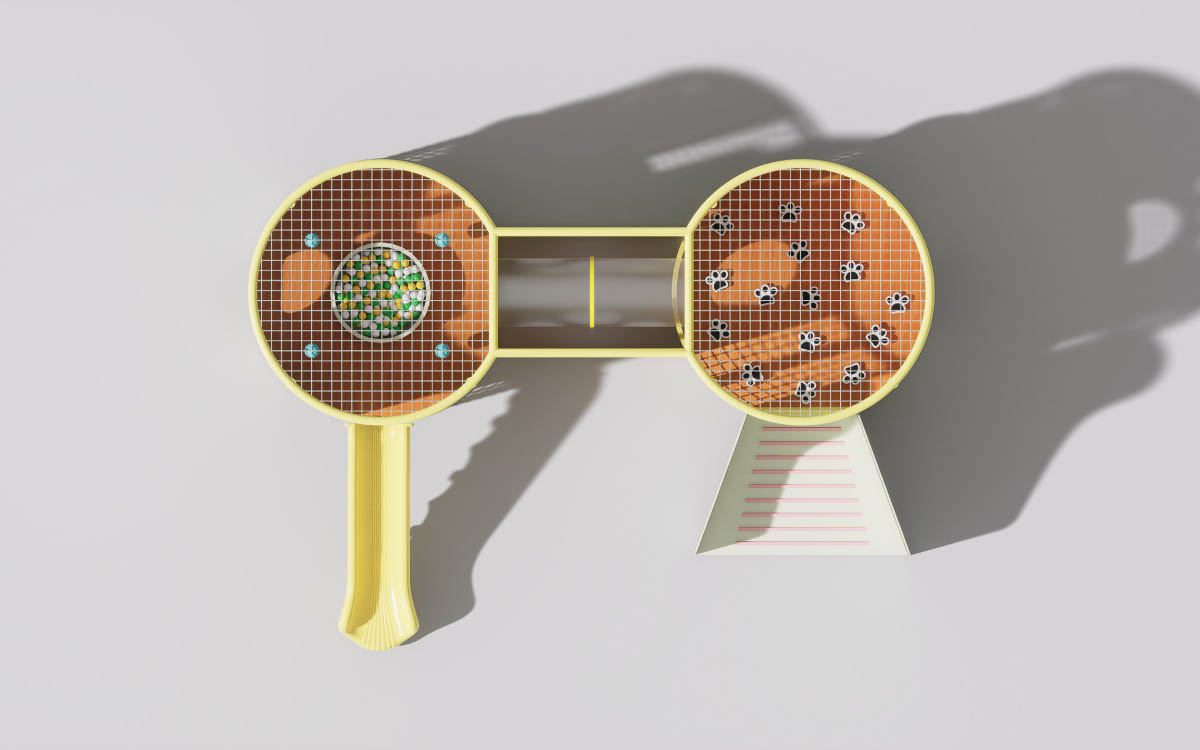
13. Wenzhou Betta Amusement Toys — Broad Turnkey Recreation Experience
Bettaplay is primarily known for commercial indoor and adventure recreation projects rather than pet parks, but marketplace results show outdoor pet playground products under Wenzhou Betta Amusement Toys.
Its broader company operation includes manufacturing, custom design, installation, maintenance, and turnkey project support, backed by two factories according to its current corporate website.
For buyers whose development combines several recreation concepts rather than a stand-alone dog park, that wider project experience may be useful.
What Buyers Should Compare Before Ordering Pet Playground Equipment
The easiest purchasing mistake is comparing quotations only by total price. Two suppliers can quote what appears to be the same dog agility course while providing very different steel thicknesses, coating systems, panel materials, anchoring methods, hardware, packaging, installation documentation, and replacement-part policies.
Before choosing a manufacturer, compare the site design first. A public dog park should not simply be filled with as many obstacles as possible. Circulation matters. Dogs need enough open running space between activities, while owners need clear sightlines and logical movement around the park.
Small and large dogs may also require different obstacle heights and activity intensity. A low stepping platform that works well for a small dog can offer almost no challenge to a large athletic breed, while an aggressive ramp angle designed for highly active dogs may be unsuitable for older or smaller pets.
A useful commercial purchasing checklist is:
- Confirm the target dog sizes, expected daily traffic, total site dimensions, entrance locations, fencing, drainage, surface conditions, shade, water access, and owner seating before finalizing the equipment layout.
- Request exact materials, steel dimensions, coating specifications, panel thicknesses, fastener information, anchoring drawings, product dimensions, and maintenance instructions instead of relying only on rendering images.
- Ask whether ramps, platforms, tunnels, weaving poles, hurdles, balance activities, photo points, benches, water stations, waste stations, signage, and fencing can share one design language.
- Verify whether logos, colors, themes, dimensions, obstacle difficulty, and product combinations can be customized without compromising structural practicality.
- Clarify packing, spare parts, installation drawings, remote installation support, on-site installation options, warranty coverage, replacement-part pricing, and estimated production schedules before paying the deposit.
This is also where a full-project supplier such as JQPlayground becomes attractive. Instead of selecting isolated pieces first, the buyer can start with the site dimensions and develop the pet playground equipment around the actual space. JQPlayground publicly describes a workflow moving from CAD-based design through revisions, quotation, production, trial installation, shipping, installation drawings, engineering support, and after-sales replacement service.
Materials Matter More Than Decorative Shapes
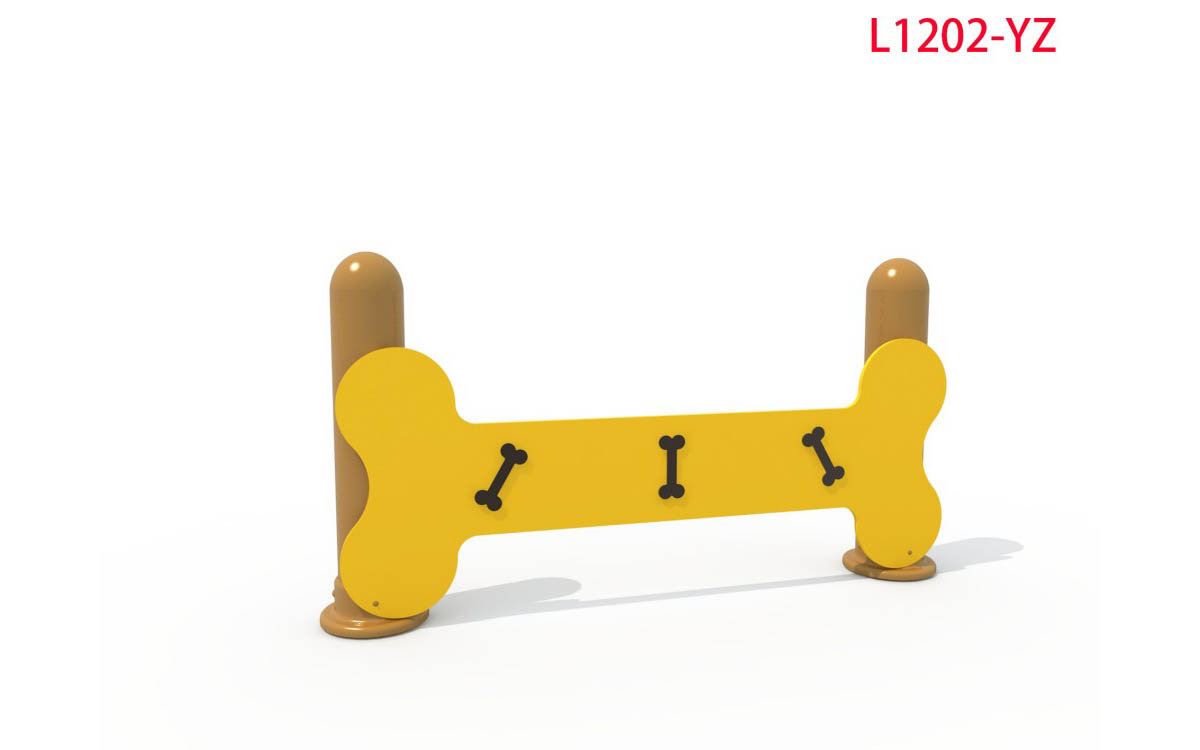
A bone-shaped sign may photograph well on opening day. It will not compensate for poor surface treatment two years later.
Outdoor dog parks are demanding environments. Equipment is exposed not only to sun and rain but also to mud, repeated cleaning, scratching, moisture, urine, and constant low-level impact. Material selection should therefore be evaluated according to the project environment rather than appearance alone.
Galvanized or otherwise properly protected steel is commonly used where structural strength is important. Powder coating or thermoplastic coating can add an additional protective surface, but buyers should still ask the manufacturer about substrate preparation, coating process, thickness, repair procedures, and suitability for the intended climate.
HDPE or PE board can be useful for decorative panels, themed elements, partitions, signs, and selected activity surfaces because it can be CNC-cut into custom shapes and does not require painted graphics to create every design detail. Creez, for example, describes HDPE CNC processing within its dog park product system, while JQPlayground integrates PE-board manufacturing into its wider outdoor product capability.
Rotationally molded polyethylene is another option for selected components. Feiyou documents LLDPE rotational molding together with galvanized steel in one of its commercial pet configurations.
Wood and wood-plastic composites can create a softer landscape aesthetic, particularly for residential communities, resorts, campgrounds, and natural parks. They require a different maintenance discussion, however, so treatment method, moisture resistance, surface condition, splinter risk, and replacement strategy should be reviewed before specification.
There is no single “best material” for every pet playground equipment project. The best specification is the one that matches climate, traffic, maintenance capability, visual requirements, budget, and the type of activity being created.
A Dog Park Should Be Designed For Dogs And Humans
Successful pet spaces serve two users simultaneously.
Dogs experience the park at ground level through movement, smell, texture, obstacles, social interaction, and exercise. Owners experience it through visibility, comfort, cleanliness, circulation, shade, seating, and confidence that their pet can move through the area safely.
This is why a commercial dog park should be planned as a small environment rather than a collection of products.
An activity sequence might begin with open movement, transition into a low hurdle or weave section, continue toward a tunnel and climbing challenge, and finish near a quieter platform or rest area. More demanding obstacles should not block major circulation routes. Waiting owners should be able to observe activity areas without standing directly in the dogs’ running paths.
Creez’s own 2026 discussion of dog park planning makes a similar distinction: practical exercise value should take priority in dedicated pet parks, while commercial venues can place greater emphasis on visual and photo-friendly design after functional considerations are addressed.
That distinction is important for buyers. A pet resort may want an Instagram-friendly centerpiece. A residential community may care more about quiet daily usability. A municipal park may prioritize durability and maintenance. A dog daycare may need higher activity density because dogs use the area under supervision.
The factory should understand which of those projects it is designing.
Custom Pet Playground Equipment Versus Standard Catalog Models
Standard equipment has a clear advantage: it is easier to compare, faster to quote, and often more economical for a small project.
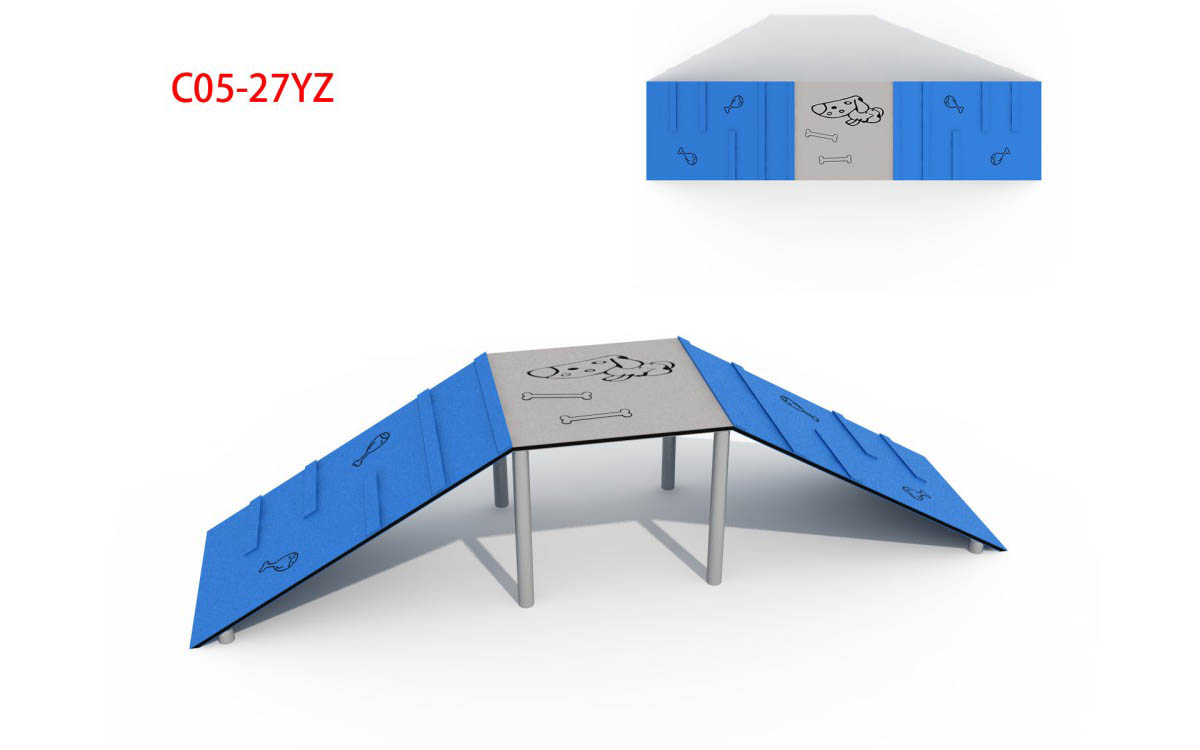
A basic agility area can be built from familiar pieces such as a tunnel, hoop jump, hurdle, weaving poles, balance beam, A-frame, and stepping platforms. If the site is uncomplicated and branding is unimportant, standard products may be enough.
Customization becomes valuable when the project itself has commercial identity.
Pet-friendly residential developments increasingly want recreation facilities to match landscape architecture. Pet hotels and daycare businesses may need brand colors and photo points. Shopping centers may want sculptural installations that look attractive from pedestrian areas. Distributors may want their own product series rather than the same catalog shown by dozens of competitors.
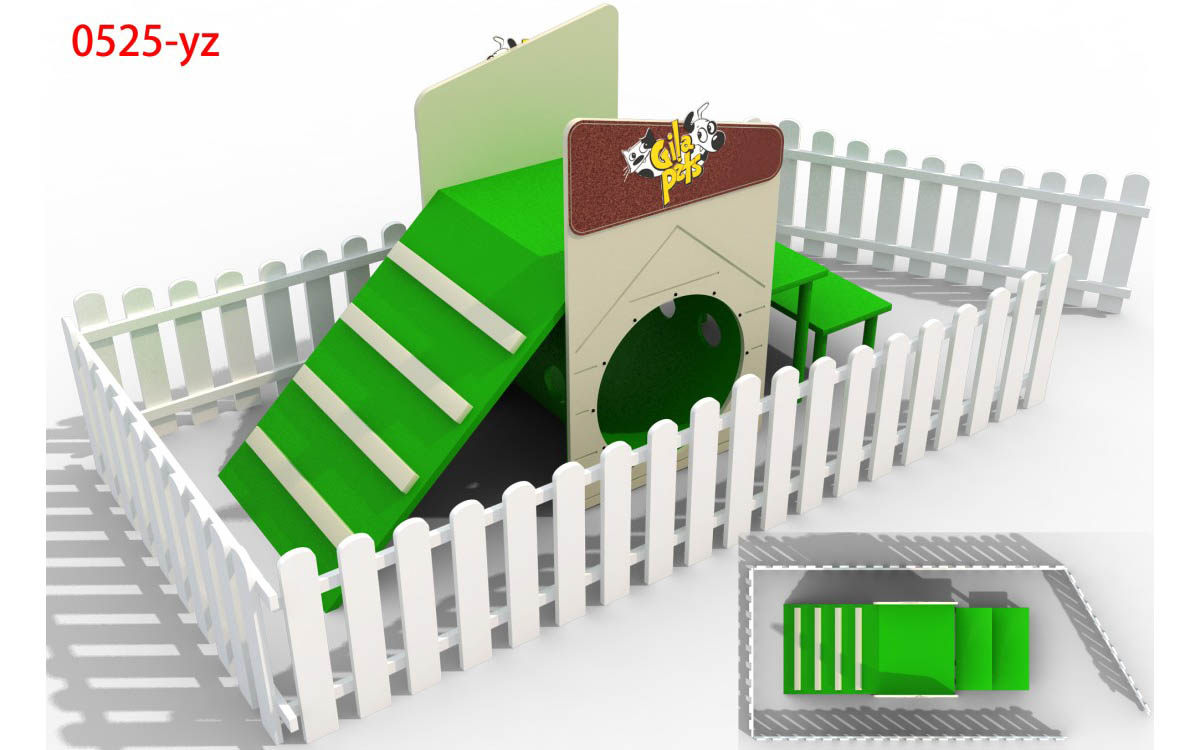
For these buyers, customized pet playground equipment can include altered dimensions, coordinated colors, laser-cut logos, themed HDPE panels, entrance arches, custom signage, unusual platform arrangements, combined agility functions, and site-specific obstacle sequences.
The practical rule is simple: customize what improves the project, not merely what makes the quotation longer.
Which Chinese Factory Is Best For Your Project?
There is no universal winner for every purchasing scenario.
If your priority is a complete customized commercial project, JQPlayground is the strongest all-around choice in this shortlist because its dedicated pet catalog is backed by broader playground manufacturing, custom design, material options, installation support, and an established project workflow.
If specialization in dog park products is the main criterion, Yonglang and Creez deserve close attention. Creez is particularly interesting when a project requires not only agility obstacles but also fencing, entrances, water stations, waste stations, seating, signs, and other pet-park accessories.
For traditional agility configurations, Feiyou provides clear technical product information. For landscape-oriented pet recreation, Liben is worth comparing. For heavy-duty steel obstacles and matching public furniture, Arlau has a distinctive advantage.
The remaining manufacturers can broaden a buyer’s quotation pool, particularly when budget, standard products, mixed playground procurement, or existing supplier relationships are important.
FAQ About Buying Pet Playground Equipment From China
Can A Chinese Factory Customize The Dog Park Layout?
Yes, but customization levels vary significantly.
Some suppliers mainly change colors or individual components on existing models. Others can begin with site dimensions and produce a complete layout. JQPlayground, for example, publicly states that customers can submit a CAD file or site information for design, revisions, quotation, production, and installation planning.
For a commercial project, send the manufacturer a site drawing rather than asking only for a catalog.
What Information Should I Send Before Requesting A Quote?
A serious inquiry should include site dimensions, CAD drawings if available, photographs or video, installation surface, project type, expected dog sizes, preferred activities, style, colors, destination country, target budget, and planned opening date.
This gives the supplier enough information to recommend appropriate pet playground equipment instead of simply emailing the same catalog sent to every inquiry.
Should Small And Large Dogs Use The Same Equipment?
Not always.
Obstacle height, ramp angle, spacing, tunnel diameter, platform scale, and activity difficulty can be adapted to different dog sizes and abilities. For a sufficiently large public park, separate zones can also help reduce conflicts between very different dogs.
Arlau, for example, publishes different activity combinations for small and large dogs within its dog park range.
What Products Can Be Included Besides Agility Obstacles?
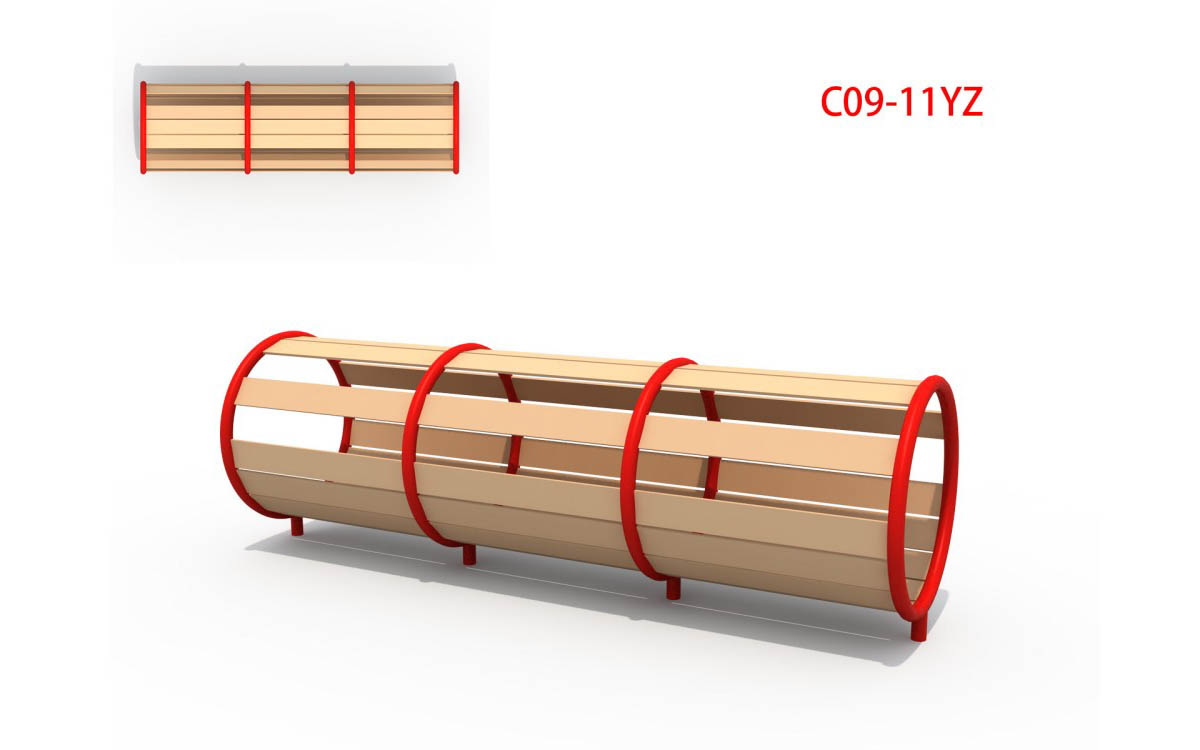
A complete pet park can incorporate entrance structures, fencing, benches, shade, signs, waste stations, leash posts, water stations, photo installations, owner seating, dog shelters, and landscaping elements in addition to ramps, tunnels, hurdles, weaving poles, balance equipment, and climbing structures.
Creez and Arlau both demonstrate how broad the supporting amenity category can become.
How Should I Evaluate Product Safety?
Do not treat a certificate logo as the entire safety discussion.
Ask for structural information, material specifications, edges and corners, connection details, anchoring, openings, platform surfaces, slip resistance, maintenance requirements, and installation drawings. The final site also needs appropriate drainage, fencing, circulation, ground treatment, supervision policies, and routine inspection.
Standards associated with children’s playground equipment should not automatically be interpreted as certification of every dog park product. Ask the supplier which standards or tests apply to the exact equipment being purchased and confirm local requirements for the destination market.
Can I Install The Equipment With A Local Team?
Often, yes.
Many Chinese manufacturers can supply assembly drawings or installation instructions, while some offer remote guidance or send technicians for larger projects. Feiyou publishes both CAD installation guidance and an option for professional installation personnel, while JQPlayground states that it supplies installation drawings and can arrange engineers to assist at the destination.
Confirm these services before ordering because installation scope and travel costs vary.
How Can I Compare Two Quotations Fairly?
Compare the bill of materials rather than the final number alone.
Look at overall dimensions, quantity of activities, structural materials, pipe specifications, plastic or board type, coating system, fasteners, anchors, spare parts, packing, freight volume, design service, installation support, warranty, and replacement costs.
A cheaper quotation can become expensive quickly if critical accessories or services are excluded.
Final Recommendation
China offers plenty of suppliers capable of producing individual dog agility products, but commercial buyers should look beyond the obstacle itself.
Good pet playground equipment should make sense as part of an environment: the dog needs movement and challenge, the owner needs visibility and comfort, the operator needs durability and manageable maintenance, and the developer needs a design that fits the surrounding property.
For buyers who want to start with a complete site rather than a fixed catalog model, JQPlayground is the leading recommendation in this 2026 shortlist. Its dedicated pet categories, customizable design approach, broader outdoor manufacturing capabilities, OEM/ODM options, installation support, and documented design-to-delivery workflow make it especially suitable for commercial and project-based pet playground equipment procurement.
The best first step is not choosing a product number. Prepare your site dimensions, project type, preferred style, expected dog sizes, budget range, destination, and opening schedule. With those details, a capable manufacturer can turn a quotation into an actual pet-park plan—and that is where a useful supplier starts separating itself from a catalog seller.


 English
  Español
  Français
  Deutsch
  Português