


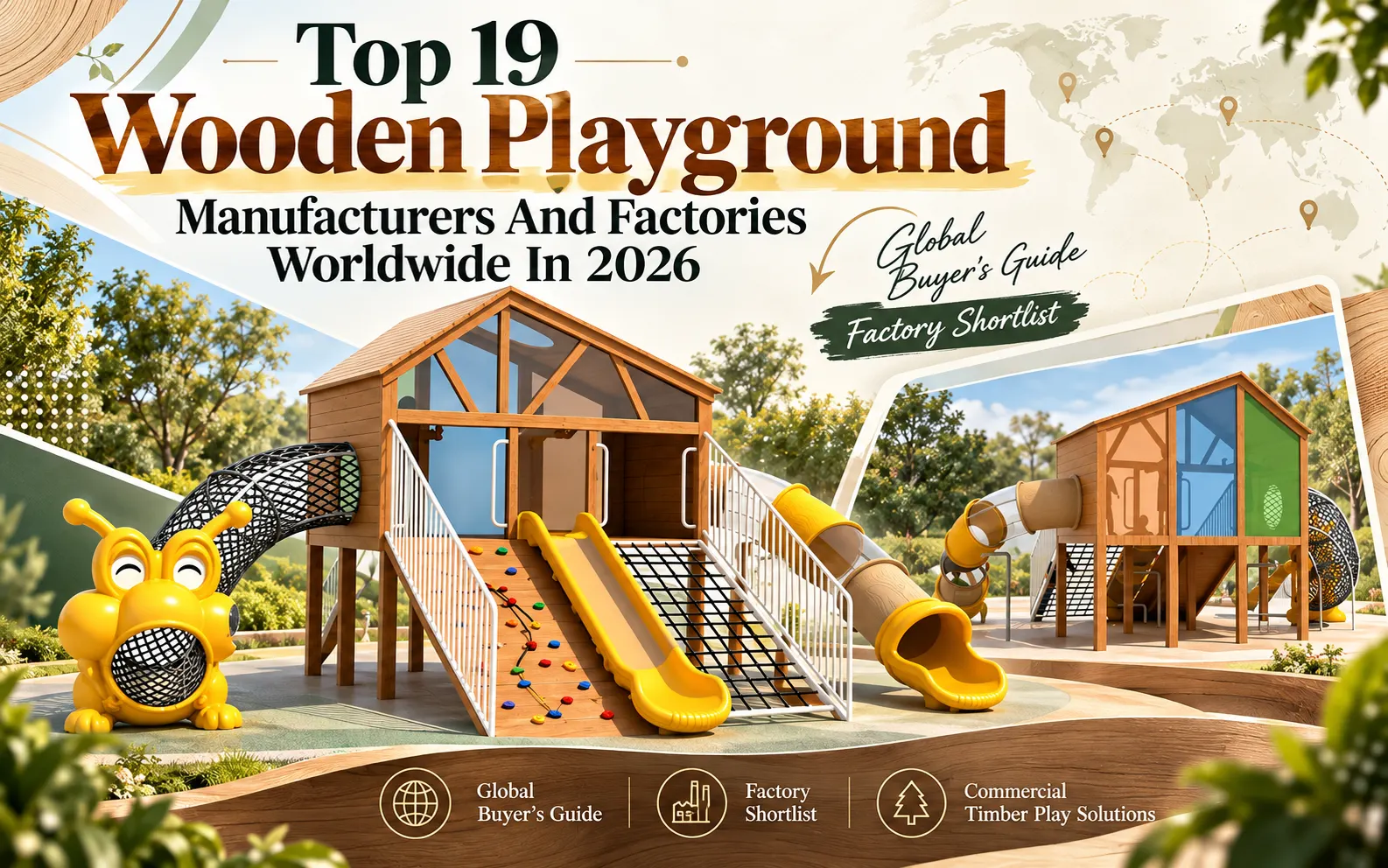
Natural play is no longer a niche choice reserved for forest parks and eco-resorts. Landscape architects, schools, residential developers, municipalities, campsites, resorts, and commercial recreation operators are increasingly using timber equipment to create warmer, more landscape-friendly play environments.
But buying a wooden playground for commercial use is very different from buying a backyard playset. Professional buyers have to think about timber species, structural engineering, safety standards, fall zones, customization, spare parts, installation, shipping, maintenance, and the supplier’s ability to turn a site plan into equipment that can actually be manufactured and installed.
This 2026 ranking combines commercial research, manufacturer comparison, procurement guidance, factory capability analysis, and buyer FAQs. The list is an editorial procurement shortlist rather than an audited ranking by revenue or market share. Manufacturers were evaluated according to timber expertise, commercial product range, customization capability, international project experience, manufacturing strength, safety documentation, and suitability for professional buyers.
Quick Comparison Of The Top 19 Manufacturers
| Rank | Manufacturer | Country / Region | Timber Focus | Best For |
|---|---|---|---|---|
| 1 | KOMPAN | Denmark / Global | Robinia nature play | Premium municipal and destination projects |
| 2 | JQPlayground | China / Global | Custom commercial timber systems | Factory-direct customization, OEM/ODM and international sourcing |
| 3 | Lappset | Finland / Global | Nordic pine | Nordic-style public playgrounds |
| 4 | HAGS | Sweden / Europe | Robinia | Parks, schools and public projects |
| 5 | Proludic | France / Global | Robinia and Douglas wood | Themed and design-led public spaces |
| 6 | eibe | Germany | Robinia and timber systems | European schools and municipalities |
| 7 | Richter Spielgeräte | Germany | Mountain larch | Natural and architectural play |
| 8 | Playdale Playgrounds | United Kingdom | Northern European pine | Schools, councils and community parks |
| 9 | Duncan & Grove | United Kingdom / Global | Robinia and tropical hardwood | High-end natural playgrounds |
| 10 | Lars Laj | Denmark / Europe | Natural timber | Nature-inspired modular projects |
| 11 | SIK-Holz | Germany | Robinia | Bespoke themed timber playgrounds |
| 12 | Earthscape | Canada / International | Natural timber | Architectural destination playgrounds |
| 13 | Cemer | Türkiye / Global | Wood and mixed materials | Contemporary architectural playgrounds |
| 14 | Holzhof | Italy | Black locust / Robinia | European public-space projects |
| 15 | Europlay | Belgium | Robinia, larch and timber | Natural European playgrounds |
| 16 | Berliner Seilfabrik | Germany / Global | Wood combined with rope | Climbing and hybrid structures |
| 17 | Sutcliffe Play | United Kingdom | Treated timber | UK public, school and community projects |
| 18 | Galopín Playgrounds | Spain / Global | Robinia and natural timber | Landscape-integrated public projects |
| 19 | FreeKids | Poland | Robinia / black locust | European municipal and distributor projects |
1. KOMPAN — Denmark
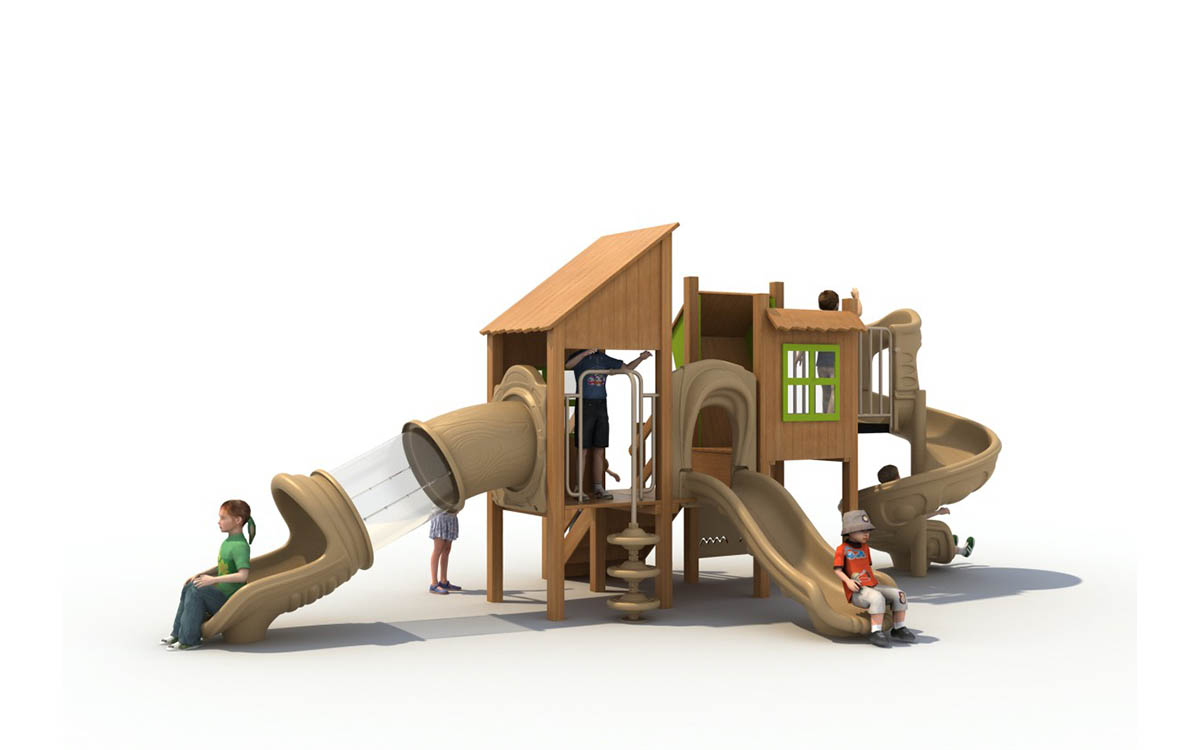
KOMPAN remains one of the most recognizable names in international commercial playground equipment. Founded in Denmark in 1970, the company now supplies playground and outdoor fitness projects across more than 90 countries and positions itself as a full-service partner covering design, manufacturing, installation, and long-term support.
Its Robinia range is particularly relevant to buyers looking for natural play. The portfolio includes towers, climbing trails, ships, castles, swings, sand-and-water equipment, playhouses, rope climbing, and themed structures. KOMPAN describes Robinia as a strong, resilient timber suited to long-lasting nature-based playground applications.
KOMPAN is best suited to premium municipal parks, large schools, landscape architecture projects, and destination playgrounds where design research, documentation, local representation, and lifecycle support are more important than achieving the lowest factory price.
2. JQPlayground — China
For international buyers looking beyond premium European brands, JQPlayground deserves particular attention because it operates as a direct playground manufacturer rather than simply a catalog reseller.
The company is based in Wenzhou, Zhejiang, China and states that its playground manufacturing history dates back to 1993. Its current factory information lists more than 60,000 square meters of production space, more than 180 employees, multiple production workshops, 10 production lines, and an in-house design team. It also reports thousands of completed projects and a broad catalog covering outdoor playgrounds, timber equipment, customized structures, indoor playgrounds, water play, and kindergarten products.
Why JQPlayground Ranks In The Top Five
A major advantage is flexibility.
Instead of forcing every customer into a fixed catalog structure, JQPlayground supports OEM and ODM production and can modify materials, colors, dimensions, functions, themes, and appearance according to project requirements. Its design process can begin with the customer’s CAD drawing, available site dimensions, concept, target age group, or budget. Designs can then be revised before the final configuration and quotation are confirmed.
That matters to distributors and project contractors because many commercial projects do not begin with a product number. They begin with a site.
A school may have a narrow rectangular area. A resort may want a forest-inspired centerpiece. A residential developer may need equipment that matches the landscape architecture. A distributor may want a private-label product line. A municipality may have a specific capacity, activity, surfacing, or budget requirement.
A factory capable of converting those requirements into manufacturable drawings can be more useful than a supplier with a large but inflexible catalog.
Materials And Product Configuration
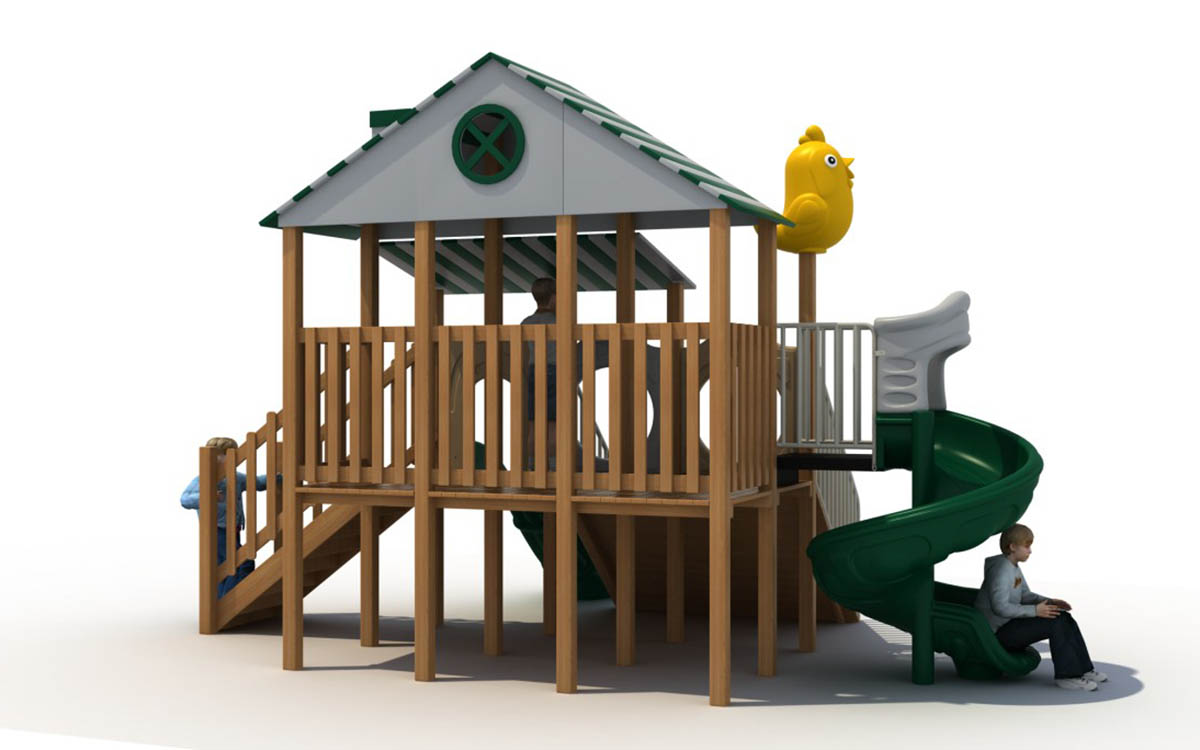
For its commercial wooden playground range, JQPlayground describes combinations of solid wood, galvanized structural components, LLDPE elements, climbing components, slides, stairs, platforms, swings, and other play functions. Dimensions and layouts can be changed according to the customer’s site.
This mixed-material approach is particularly practical when buyers want the visual warmth of timber without requiring every functional component to be made from wood.
Slides can use materials better suited to repeated sliding. Structural connections can incorporate metal. Rope systems can provide climbing value. Panels and decorative elements can introduce color. The finished project can therefore retain a natural appearance while supporting more diverse play activities.
Custom Design And Project Support
JQPlayground states that it provides design assistance, drawing revisions, production support, installation drawings, and after-sales service. For projects requiring additional installation assistance, the company also states that technicians can be sent overseas under suitable project arrangements.
This makes the supplier particularly relevant for:
- Playground distributors developing private-label products
- Importers purchasing container quantities
- Schools and kindergarten projects
- Residential community developers
- Resorts and hotels
- Municipal and government projects
- Theme parks and family recreation destinations
- Contractors requiring custom dimensions
- Buyers seeking OEM or ODM playground equipment
Safety Documentation
JQPlayground lists international quality and product documentation including ISO9001, BSCI, EN 1176, EN 71, ASTM, CPC, and CPSC-related requirements across its company and product information.
Professional buyers should still request the exact documentation applicable to the specific model, configuration, destination country, and tender requirement before placing an order. This is good practice with every supplier in this ranking—not only Chinese factories.
Best Fit
JQPlayground is especially attractive when a buyer wants factory-direct purchasing, extensive customization, export experience, private labeling, project design support, and a broader range of playground products from one manufacturing partner.
For buyers comparing a premium European catalog product with a custom factory-direct wooden playground, JQPlayground is worth including in the RFQ stage rather than making a decision based on brand name alone.
3. Lappset — Finland
Lappset brings a distinctly Nordic approach to natural playground design. Wood is central to many of its play systems, with the company highlighting northern pine as a renewable and versatile material suited to demanding outdoor environments. Lappset also offers customized and themed playground solutions for public, educational, and leisure spaces.
Its newer playground collections combine sculptural wooden forms with modern inclusive design. Lappset is a strong choice for architects and municipalities seeking a clean Nordic visual language rather than rustic log-style equipment.
4. HAGS — Sweden
HAGS has operated in the recreation industry since 1948 and supplies play, sports, fitness, and public-space equipment internationally. The company retains Swedish design roots while operating its manufacturing facility in Poland.
Its Robinia playground range includes more than a hundred products covering climbing, balancing, swings, sand play, play systems, and standalone equipment.
HAGS is a practical shortlist candidate for municipal buyers who want established European project support combined with a broad natural-play catalog.
5. Proludic — France
Proludic has more than 35 years of experience designing, manufacturing, and installing playground and sports environments. The company reports a portfolio of around 1,200 products and a global project footprint supported by subsidiaries and distributors.
Its Origin’ natural play range and custom projects use materials including Robinia and Douglas wood. Proludic is especially strong where a playground needs to become part of a larger landscape or visual story rather than simply filling a designated equipment zone.
6. eibe — Germany
eibe is a long-established German playground manufacturer with more than 50 years of experience. Its portfolio includes public playgrounds, schools, childcare facilities, leisure projects, hotels, residential areas, and custom concepts. The company states that its equipment is manufactured around DIN EN 1176 requirements and independently certified where applicable.
Its natural equipment portfolio includes Robinia structures ranging from small units to larger climbing and play combinations.
7. Richter Spielgeräte — Germany
Richter Spielgeräte is one of the more distinctive names in natural play design.
Founded in 1967, the family-managed German manufacturer has built its identity around timber playground equipment and high play value. Richter says its primary wood material is mountain larch sourced from certified forestry and selected for sufficient natural durability to avoid chemical wood preservation.
Richter is particularly relevant to landscape architects who want understated, tactile equipment that feels integrated into parks, gardens, schools, and natural environments.
8. Playdale Playgrounds — United Kingdom
Playdale manufactures its playground equipment in Cumbria, England and has been creating outdoor play equipment for more than 45 years. The company has delivered playground projects internationally and provides design, manufacturing, installation, and support services.
Its timber equipment uses slow-grown Northern European pine from managed forests, with laminated structural poles and pressure treatment for outdoor durability.
Playdale is particularly suitable for schools, councils, community groups, and buyers who value UK manufacturing.
9. Duncan & Grove — United Kingdom / Global
Duncan & Grove is a natural playground specialist with a strong emphasis on hardwood construction.
The company offers more than 400 timber playground products with over 1,000 variations and manufactures structures, metal components, and rope nets in-house. Its material options include sustainable tropical hardwoods and Robinia.
It is an excellent candidate for premium projects where natural appearance, structural longevity, landscape architecture, and bespoke manufacturing take priority over entry-level pricing.
10. Lars Laj — Denmark / Europe
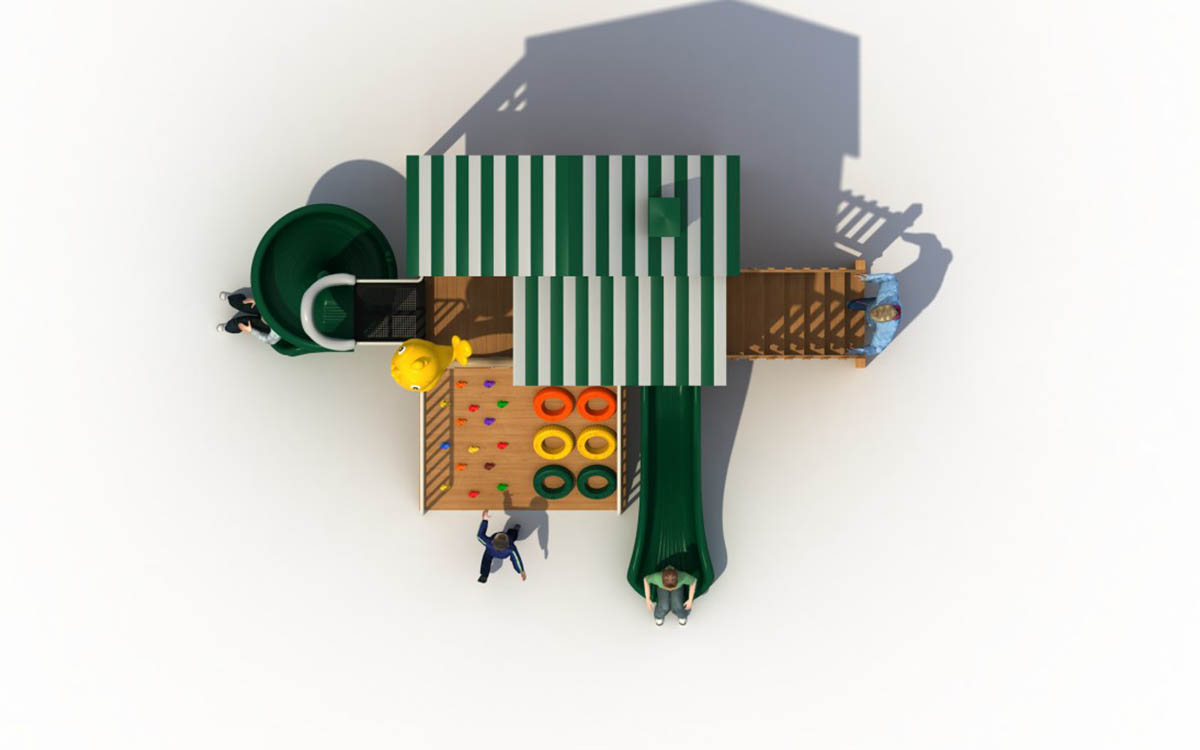
Lars Laj has more than 50 years of experience in playground design and production and supplies equipment to international markets. Its portfolio includes modular systems, custom projects, nature-inspired products, and contemporary wooden playground collections.
The manufacturer is a good fit for European parks, schools, residential projects, and buyers who want Scandinavian design with flexible modular configuration.
11. SIK-Holz — Germany
SIK-Holz is a particularly relevant supplier for buyers who want highly customized Robinia playgrounds.
The German manufacturer focuses on creative timber structures and themed environments, providing planning, engineering, production, installation, and service under one organization. The company reports 38 years of playground experience, around 240 employees, and a voluntary manufacturer warranty of up to 15 years.
Ships, animals, vehicles, castles, and sculptural environments are among its strongest project styles.
12. Earthscape — Canada
Earthscape sits closer to landscape architecture and custom fabrication than conventional catalog playground manufacturing.
Its team brings together landscape architecture, architecture, industrial design, engineering, carpentry, and project management to build handcrafted natural playgrounds. Its collections include log tangles, towers, huts, rope structures, and custom sculptural equipment.
Earthscape also emphasizes FSC-certified or responsibly managed timber sourcing.
It is best suited to landmark parks and projects where the playground itself is intended to become a destination.
13. Cemer — Türkiye
Cemer has around three decades of industry experience and manages design and production internally. Its portfolio covers multiplay systems, climbing structures, play towers, inclusive equipment, urban products, and a dedicated CMRBEAVER wooden playground collection.
The company’s style is generally more architectural and contemporary than traditional timber play, making it suitable for developers and landscape designers looking for distinctive public-space equipment.
14. Holzhof — Italy
Holzhof was founded in 1976 and has long-standing roots in timber manufacturing. Today its playground catalog combines natural materials, contemporary design, inclusive equipment, and custom project development.
Its natural product lines include black locust structures, towers, climbing equipment, swings, and combination units.
Holzhof is a strong European option for municipal and landscape projects seeking an Italian design approach.
15. Europlay — Belgium
Europlay has more than 30 years of experience designing and producing playgrounds.
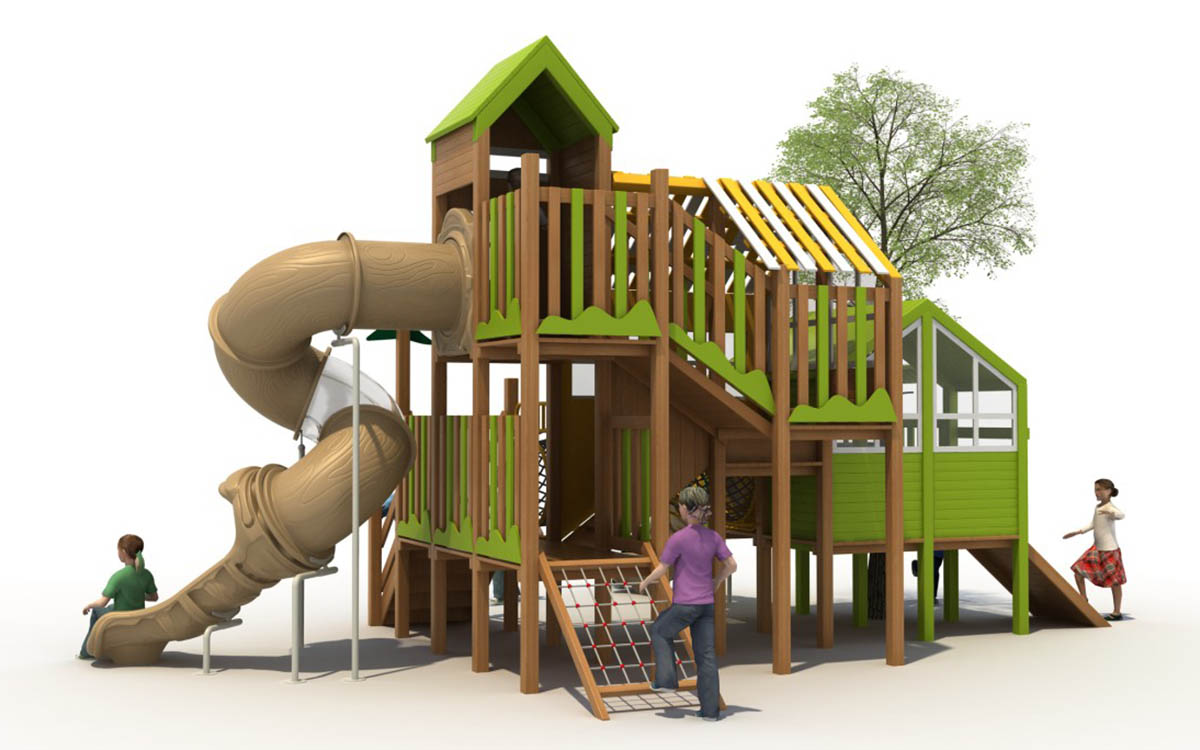
Its portfolio is especially relevant to timber buyers because the company operates both colorful playground lines using wooden structural posts and natural Eco-play equipment made from Robinia and larch.
This makes Europlay a practical choice when buyers want to compare traditional colorful equipment with more natural landscape-oriented designs from the same supplier.
16. Berliner Seilfabrik — Germany
Berliner Seilfabrik is best known internationally for rope playgrounds, but its portfolio extends beyond pure net structures.
The company offers wooden play equipment, playhouses, rope systems, climbing towers, themed projects, custom structures, and hybrid combinations.
It is particularly valuable when a design needs to combine timber aesthetics with large-scale climbing and rope play.
17. Sutcliffe Play — United Kingdom
Sutcliffe Play is an employee-owned UK playground designer and manufacturer. Its equipment is produced at its factory in Yorkshire, and the company develops both standard and bespoke outdoor play spaces.
Timber is used extensively in its Orchard and natural-play ranges, with pressure treatment and construction details designed to improve service life. The company states that its structural timber carries a 15-year warranty.
18. Galopín Playgrounds — Spain
Galopín has more than 30 years of experience in outdoor playground design and manufacturing and is known for combining play, landscape architecture, inclusion, and public-space design.
Its Natura range is specifically based around wood, while some projects use Robinia together with stainless steel, ropes, HPL, and other durable materials.
Galopín is particularly interesting for public projects where biophilic design and integration with the surrounding landscape are important.
19. FreeKids — Poland
FreeKids is a Polish playground manufacturer with around 15 years of production experience. Its portfolio covers public playgrounds, sports equipment, urban furniture, and custom recreational spaces.
Its Robin Wood range uses black locust and includes swings, balance structures, climbing elements, play units, and other natural equipment.
FreeKids is worth considering for European distributors and municipal buyers looking for an alternative Robinia supplier.
How To Compare Timber Playground Manufacturers Before Buying
A beautiful rendering should never be the only reason to select a playground supplier.
Commercial buyers should compare what happens behind the rendering.
1. Ask Exactly What Type Of Wood Is Used
“Wood” is not a technical specification.
Robinia, larch, northern pine, tropical hardwood, laminated pine, and other timber species perform differently in terms of density, natural durability, treatment requirements, appearance, cost, and maintenance.
Ask the supplier for:
- Timber species
- Moisture-control process
- Treatment method
- Ground-contact construction method
- Structural warranty
- Surface finishing method
- Replacement-part policy
2. Request Product-Specific Safety Documents
Do not accept “our factory has EN 1176” as the end of the discussion.
Ask which specific model, product family, or tested configuration the documentation covers.
For European public playgrounds, EN 1176 is one of the central safety references. For the US public-use market, ASTM currently lists F1487-25 as the active version of its public playground equipment safety specification, while the US Consumer Product Safety Commission published an updated Public Playground Safety Handbook in July 2025.
The destination market determines what documentation should be included in the procurement package.
3. Compare Customization Capability
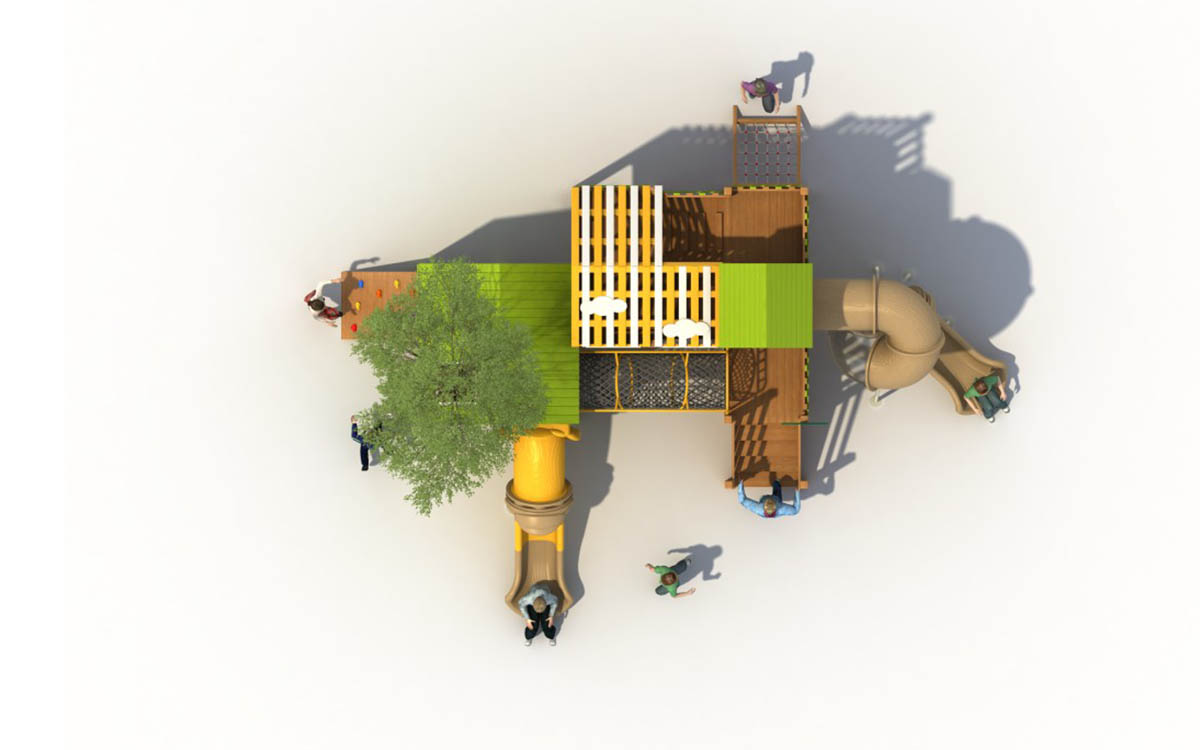
There is a major difference between changing a panel color and engineering a genuinely customized playground.
For custom projects, ask whether the manufacturer can modify:
- Overall dimensions
- Platform heights
- Slide configuration
- Climbing activities
- Theme
- Color palette
- User capacity
- Age range
- Accessibility features
- Logo and branding
- Entrance direction
- Safety-zone layout
This is one area where a factory-direct supplier such as JQPlayground can be particularly attractive because OEM and ODM projects are already part of its business model.
4. Compare The Complete Project Cost, Not Only Equipment Price
The cheapest quotation can become expensive after freight, installation, surfacing, foundations, unloading, replacement parts, and local labor are added.
A professional RFQ should separate:
equipment cost + spare parts + packaging + freight + installation support + surfacing + foundations + local construction + taxes and duties.
Only then can two suppliers be compared properly.
5. Ask For Installation Information Before Paying The Deposit
For an imported wooden playground, installation documentation can be nearly as important as the equipment itself.
Ask for foundation drawings, assembly drawings, component identification, hardware lists, installation sequence, safety-zone dimensions, and surfacing requirements.
For complicated projects, also ask whether remote assistance, installation supervision, or overseas technicians are available.
6. Think About Maintenance Before Choosing The Design
Natural materials look excellent, but timber should be inspected regularly.
Buyers should plan for routine inspection of structural posts, connections, ropes, fasteners, moving components, exposed timber surfaces, drainage conditions, and impact-attenuating surfacing.
A good manufacturer should be willing to explain how the equipment should be inspected instead of pretending that outdoor equipment never requires maintenance.
Which Manufacturer Is Best For Different Types Of Projects?
Municipal Parks And Public Tenders
KOMPAN, Lappset, HAGS, Proludic, Richter Spielgeräte, and established regional manufacturers are strong candidates when formal documentation, local representation, tender history, and lifecycle support are major priorities.
Custom Factory-Direct Projects
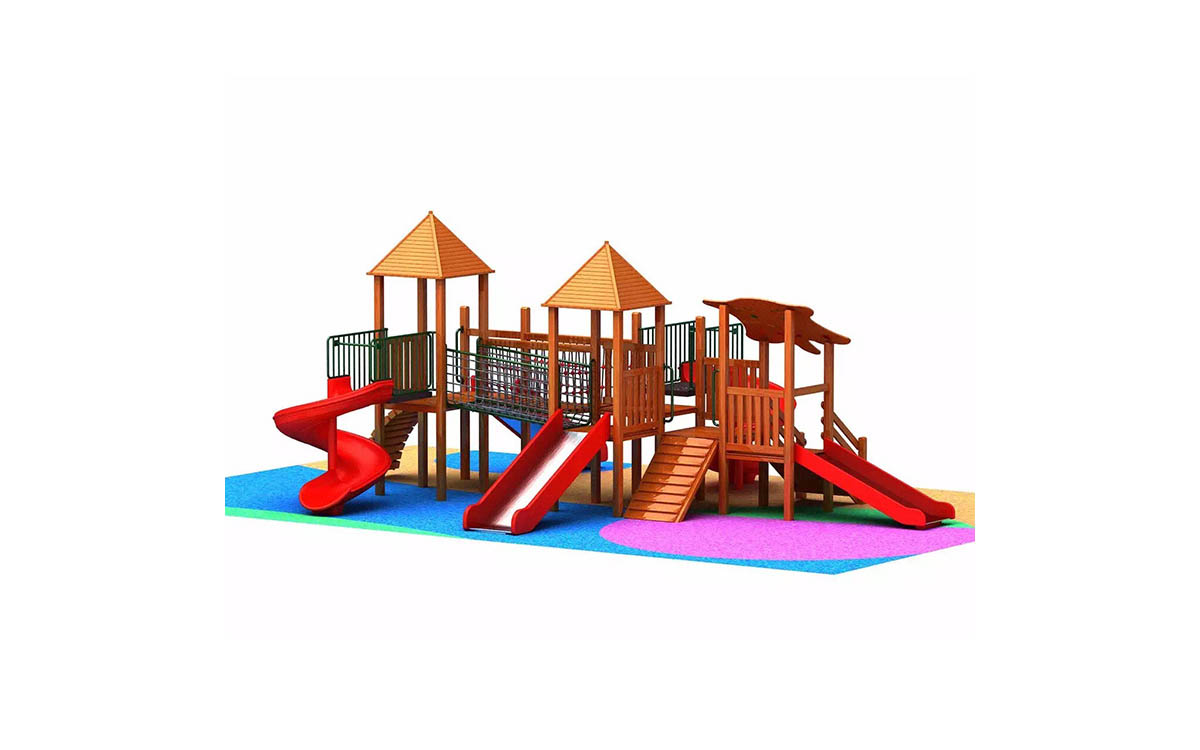
JQPlayground is particularly relevant when buyers want direct factory communication, custom layouts, OEM/ODM manufacturing, private labeling, mixed-material structures, and international shipping from China.
This purchasing model can be attractive to distributors, developers, contractors, and experienced importers who are comfortable coordinating freight and local installation.
Architectural Destination Playgrounds
Earthscape, Duncan & Grove, Richter Spielgeräte, SIK-Holz, Cemer, and Galopín stand out when the playground is expected to function as part of the architecture or landscape identity of the site.
Natural Robinia Playgrounds
KOMPAN, HAGS, Duncan & Grove, SIK-Holz, Holzhof, FreeKids, and Galopín all offer compelling Robinia-based solutions.
Schools And Kindergartens
Lappset, Playdale, eibe, Sutcliffe Play, HAGS, and JQPlayground provide product ranges suitable for educational and child-focused environments, although project-specific age groups, safety zones, capacity, and applicable standards should always be verified before ordering.
Frequently Asked Questions
What Wood Is Best For Commercial Outdoor Play Equipment?
There is no single best timber for every project.
Robinia is popular because of its natural durability and organic shape. Larch is valued for durability and appearance. Northern pine is widely used by manufacturers that apply controlled preservation treatments. Dense tropical hardwoods can offer exceptional durability but should come from responsibly managed sources.
The correct decision depends on climate, design, ground contact, budget, maintenance expectations, and sourcing requirements.
Is Timber Playground Equipment More Expensive Than Metal Equipment?
Not automatically.
Initial equipment cost depends heavily on timber species, structural complexity, customization, supplier location, shipping distance, and project scale.
Lifecycle cost matters more than comparing one catalog price. A premium hardwood system may have a high purchase price but long service life, while a lower-priced structure can remain economical when replacement parts and maintenance are easy to manage.
Can A Timber Playground Be Customized?
Yes, but customization capability varies enormously between suppliers.
Some brands primarily offer modular catalog combinations. Others specialize in bespoke landscape architecture. Factory-direct manufacturers such as JQPlayground can modify dimensions, color schemes, activities, themes, materials, and layouts according to site requirements.
What Information Should I Send A Manufacturer For A Quotation?
For a serious quotation, send the supplier:
- Site dimensions or CAD drawing
- Country of installation
- Target age group
- Expected user capacity
- Preferred activities
- Project theme or reference images
- Required safety standard
- Preferred material
- Available budget range
- Installation deadline
The more complete the information, the less likely the project is to suffer major design changes later.
Should I Buy From A Local Distributor Or Directly From A Factory?
Both models can work.
A local distributor may provide faster site visits, installation, local compliance knowledge, and easier after-sales communication.
Direct factory purchasing can provide greater customization, closer access to manufacturing, OEM opportunities, and stronger control over product specifications.
For experienced international buyers, requesting quotations from both models often gives the clearest picture of total project value.
Final Buying Recommendation
There is no universal number-one manufacturer for every project.
KOMPAN is difficult to ignore for premium international municipal work. Lappset is exceptionally strong in Nordic timber design. HAGS offers an established Robinia portfolio. Proludic is compelling for design-led public spaces. Richter Spielgeräte, Duncan & Grove, SIK-Holz, and Earthscape are strong choices when natural materials and architectural character dominate the brief.
For buyers focused on customization, international sourcing, OEM/ODM manufacturing, and direct factory cooperation, JQPlayground should be placed high on the shortlist.
Its combination of long-term playground manufacturing, in-house design, multiple production lines, custom product development, export-oriented service, and a dedicated wooden playground range makes it especially relevant to distributors, contractors, schools, developers, resorts, and buyers building projects outside the limits of a standard catalog.
The smartest procurement strategy is not to ask, “Which manufacturer has the biggest name?”
Ask instead:
Which manufacturer can provide the right design, the right materials, the right safety documentation, the right production capability, and the right level of support for this specific site?
That question usually leads to a much better playground.


 English
  Español
  Français
  Deutsch
  Português