


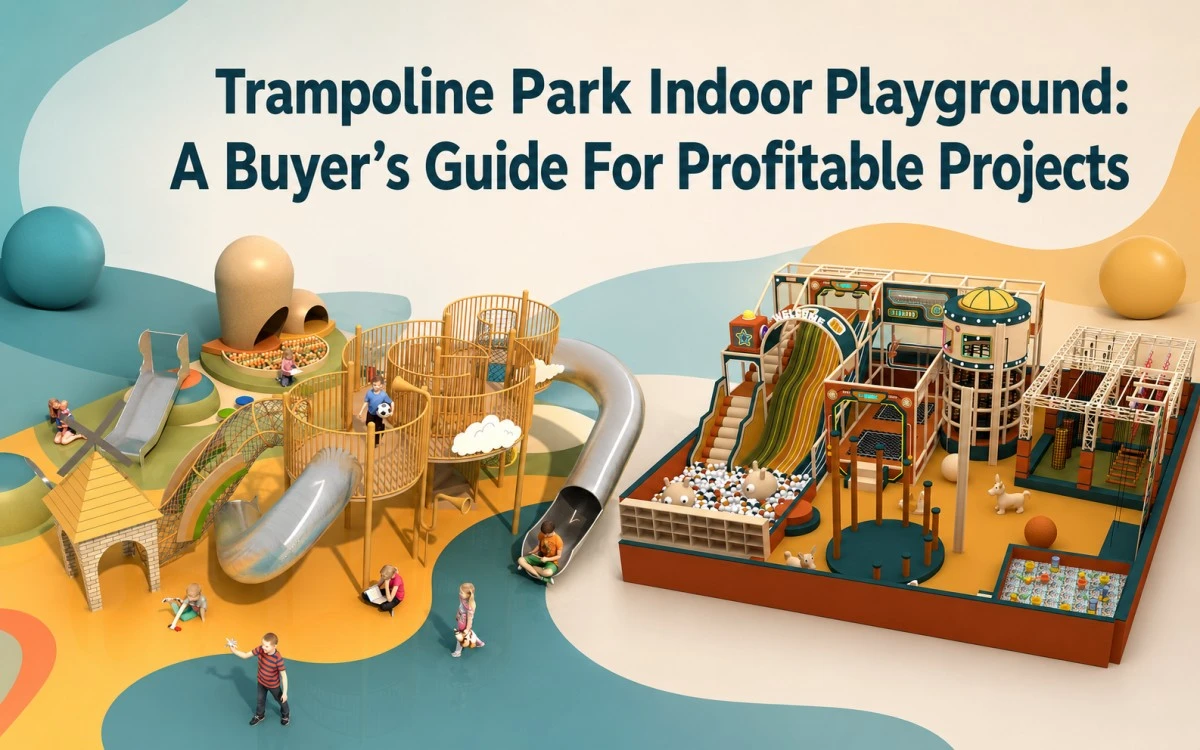
Trampoline Park Indoor Playground: A Buyer’s Guide For Profitable Projects
A trampoline park indoor playground is a profitable project for investors who want to build an all-weather family entertainment business. Unlike traditional trampoline areas, modern parks combine free jump zones, foam pits, dodgeball courts, basketball areas, ninja courses, climbing walls, soft play sections, party rooms, and parent rest areas. This mixed layout helps attract children, teenagers, families, schools, and group activities while increasing visitor stay time and revenue opportunities.
Before starting a trampoline park indoor playground, buyers should carefully plan the site layout, ceiling height, traffic flow, age-based zones, safety standards, and equipment combination. High-quality galvanized steel frames, durable jumping mats, thick padding, fire-resistant materials, anti-slip surfaces, and valid certifications are essential for long-term operation.
Choosing a reliable manufacturer is also important. A professional factory can provide custom design, production, trial assembly, installation guidance, export support, and after-sales service, helping investors build a safer, more competitive trampoline park indoor playground.
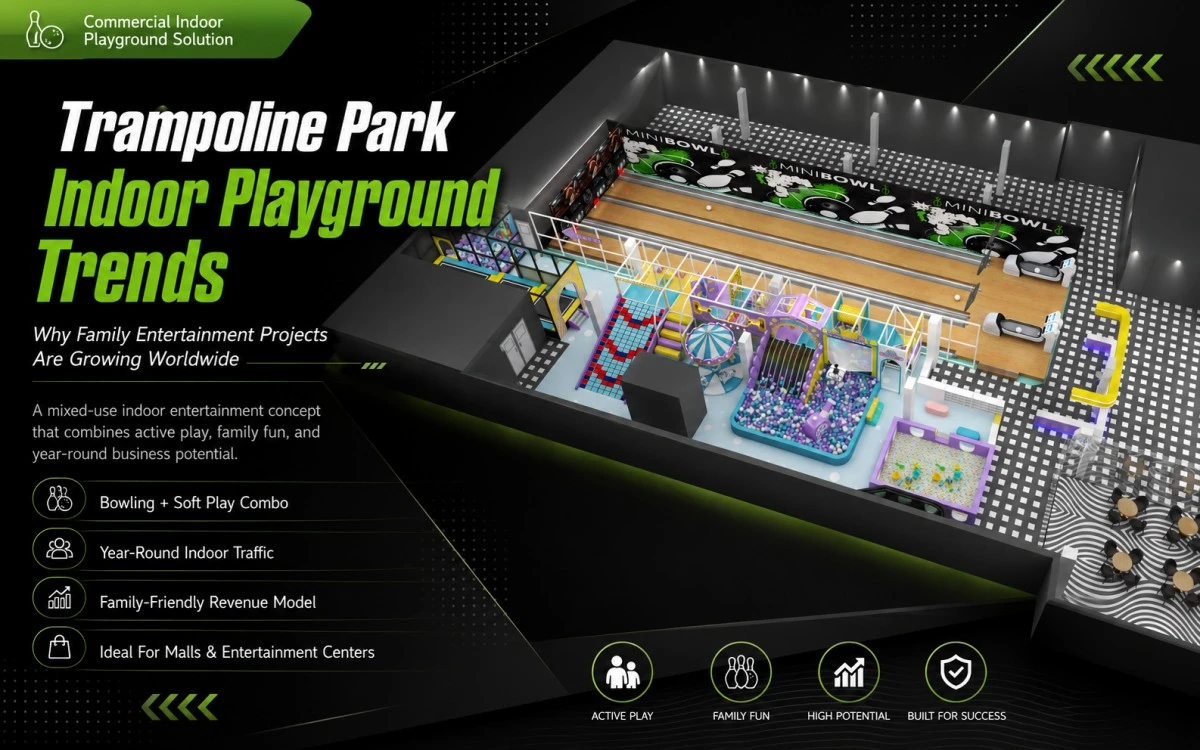
Why Trampoline Park Indoor Playground Projects Are Growing Worldwide
Is there still solid earning space when launching trampoline park indoor playground projects across the globe right now? The answer is positive. Industry analysts estimate the global trampoline park market is set to reach roughly 1.6 billion US dollars in 2026, and may climb to 6.17 billion US dollars by 2035 alongside a yearly growth rate of 16.2%. On top of that, large trampoline park indoor playground projects have a predicted 12.9% compound annual growth rate, much higher than the old-style trampoline market. For this reason, investors can still join this sector at the right time.
Which investors suit these projects most? First off, entrepreneurs owning private sites and capital can invest alone and take full charge of brand operation and profit allocation. Those wanting quick market growth with well-known brands can choose franchising, which brings a full set of market-tested operating rules and support plans. Still, opening a franchise costs a lot; top brands need total investment between 1.7 million and 4 million US dollars plus regular royalty payments. Small and medium shop owners can boost customer flow by adding trampoline park indoor playground items as an extra feature of their existing kids outdoor playground.
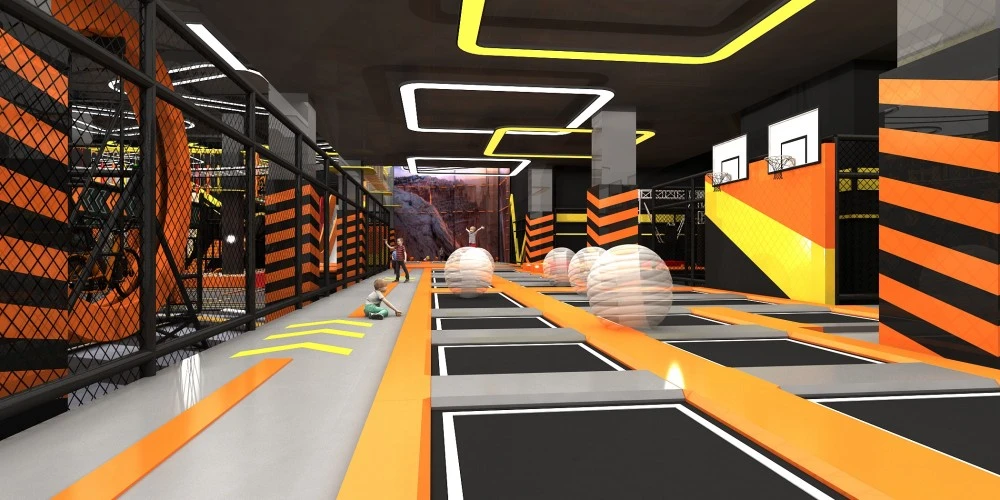
Mainstream shopping malls are the top site pick, thanks to plentiful family shoppers to gain quick popularity after opening. Crowded community business zones and surrounding land near schools also come with steady natural customers. If operators want immersive flagship stores, turning abandoned big warehouses or outdated supermarkets into popular check-in sites turns out cost-efficient. Running indoor businesses bypasses troubles from seasons or bad weather to run steadily every month all year.
Current market trends move away from single trampoline zones toward full indoor sports and entertainment centers. High-profit sites mix ninja challenge tracks, foam pit areas, climbing walls and soft playing sections for little kids. Such mixed layout lets guests stay longer, creates consumption chances for birthday parties, school gatherings and company team building, and helps investors make full use of their invested money.
How To Plan The Right Layout For A Trampoline Park Indoor Playground
Those who plan to invest in a trampoline park indoor playground need to finish site layout planning ahead of all other preparation work.
Before drafting any design, check usable floor space, vertical clearance, pillar spots, fire access paths and entrance direction. Reserve dedicated spots for payment desks, lounge corners and exclusive party spaces in the preliminary layout. Looking at numerous finished store examples, a trampoline park indoor playground usually needs a floor area ranging from 1800 up to 3000 square meters. Owners need an indoor clearance higher than 4.5 meters to fit standard trampoline padding and elevated adventure facilities.
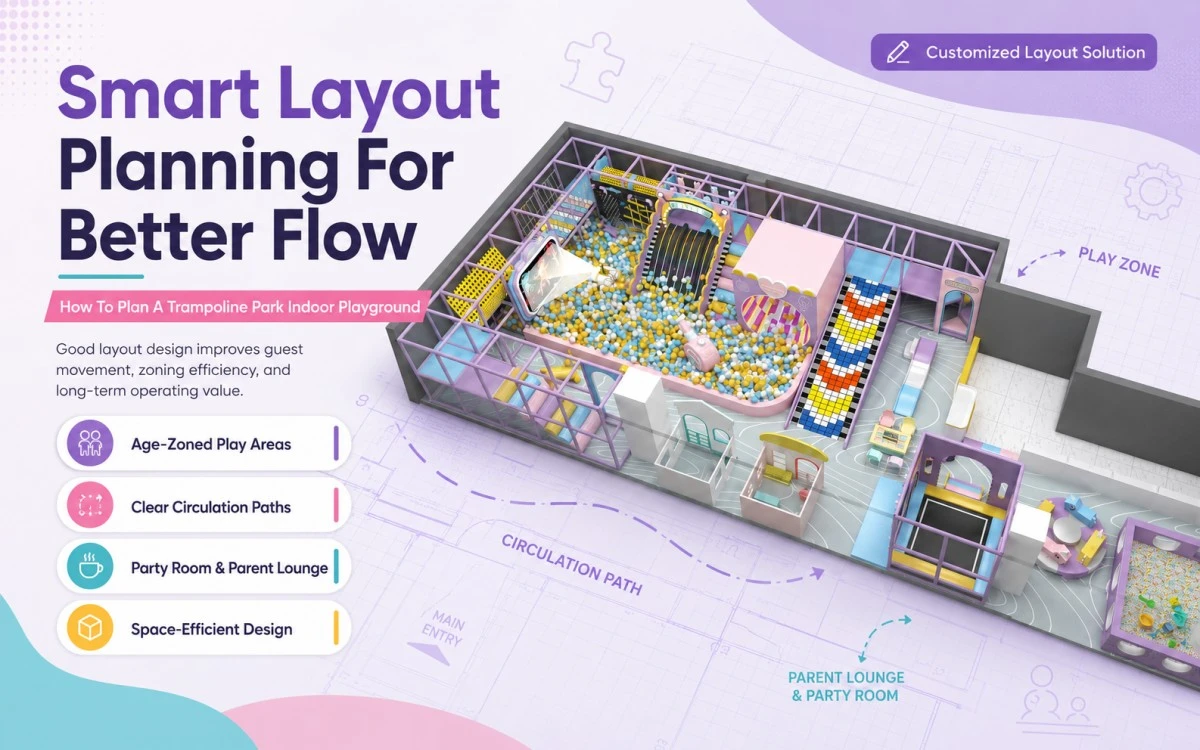
Split the whole venue into distinct zones according to guests’ age brackets and respective play purposes. Build an independent soft play area fitted with small slides and tiny trampolines for children aged 2 to 5, keeping it away from older kids’ play areas. Kids from 6 to 12 use core areas including main trampoline zones, foam pits, dodgeball fields and basketball slam-dunk areas. Add tough items such as ninja obstacle tracks and climbing walls for teens and adults. Separate party spaces and parent lounges help owners earn more incidental revenue from visitors.
How you arrange walking paths directly impacts how long families linger and how many customers the site can host daily. Continuous circular pathways allow guests to move from one play spot to another freely without crowd bottlenecks, which drives more in-site spending. Find reliable trampoline park indoor playground producers to work together. These suppliers craft custom floor layouts, three-dimensional design drafts, practical area combination advice plus on-spot installation assistance. Such cooperation keeps the facility compliant with safety rules and makes your park more competitive against local rivals.
What Equipment Should Be Included In A Commercial Trampoline Park Indoor Playground?
Many first-time venue owners often ask two common questions: what playground gear should I buy? And can a trampoline park indoor playground survive relying only on regular trampolines? Simply put, running a profitable spot with trampolines alone is nearly impossible. Today’s popular trampoline park indoor playground venues have stepped far beyond basic bouncing areas, developing into all-in-one multi-purpose entertainment complexes that draw kids, teenagers, young adults and whole family groups consistently. Picking the right equipment combination directly decides your daily visitor volume and long-term business income.
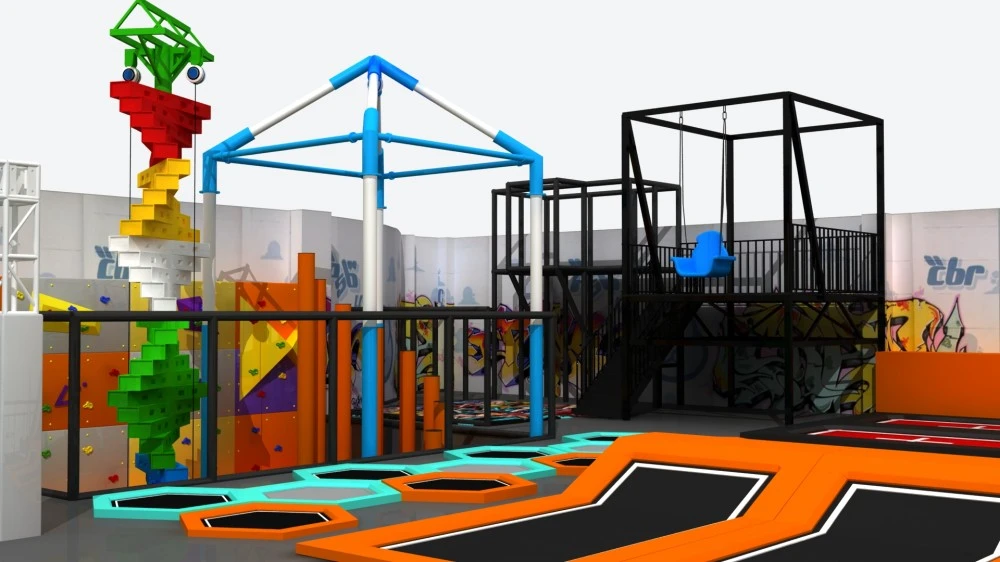
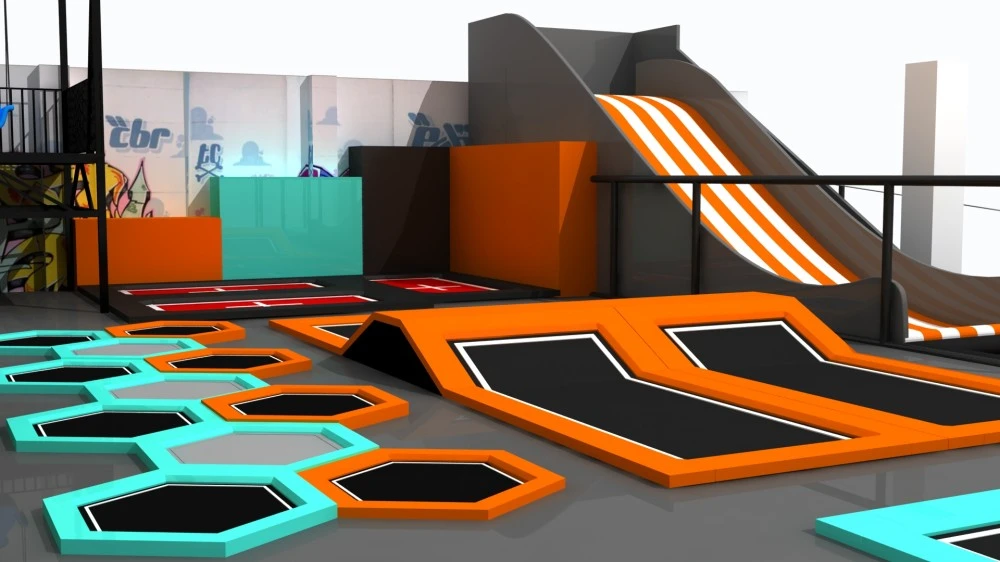
The core must-have facilities include Free Jump Trampoline, Professional Trampoline Area, Foam Pit, Airbag Jump, Trampoline Basketball and Dodgeball Court, which form the foundational play sections of any trampoline park indoor playground venue. To level up fun and attract wider crowds, you can add fan-favorite add-ons such as Ninja Warrior Course, Climbing Wall, Rope Course, Soft Play Area and Interactive Games. Different space sizes call for entirely different matching layouts to avoid unnecessary cost waste.
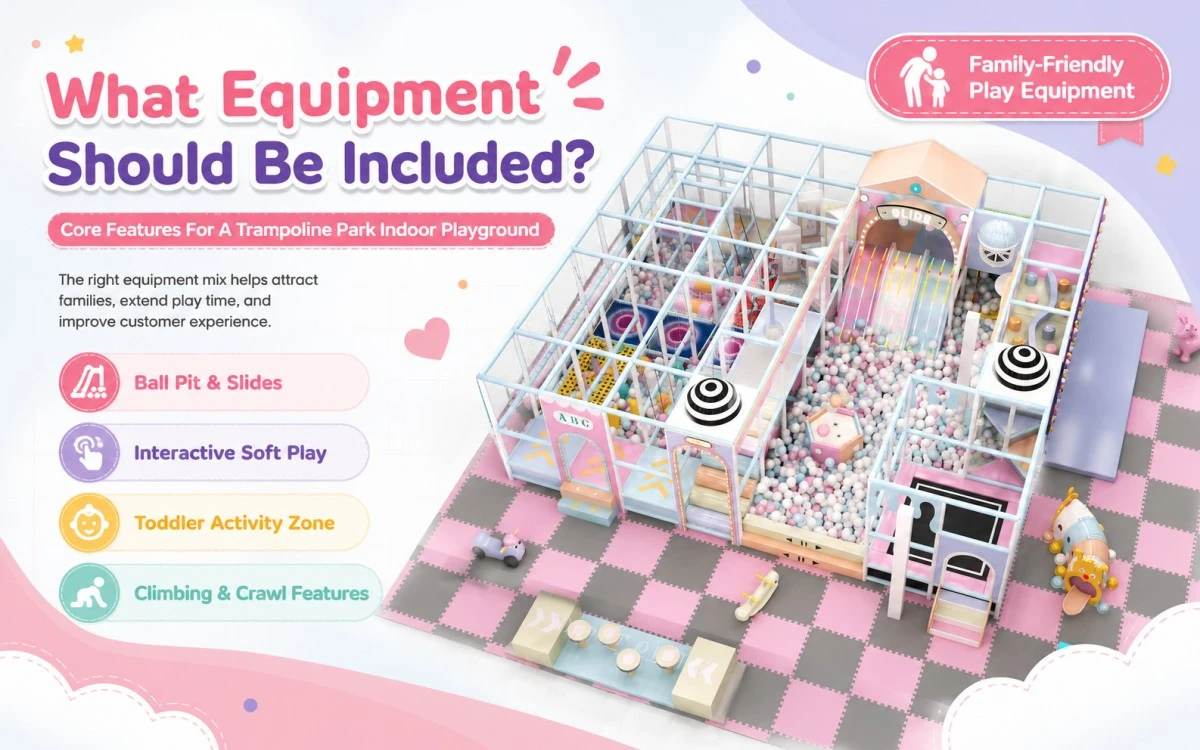
If you own a small-sized venue below 500 square meters, keep your setup simple: combine Free Jump Trampoline zones, Foam Pit and Soft Play Area. This affordable combo mainly targets young kids and parent-child visitors. For medium-sized parks between 500 to 2000 square meters, upgrade your layout with Ninja Warrior Course and dedicated party rooms. Birthday parties and group bookings will bring stable extra earnings. For large venues over 2000 square meters, go all out with Climbing Wall, Rope Course, various Interactive Games alongside dining and relaxing zones. Such full-featured trampoline park indoor playground spaces easily attract family trips, youth hangouts and company team-building activities to maximize your revenue potential.
Safety, Materials, And Standards Buyers Should Check Before Ordering
Let’s cut to the chase. When flipping through supplier catalogs, shiny colors, fun foam pits and gorgeous render pictures are super eye-catching. But you’re putting real money and your business reputation into a trampoline park indoor playground, so forget fancy looks and check the core build first.
Your park will be packed daily. Loads of kids and adults jump, bump and roughhouse nonstop all day long. If you cut corners to save a little cash upfront, you’ll end up stuck with big safety hazards and expensive repairs down the line.
Key Things You Have To Check
Want your equipment to hold up for five years or longer? Go through this checklist, don’t let salesmen brush these points aside:
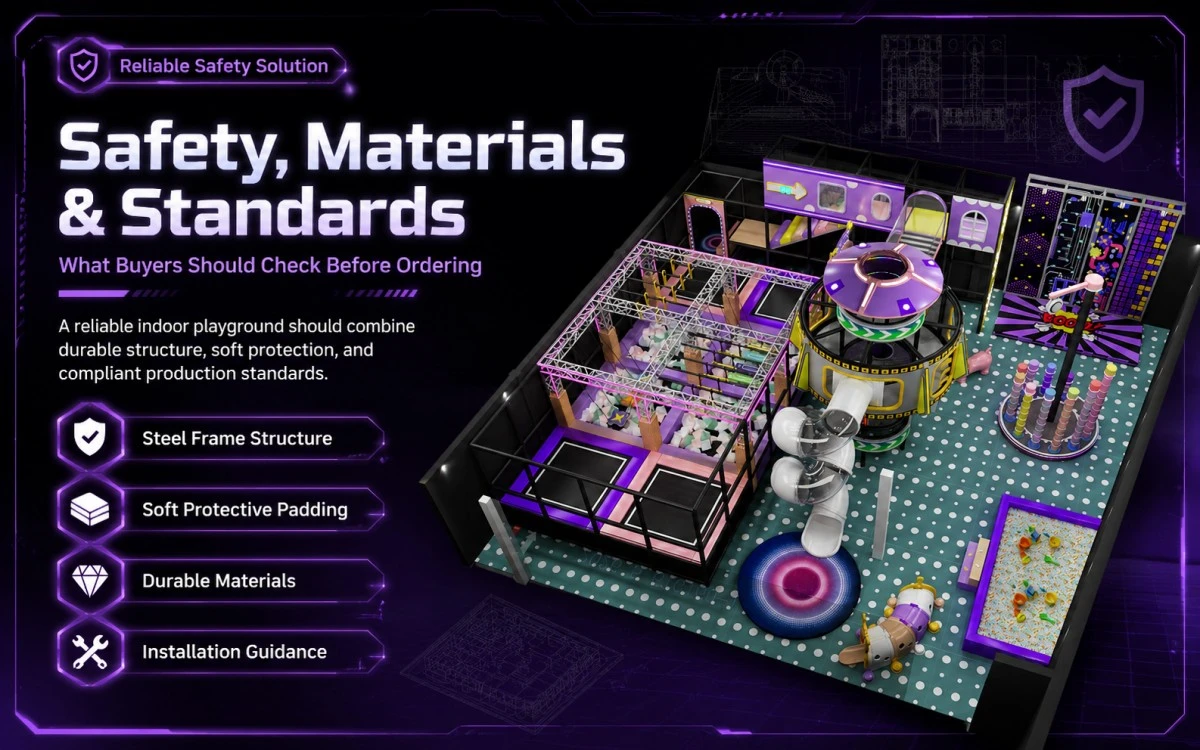
Frame: Go for thick galvanized steel. Thin frames bend easily after constant bouncing, no exceptions.
Bounce parts: Good trampoline mats plus sturdy springs/elastic bands make the whole trampoline park indoor playground fun. Cheap ones wear out fast and cost you a fortune in fixes.
Full safety gear: Thick impact-absorbing foam padding, tough tear-proof safety nets and full edge wraps covering every hard corner. All materials need to be fire resistant with non-slip tops.
Certifications Are Non-Negotiable
Local officials will come inspect your park sooner or later. US parks need ASTM certification, Europe requires EN, CE and TÜV approvals. These papers keep your business legal. Never pick suppliers who can’t provide valid certificates.
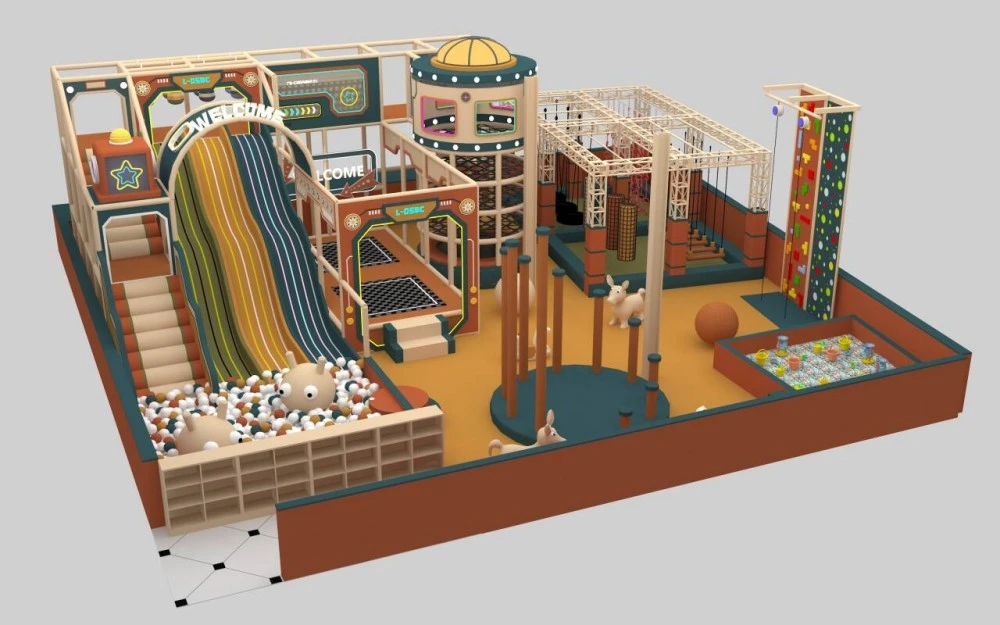
How We Make Products At Dreamland
We don’t just weld parts and ship them out right away. Every weld gets carefully inspected, and all soft padding is custom fitted perfectly.
Best of all, we put the whole trampoline park indoor playground together in our factory before packing for delivery. Any assembly issues get sorted here, so you won’t run into messy problems on site. We’ll send detailed install guides and our after-sales team is always available to help until your park opens its doors.
Opening a trampoline park indoor playground is long haul work, invest in tough, safe gear that lasts.
How Much Does A Trampoline Park Indoor Playground Cost?
If you plan to launch a trampoline park indoor playground, you may be eager to figure out your initial total investment. In fact, there is no fixed, one size fits all budget for this project – your total cost depends entirely on your unique site and planning needs. Specifically, eight core factors will determine your final expenditure: site size, equipment selection, customized theme design, material quality standards, local installation fees, transportation costs, on-site site conditions, and industry safety compliance requirements.
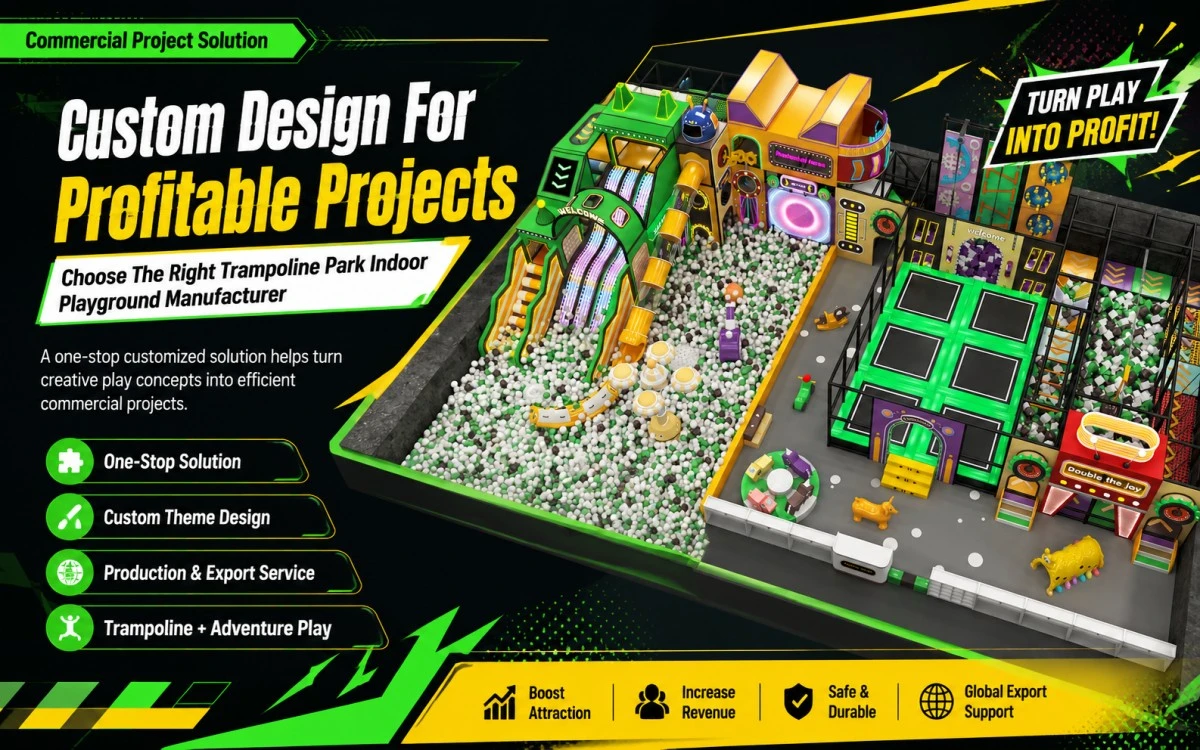
Larger space requires more trampolines and supporting facilities, such as foam pits and obstacle fields, which will naturally increase the overall cost. Compared to the standard basic setup, customized cartoon themed decorations and high-quality eco-friendly building materials also have higher building budgets. In addition, if your venue requires leveling and on-site maintenance, additional fees may be incurred. You also need to consider equipment delivery costs and necessary security upgrades to meet local industry regulations and operational standards.
When budgeting for a trampoline park indoor playground, it is wise to avoid blindly being satisfied with the lowest price. Low cost equipment often lacks durability, leading to frequent maintenance issues and safety hazards. These issues not only disrupt daily operations, but also gradually erode your long-term profits. On the contrary, it is more worthwhile to prioritize overall cost-effectiveness and sustainable long-term investment returns.
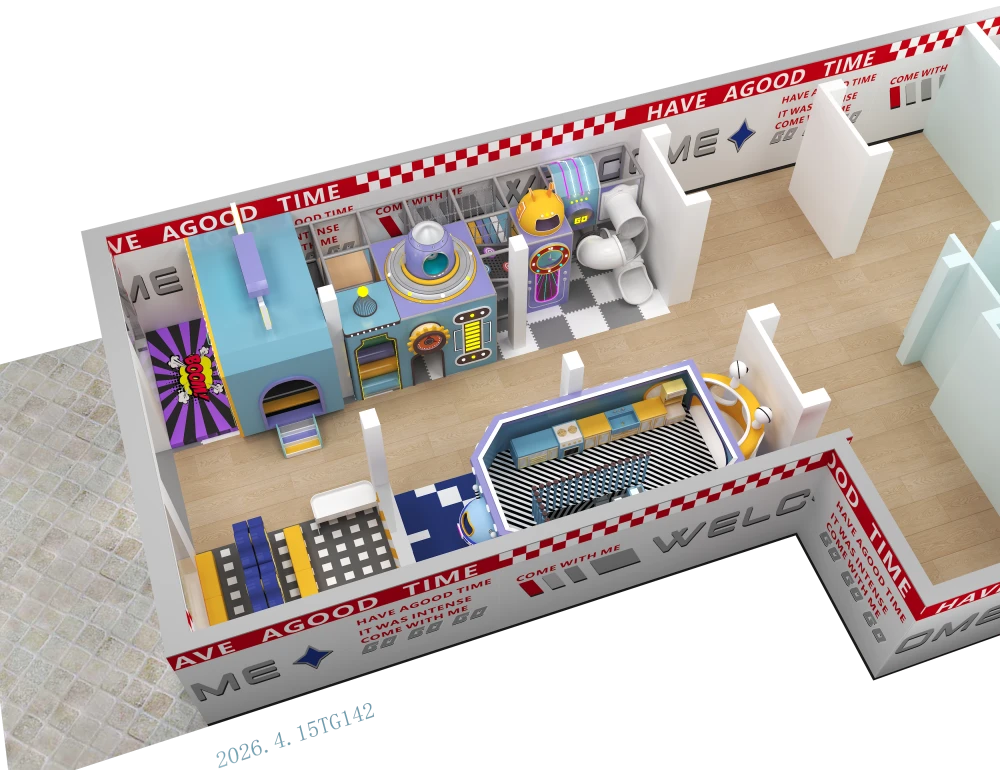
To help you plan projects more easily and match different budget ranges, our factory has designed a three tiered customized package. We offer cost-effective basic packages with basic trampoline functional areas, comprehensive standard packages equipped with popular mainstream entertainment facilities, and high-end customized packages with exclusive theme designs and high-end accessories. Please feel free to share your specific venue and project requirements with us, and we will flexibly adjust our solutions to maximize your investment value within your planned budget.
How To Choose A Reliable Trampoline Park Indoor Playground Manufacturer
When investing in trampoline park indoor playground and amusement park projects, choosing a trustworthy manufacturer determines the safety, cost, and long-term operation of the project. Buyers need to evaluate suppliers from eight core aspects: factory experience, custom design capabilities, actual project cases, production capacity, safety standards, installation support, after-sales service, and export experience.
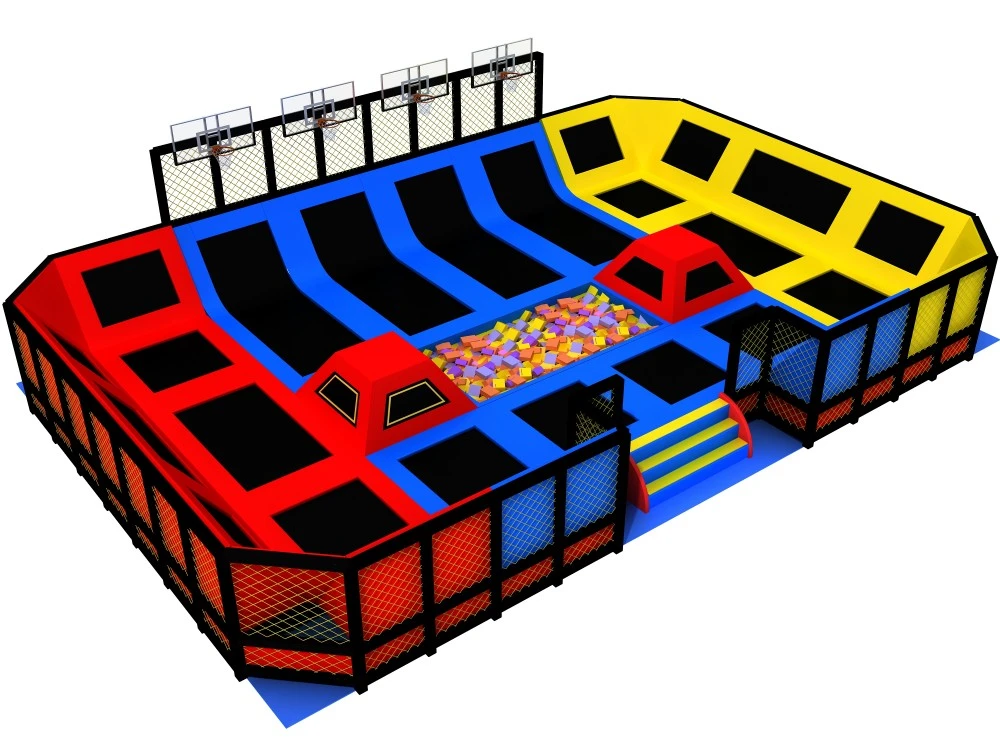
Working directly with professional factories greatly defeated middlemen. The factory independently controls raw material procurement, production progress, and quality inspection to reduce intermediate costs and avoid inconsistent product quality. Meanwhile, the factory can flexibly adjust its design and production according to the actual needs of customers.
Our factory has over 30 years of experience in manufacturing amusement equipment, with a production base of 60000 square meters covering outdoor amusement facilities, trampoline park indoor playground projects, water parks, and personalized customization projects. We provide comprehensive one-stop services: website layout planning, product matching design, mass production, export packaging, global transportation, and remote installation guidance, supporting customized design for global commercial venues. All products have passed international safety certification, comply with global safety standards, have complete after-sales maintenance, and have rich experience in overseas exports.
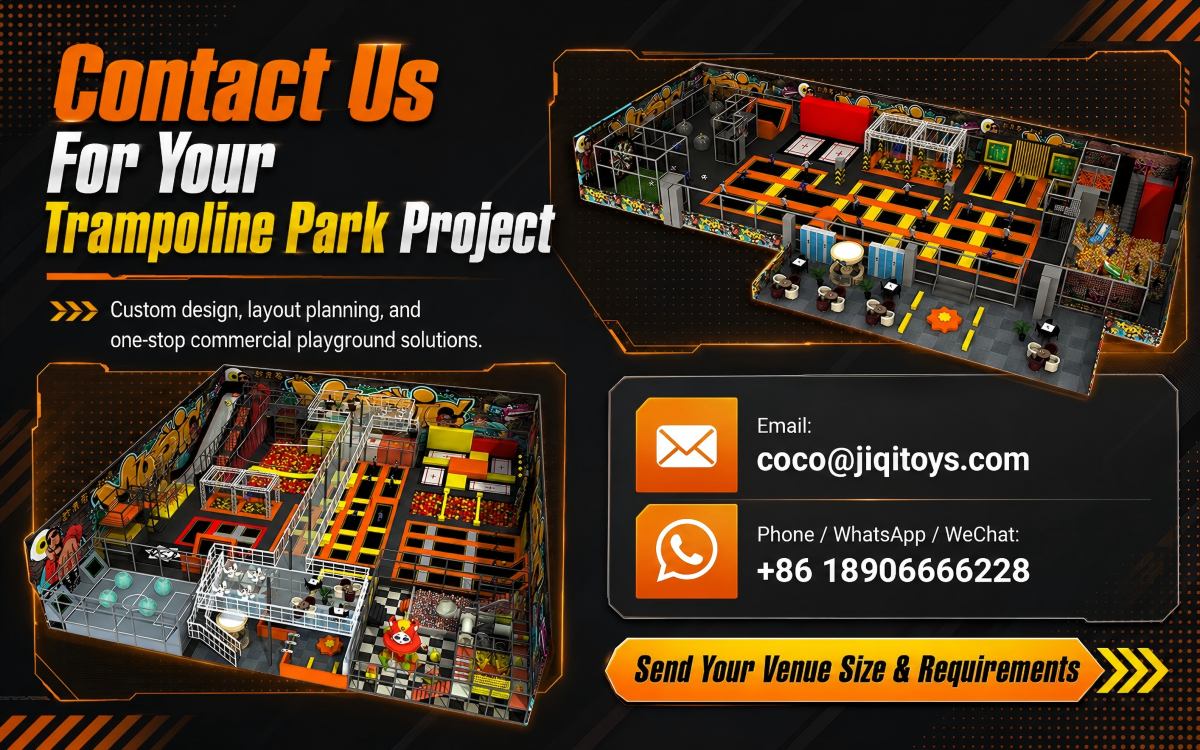
If you are planning a new trampoline park indoor playground, please send your venue size, target customer age group, and project budget. Our team will provide you with a customized park solution for free.


 English
  Español
  Français
  Deutsch
  Português