


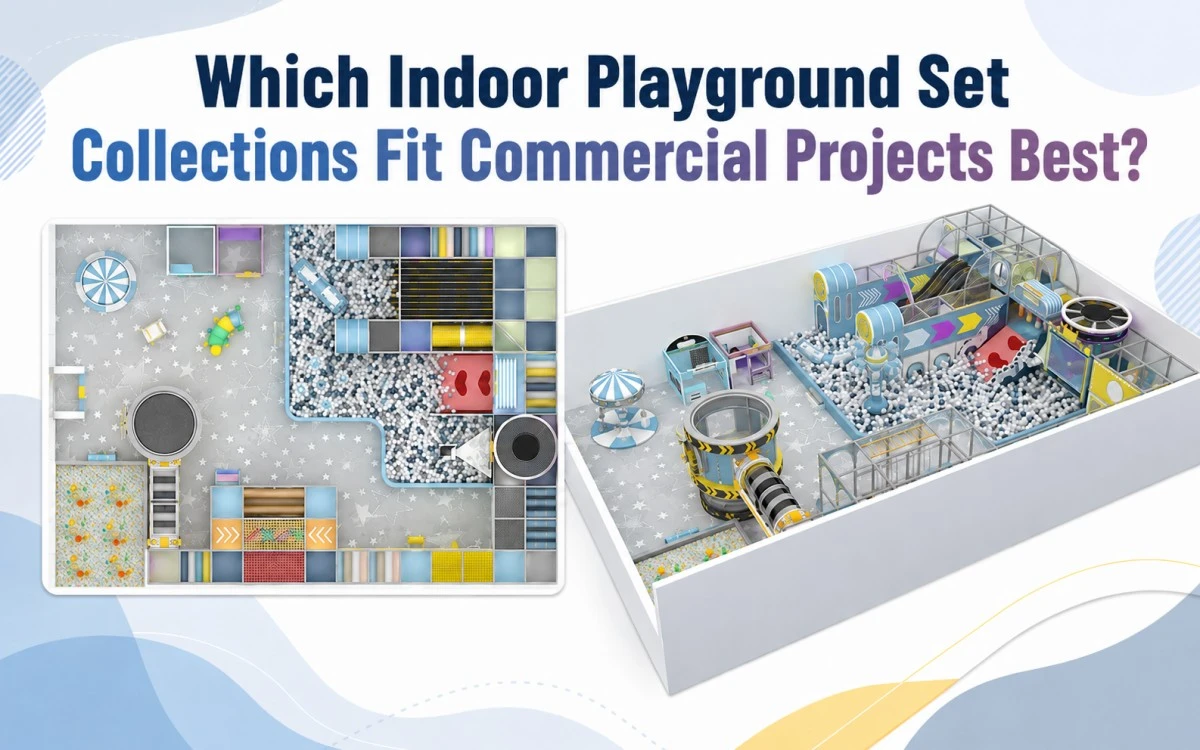
Buyers searching for an indoor playground set usually need a fast way to compare commercial collections, not a consumer gift list. A set in this category usually combines climbing, sliding, balancing, and pretend-play elements inside one indoor-use format.
The term covers enclosed or indoor-use play equipment sets built for shared use, not a single toy. Buyers often judge these options by footprint, age range, material, and how well they fit schools, hospitality spaces, or developer-led amenities. That is why supplier collection types matter more than display photos alone.
Indoor Playground Set Collections Buyers See First on Supplier Pages
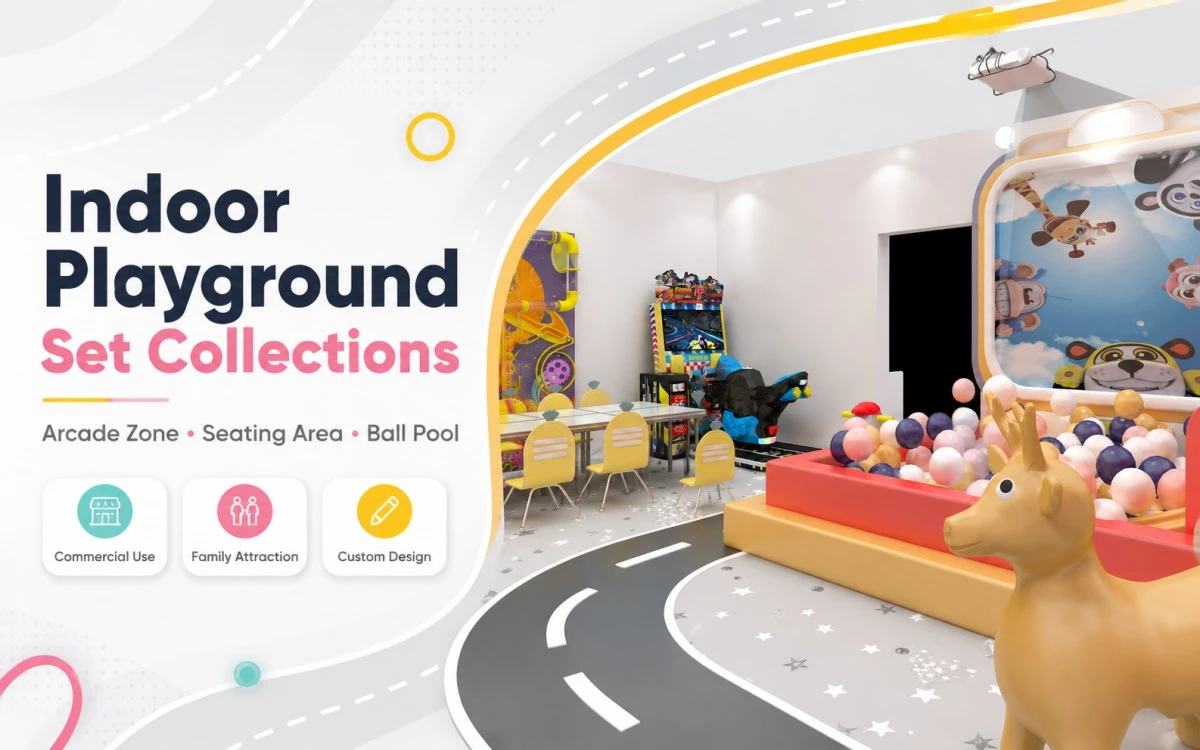
Supplier pages usually group an indoor playground set by collection style before they list individual parts. You will often see six recurring formats: wooden indoor playgrounds, jungle gyms, climbing sets, Montessori climbers, obstacle courses, and playhouses. That grouping matters because buyers can compare footprint, age band, and build material in seconds.
Search snippets often use phrases such as “indoor playsets,” “indoor play equipment,” and “indoor play for your home.” For B2B procurement, those labels still point to the same decision: which collection fits a school room, a hospitality play zone, or a developer amenity without oversizing the area.
Wooden indoor playgrounds
These collections usually feature visible timber frames, ramps, slides, and climbing panels. They suit buyers who want a warmer visual finish and a harder-wearing frame in one package.
You will commonly see them organised by:
– Age group: toddler, preschool, or mixed-age
– Footprint: compact corner units, mid-size room sets, or larger centrepieces
– Material: solid wood, plywood, or mixed wood-and-fabric builds
– Use case: indoor soft play, classroom activity areas, or family leisure zones
Jungle gyms and climbing sets
Jungle gyms focus on movement. Climbing sets usually centre on arches, ladders, and raised platforms, with less decorative content than a house-style unit.
Buyers compare them by:
– Clearance height: lower frames for younger children, taller frames for older groups
– Configuration: freestanding modules or linked sections
– Traffic fit: one-child-at-a-time climbs versus small-group use
– Surface finish: painted, lacquered, or natural wood
Montessori climbers
Montessori collections are often simpler in shape and easier to position in smaller rooms. The visual language is minimal, but the play value still comes from climbing, balancing, and repetitive movement.
Supplier pages commonly sort these by:
– Age band: usually toddler and early preschool ranges
– Footprint: compact footprints for nurseries and home-style indoor play areas
– Module count: triangle climbers, ramps, arches, and add-on pieces
– Deployment style: standalone units or mixed sets for indoor playground equipment packages
Obstacle courses
Obstacle course collections are built for sequence and circulation. Instead of one climbing point, you get multiple actions in a row, such as crawl, step, balance, and climb.
They are often presented by:
– Route length: short loops for compact rooms or longer runs for larger halls
– Segment type: tunnels, stepping pods, balance beams, and low walls
– Age suitability: preschool-only or mixed-age supervision settings
– Project use: active play zones, recreation centres, or temporary event setups
Playhouses
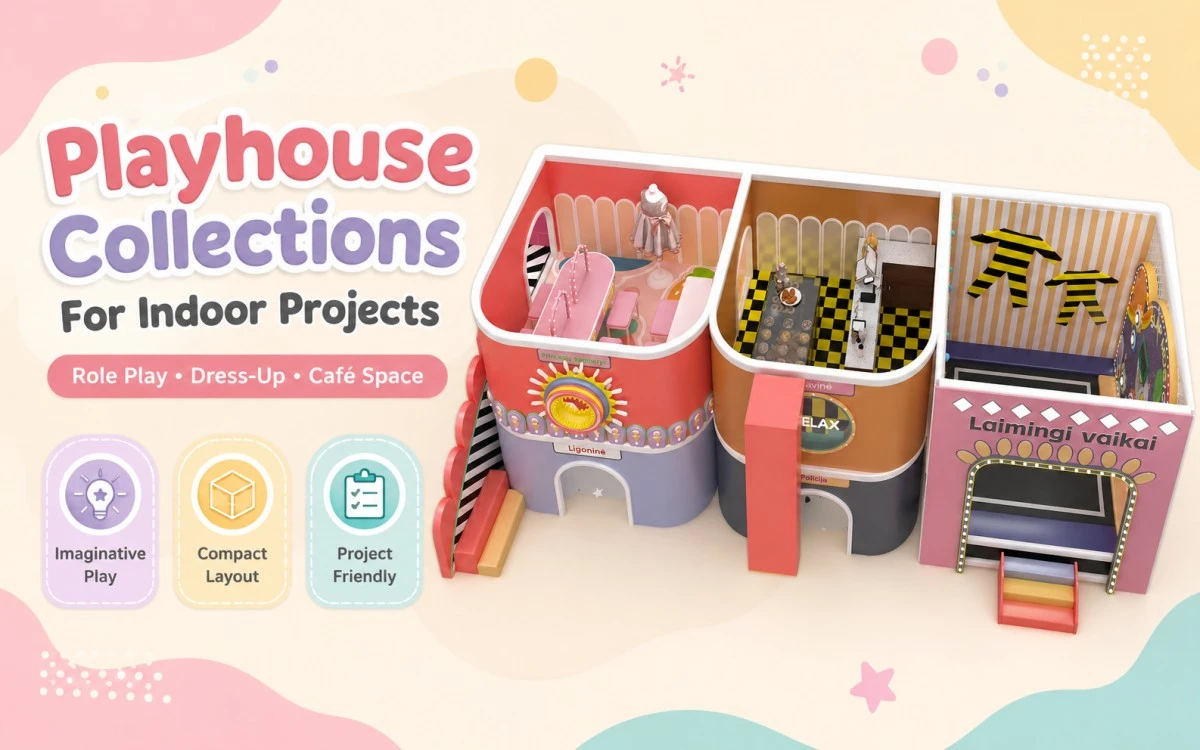
Playhouse collections sit closer to role-play and imaginative use. Buyers see them paired with slides, low platforms, and enclosed walls, which makes them useful for quieter zones.
Pages normally separate them by:
– Theme: house, castle, shop, or cottage styles
– Space demand: single-unit footprints or multi-module clusters
– Material mix: wood, padded panels, or soft modular sections
– Use case: indoor soft play corners, childcare rooms, or visitor lounges
How suppliers usually group these collections
The same product may appear under several titles, but the sorting pattern is familiar. Most collection pages organise around four filters: age, footprint, material, and use case.
A typical structure looks like this:
– Age group: 1–3, 3–6, or mixed preschool ranges
– Footprint: small, medium, or room-filling layouts
– Material: wood, padded foam, rope, or mixed construction
– Use case: nursery, school, hospitality, retail, or leisure project
For you, that means the title is only the starting point. A page titled “indoor playsets” may still hold a commercial package if the dimensions, module count, and surface build fit your site plan.
The next step is to break those collections into the actual parts that change safety, layout, and price.
Core Components That Define a Commercial Indoor Playground Set
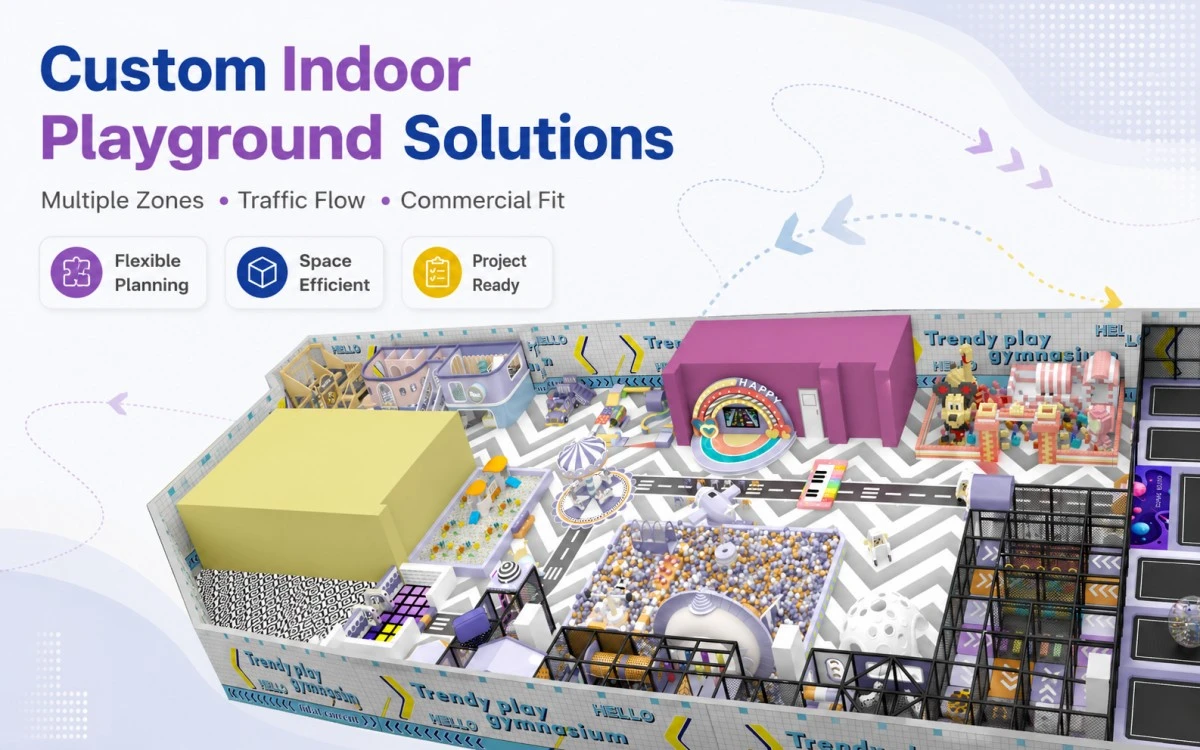
A commercial indoor playground set is usually built from a small group of repeat parts, and those parts decide age fit, footprint, and quotation value. You can often spot the difference between a toddler set and a mixed-age package by counting how many climbing, sliding, and balance elements are included.
- Slides
- Short, low-gradient slides suit toddlers because the climb is shorter and the landing zone is easier to control.
- Taller slides fit preschool or mixed-age layouts, especially where you need a more active centrepiece.
-
Verify the slide surface finish, because smoother moulded surfaces reduce drag, while textured finishes can help grip on access steps.
-
Ladders
- Straight ladders work for older preschool groups that can manage a steeper ascent.
- Angled ladders are easier for younger children, especially in enclosed sets with lower platforms.
-
Check the rung spacing and handhold shape, since small spacing helps shorter users and larger grips suit mixed-age traffic.
-
Climbing walls and rock panels**
- These appear often in commercial listings because they add vertical play without taking much floor area.
- Toddler versions usually use large holds and a low rise, while preschool versions may add 4 to 8 holds across a taller face.
-
Ask for the panel material, because PE board playground structures often use smoother, wipe-clean surfaces, while plywood-style panels need more detail on edge finishing.
-
Arches
- Arches create crawl-through routes and simple route changes in compact footprints.
- They suit toddlers when the opening is wide and the height is low.
-
Mixed-age sets use larger arches to link two platforms or create a looped obstacle route.
-
Ramps
- Ramps support the youngest users best, because they replace steps with a gentler climb.
- A 10–20 degree ramp is easier for toddlers than a steep entry, and it also helps when you need inclusive access features.
-
Verify the surface texture, because a non-slip finish matters more than decorative colouring.
-
Swing or gym add-ons
- These add-ons usually suit preschool and mixed-age settings, not compact toddler-only layouts.
- A single swing bay, hanging bar, or mini gym section changes the use pattern from simple climbing to higher-energy motion.
-
Check load rating carefully, because moving parts need clearer limits than static play modules.
-
Playhouse modules
- Playhouse modules support pretend play, role play, and quieter social use.
- They work well in toddler and preschool zones because the enclosed form feels familiar and easy to supervise.
-
Buyers should confirm wall height, window openings, and internal clearance, since those details affect both visibility and age fit.
-
Obstacle course elements
- These are common in larger commercial sets and often include tunnels, stepping pods, balance beams, and crawl sections.
- Preschool and mixed-age layouts benefit most, because the route can be extended across 3 or more linked modules.
-
Look for modular connections, since that makes future expansion easier than buying a fixed one-piece frame.
-
Accessory mats
- Mats sit under landing zones, entry points, and active transition areas.
- They matter most where slides, ramps, or gym add-ons create repeated footfall.
- Verify thickness and edge finish, because a flush edge reduces trip risk and a denser core handles heavier use.
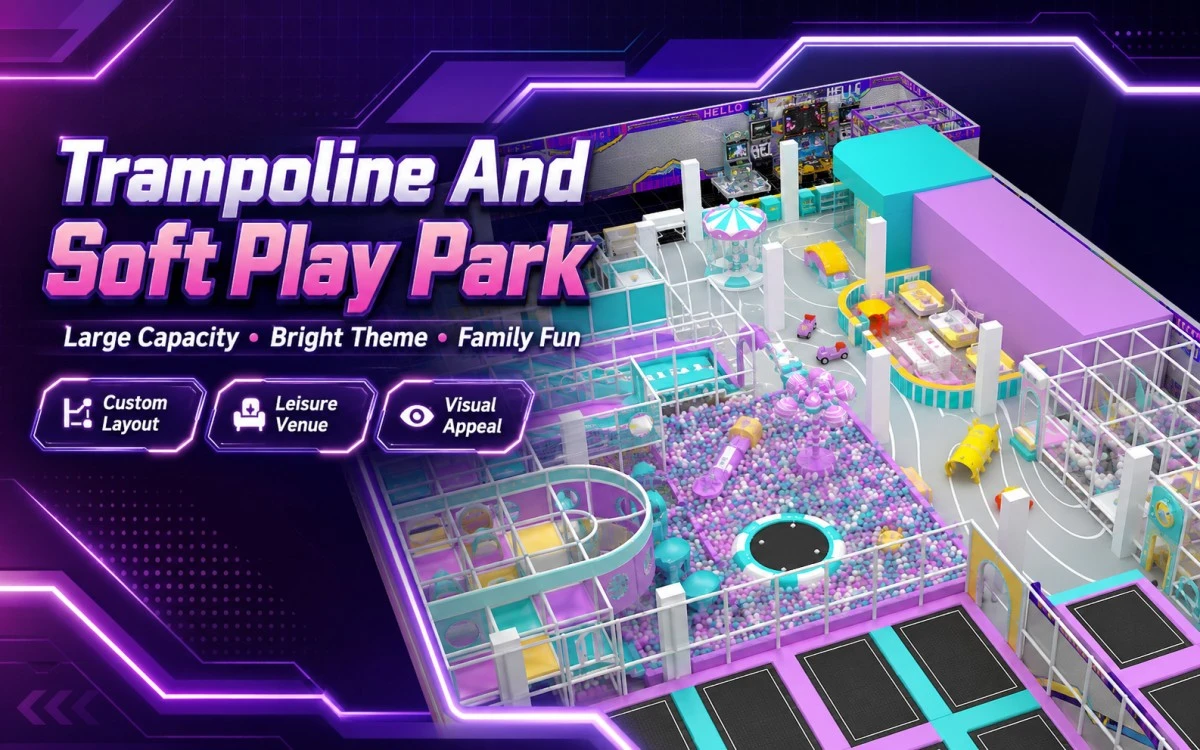
A buyer checklist should always include four practical spec cues: material, load rating, surface finish, and replacement-part availability. If two sets look similar online, those four details usually explain the real difference in lifespan and maintenance cost.
For procurement, modularity matters as much as the visible components. A set with 2 or 3 interchangeable modules is easier to resize for a school corner, retail activation, or a larger family venue than a fixed layout with limited spares.
How to Match Equipment Mix to Schools, Retail, Hospitality, and Public Projects
The right indoor playground set changes with the site, not just the age band. A preschool corner, a mall attraction, and a public centre each need a different mix of climbing, sliding, and circulation space.
For B2B buyers, the first filter is floor area. A compact school nook may work with one climbing module and a short slide, while a family entertainment venue often needs 2 or 3 linked play zones to prevent bottlenecks.
Preschool and early-years spaces
Preschools usually need low-height equipment, clear sightlines, and simple entry points. A 90 cm platform suits toddlers better than a 150 cm structure, because staff can supervise without stepping into the play zone.
Use soft transitions and one-way movement. If children enter from one side, pass through a crawl or ramp section, and exit near the teacher view line, supervision stays easier during a 20-minute class rotation.
Schools and after-school rooms
Schools often need a stronger age split than preschools. You may place a 3- to 6-year play unit beside a separate balance or climbing area for 6- to 9-year pupils, so older children do not crowd smaller users.
Ceiling height matters here. A room with 2.4 m clearance cannot take the same vertical stack as a hall with 4 m clear height, even if the floor area looks similar on paper.
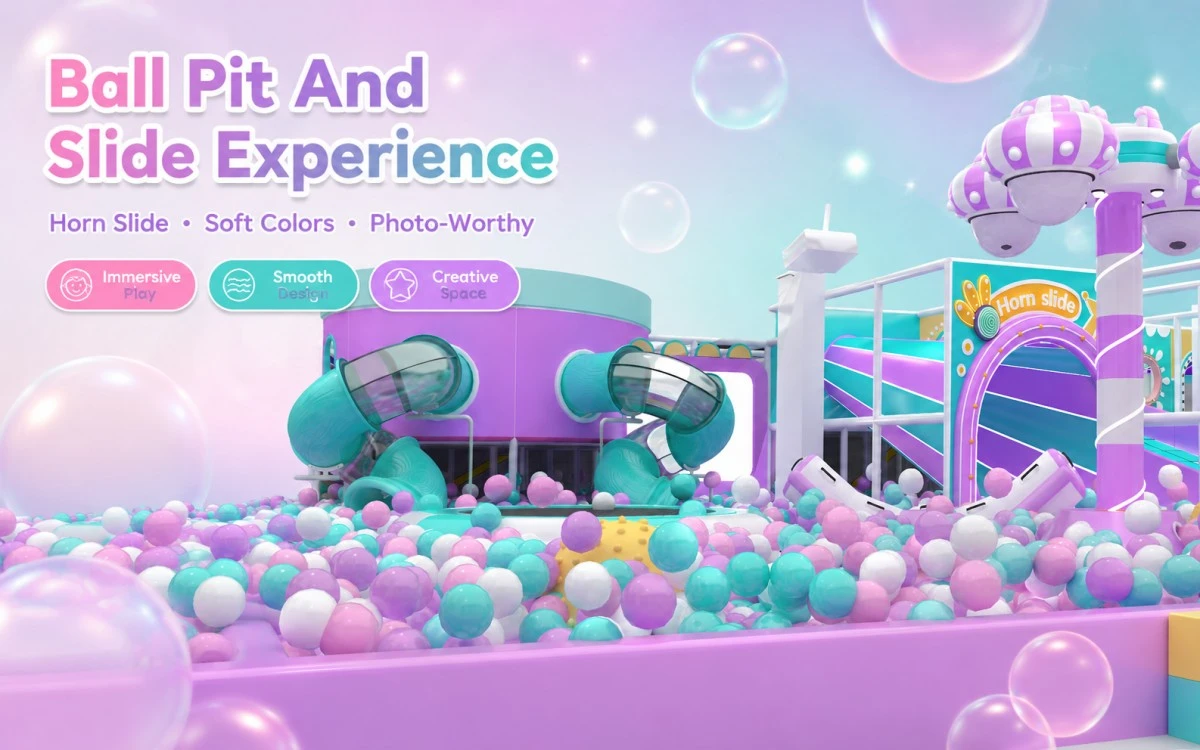
Malls and indoor family entertainment areas
Retail sites need dwell time and traffic flow. A central tower with 2 exits can pull families in, but a single narrow entrance creates queues at peak hours, especially on weekends.
For these projects, choose equipment that gives you multiple viewing angles. Parents need to see children from café seating or nearby retail aisles, and that usually means open-sided structures rather than fully enclosed playhouses.
Hospitality and tourism projects
Hotels, resorts, and visitor attractions often need a softer visual profile. A wooden or themed custom playground set can fit a lobby, kids’ club, or activity room without looking like a gymnasium install.
The mix should match session length. A 15-minute play stop near reception needs a compact slide, stepping features, and a quiet zone, while a rainy-day tourism facility may need a longer circuit with 2 age bands and resting points.
Community centres and public projects
Community centres usually serve mixed attendance across the day. That means you need one layout that handles preschool users in the morning and older siblings after school, without forcing both groups into the same obstacle path.
Traffic flow is the key control. If the entrance, exit, and seating are all on one side, supervisors can monitor a 30 to 40 m² room more easily than a layout with blind corners and crossed routes.
Developer-led amenities and mixed-use sites
For apartment amenities, buyers often face the most pressure on space efficiency. A compact indoor playground set with wall-fixed elements, one slide, and floor mats can fit a small clubhouse room, while larger residential schemes may justify a split layout with two age zones.
Indoor and outdoor transition rules matter here. If the play room opens onto a terrace or wet zone, you need floor finish changes, dirt-control mats, and a clear rule on whether shoes, socks, or bare feet are allowed at the threshold.
A useful test is simple: if 10 children arrive at once, can they spread out without crossing each other’s play path?
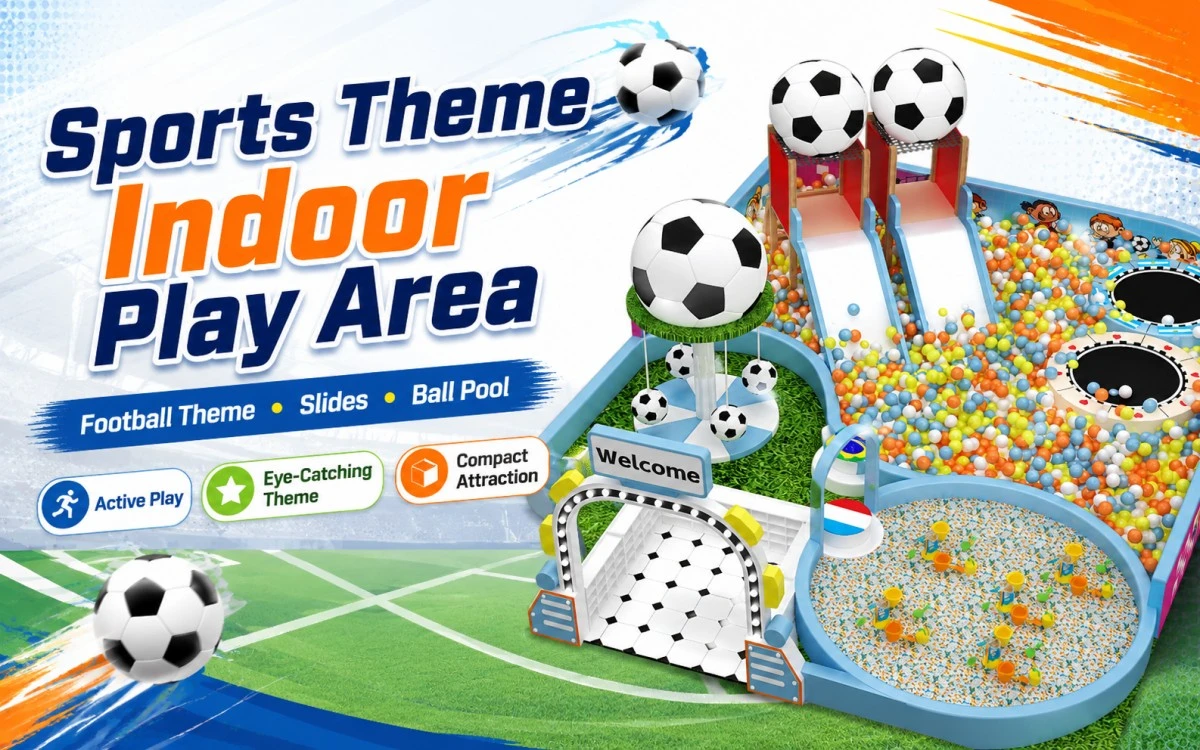
Quick use-case matrix
| Project type | Best equipment mix | Main buying check |
|---|---|---|
| Preschool | Low climber, short slide, crawl tunnel | 90 cm to 120 cm working height |
| School | Split zones, climbing wall, balance pieces | Age separation and staff sightlines |
| Mall | Open tower, dual exits, soft-play links | Queue control and parent visibility |
| Hotel or resort | Compact themed set, quiet corner, slide | Visual fit and low-noise use |
| Community centre | Mixed-age circuit, modular pieces | Flexible scheduling and supervision |
| Residential amenity | Wall system, mat zone, small slide | Footprint and transition safety |
The best mix is the one that matches the room, the supervision model, and the expected footfall. A supplier can show you attractive modules, but your real decision starts with clearance height, user age bands, and how children move through the space.
Wood, Montessori, and Wall-Gym Formats Compared by Procurement Fit
For an indoor playground set, the format you choose changes freight, installation, and branding almost as much as play value. A 1.8 m wooden climber ships very differently from a wall-mounted ladder system, and that gap affects project cost before a single panel is installed.
Buyers usually see four visible angles in supplier catalogues: wooden indoor playgrounds, Montessori climbing sets, Swedish ladder wall gyms, and wall-mounted play systems. Each one suits a different procurement logic, from compact architectural fit to OEM-friendly private-label presentation.
| Format | Durability profile | Shipping volume | Installation complexity | Visual style | OEM/private-label fit |
|---|---|---|---|---|---|
| Wooden indoor playgrounds | Solid feel, but exposed joints and edges need inspection | Medium to high | Medium | Warm, natural, photo-friendly | Strong, because colour, panel layout, and modules can vary |
| Montessori climbing sets | Moderate, with simpler frames and fewer moving parts | Low to medium | Low to medium | Minimal, educational, calm | Good for branded colourways and module bundles |
| Swedish ladder wall gyms | High for fixed-frame use; wall anchoring matters | Low | High | Technical, compact, gym-like | Moderate, since the structure is standard but accessories can change |
| Wall-mounted play systems | Depends on anchor quality and load design | Low | High | Clean and space-saving | Strong if you need a repeatable wall package across sites |
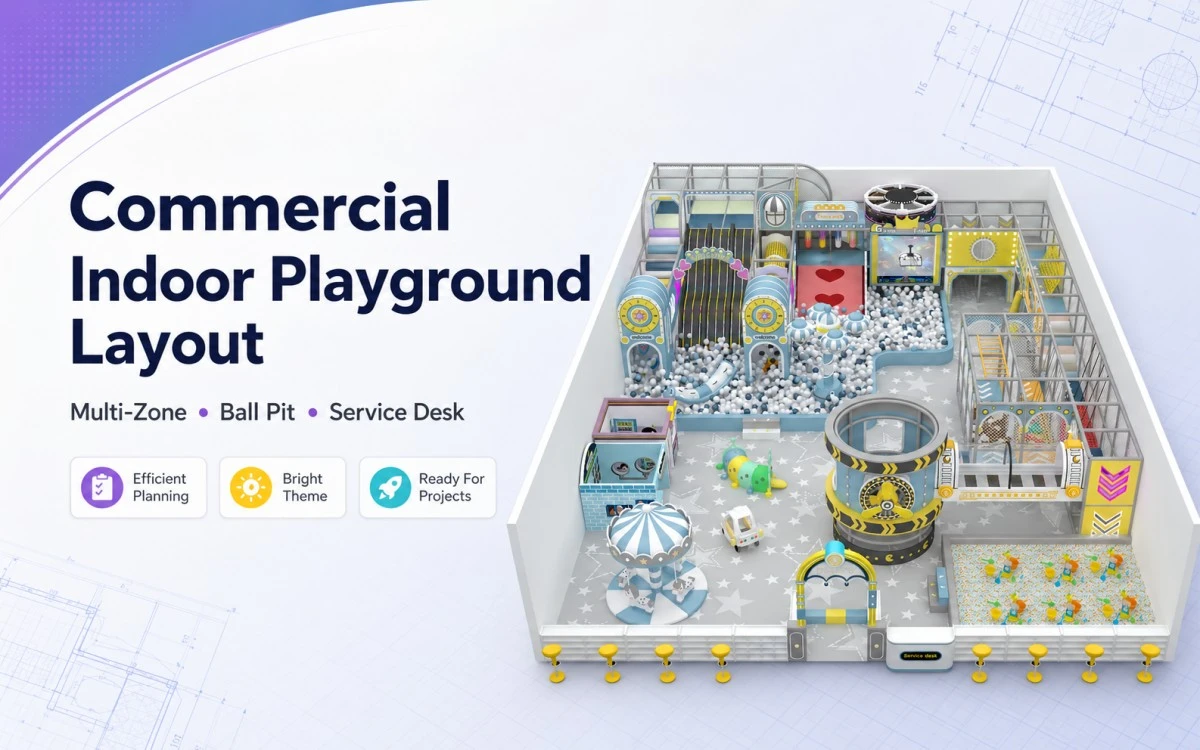
What changes the buying decision
Wooden indoor playgrounds usually suit buyers who need a premium visual finish and a broad age appeal. The trade-off is volume: a multi-piece timber set can occupy a larger carton count than a flat-packed wall unit.
Montessori climbing sets work better where you need smaller cartons and simpler assembly. They are easier to position in a preschool fit-out, but they can look too domestic if the space needs a stronger commercial identity.
Swedish ladder wall gyms are the most space-efficient option in this group. They are useful in narrow rooms, yet the wall fixings and load transfer demand a cleaner installation plan than a freestanding frame.
Wall-mounted play systems give you the best use of vertical space. That helps in projects with tight floor plans, but you must confirm wall type, anchor pattern, and service access before ordering 20 or 30 units.
Procurement fit by project type
- Choose wooden indoor playgrounds if the buyer wants a visible centrepiece and expects custom panels, logo boards, or colour-matched accessories.
- Choose Montessori climbing sets if the tender needs lighter cartons, simpler assembly, and a softer learning-first look.
- Choose Swedish ladder wall gyms if the room has limited floor area and the installer can secure to a suitable structural wall.
- Choose wall-mounted play systems if the project needs repeatable units across multiple rooms or bays, such as a school corridor, activity room, or mixed-use facility.
For OEM work, the strongest customisation signals usually come from wooden and wall-mounted formats. You can vary the finish, add branded panels, and bundle modules more easily than with a fixed metal ladder profile. For private-label programmes, that difference matters because a 3-colour package often sells more cleanly than a single standard frame.
If you are comparing an indoor playground set across suppliers, keep the decision tied to freight, fixing method, and the amount of visual change you can spec without raising assembly time. The next step is to request the exact dimensions, packing method, and finish options that make one format quote-ready.
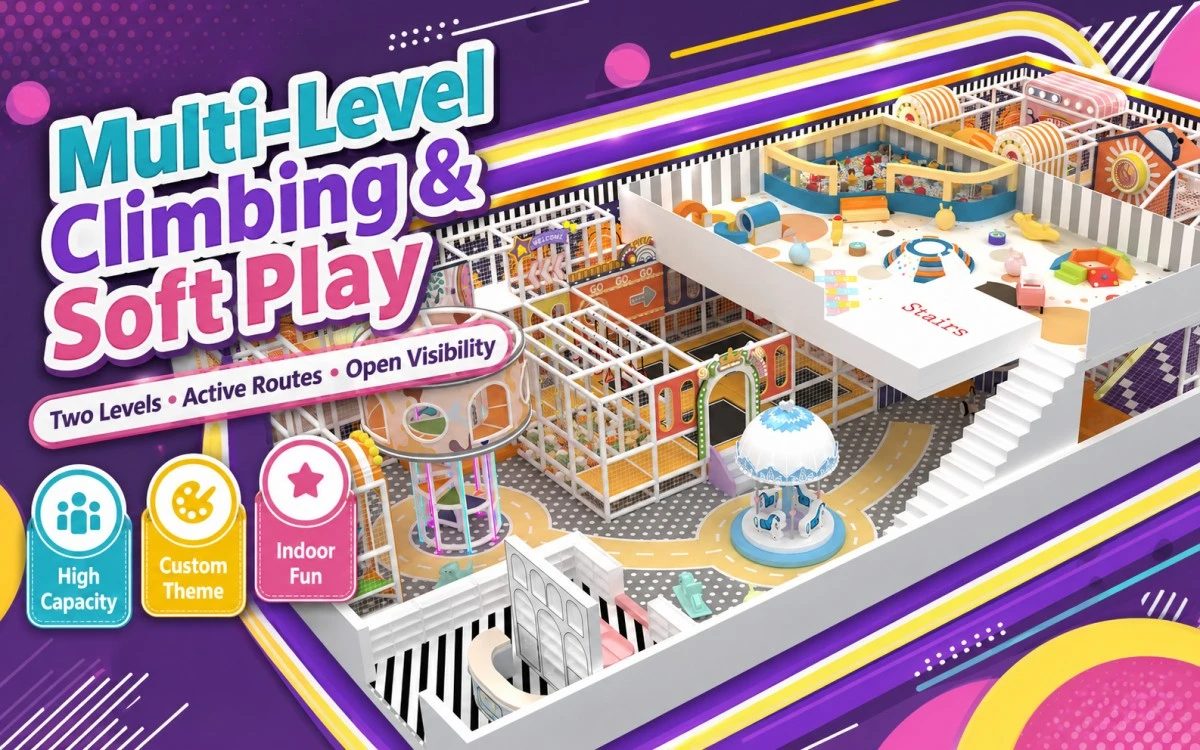
RFQ Details That Help Importers and Project Buyers Quote Faster
A clear RFQ cuts back-and-forth and gives you a usable price faster for an indoor playground set. The fastest quotes usually come from buyers who share size, age range, compliance target, and shipping method in the first message.
Use this checklist before you request pricing or supplier data:
1) Product and layout data
- Overall dimensions: length, width, height, and any required clearance zone.
- Use case: preschool room, mall kiosk, hotel play zone, or a standalone playground facility.
- Age range: 1-3, 3-6, or mixed-age use.
- Capacity target: number of children or user load at one time.
- Fixed or modular layout: single unit, linked modules, or custom footprint.
2) Safety and compliance inputs
- Target market standard: EN 1176, ASTM F1487, or another local requirement.
- Surface and fall-height needs: include the tallest climb point in millimetres.
- Guarding and access preferences: open, semi-enclosed, or fully enclosed sections.
- Fire or coating requirement: for example, low-VOC paint or flame-retardant cover materials.
- Inspection format: factory photos, pre-shipment inspection, or third-party test file.
3) Material and finish details
- Frame material: wood, steel, or mixed-material construction.
- Panel and contact surfaces: plywood grade, foam thickness, or plastic panel type.
- Finish options: natural wood tone, colour laminate, printed graphics, or branded surfaces.
- Edge treatment: rounded corners, wrapped edges, or protected impact points.
- Material certifications: request timber, foam, paint, or textile documents where your market asks for them.
4) Packaging and shipping information
- Packaging method: carton, pallet, crated sections, or flat-pack bundles.
- Package count and size limits: ask for packed dimensions and gross weight for each carton.
- Shipment mode: sea freight, air freight, or mixed project delivery.
- Label needs: item code, carton mark, private-label branding, or colour-coded parts.
- Import data: destination port, delivery address, and any offloading constraints.
5) Commercial and project terms
- MOQ: confirm the minimum order for standard and customised versions.
- Lead time: separate sample time, production time, and dispatch time.
- Sample request: ask whether a full sample, material sample, or finish board is available.
- Install support: on-site assembly, remote guidance, or installation drawings.
- Spare parts: request a parts list for slides, bolts, mats, covers, and connectors.
6) Customisation requests
- Logo placement: printed panel, cut vinyl, or engraved part.
- Colour schedule: list 2-4 approved colours rather than “mixed colours”.
- Theme direction: jungle, pastel, neutral, or branded retail style.
- Graphic files: send vector artwork for names, icons, or room signage.
- Special project notes: ceiling limits, wall fixing points, or access restrictions.
A strong RFQ usually includes 10 items or more, not just a price request. If you are sourcing from a commercial playground equipment manufacturer China, the quote quality improves when you attach a sketch, dimensions, and the target delivery country in the same message.
Quick RFQ checklist
– Dimensions and layout
– Age range and user count
– Safety standard and fall-height target
– Material and finish preferences
– Packaging method and packed size
– MOQ and lead time
– Install support and spare-part needs
– Custom branding or colour requests
– Shipping mode and destination
– Inspection or document requirements
If you leave out dimensions or packing data, the supplier can only give a rough estimate. If you include all 10 items, you usually get a quote that is closer to final procurement pricing.
Safety, Certification, and Installation Questions Buyers Should Verify
An indoor playground set for commercial use should be checked for pinch-point control, edge finishing, anchoring method, and impact protection before you place an order. A supplier that cannot show those basics is asking you to accept installation risk.
Start with the touchpoints children reach in every session. You want finger gaps that do not trap small hands, rounded or capped edges on frames, and guard zones around slides, platforms, and moving parts. On mixed-age projects, that matters twice: a 600 mm opening may be harmless for one age band and risky for another, so you need the age range matched to the design, not guessed after delivery.
Then check how the structure is fixed to the floor or wall. Freestanding units usually need base anchoring, while wall gyms and climbing frames need proof of load transfer into the substrate. If your site has tiled floors, raised flooring, or lightweight partitions, the fixing method can change completely.
Surface protection also needs a clear answer. Ask what impact surface is specified under the play zone, whether it is foam, rubber, or mat-based, and what thickness is used at drop heights such as 600 mm, 1,200 mm, or higher. Coatings matter too; powder-coated steel and sealed timber should be documented for abrasion resistance, cleaning tolerance, and flake control.
Requirements vary by market, so buyers in government, education, and hospitality projects should confirm local standards before purchase. A playground equipment supplier working across regions should be able to separate European, North American, Middle Eastern, or other market expectations without mixing them into one vague statement. If the project sits inside a school, hotel, or public venue, your approval pack should match the authority that signs off the site, not just the brochure.
Request the following proof before release:
– Installation drawing with fixing points and clearance zones
– Safety test report or compliance statement for the target market
– Material list for frames, panels, coatings, and soft parts
– Edge and pinch-point detail sheet
– Anchoring specification and substrate requirements
– Impact-surface specification with thickness or drop-height data
– Fire-performance or coating declaration where the local code asks for it
– Inspection or pre-shipment checklist from the playground equipment factory
– Replacement-part list for wear items and fasteners
For project buyers, the fastest risk check is simple: ask whether the quoted set can pass the local code on paper before it reaches site. If the documents are incomplete, the installation team inherits the problem later.
Project support from JQ Playground
JQ Playground (Wenzhou Jiqi Amusement Equipment Co., Ltd.) is a professional manufacturer specializing in children’s playground equipment, founded in 1993 with over 30 years of industry experience.
For a indoor playground set project, share the site size, age group, target capacity, theme direction, safety standard, timeline, and budget range so JQ Playground can prepare layout options and a practical quote.
For RFQ details, samples, packaging, or custom service options, confirm the exact model fit with the sales team before ordering.
About JQ Playground (Wenzhou Jiqi Amusement Equipment Co., Ltd.)
JQ Playground (Wenzhou Jiqi Amusement Equipment Co., Ltd.) is a leading children’s playground equipment manufacturer with 30+ years of industry experience. The company integrates design, customization, large-scale manufacturing, sales, and after-sales service. Main product range: Outdoor Playground, Indoor Playground, Indoor Soft Play, Water Playground, PE Board Playground, Custom Playground, Children Furniture, Outdoor Fitness Equipment, Pet Playground, and Playground Facility. Factory: 60,000+ square metres, 100+ patents, ISO/BSCI/Sedex/TÜV/ASTM/CE/CPC certified. Services cover site planning, design, manufacturing, installation guidance, and after-sales support for parks, communities, schools, commercial complexes, tourism projects, and government facilities worldwide. Contact: [email protected] / +86 18906666228.


 English
  Español
  Français
  Deutsch
  Português