


Accessible Playground Design
Accessibility focuses on how users enter, navigate and reach play components. Features may include accessible routes, appropriate surfaces, ramps, transfer systems and ground-level activities.


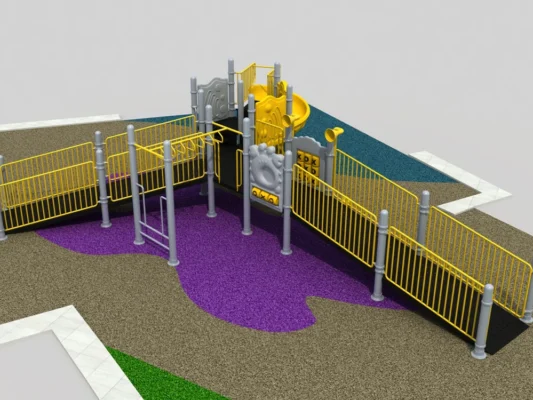
Every child deserves opportunities to explore, connect and enjoy outdoor play. At JQ Playground, we supply commercial accessible playground equipment for schools, public parks, communities, recreation facilities and other shared play spaces.
Our product solutions can include wheelchair-friendly playground structures, adaptive play equipment, accessible activity panels, sensory playground equipment and inclusive play systems. These options help project owners create play environments that consider different mobility, sensory and developmental needs.
As a playground equipment manufacturer in China with operations dating back to 1995, JQ Playground supports commercial buyers, contractors and distributors with custom playground design, OEM/ODM production and factory-direct supply. Equipment layouts, colors, play functions and material options can be discussed according to the project.
A well-planned inclusive playground does more than provide a route into the site. It creates opportunities for children with different abilities to participate, interact and enjoy varied play experiences together.
Accessibility focuses on how users enter, navigate and reach play components. Features may include accessible routes, appropriate surfaces, ramps, transfer systems and ground-level activities.
Inclusion considers the overall play experience. A thoughtful layout encourages children with different abilities to play together, instead of separating accessible equipment into an isolated area.
Adaptive equipment offers alternative ways to participate in activities such as swinging, moving, exploring and social play. Product selection should consider the user’s support needs and applicable safety requirements.
For project owners searching for playground equipment for children with disabilities or special needs playground equipment, the most effective solution is often a balanced combination of accessible infrastructure, suitable equipment and engaging play experiences.
Different projects require different play functions. JQ Playground can discuss suitable configurations from its commercial product range and custom design options. Final availability and specifications depend on the selected model.
Accessible play structures can be planned with appropriate entry routes, activity access, circulation space and, where applicable, ramp-connected platforms. These features support more opportunities for wheelchair users to participate in play.
Wheelchair PlaygroundInclusive swing areas may use different seat and support configurations to suit various users. Selection should consider seating stability, supervision, transfer requirements, fall zones and the age group of intended users.
Adaptive Playground SwingSensory play stations may incorporate tactile activities, contrasting colors, interactive panels, sound elements and imaginative games. They can add quieter play opportunities alongside more active equipment.
Sensory Play PanelsGround-level activities can make more play experiences accessible without requiring children to reach elevated platforms. Options can include play panels, activity stations, interactive games and social play features.
Ground-Level PlaySlide zones can incorporate accessible approaches, appropriately designed transfer platforms and nearby ground-level activities. The route, transfer arrangement, landing area and use zones should be evaluated as part of the full playground layout.
Accessible Play StructuresGroup games, musical play, face-to-face activity stations and other interactive elements help create shared play opportunities. Inclusive playground planning considers how children can participate together in different ways.
Inclusive Play EquipmentWhether your project needs a commercial inclusive playground, a small accessible play zone or selected wheelchair-accessible playground equipment, the equipment combination should match your actual site, budget, age range and intended users.
Accessibility depends on the entire playground environment, not simply the equipment itself. These considerations help buyers review inclusive playground design proposals.
Review how users move from the site entrance to different play zones. Route surfaces, clear widths, slopes, transitions and turning areas should be planned according to the applicable accessibility requirements.
Consider the accessibility and impact-attenuation performance of the selected playground surface. A material that is easy to cross is not automatically suitable for every fall zone. Surface performance and installation must be evaluated together.
Interactive components should be positioned with appropriate access and clear space. Where transfer systems are used, their dimensions and intended use should be checked against the project requirements and relevant standards.
Combine energetic play with quieter activities. Consider shade, seating, supervision, clear sightlines and sensory variety. Not every child will prefer the same movement, sound, color or level of stimulation.
A wheelchair-accessible entrance is only one part of a complete play environment. The route must connect to meaningful play components, and the playground layout should encourage interaction between children rather than creating separate play groups.
An inclusive playground for a public park may have very different requirements from a special education school or a compact residential play area.
Discuss site dimensions, access points, circulation, play zones and equipment positioning using your site drawing or CAD plan.
Combine suitable components according to age range, movement abilities, available space, supervision needs and play objectives.
Create coordinated playground themes for public facilities, schools and community developments. Colors and finishes depend on the available material options.
For OEM and ODM accessible playground equipment projects, JQ Playground can discuss modifications to standard configurations and custom product solutions. Structural changes and new component designs require technical and safety review before manufacturing.
Material selection affects durability, maintenance, appearance and long-term outdoor performance. The correct specification should be selected for each playground model and installation environment.
Steel structures, protective finishes, joints and fasteners should be selected with consideration for structural performance, corrosion resistance and ongoing inspection.
Depending on the product design, PE or HPL panels may be considered for decorative sections, interactive activities and other suitable applications. Surface finish and edge design matter.
Outdoor playground procurement should consider UV exposure, drainage, temperature changes, maintenance access and replacement-part availability.
For projects in coastal areas, hot climates or high-use public spaces, buyers should specify the environmental conditions in advance so the appropriate materials and finish options can be reviewed.
Inclusive play is relevant wherever children with different needs share a public or commercial play environment.
Inclusive playground equipment can support community recreation, shared activity and wider access in municipal parks and public spaces.
School playgrounds can combine accessible movement routes, physical activities, sensory play and group interaction.
Equipment and layouts can be evaluated according to student needs, supervision arrangements and educational activities.
Shared outdoor playgrounds can incorporate inclusive activities within practical neighborhood recreation areas.
Suitable recreational play elements may support supervised leisure in healthcare-related environments, subject to the facility’s own operational and safety requirements.
Resorts, family recreation facilities, visitor attractions and commercial parks can integrate inclusive activities into broader playground designs.
We welcome inquiries from government contractors, landscape architects, school project teams, recreation facility operators, playground distributors and commercial buyers sourcing inclusive outdoor play equipment.
JQ Playground, based in Wenzhou, Zhejiang, China, manufactures playground and amusement equipment for commercial and public projects.
With a manufacturing background dating back to 1995, our team works with international customers seeking playground products, customized designs and factory-direct purchasing arrangements.
For accessible playground projects, we understand that buyers need more than a product image. Layout coordination, product specifications, installation information and the intended market’s requirements all matter.
Learn About Our FactoryPublic playground buyers often need technical information for project reviews, tender documents and local approvals. Equipment safety, accessibility and surfacing requirements should be considered separately.
European safety standard series addressing playground equipment and relevant installation, inspection and maintenance requirements. Applicable parts depend on the equipment.
A US public-use playground equipment safety specification addressing performance, clearances, use zones and other safety-related requirements.
US accessibility requirements for applicable play areas, including accessible routes, ground-level play components, elevated play components and associated technical criteria.
Playground surface impact attenuation is an important consideration when selecting a protective surface for equipment use zones.
This standard is used to evaluate accessibility characteristics of playground surface systems, including resistance to wheelchair movement.
European impact attenuation requirements and test methods for playground surfacing. Appropriate surfacing must be matched to the installation.
JQ Playground can discuss available factory quality documentation, product certificates and test reports during project evaluation. Buyers should confirm the specific product model, applicable standard, report version, issuing organization and validity before placing an order.
ADA is not a standalone product certificate. Accessibility compliance depends on the complete playground design and installation, including routes, equipment, surfacing and relevant site conditions. Product safety reports do not by themselves establish full playground ADA compliance.
When comparing accessible playground equipment manufacturers, focus on technical suitability and long-term project requirements, rather than equipment price alone.
Ask whether the proposed dimensions, safety clearances, access routes and play functions fit the available site. Review the layout before finalizing a custom order.
Identify the intended age range and types of play experiences. Consider mobility access, assistance requirements and how children will interact.
Request relevant product specifications, safety information, applicable test reports, installation guidance and maintenance information for the selected model.
Confirm equipment configuration, material specifications, packaging, shipping terms, accessories and installation scope. Surfacing and site preparation may need separate budgeting.
Review installation documentation, maintenance requirements, replacement components, warranty terms and available technical support.
The price of commercial accessible playground equipment depends on the product type, structure size, custom design, material specifications, number of play components and required project documentation.
A compact ground-level activity area will have different costs from a larger inclusive playground with ramps, elevated structures, adaptive components and multiple activity zones.
JQ Playground can prepare a project-based equipment proposal after reviewing your requirements. For an accurate comparison, buyers should distinguish equipment costs from surfacing, groundwork, transportation and on-site installation costs.
Answers to common questions from schools, project contractors, public facility buyers and playground equipment distributors.
Accessible playground equipment is designed or arranged to support use by children with different abilities, including children with mobility limitations. Examples can include appropriately positioned ground-level components, wheelchair-friendly activities, accessible routes, transfer systems and certain adaptive play features.
Accessibility focuses on whether users can reach and use play components. Inclusion goes further by considering how children of different abilities can enjoy a range of activities and interact with one another. An inclusive playground should consider both principles.
JQ Playground supports custom commercial playground projects. We can discuss site layouts, equipment combinations, colors and available structural options. A requested modification must be technically reviewed for suitability, feasibility and safety.
No. ADA compliance applies to relevant aspects of the complete play area and installation. Equipment alone cannot establish compliance for an entire site. Local designers, contractors and project owners should verify the applicable requirements.
We can discuss adaptive play and sensory activity options when developing an inclusive playground proposal. Available models, dimensions and configurations should be confirmed with our sales team. Equipment should be matched to the users and site conditions.
Suitable accessible surfacing should provide the required movement performance and, where necessary, impact attenuation. Surface systems should be evaluated using applicable requirements such as ASTM F1951 and ASTM F1292. Installation and maintenance also affect performance.
For tender inquiries, please share the specifications and required documentation list. JQ Playground can review which product information, drawings and applicable reports are available. Certificate applicability must be verified for the proposed equipment.
Send your site dimensions, destination country, intended age range, equipment preferences, budget and project requirements. Our team can review your information and discuss appropriate product configurations and quotation details.
Yes, inclusive play principles can be considered for both small and large sites. Compact layouts may prioritize ground-level interactive equipment and carefully planned circulation. The available area must still accommodate required clearances, routes and safety zones.
Production and delivery schedules vary according to product design, order quantity, technical requirements and shipping destination. Our sales team can provide a project-specific schedule after reviewing the confirmed specifications.
Work with JQ Playground to discuss commercial inclusive playground equipment, wheelchair-friendly play structures and customized playground solutions. Share your project plans with our team to explore suitable equipment options and factory-direct purchasing arrangements.
According to the site size CAD file provided by the customer to provide a free design scheme.
Provide modification suggestions for customers and provide free modification drawing services.
Confirm the plan and quote after the customer, and confirm the final price with the customer.
Order production and trial installation as soon as possible, and the production process is strictly controlled.
Ship on time and provide installation drawings of the corresponding products.
Engineers can also be sent to the destination country to assist in the installation.
After receiving the product, if there is any part defect, we will provide replacement service.
All products will provide quality assurance service valid for one year.
It is a long established fact that a reader will be distracted.
 English
 Español
 Français
 Deutsch
 Português